Practical answer up front: for most couples a mixed plan that pairs a high‑speed or intercity train from Seoul with a short car or taxi segment at the Gangneung end gives the best balance of speed, luggage ease, and flexibility. If you prefer door‑to‑door control and scenic stops, driving or renting a car for part of the route can be better. Budget‑minded couples often favor express coach services for a single, lower‑effort reservation. Whatever you pick, compare total door‑to‑door time, transfer friction with luggage, and backup options for weather or service disruptions. Later sections walk through terminal fit, luggage handling, timing flexibility, and what to prepare if something goes wrong, so you can build a multi‑city ground transport plan that suits your relationship rhythm and travel priorities.
How to choose between train, coach, car, or a mixed plan
Start by ranking what matters most as a couple: shave minutes off travel time, minimize walking and luggage handling, keep costs down, or add scenic stops. Trains typically win on consistent run times and comfort, coaches offer straightforward single reservations and fewer transfers, and driving gives you full route control and the freedom to stop for coffee, photos or a beach picnic. A mixed plan combines strengths — for example, a fast rail segment out of Seoul followed by a short car or taxi leg near Gangneung — and is often the best compromise for two people who balance efficiency with local mobility.
Think beyond the moving segment. Door‑to‑door practicality often hinges on first‑mile and last‑mile arrangements: how long it takes to reach the departure terminal from your Seoul base, and how you’ll get from the arrival terminal to your Gangneung lodging. If one partner dislikes heavy bags, prioritize fewer transfers even if it costs a little more. Couples who want a more relaxed pace can deliberately add a scenic driving leg or an overnight stop in an intermediate town to turn transit into part of the trip experience.
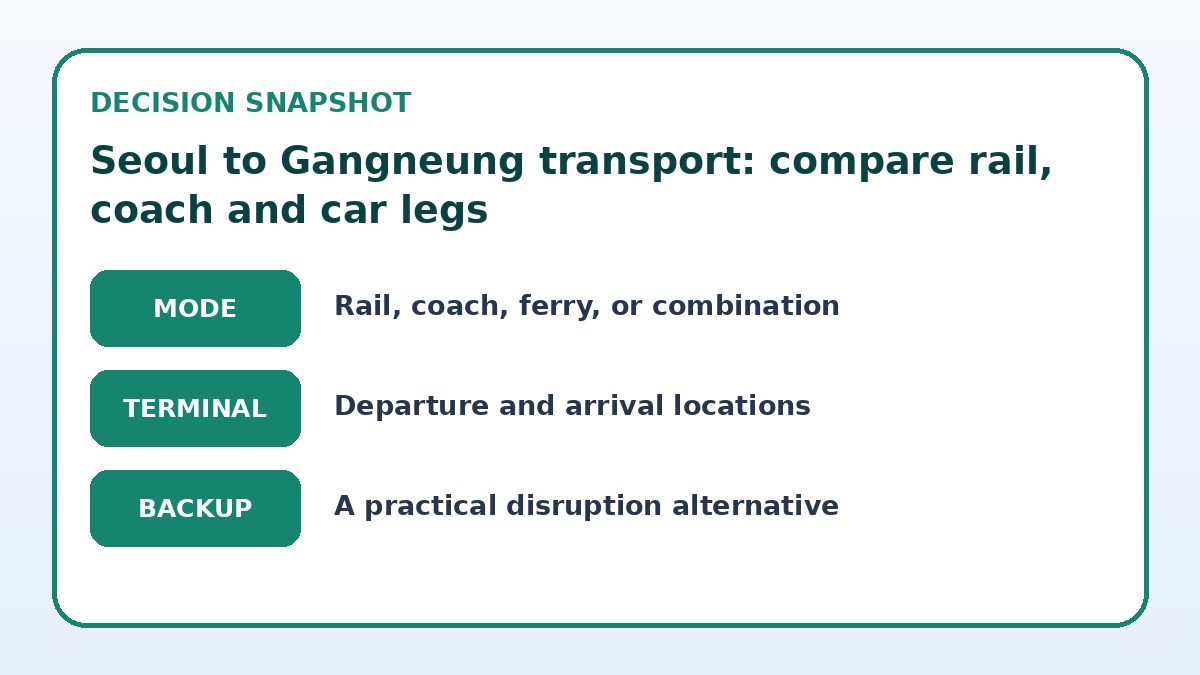
Choose the end-to-end journey plan
| Journey approach | Best for | Friction to check |
|---|---|---|
| All‑train plan (single or connecting rail legs) | Couples valuing speed, predictable schedules, and onboard comfort with minimal driving stress. | May require transfers between stations and fixed timetables; last‑mile taxi or bus might still be needed. |
| Single coach/express bus | Couples who want a simple one‑reservation trip with minimal transfer planning and steady on‑road arrival points. | Generally less flexible for scenic stops and potential highway congestion can affect timing unpredictably. |
| Drive or self‑drive whole route | Couples wanting maximum flexibility to stop, change plans, and carry bulky luggage without transfers. | Requires a driver, parking planning, and can be tiring; driving responsibility may reduce shared relaxation time. |
| Mixed plan (train or coach plus local car/taxi legs) | Couples balancing fast mainline travel with convenient door‑to‑door pickup and drop‑offs at either end. | Adds a booking step and small transfer friction but often yields the best overall door‑to‑door practicality. |
Check live intercity options
Look beyond the ride itself and compare terminals, transfers, luggage, and arrival fit.
Terminal fit, luggage handling and transfer friction
Check where main train stations and coach terminals sit inside each city and how easy they are to reach from your accommodation. Some high‑speed and intercity train stations are centrally located, while other terminals may be on the city edge. Even short transfers matter when you have suitcases or a stroller. If luggage is a concern, plan for one continuous mode or for transfer options with easy luggage handling—station elevators, porters, or taxis you can load curbside. Couples should decide whether they prefer to carry everything themselves or use a luggage service if available.
When mapping transfers, estimate walking time, elevator availability, and the likelihood of crowded platforms—busy peak periods increase friction. If your plan involves switching from train to car, arrange a prebooked taxi or car pickup at the arrival terminal to avoid wandering. For coach arrivals, verify the drop‑off point relative to main streets and bus shelters; a coach that stops near a taxi rank or metro station reduces stress. Always build a 30–60 minute buffer into connections between different modes to absorb delays and keep the day relaxed.
Timing flexibility and building an itinerary that suits two people
Couples often have different tolerance levels for tight connections and early departures. If one partner wants to sleep in, avoid itineraries that require very early trains or buses. Look at frequency: if trains or coaches run several times a day, you have more flexibility to choose a later service without sacrificing a full day together. When train schedules are less frequent, a car leg provides timing control but can increase driving fatigue for the designated driver, so consider alternating driving duties or booking a point‑to‑point transfer service.
Also align travel timing with what you plan to do on arrival. A noon arrival gives time for a long lunch and a stroll; an evening arrival might be better if you want to relax at your hotel. For day trips or split routes, design the plan so that heavy‑travel segments fall when both of you are at your best—this could mean catching a morning train for energy and using a rental car later in the afternoon for leisure stops. Discuss these tradeoffs together so the schedule matches both partners’ interests.
Compare the practical alternatives
Use the final page to confirm what is actually offered on your dates and save a workable fallback.
Intercity travel checklist
- Confirm the exact station or bus terminal addresses in Seoul and Gangneung and map door‑to‑door transit times from your lodging.
- Estimate transfer time and luggage handling needs; reserve a taxi or car pickup at arrival if you want zero‑stress transfers.
- Check train and coach frequencies for your travel day and note the next two departures in case of delays.
- Decide whether you need seat reservations and verify that policy on the provider’s final booking page.
- Pack a small overnight bag in carry‑on style for quick transfers and keep chargers and documents accessible.
- Save local emergency numbers, your accommodation phone, and a translation app to ease unexpected rerouting.
Disruption backup and what to verify before booking
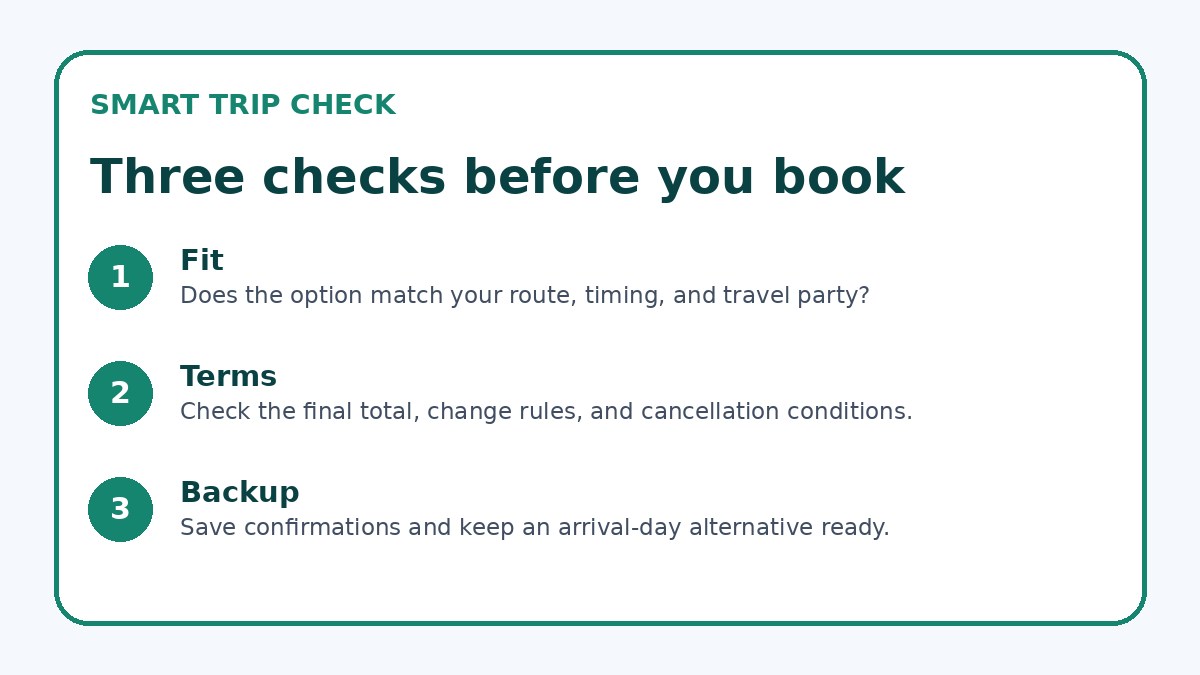
Always prepare a simple backup plan: identify the next two services (train or coach) after your preferred departure, note local taxi or car hire options at the arrival terminal, and keep contact info for your accommodation. If you plan a mixed route, know alternatives that keep you moving even if one leg is canceled. For weather‑sensitive periods or holiday weekends, increase buffer times and consider flexible tickets or providers that list explicit rebooking options on their booking pages. Confirm cancellation and change policies directly on the provider’s final booking page before purchase.
Before you book, verify practical details that change: terminal addresses, platform or bay arrangements, luggage allowances, and any required check‑in times. If you expect to rely on local trains that might have differing seat reservation policies, check whether a seat reservation is needed or optional. You can check live availability on sites like Trip.com for comparison, but always confirm the final terms, refund rules, and any special carriage or vehicle type details on the operator’s own booking interface so you aren’t surprised at the station.
Rail & Intercity Transport questions travelers ask
Should couples prefer trains or coaches between Seoul and Gangneung?
Pick trains if you value consistency, on‑board space to relax, and generally quicker scheduled journey times. Coaches can be simpler—one reservation, direct drop‑offs—and may be a better choice if you’re minimizing costs or prefer a single continuous ride. For many couples the ideal is a hybrid approach: take a mainline train for speed, then a short taxi or rental car for local mobility. Before booking, check the frequency of each mode on your intended travel day and confirm luggage policies on the operator’s booking page.
How much buffer time should we build between a rail arrival and hotel check‑in?
Aim for a buffer of at least 45–90 minutes between scheduled arrival and hotel check‑in depending on how far the arrival terminal is from your lodging and whether you have heavy bags. This covers walking, luggage handling, a short taxi ride, and any small delays. If you arrive during peak periods or need public transit connections, increase the buffer. If punctuality matters, contact your hotel to confirm they’ll hold your room or luggage so you can adjust without losing time.
What disruption backups are most practical for couples on this route?
Practical backups include knowing the next two scheduled trains or buses, having a local taxi app or number saved, and keeping funds for a short car hire if necessary. If you booked a mixed itinerary, identify a single full‑drive option as a fallback and confirm driver availability for late arrivals. Purchase tickets that allow free or low‑cost changes when possible, but always read the provider’s change and refund terms on their booking page so you can act quickly if a leg is canceled.
Final decision note
For couples planning Seoul to Gangneung transport, focus on door‑to‑door practicality: where each terminal is located, how transfers and luggage will be handled, and how flexible your timing needs to be. A mixed plan—fast rail or coach for the main leg combined with a short local car or taxi on arrival—often gives the best compromise between speed, comfort, and local mobility. Whatever approach you choose, verify terminal addresses, seat‑reservation rules, and change/cancellation policies on the provider’s final booking page before purchasing. With those details checked and a simple disruption backup in place, you’ll travel together with less stress and more time to enjoy Gangneung.
Continue planning
Check current options and final conditions
Use the provider page to confirm live availability, the final total, cancellation terms, and every condition that matters to your trip.
This evergreen planning guide was created with AI-assisted drafting and a structured quality review. It does not display live prices, schedules, availability, visa guidance, or provider rankings. Verify current details before booking. Some links are affiliate links; we may earn a commission at no additional cost to you.