If you need the simple answer: for most first-time visitors the Shinkansen is the easiest balance of speed and convenience, coaches are the most budget-friendly for flexible sleepers, ferries offer a slower scenic option with more luggage freedom, and flights are competitive only if you find a timetable that suits tight schedules. This article helps you pick by matching travel priorities—time, cost, comfort, luggage, and convenience—and explains what to verify before you buy. I’ll highlight the practical tradeoffs, what to check on booking pages (connections, station names, luggage rules, seat types), and how to compare direct versus connecting options. If you want to shop availability quickly, Trip.com can help as one comparison point, but always confirm times, baggage rules, and station/terminal details on the provider’s official booking page.
Train (Shinkansen and limited express): speed, frequency, and city-center access
Trains between Tokyo and Osaka include frequent high-speed Shinkansen and slower limited-express options that depart from central stations and arrive directly in the city. For first-time visitors this matters: boarding and alighting happen at major transport hubs with straightforward onward connections to hotels, sightseeing districts, and airport links. When comparing train options, check whether the service is direct or requires a transfer, whether seat reservations are optional or mandatory, and how long the transfer time is at connecting stations. Confirm platform and station names on the operator’s final booking page to avoid last-minute rushes.
Deciding whether to reserve seats depends on travel day and time—reserved seats guarantee a specific seat while non-reserved cars offer flexibility but can be crowded on peak services. Luggage rules vary by operator and service type; some Shinkansen have limited overhead space for large suitcases and may require advance notice or a paid luggage service for oversize bags. Before booking, compare total door-to-door time (including walk or transfer time at each station) rather than just in-vehicle travel time to make a realistic plan.
Coach: budget-friendly and practical for overnight travel
Coaches are often the lowest out-of-pocket option for travelers willing to trade time for cost. Overnight coaches depart late evening and arrive early the next morning, which can save a night in a hotel and maximize sightseeing time, but they also mean less legroom and potentially disrupted sleep. Daytime coaches can be slower than trains but sometimes drop you closer to neighborhoods or terminals that are convenient for your itinerary. Check whether your chosen coach requires picking up tickets at a counter, offers assigned seats, and what baggage allowances apply before you finalize any purchase.
Consider your tolerance for comfort and the size of your luggage when choosing a coach: many services welcome large suitcases stored under the bus but may limit how much you can carry into the cabin. Also compare pickup and drop-off locations—some coach terminals are outside the most central districts, adding local travel time and cost. Look for coaches with onboard toilets and charging points if those amenities matter to you. Always verify the pick-up address, drop-off address, and any required ID or ticket-collection procedures on the carrier’s booking page.
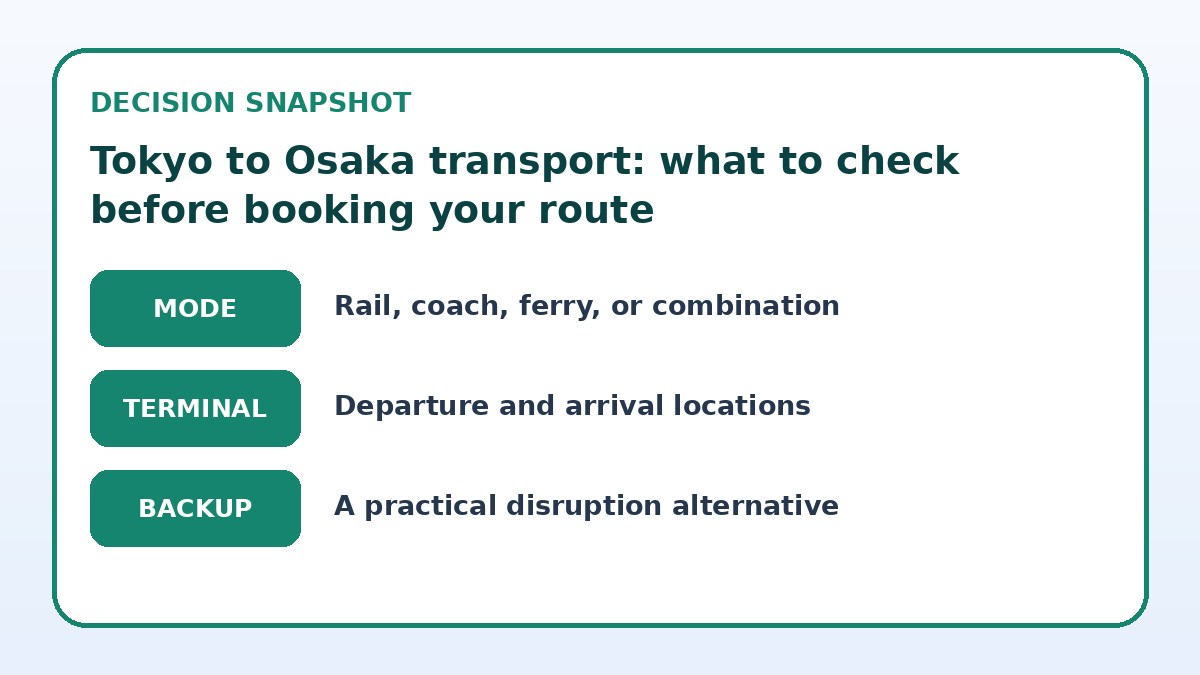
| Approach | Best for | Tradeoff to check |
|---|---|---|
| High-speed train (Shinkansen) | Travelers prioritizing speed, frequent departures, and city-center to city-center transfers | Higher fare than coach or ferry and limited space for oversized luggage unless prearranged |
| Long-distance coach | Budget-conscious travelers or overnight sleepers willing to trade time for lower cost | Longer journey time and less legroom; terminals may be less central than train stations |
| Ferry / overnight ship | Those traveling with large luggage, seeking relaxed travel pace, or wanting sea views | Slower travel and extra local transfers to/from ferry terminals; fewer daily departures |
| Plane (domestic flight) | Passengers with tight schedules who start or end near airports or need fast sector flights | Airport transfers and check-in time can erase airborne time savings; baggage rules vary |
Ferry and overnight ship options: relaxed travel and more luggage freedom
Ferries linking regions of Japan can be slower but offer a different travel experience: more space to move, places to eat, and the ability to carry larger or heavier luggage without strict overhead limits. If you prefer a relaxed pace or plan to travel with bulky gear, a daytime or overnight ferry might fit your needs. Ferry terminals are typically off the main rail lines, so you should factor in transfer time to and from central Tokyo and Osaka. Confirm boarding times, terminal names, luggage handling policies, and cabin or seat types on the ferry operator’s official page before booking.
Think of ferries as part travel, part mini-cruise—they are appealing if you want to stretch your legs and enjoy the sea, or if rail and air options are less convenient for large groups or unusual cargo. Overnight ferries often sell cabins that range from shared reclining seats to private rooms, which affects comfort and total trip cost. Check cancellation and check-in rules, whether meals are included, and luggage limits to avoid surprises; these provider-specific details should be verified on the carrier’s final booking pages.
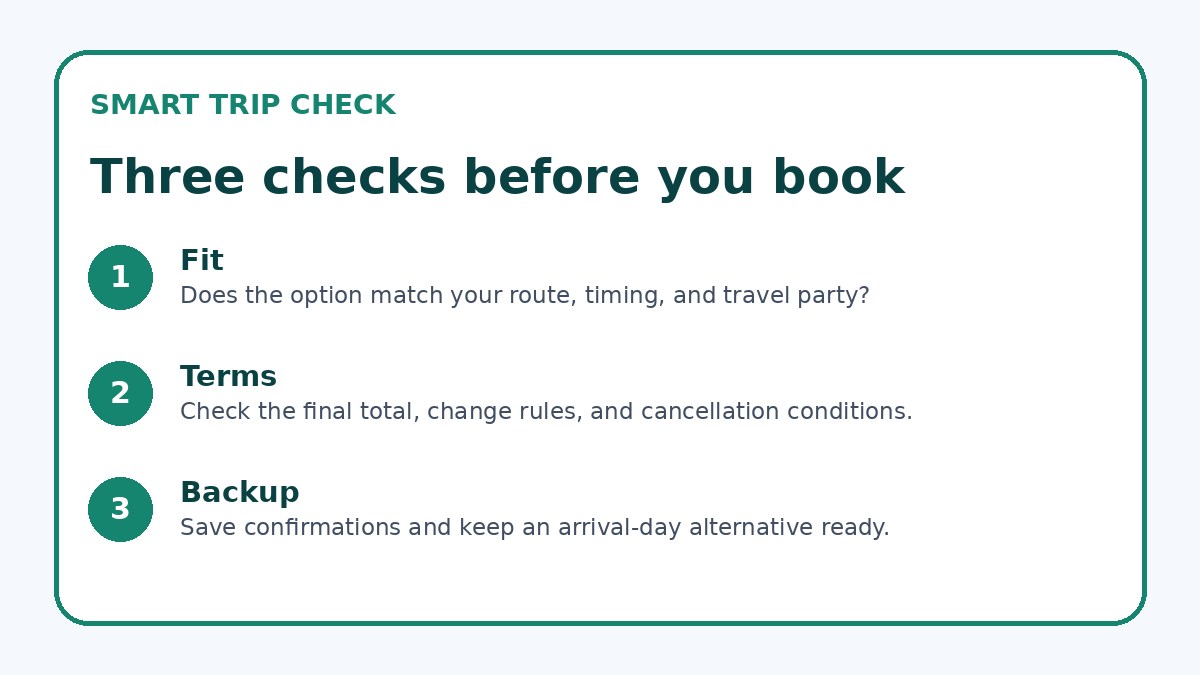
Before you book
- Confirm departure and arrival station/terminal names and addresses on the provider’s booking page.
- Add realistic transfer time between stations, terminals, or coach/ferry ports to your itinerary.
- Check seat reservation rules, baggage allowances, and any extra fees before finalizing payment.
- Compare total door-to-door time across modes, not just in-vehicle travel duration.
- Verify cancellation, change, and refund policies on each operator’s official booking page.
- If using multiple operators, confirm whether connections are protected or if separate tickets are required.
Plane and combined door-to-door strategies: when flying makes sense
Flights between Tokyo-area and Osaka-area airports can be fast in the air but tend to require extra time for transfers to and from city centers, security, and recommended early check-in. For travelers with tight onward connections beyond Osaka or those starting/ending near an airport, a flight may be convenient despite airport transfer time. If you consider flying, compare total door-to-door time, including transfers and security lines, rather than just flight duration. Always verify baggage allowances, airport terminals, and whether the fare includes hold luggage on the airline’s booking page.
Combination itineraries—such as train to a nearby regional airport or coach to a ferry terminal—sometimes yield better balance between cost and travel time than a single-mode option. To compare combinations, list each segment’s departure and arrival points, add transfer times, and then evaluate overall convenience and cost. When booking multi-segment plans, confirm connection minimums, separate ticketing implications (one missed connection might mean you’re responsible for the next leg), and refund or change policies on each provider’s final booking page.
Frequently asked questions
Is the Shinkansen the best way to travel between Tokyo and Osaka?
For many first-time visitors the Shinkansen offers the most convenient balance of speed and city-center access, but “best” depends on your priorities. If you value minimal transfer hassle and frequent departures, high-speed rail is a strong choice. If your top priorities are price savings, traveling overnight to save a hotel night, or carrying oversized luggage, a coach, ferry, or alternative might be preferable. Compare total door-to-door time, luggage rules, and seat reservation policies on the train operator’s booking page before deciding.
Should I book tickets in advance or wait to buy on the day?
Advance booking brings peace of mind on busy travel dates and guarantees seats on reserved services, while buying on the day offers flexibility for uncertain plans. If you travel during peak holiday periods or have a strict schedule, reserve seats or buy tickets ahead. For flexible travelers on off-peak days, day-of purchases can work well—just be ready to accept non-reserved seating or slightly different departure times. Always check the provider’s site for reservation rules, refund terms, and how to collect e-tickets or paper tickets.
How should I compare total travel time between different modes?
Add three elements: the in-vehicle duration, the transfer time to reach the departure point (walk, train, bus), and buffer time for check-in or boarding procedures. For flights include recommended early arrival for security and baggage drop; for ferries check boarding windows; for trains and coaches account for walk time through large stations or terminals. The realistic ‘door-to-door’ estimate will often change which option looks fastest. Use official provider pages to confirm scheduled departure and arrival times, plus minutes needed for boarding.
Final planning note
Choosing how to travel from Tokyo to Osaka comes down to what you value most: speed and central access (Shinkansen), cost savings (coach), relaxed pace and luggage freedom (ferry), or focused time savings on specific airport-to-airport itineraries (plane). Build a door-to-door comparison that includes transfers, luggage handling, and seat-reservation rules rather than judging by headline travel times alone. Before you book, verify station and terminal names, baggage allowances, seat or cabin options, and refund/change policies on each provider’s official booking page. Use a comparison site like Trip.com as one quick lookup, but always confirm critical details with the carrier to avoid surprises.
Continue planning
Check current options and final conditions
Use the provider page to confirm live availability, the final total, cancellation terms, and every condition that matters to your trip.
This evergreen planning guide was created with AI-assisted drafting and a structured quality review. It does not display live prices, schedules, availability, visa guidance, or provider rankings. Verify current details before booking. Some links are affiliate links; we may earn a commission at no additional cost to you.