
Practical answer up front: for most first-time visitors to Osaka, a rental car is unnecessary and often more hassle than help. The city’s efficient urban rail, extensive subway lines, buses, and walkable neighborhoods typically cover tourist needs with less stress than driving. However, a car can make sense if your itinerary includes out-of-city day trips (rural Kansai, the Kii Peninsula, or small towns that lack frequent trains), you’re traveling with lots of luggage or a family group, or you value the flexibility to chase remote sights on your own schedule. This guide focuses on how to decide: when driving brings real benefits, the tradeoffs you’ll face in traffic, parking and navigation, and the concrete checks to run before booking. Use these criteria to match a car to your specific daily plans rather than assuming it’s the default way to see Osaka.
When a rental car helps your Osaka trip
A car pays off when your Osaka plan extends beyond the urban core. If you want to visit countryside destinations that are poorly served by trains or buses—small coastal towns, mountain shrines, or multi-site rural itineraries—the flexibility to leave early or stay late without chasing timetables becomes valuable. Families with young children or travelers carrying a lot of gear also appreciate door-to-door convenience and the ability to spread luggage across seats rather than hauling it through stations. Additionally, when traveling with a group, the per-person cost of a car plus parking can be competitive compared with multiple rail tickets.
Consider also how you intend to structure days. Cars are best for linear routes that link dispersed attractions or when routes are time-sensitive, for example reaching a sunset viewpoint that would otherwise require multiple transfers. For single-day excursions where public transport options exist but are infrequent, driving can compress the schedule and let you visit more in one day. Balance the attraction of flexibility against the need to navigate narrow streets and unfamiliar traffic patterns—especially if you plan to cross prefectural boundaries where signage and road norms feel different.
When you should skip the car and use public transport
If your itinerary centers on Osaka city neighborhoods, public transport is usually faster, cheaper, and far less stressful. The subway and JR lines connect major tourist nodes, and transfers are straightforward. Walking between nearby neighborhoods is often quicker than finding parking, and many downtown destinations are pedestrian-friendly. Public transportation also spares you fuel, parking fees, and the mental load of driving in an unfamiliar city. For single travelers or couples without heavy luggage, trains and subways will typically be the more practical choice.
Choose trains, trams, or buses when you expect to rely on frequent, scheduled services and plan to concentrate activities within a compact area. If you prize evening drinks or want to avoid paying for overnight parking, public transit extends later in urban zones and removes the need to return to a parked car. Additionally, Japanese urban traffic can be dense during rush hours; avoiding driving through peak commuter windows reduces travel time uncertainty. When museums, restaurants, and nightlife are clustered, a no-car approach often increases enjoyment by simplifying movement.
| Approach | Best for | Tradeoff to check |
|---|---|---|
| Keep to public transport and walk | Visitors staying in central Osaka focused on museums, dining, nightlife, and compact sightseeing | Less flexibility for rural day trips and reliance on scheduled services |
| Rent a car for day trips only | Travelers combining a few targeted out-of-city excursions with urban stays | Extra cost and the need to coordinate parking and pick-up/drop-off logistics |
| Rent for the whole stay | Groups or families who prefer door-to-door travel and multiple dispersed destinations | Higher overall cost, parking hassle, and navigating urban traffic daily |
| Use rail for core transit, rent locally for a single rural stretch | Visitors who want the comfort of trains in the city but need a car for a specific remote leg | Requires coordinating rental timing and luggage transfers between modes |
Tradeoffs: cost, parking, navigation, and convenience
Renting introduces variable costs and practical tradeoffs. Daily rental rates, fuel, parking, and potential tolls all add up, and those amounts vary by neighborhood and time. Parking scarcity in central Osaka can force you to use private lots that operate by short-hour rates or overnight rules; some hotels include parking while others do not. Navigating narrow side streets, one-way systems, and unfamiliar signage adds time and stress—especially if you don’t read Japanese characters. Weigh these predictable hassles against the time saved on specific day trips where driving removes the need to coordinate timetables.
Tolls on expressways and city ring roads can accelerate travel between distant points but add cost and require either cash or an ETC card—or an electronic toll arrangement supplied by the rental agency—so check how tolls are handled. Insurance and collision damage waivers reduce financial risk but have differing coverages; read the contract terms and decide whether your existing travel insurance or card benefits cover rental vehicles abroad. Finally, verify which transmission types, child seats, and in-car navigation language options are offered before you book—these product details are provider-dependent and can change at the booking stage.
Before you book
- List each day’s destinations and mark which are poorly served by trains or buses to justify driving time.
- Confirm international driving permit acceptance, driver age limits, and any additional ID required by the rental company.
- Check whether your hotel offers on-site parking or recommended nearby lots and note overnight parking rules.
- Confirm whether the rental car includes GPS in English, automatic transmission, and availability of child seats if needed.
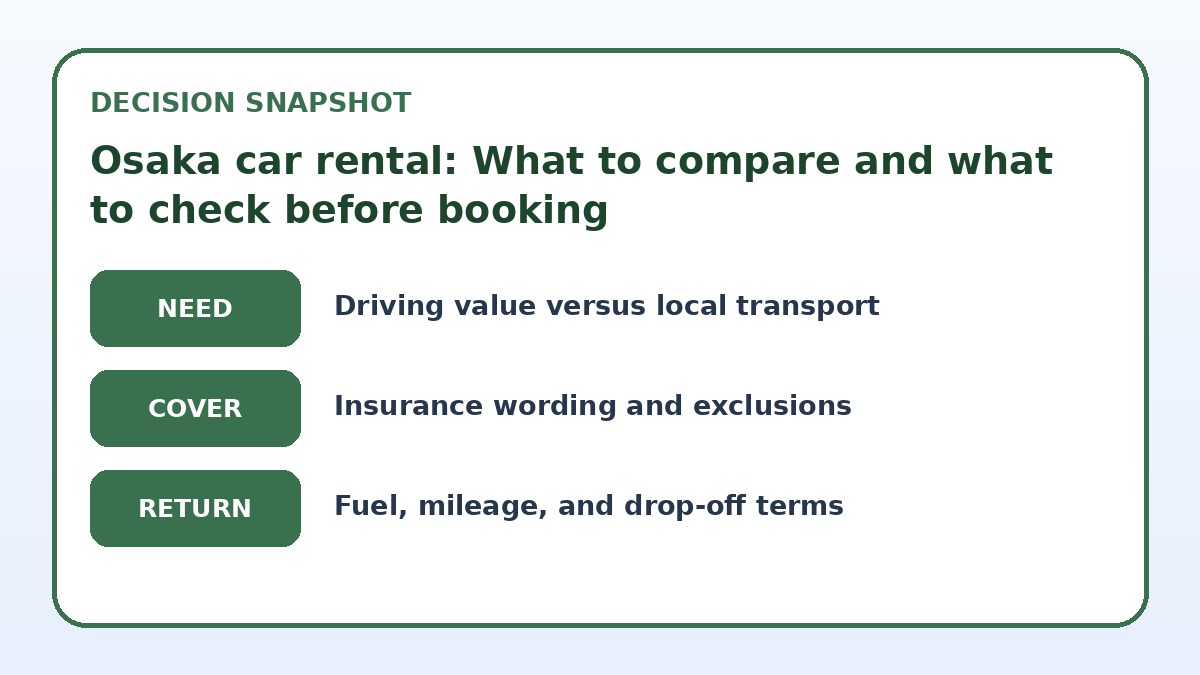
- Verify fuel policy, mileage limits, insurance options, roadside assistance details, and how tolls are billed on provider pages.
- Compare estimated total cost (rental, fuel, tolls, parking) with public transport passes and private transfers for your route.
Practical checks to make before you book
Before you reserve, confirm the rental company’s rules for international driving permits, driver age restrictions, and acceptable identity documents. Check whether the rental offers an English-language GPS or smartphone navigation, and whether the vehicle has automatic transmission if you need it. Verify fuel policy, mileage limits, insurance options, and the company’s roadside assistance procedures so you’re not surprised mid-trip. These are all provider-specific details—look for them on the final booking page or call the local office to confirm.
Also research where you’ll park each night and whether your intended hotels provide on-site parking or partner lots. If you plan expressway travel, ask how toll charges are billed. For city driving, map a few realistic routes from your accommodation to key attractions to estimate drive times, parking access, and potential congestion points. If in doubt, compare costs and schedules with rail and bus options. You can use Trip.com as one place to compare current rental availability, but always verify policy and final pricing directly with the rental provider before booking.
Frequently asked questions
Is driving in Osaka difficult for foreigners who have an international driving permit?
Driving in Osaka is manageable for many visitors, but it depends on experience with urban driving. Expect narrow streets in older neighborhoods, frequent one-way systems, and busy traffic during commute hours. Road signs include some English, but reading Japanese characters helps with smaller signs and parking instructions. If you’re comfortable using navigation and driving defensively, an international driving permit usually suffices—verify acceptance rules with your rental provider and carry your home driver’s license. If unfamiliar with highway tolls or left-side driving, consider renting only for specific day trips rather than city driving.
Can I pick up a rental car near Osaka’s main train stations or airport?
Major rental companies typically have locations near transport hubs, but exact pick-up points, shuttle arrangements, and operating hours vary by provider. When comparing options, check the provider’s final booking page for the precise office address, any required shuttle service, and whether vehicle collection requires additional time. If you plan station-to-station travel, allow buffer time for pick-up and return, and confirm whether drop-off outside office hours is possible. Using a station-located office can be convenient, but verify vehicle availability and any extra charges before you commit.
How should I weigh parking costs and availability in central Osaka?
Parking in central Osaka can be limited and often priced by the hour for short stays or by overnight rates for hotel areas. Look up whether your accommodation includes parking or partners with nearby lots and check typical lot hours and restrictions. For popular tourist zones, expect to walk a short distance from a public lot to attractions. If multiple days in the city are planned, factor daily parking into your budget and compare it against the cost of public transport—sometimes paying for a few rail rides is less work and cost than daily parking. Always confirm parking options directly with hotels or the lot operator.
Final planning note
Deciding whether an Osaka car rental fits your first visit comes down to matching itinerary geography with transportation strengths. For city-centric trips a car is often an unnecessary complication; trains, subways, and walking usually save time and reduce stress. If your plan includes multiple rural day trips, heavy luggage, or flexible schedules that local transit cannot meet, a rental can be worth the added cost and logistics. Use the checklist above to verify permits, vehicle features, parking arrangements, and insurance details on the rental provider’s final booking page. Compare the total door-to-door time and cost with public transport options so your decision serves the actual days you’ll spend in and around Osaka.
Continue planning
Check current options and final conditions
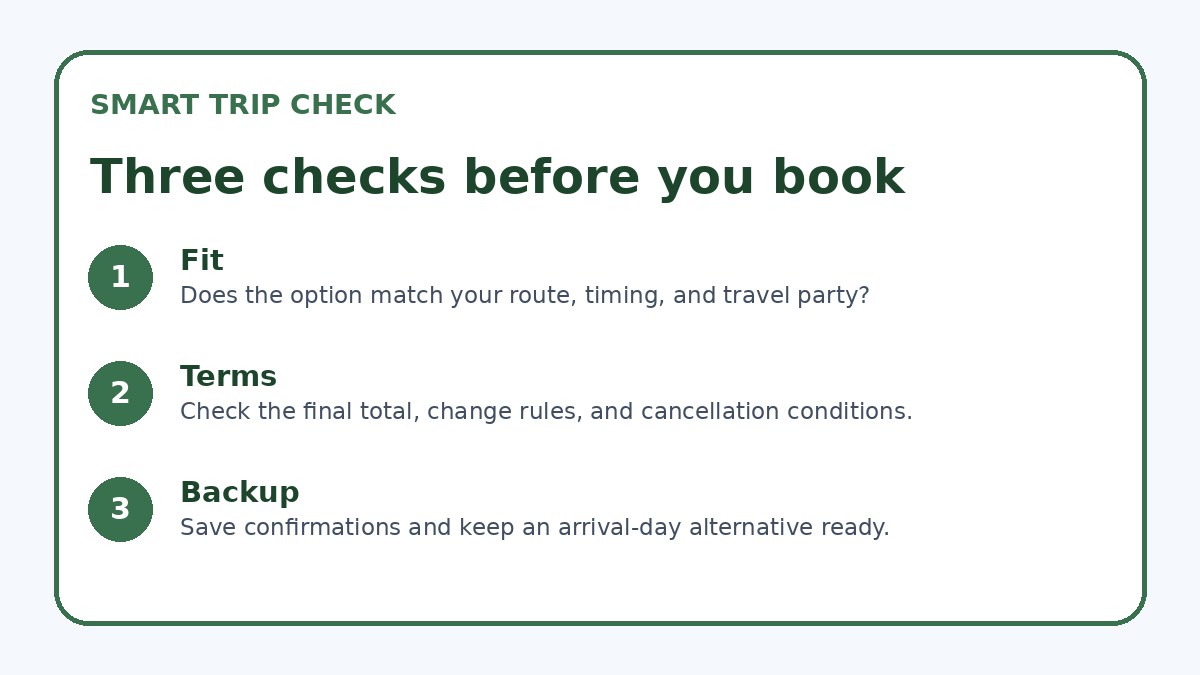
Use the provider page to confirm live availability, the final total, cancellation terms, and every condition that matters to your trip.
This evergreen planning guide was created with AI-assisted drafting and a structured quality review. It does not display live prices, schedules, availability, visa guidance, or provider rankings. Verify current details before booking. Some links are affiliate links; we may earn a commission at no additional cost to you.