Practical answer up front: for most first-time visitors who want to explore beaches, handpicked coastal drives, and several dispersed attractions in one trip, renting a car on Jeju is the most flexible option. If your stay centers on a single town, you plan to use organized day tours, or you prefer not to drive in a foreign place, public buses, taxis, and transfer services can cover main highlights. This article helps you decide by examining the tradeoffs—time saved versus stress, cost versus convenience, and parking versus hotel location. Read on to match your mobility style and itinerary priorities with the right choice, and to learn what to verify on a rental booking page before you commit.
Who should rent a car in Jeju
Renting a car suits travelers who want to cover a lot of ground on their own schedule. If your plan includes a mix of coastlines, inland attractions like Hallasan-area trails, and scattered cafes or scenic viewpoints, a car dramatically reduces transfer friction. You can leave early for sunrise viewpoints, linger at quieter beaches, and visit multiple sites in a single day without coordinating with bus timetables. Families, multi-generational groups, and anyone with bulky gear (beach equipment, photography kit, or child seats) will particularly appreciate the storage and privacy a rental provides.
A car also helps when your lodging choices are outside major towns or when public transport connections are limited at night. If you intend to explore off-the-beaten paths, rural coastal roads, or timed activities that require precise arrival times, driving is often the more practical way to stick to your schedule. That said, be honest about your confidence driving in a new country; if unfamiliarity with local traffic patterns or left/right differences would cause anxiety, the convenience of a car may be outweighed by stress.
When to skip a rental and use buses, taxis, or tours
You can skip renting a car if your itinerary is compact—staying mainly in Jeju City or Seogwipo—and you plan to visit a handful of well-served attractions. The island’s intercity buses link many popular sites, and taxis are convenient for shorter trips or when you don’t want to plan routes. Organized day tours handle driving, navigation, and parking while offering curated stops, which can be attractive if you prefer a hands-off approach or want local commentary without renting a vehicle.
Avoiding a rental also reduces your responsibilities: you won’t worry about parking availability at busy scenic spots, fuel, or tolls. If you’re traveling solo and want to meet other travelers, or if your time on Jeju is limited and you only want to see a couple of highlights with minimal logistics, public options may be simpler and less mentally taxing. Consider also that late-night return trips or unpredictable weather could make public transport or a driver-based service the safer option.
| Approach | Best for | Tradeoff to check |
|---|---|---|
| Rent a car for the whole trip | Travelers seeking full flexibility, mixed remote stops, and family or group comfort | Higher total cost and responsibility for driving, parking, and insurance |
| Use public buses and taxis only | Budget-conscious visitors staying in major towns and visiting main attractions | Less flexible timing and longer waits between dispersed sites |
| Book guided day tours for key days | Visitors who want expert commentary and no driving responsibility | Fixed schedules and fewer chances to linger off-route |
| Rent a car for select days | Travelers combining public transport with a few self-drive excursions | More complex planning and potentially higher per-day rental costs |

Key tradeoffs to weigh before booking
Cost is not only the headline rate for the vehicle. When deciding, add likely expenses: fuel consumption for your planned driving distances, parking fees at attractions or accommodations, any one-way drop-off fees, and extra charges for GPS, child seats, or additional drivers. Also factor in the time value of flexibility—how much does avoiding bus schedules or a taxi wait matter to you? For some travelers, the ability to explore spontaneously justifies higher spending; for others, the budget route is preferable.
Comfort and risk tolerance matter too. Driving reduces the hassle of carrying luggage on buses and waiting for connections, but it introduces responsibilities like navigating unfamiliar roads, following local traffic rules, and dealing with insurance or damage claims if an incident occurs. If you choose to rent, scrutinize collision damage waiver coverage, liability limits, and deductible amounts on the rental booking page. Confirm exactly what is covered and what will be your responsibility should something go wrong before you finalize the reservation.
Before you book
- Confirm whether your driver’s license is accepted (international driving permit or local license) and bring original documents when picking up the car.
- Read the rental agreement’s insurance section: note deductible amounts, collision coverage, and what behavior could void coverage.
- Check fuel policy and plan whether to refuel before drop-off to avoid refueling charges.
- Verify pick-up and drop-off locations and hours, and ask about after-hours procedures or additional fees if arriving late.
- Reserve any needed extras (child seats, GPS, additional driver) in advance and confirm their inclusion on the final booking page.
- Map your main day routes and check parking availability at attractions or your hotel to avoid daily surprises.
Practical booking checks and on-island tips
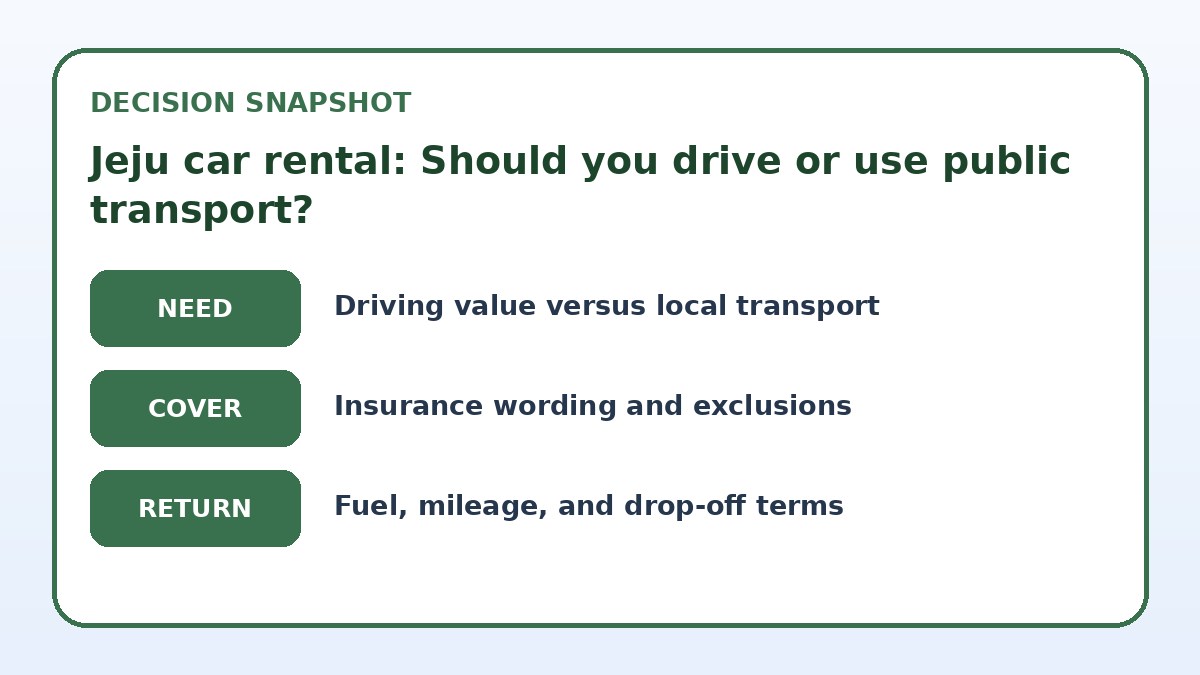
Before you book a rental, verify several items on the provider’s final page: the allowed driver age and license requirements (international or local translates), insurance coverage and deductibles, fuel policy, mileage limits, pick-up/drop-off hours, and any airport surcharges. If you plan pick-up outside office hours, check whether there is an after-hours fee. Compare these terms between providers rather than relying only on headline rates. Trip.com can be used as a place to compare current availability and the provider terms, but always read the rental company’s own policy pages before confirming.
On the island, plan for parking near busy attractions—some scenic spots have limited lots that fill early. If you’re uncomfortable parking in tight spaces, choose accommodations that include parking to reduce daily stress. Keep a local map app that works offline, and if you prefer not to rely on mobile navigation, request a written route or local directions from your hotel. Finally, if your itinerary includes mountain trails, check access roads and seasonal considerations; some routes can be narrow or weather-affected, so build buffer time into your days.
Frequently asked questions
Is driving in Jeju difficult for foreign visitors?
Driving on Jeju is generally straightforward compared with dense city traffic, but roads vary from wide coastal arteries to narrow rural lanes. Expect standard highway signage and a mix of local and tourist drivers. Traffic rules are those of the country where Jeju sits, so ensure you understand speed limits, parking regulations, and lane-use norms ahead of time. If you are not confident with regional driving conditions, consider renting for only part of your stay or relying on guided tours—either approach reduces stress while still letting you see the island.
Can I rely on public transport to reach all main Jeju sights?
Public buses and taxis serve many of Jeju’s key attractions, especially along major corridors. However, connections can be less frequent to remote beaches, certain scenic roads, and early-morning viewpoints. Organized day tours fill many gaps by providing scheduled transport to popular sites. If you plan to use buses, build extra time between stops, check timetables for the specific season, and have a taxi option as backup for late or remote legs of your itinerary.
What should I check about insurance and damage policies before booking a rental?
On the provider’s final booking page, look for details on collision damage waivers, third-party liability limits, and the deductible you would be expected to pay after an incident. Note any exclusions such as driving off-road, smoking in the car, or driving outside designated areas. Also check whether the quoted rate includes basic insurance or merely offers it as an optional add-on. If coverage language is unclear, contact the rental company to request written clarification before you confirm the reservation.
Final planning note
Deciding whether to rent a car on Jeju depends on your itinerary shape and comfort with driving. If you want independence to reach scattered coastal spots, leave early for viewpoints, or travel with family gear, a rental often makes the trip smoother. If your plans concentrate in one town, you prefer guided experiences, or you’d rather avoid navigation and parking tasks, public transport, taxis, and day tours can adequately cover highlights. Whatever you choose, compare total travel costs, read rental policies carefully, and verify license and insurance rules on the provider’s final booking page before you commit. That preparation keeps your Jeju visit focused on the views and experiences you came for.
Continue planning
Check current options and final conditions
Use the provider page to confirm live availability, the final total, cancellation terms, and every condition that matters to your trip.
This evergreen planning guide was created with AI-assisted drafting and a structured quality review. It does not display live prices, schedules, availability, visa guidance, or provider rankings. Verify current details before booking. Some links are affiliate links; we may earn a commission at no additional cost to you.