
If you want to get from Busan to Jeju with the least hassle, take a direct flight when available — it’s usually faster, simpler for luggage, and cuts the chance of a missed connection. But connecting flights can make sense if direct options are sold out, better timed for your schedule, or priced more attractively. For first-time visitors, the decision often hinges on how risk-averse you are, how much time you have between activities in Busan and Jeju, and whether you need to check bags or prefer carry-on only. Below I’ll lay out the practical tradeoffs, how to compare options during booking, which checks to make before you buy a ticket, and tips for arriving in Jeju smoothly. Whenever provider-specific details matter — fares, baggage rules, exact departure terminals and minimum connection times — verify them on the airline’s final booking page or the platform you use to purchase tickets.
When a direct flight is the practical choice
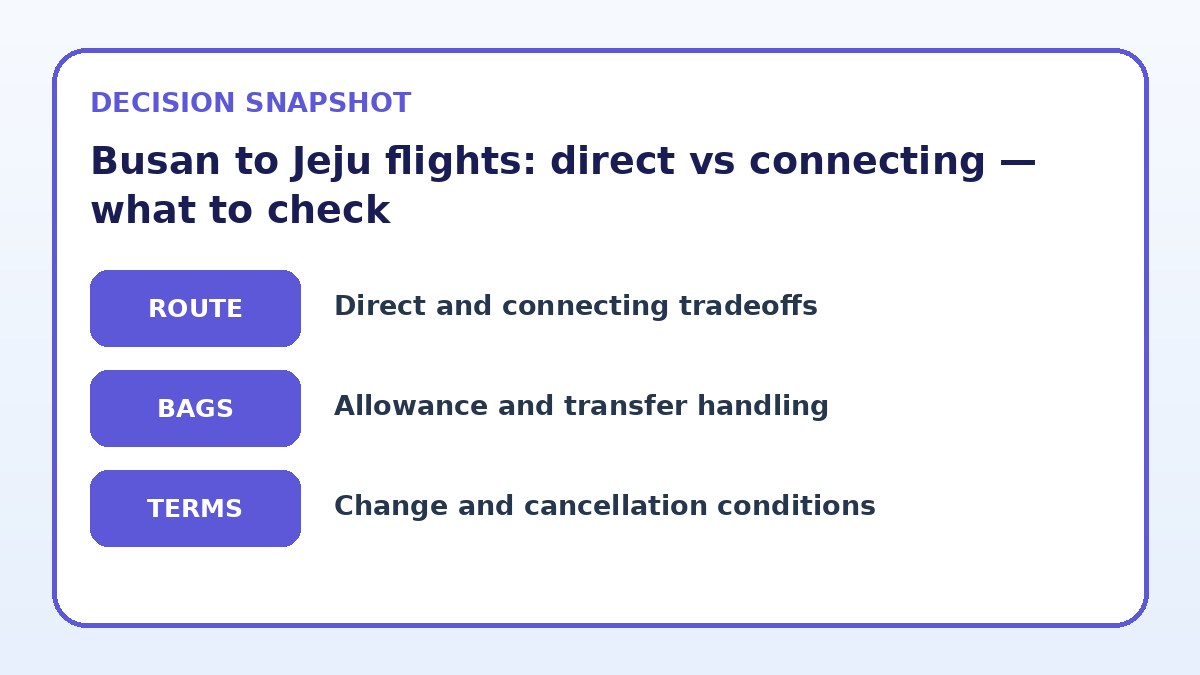
Direct flights between Busan and Jeju are the simplest option for first-time visitors who prefer a predictable journey. Choosing non-stop service means you board once, don’t have to manage an intermediate airport transfer, and avoid the stress of catching a tight connecting flight. That simplicity is especially valuable if you’re carrying checked luggage, traveling with family, or want to minimize transit time so you can start exploring Jeju as soon as possible. On short domestic routes, a direct flight usually translates to more time on the ground at your destination and less chance that delays cascade into missed connections.
Pick direct when your itinerary is fixed and you prioritize reliability over potentially lower fares or greater selection. If weather or operational disruptions are common in the season you travel, direct routing limits exposure to cascading delays that multiply with transfers. Before booking any direct flight, check the carrier’s baggage policy, boarding terminal, and whether the price includes checked baggage if you need it. When specifics might change, confirm them on the airline’s final booking page — that’s the source of truth for what your ticket actually includes.
When connecting flights make sense
Connecting flights become worth considering when direct seats are limited, timing doesn’t align with your plans, or connections open up a meaningful price or routing advantage. For travelers with flexible schedules who don’t mind extra time in transit, a well-planned connection can increase the number of daily travel windows and allow arrival or departure times that better match hotel check-ins, tours, or ferry schedules. Connections can also be useful if you’re combining Jeju with other Korean cities on the same trip and want to consolidate flights into a single international or domestic routing.
To use a connecting itinerary safely, pay attention to minimum connection times, whether luggage transfers are handled through to Jeju, and if the flight segments are on the same ticket. If they are separate tickets, you must plan for baggage recheck and longer layovers to avoid missed onward flights. Verify transfer procedures and terminal changes on the airline or booking platform’s final confirmation page and leave generous extra time for unexpected delays, immigration or security lines, and ground transport between terminals if required.
| Approach | Best for | Tradeoff to check |
|---|---|---|
| Direct flights | Travelers who prioritize speed, simplicity, and minimal transfer risk | Fewer time slots and sometimes higher fares or limited seat availability |
| Connecting flights on one ticket | Those needing more timing options or coordinated multi-city itineraries | Longer total travel time but better protection for missed connections if on same reservation |
| Separate-ticket connections | Flexible travelers seeking lower-cost segments or unusual routings | Higher risk: you must recheck bags and allow large layover buffers for safety |
| Hybrid approach (direct one way, connecting the other) | Visitors balancing convenience outbound with flexible return options or vice versa | More complex planning and attention to differing baggage and change policies |
How to compare options while booking
Start by filtering search results for direct flights so you can see the simplest options at a glance; then compare connecting itineraries only if direct choices don’t meet your needs. When comparing, place equal weight on total door-to-door time and the number and length of connections. A cheaper ticket that eats several hours in a layover may not be worth it if it costs you sightseeing time or adds stress. Check whether the ticketed itinerary includes checked baggage or if it charges extra; the effective total cost can change substantially once baggage and change fees are added.
Other practical comparisons include the layover airport (is it in the same country and easy to transfer between gates?), whether the two segments are on the same reservation, and the cancellation or change policy. If your flight is on multiple carriers, verify through-check baggage and protection for missed connections — airlines are more likely to assist if everything is on one ticket. For live availability and comparisons you can also scan major booking platforms; Trip.com can be useful as one place to compare current options, but always confirm rules and final prices on the operating airline’s page before you complete a purchase.
Before you book
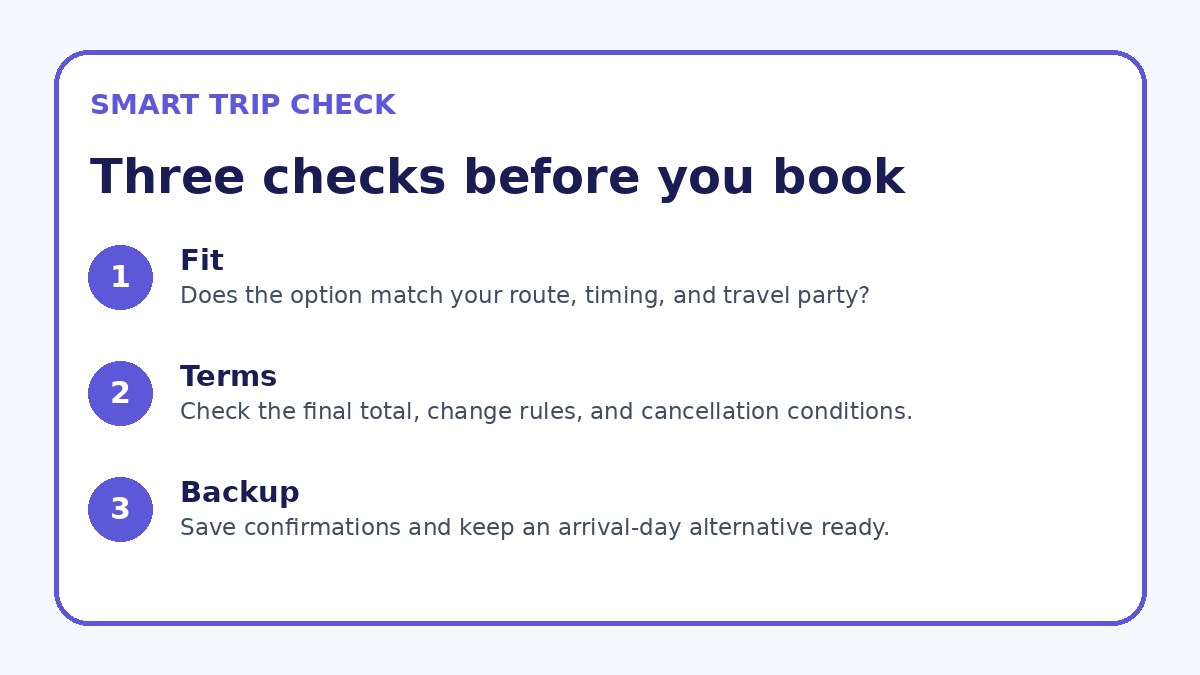
- Filter search results for nonstop flights first, then compare connecting itineraries only if nonstop times don’t fit your schedule.
- Confirm whether baggage is included in the fare and, if not, add checked luggage during booking to avoid surprises at the airport.
- Verify minimum connection times, terminal transfers, and whether the segments are on a single ticket on the airline’s final booking page.
- If booking separate tickets, allow at least several hours for layover, rechecking baggage, and possible terminal transfers.
- Note local ground transport options from Jeju Airport and pre-book a rental car or airport transfer if arriving outside public transport hours.
- Save digital and printed copies of your itinerary and ticket confirmations, and check carrier contact details for reporting baggage problems after arrival.
On-the-ground tips for arriving in Jeju
Once you land in Jeju, local logistics matter: know how you’ll get from the airport to your accommodation, whether you need a rental car for island exploration, and if public buses or taxis match your arrival time. Jeju has a spread of attractions, so plan your first hours with realistic transport time in mind rather than assuming you’ll be able to reach a distant beach or site immediately. If you booked an early morning flight, confirm that rental counters, taxis, or hotel check-in services will be available when you arrive so you don’t end up waiting at the airport.
If your flight required a connection, consider building slack into your schedule the first day on Jeju in case of delay. For arrivals late in the day, pre-book ground transfer or check whether your accommodation runs a shuttle. Keep documentation handy for any luggage transfers promised by the airline, and if anything goes missing, report it at the carrier’s baggage office before you leave the airport. These small checks make the first impression on Jeju smoother and prevent preventable hassles that can mar the start of a short trip.
Frequently asked questions
How long is the flight from Busan to Jeju and does choice of routing affect it?
Flight time for a nonstop flight is relatively short compared with most domestic trips in Korea, but exact block time depends on the operator and conditions. Choosing a connecting route will increase the total travel time substantially because of the additional segment and layover. When comparing itineraries, look at the total elapsed time from scheduled departure in Busan to scheduled arrival in Jeju rather than individual segment lengths. Also verify scheduled times and any minimum connection requirements on the airline’s final booking page before confirming your purchase.
Is it safer to book connecting flights on one ticket versus separate tickets?
Yes — booking connecting segments on the same ticket generally offers more protection: airlines are more likely to rebook you onto a later flight if an earlier segment is delayed and causes a missed connection. Separate tickets mean you are treated as two independent journeys; if the first flight is delayed you may lose the onward reservation and baggage is less likely to be transferred automatically. Always check the reservation status on the booking page and consider travel insurance if you must book separate tickets and want buffer for disruption.
What should I check about baggage rules when comparing direct and connecting options?
Baggage rules can vary by carrier and fare class, and they directly affect convenience and cost. Confirm whether checked bags are included, the size limits for carry-on luggage, and fees for additional pieces on the airline’s final booking page. If your itinerary includes multiple carriers or separate tickets, find out whether the airlines will transfer checked luggage through to Jeju or if you must collect and recheck it during a connection. These details change the practical difference between a fast nonstop and a cheaper-but-messier connecting itinerary.
Final planning note
For first-time visitors deciding how to travel from Busan to Jeju, start by prioritizing what matters most: speed and simplicity typically favor direct flights, while flexibility and broader timing options can justify connections. Compare total door-to-door time, baggage inclusion, and whether segments are on a single reservation. If you opt for a connection, allow generous layover time or book through a single ticket to reduce risk. Before completing any purchase, confirm fare rules, baggage allowances, terminals, and minimum connection times on the airline’s final booking page. Use comparison sites, including Trip.com as one option to view availability, but treat the carrier’s confirmation as authoritative.
Continue planning
Check current options and final conditions
Use the provider page to confirm live availability, the final total, cancellation terms, and every condition that matters to your trip.
This evergreen planning guide was created with AI-assisted drafting and a structured quality review. It does not display live prices, schedules, availability, visa guidance, or provider rankings. Verify current details before booking. Some links are affiliate links; we may earn a commission at no additional cost to you.