If you want the simplest answer: choose a direct flight if you value minimum travel time and a lower chance of disruption; choose a connecting itinerary if you need a cheaper fare, more departure options, or want to include a stopover. For first-time visitors, the right pick depends on how you balance time, risk tolerance, and trip priorities (tight schedules, jet lag, sightseeing, or budget). This article explains the practical tradeoffs, how to compare itineraries, what to check before you book, and which decision approach fits common travel goals. Read the quick points for immediate guidance, then use the deeper sections to map tradeoffs against your specific plan and the checklist to finalize your booking with fewer surprises.
What direct flights offer first-time visitors
Direct flights reduce the number of moving parts in your journey. For a first-time visitor, that simplicity often translates to less stress: no mid-route terminal changes, fewer security checks, and a lower chance your luggage needs to be claimed and rechecked. Direct service usually means you can plan around one departure and one arrival time, which helps if you have fixed ground transfers, early hotel check-ins, or limited time in destination city neighborhoods. If your priority is to maximize time in Auckland and minimize travel fatigue, direct options are typically the most convenient choice.
That convenience comes with tradeoffs you should evaluate. Direct flights may operate on a narrower range of daily departure times, reducing flexibility around your preferred schedule. They can also be priced higher than itineraries with one or more connections, especially outside peak travel patterns. On some days the frequency of direct options may be limited, so if you need a very specific arrival window or want to combine other stops into your trip, a connecting itinerary could still make sense despite the extra handling and transfer steps.
When connecting options make sense
Connecting itineraries are worth considering if your priorities include lower fares, flexible routing, or visiting a second city en route. A single stop can broaden the range of departure times, allow you to take advantage of different carriers’ schedules, or help you match arrival times with late-night hotels or daytime check-ins. If you’re comfortable with managing an airport transfer and building extra buffer into your plans, a connection can turn a single travel day into a multi-city experience or simply open up more affordable fares when direct seats are limited.
But connecting flights add complexity and potential points of failure. You’ll need to account for transfer time between gates or terminals, the possibility of delayed inbound flights, and any additional immigration or security checks that may apply depending on the connection point. If your luggage is not through-checked, you may need to collect and re-check it, which adds time and uncertainty. For first-time visitors who prefer a stress-free arrival, these factors can outweigh the potential savings or routing benefits.
| Approach | Best for | Tradeoff to check |
|---|---|---|
| Direct flights | Travelers prioritizing speed, simplicity and fewer transfer-related risks | Usually fewer schedule choices and sometimes higher fares |
| Short connecting itinerary (longer layover) | Those balancing price savings with manageable transfer time | Longer total travel time but lower stress than tight connections |
| Tight single-connection itinerary | Experienced travelers on a strict budget and confident in quick transfers | Higher risk of missed connections and potential baggage hassles |
| Multi-stop or overnight stopover | Travelers wanting a break in the journey or to visit a second city | Adds planning complexity and extends total trip duration |
How to compare itineraries practically
Compare total door-to-door travel time, not just time in the air. Add estimated journey time to the Sydney airport from your origin, suggested airport arrival buffer, connection layover, and transfer time at your destination to get a realistic picture of the full trip. Look at different departure windows across carriers and alliance partners, and check whether the booking page explicitly shows whether luggage is transferred through or must be collected. Pay attention to minimum connection times listed by the airline or airport and allow extra margin for delays when the itinerary is tight.
Also compare change and refund policies, seat selection and baggage charges, and whether you’ll need visas or transit documents for any stopover. If two itineraries have similar prices, prefer the one with clearer protection for missed connections or fewer fees for minor changes. When a booking platform or airline page lists protection for missed connections, read the fine print to understand what is covered. You can use Trip.com or carrier websites to verify current availability and terms, but always confirm the final details on the airline’s booking or support pages before completing payment.
Before you book
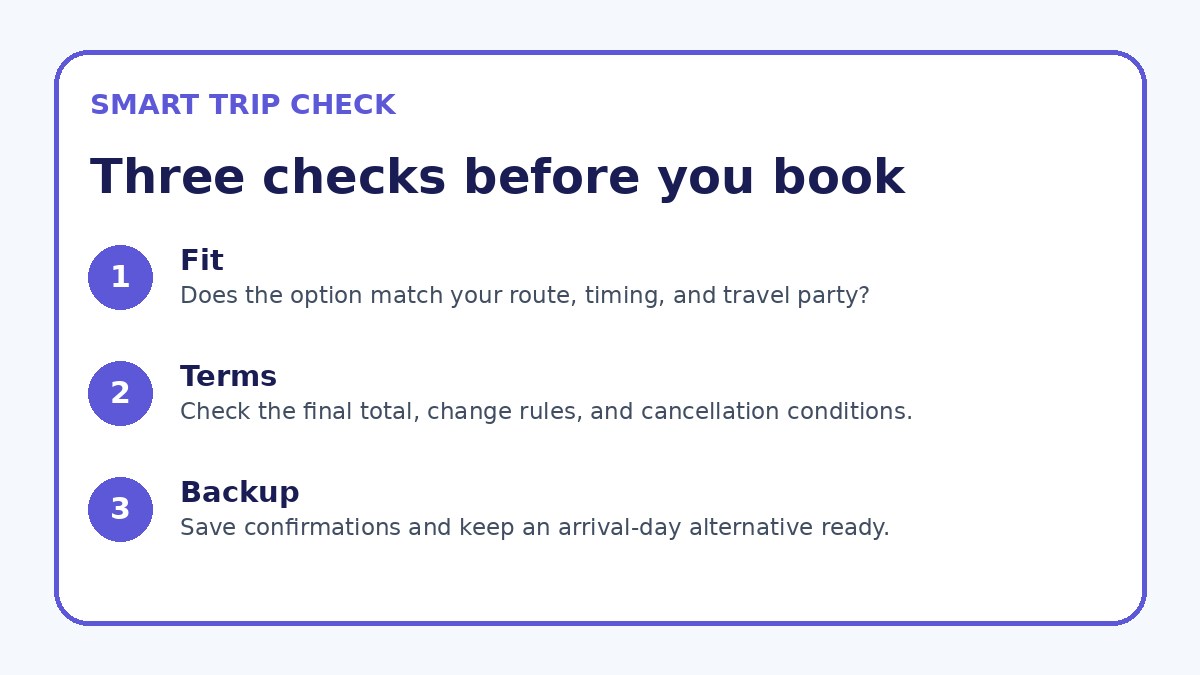
- Calculate door-to-door time: add travel to Sydney airport, recommended pre-flight check-in, flight durations, connection buffers, and transfer to accommodation in Auckland.
- Confirm whether baggage is checked through to the final destination or needs to be collected and rechecked at the connection airport.
- Verify minimum connection times and terminal change requirements on the airline or airport information pages when considering connecting itineraries.
- Compare cancellation, change, and missed-connection policies on the airline’s official booking page before committing to purchase.
- Check seat selection availability and extra fees (baggage, preferred seats) so you can compare true total cost across itineraries.
- If connection is tight, choose seats toward the front and download terminal maps so you can move quickly between gates if needed.
Decision criteria and risk management
Make a decision based on your tolerance for tight schedules and the purpose of the trip. If you’re traveling to Auckland for an event with a fixed start time, a direct flight or a connection with generous layovers reduces the chance of missing your commitment. For leisure trips with flexible arrival dates, a connecting itinerary that saves money or adds an extra stop could be appealing. Consider personal factors such as whether you travel well after a long flight, whether you need sleep first on arrival, or whether you want to arrive in daylight to navigate unfamiliar transit and neighborhoods more easily.
Plan contingency measures regardless of which option you choose. Allow at least one to two hours extra buffer for unexpected delays when booking ground transfers or tours on arrival. Consider travel insurance that covers missed connections and check whether your credit card or airline ticket includes rebooking assistance. If a connection is very tight, pick seats near the front of the aircraft or select carriers that operate within the same terminal where possible to shorten transfer walks and security queues.
Frequently asked questions
Are direct flights always faster door-to-door between Sydney and Auckland?
Direct flights remove the need for an intermediate stop, which usually shortens airborne time and the number of security and boarding steps. However, door-to-door speed depends on how far you are from each airport, the time you need to arrive before departure, and ground transfers on arrival. A connecting itinerary with an early departure and a well-timed layover might still get you to your final address at a comparable time in some circumstances. Always calculate the full door-to-door timeline for each option rather than judging by flight duration alone.
How much layover time should I allow if I pick a connecting flight?
Allow at least the airline’s published minimum connection time plus an extra buffer for potential delays, security lines, and walking between gates or terminals. If you must clear immigration or collect and recheck bags, add more cushion. For first-time visitors or those not confident with airport navigation, err on the side of longer layovers to reduce stress. Check the connection recommendations on the airline and airport pages and remember that shorter layovers increase the risk of missed connections, especially during peak periods.
What should I verify on the carrier or booking page before payment?
Confirm baggage allowance and whether that allowance applies across all legs, read the ticket’s change and refund rules, and check if the fare includes protection for missed connections. Look for details about terminal transfers and whether luggage is through-checked. If the booking involves separate tickets, understand that airlines may not be responsible for missed subsequent flights. Finally, check contact methods for the carrier’s customer service in case you need rebooking assistance after delays.
Final planning note
For first-time visitors deciding between direct and connecting Sydney to Auckland flights, the simplest rule is: choose direct for minimal complexity and quicker door-to-door travel, and choose connections when schedule flexibility, lower fares, or stopover opportunities matter more. Weigh total trip time, luggage handling, and the protection that the carrier or fare type provides for missed connections. Use the checklist to confirm baggage rules, connection times, and cancellation or change policies on the airline’s final booking page. If you want a quick way to see current options, you can check availability on platforms like Trip.com and then verify everything on the airline’s own page before paying.
Continue planning
Check current options and final conditions
Use the provider page to confirm live availability, the final total, cancellation terms, and every condition that matters to your trip.
This evergreen planning guide was created with AI-assisted drafting and a structured quality review. It does not display live prices, schedules, availability, visa guidance, or provider rankings. Verify current details before booking. Some links are affiliate links; we may earn a commission at no additional cost to you.