Practical answer up front: if you value speed and simplicity, a direct flight from Paris to Rome is usually the best choice for first-time visitors; if you need a cheaper fare, want a specific schedule, or plan to stop briefly en route, a single-connection option can make sense. Before you book, weigh total door-to-door time, luggage rules, connection minimums, and the stress of tight layovers. First-timers should also consider which airports you’ll use in Paris and Rome, how you’ll reach the city from the airport on arrival, and whether a connection requires you to change terminals or recheck bags. Below you’ll find clear trade-offs and decision criteria so you can choose confidently based on your priorities—time, cost, flexibility, or comfort.
Speed and convenience: why direct flights matter
For first-time visitors the most tangible benefit of a direct Paris to Rome flight is reduced travel complexity. You deal with check-in once, pass security in Paris, board a single aircraft, and arrive without the headache of an enforced transit. That matters especially if you are jet-lagged, traveling with young children, have limited mobility, or are carrying fragile items. Fewer touchpoints also reduce the number of things that can go wrong—no missed connecting gates, no last-minute terminal sprints, and fewer chances of luggage delays when everything is on one itinerary.
Direct options also help with planning arrival logistics in Rome. With a single arrival time you can pre-book airport transfers, know when to check into your accommodation, and plan your first afternoon or evening with confidence. If your time in Italy is short and you intend to maximize sightseeing, the minutes saved by skipping a connection quickly add up. That said, direct flights sometimes operate at less convenient times or cost more, so it's worth comparing them against connecting itineraries if budget or schedule flexibility is a priority.
When connecting flights make sense
Connecting flights can be smart when direct service is limited, more expensive than your budget allows, or when it opens a useful daytime departure or arrival window. A single connection often increases available flight times and airline choices, which can be valuable if your travel dates are fixed or you want to arrive in Rome at a specific hour. If you’re planning a stopover in a second city and want to stretch the journey into a mini-visit, intentionally booking a longer connection lets you explore without buying separate tickets—just confirm visa or transit rules before leaving the airport.
However, connecting itineraries require extra attention to layovers, ticket types, and baggage rules. On a single ticket with a protected connection the airline usually handles missed flights and transfers your checked baggage, but if you book two separate legs you may need to collect and recheck luggage and clear exit/entry formalities. Also check minimum connection times for the airports involved and whether a terminal change requires you to navigate shuttle buses or long walks—these elements can turn a cheap itinerary into a stressful one if not checked in advance.

| Approach | Best for | Tradeoff to check |
|---|---|---|
| Direct flights | Travelers prioritizing simplicity, minimal transfer risk, and faster door-to-door time. | Often fewer schedule choices and sometimes higher fares compared with connecting options. |
| Single-connection itineraries (same ticket) | Travelers seeking lower fares or specific departure/arrival windows with some protection for missed connections. | Longer total travel time and potential terminal changes, but airlines usually handle baggage transfer. |
| Two separate tickets (independent legs) | Flexible planners who can absorb risk for lower cost or who want to combine carriers not partnered together. | You must recheck bags and accept responsibility for missed connections; allow large buffers between flights. |
| Connections with intentional stopovers | Travelers wanting to add a mini-break to their journey and see an extra city en route. | Requires careful visa/transit checks and more logistic planning; can extend total trip time significantly. |
Key factors to compare before you book
Always compare total door-to-door travel time rather than focusing only on airborne time. Add travel to and from airports, recommended check-in and security time, connection buffers and likely taxi or train time into the city. Also compare different Paris airports—some travelers depart from Charles de Gaulle while others use Orly—and Rome has multiple arrival options too; the choice affects ground transfers and journey time to your accommodation. Use consistent assumptions when comparing itineraries so you’re evaluating like for like.
Beyond time, check baggage policies and whether carry-on-only fares actually work for you. Low-cost connecting fares sometimes require buying separate allowances or paying for checked bags that are not included, and fees can erase any apparent savings. Verify whether the itinerary is on a single ticket (which typically includes protection for missed connections) or two separate tickets (which can leave you responsible for missed onward flights). Finally, check visa rules, transit requirements, and whether changing terminals in either city requires extra security or customs steps.
Before you book
- Confirm which Paris airport you’ll depart from and which Rome airport you’ll arrive at before comparing ground transfer times.
- Add estimated travel time to and from each airport plus recommended airport arrival buffers to compute true door-to-door time.
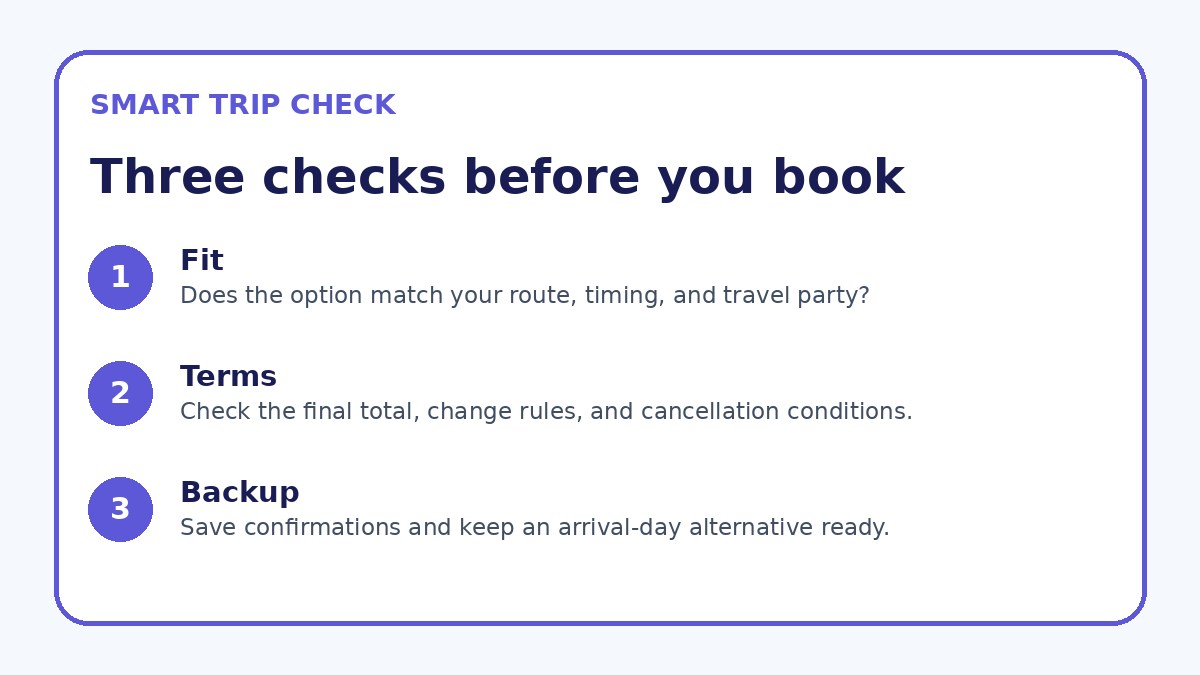
- Check whether your fare is sold on a single ticket or two separate tickets and what that means for baggage transfer and missed connections.
- Verify baggage allowances and fees for each flight segment on the carrier’s final booking page before completing purchase.
- If your itinerary includes a connection, confirm terminal change details and minimum connection time recommended by the airport.
- Review change, cancellation, and delay protections in your ticket and consider travel insurance or a refundable fare if you need flexibility.
Practical booking tips and what to verify
When you find an itinerary you like, verify a few things on the provider’s final booking page before you pay. Confirm total travel time, exact terminal information for departures and arrivals, whether your connection is protected under a single ticket, and the baggage allowances and fees for each fare. If the trip involves a transfer between airports, confirm recommended transfer times and transport options—the time needed can be substantial even when distances seem short on a map.
Also check change and cancellation policies so you know how flexible the booking is if plans shift, and verify whether your credit card or travel insurance covers missed connections or delays. If you plan to use a low-cost carrier, consider booking a slightly longer connection to reduce stress. Finally, you can compare current availability and conditions on platforms such as Trip.com, but always confirm the flight operator’s information on the airline’s own site before finalizing the purchase.
Frequently asked questions
How much extra time should I allow for a connection between Paris and Rome?
Allow at least 90 to 120 minutes for a domestic-style international connection when on a single ticket, more if changing airports or switching between low-cost carriers. This buffer covers deplaning, transit between gates or terminals, security rechecks, and possible minor delays. If you booked separate tickets, double your minimum buffer since you may need to collect luggage, possibly clear customs, and check in again. Check the specific airports’ recommended minimum connection times and add time for travel between airports if applicable.
Will my luggage be transferred automatically on connecting flights?
If both flight legs are booked on the same ticket with carriers that have interline or alliance agreements, checked luggage is typically transferred automatically. If you book separate tickets or travel on independent low-cost carriers, you will likely need to collect and recheck baggage, which requires extra time and potentially additional fees. Always confirm the baggage transfer policy on the final booking page and ask the airline at check-in if your bags will appear on the final Rome itinerary.
What should first-time travelers prioritize when choosing between direct and connecting options?
First-time travelers should prioritize simplicity and predictability: direct flights reduce logistical stress and are easier to plan around ground transport and check-in times. If budget constraints or desired arrival times matter more, a single, protected connection can be a good compromise—just ensure sufficient layover time and clear baggage rules. If considering split tickets or purposeful stopovers, factor in visa/transit rules and accept more planning complexity. Ultimately choose the option that aligns with your comfort level for transfers and your tolerance for travel risk.
Final planning note
Choosing between a direct Paris to Rome flight and a connecting option depends on what you value most: speed and simplicity, or cost and schedule flexibility. For first-time visitors who prefer fewer unknowns and a straightforward arrival, direct service usually reduces stress and lets you start exploring sooner. If you’re willing to trade time and some complexity for a better fare or a specific arrival time, a single-connection itinerary can work well—provided you confirm baggage transfer rules and allow adequate layover time. Carefully compare total door-to-door time, terminal logistics, and ticket protections on the airline’s booking page before you buy, and use the checklist above to lock in a plan that suits your travel priorities.
Continue planning
Check current options and final conditions
Use the provider page to confirm live availability, the final total, cancellation terms, and every condition that matters to your trip.
This evergreen planning guide was created with AI-assisted drafting and a structured quality review. It does not display live prices, schedules, availability, visa guidance, or provider rankings. Verify current details before booking. Some links are affiliate links; we may earn a commission at no additional cost to you.