If you’re traveling from Tokyo to Osaka for the first time, the single most useful decision you’ll make is where and how to transfer between stations and terminals. Whether you take the Shinkansen from Tokyo Station or Shinagawa, a long-distance bus from Shinjuku or Tokyo Station, or combine local trains and metro lines for budget options, knowing the exact transfer points and how to navigate them saves time and stress. Start by deciding whether you prioritize speed, cost, luggage ease, or simpler station layouts. Then compare door-to-door walking times, the number of platform changes, and luggage handling options at each potential transfer station. This article gives practical steps to plan transfers, the tradeoffs between main choices, and a printable checklist so you can compare options before you book.
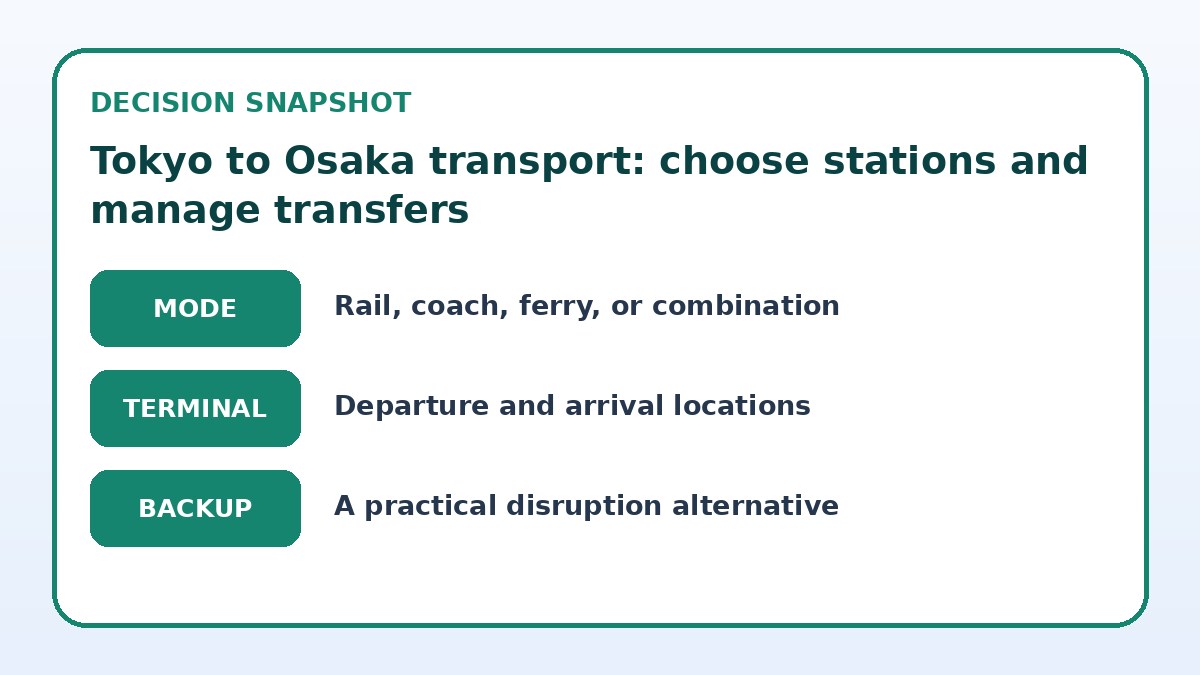
See current options before you compare the details
Availability and final conditions change. Open Trip.com now or keep reading for the practical comparison.
Choose your transfer hub in Tokyo
Tokyo offers several viable departure hubs; your choice changes how many transfers you encounter. Tokyo Station is the main national rail hub with direct Shinkansen platforms, but its sprawling concourses and multiple exits can increase walking time. Shinagawa is a more compact alternative for many Shinkansen services and often shortens platform-to-street transfers. Shinjuku and Ikebukuro are easier if you’re staying on the west side of the city and prefer fewer metro changes, though they may require an extra direct transfer to reach a Shinkansen departure or a long-distance bus terminal.
To decide, map the door-to-door route from your accommodation to each candidate station and compare the number of transfers and walking distances. Consider luggage: stations with elevators, luggage delivery counters, or dedicated baggage services reduce hassle. If you’re carrying oversized bags, choose the station with the simplest platform layout even if it adds a short travel leg. Finally, check how each hub links to your chosen Osaka arrival point—direct Shinkansen to Shin-Osaka or surface trains to Osaka/Umeda—and whether that final connection fits your onward plans.
Pick the right arrival terminal in Osaka
Osaka has multiple stations that serve different needs. Shin-Osaka is the Shinkansen terminus for intercity high-speed services and is ideal when you value shortest travel time and straightforward transfers to onward trains. Osaka Station (Umeda complex) sits in the city center and provides more direct access to hotels and city destinations, but reaching it from a Shinkansen requires a short transfer by local train or subway. Kansai International Airport also factors in when planning onward international flights; choosing an arrival that minimizes additional transfers to the airport matters if you have tight connections.
Match your arrival station to what comes next: if you’re headed to central hotels, the extra transfer from Shin-Osaka to Umeda may be worth the marginal time loss; if you need to continue by bullet train or are tight on time, aim for Shin-Osaka. For travelers with heavy luggage, review station layouts for elevators, escalators, and luggage lockers. If you plan onward travel to the Kansai area by local lines, check which Osaka terminal offers the best direct connections or simplest single-transfer options to reduce complexity.
| Approach | Best for | Tradeoff to check |
|---|---|---|
| Direct Shinkansen to Shin-Osaka | Travelers prioritizing speed and fewer transfers | May require longer walk at departure station and possible extra local transfer into central Osaka |
| Depart from Shinagawa instead of Tokyo Station | Passengers seeking shorter station navigation and fewer concourse walks | Depends on your accommodation location; may add a local leg to reach Shinagawa |
| Surface trains and regional express connections | Budget-conscious travelers willing to accept more transfers | More platform changes, longer travel time, and greater luggage hassle |
| Long-distance overnight or daytime buses | Those prioritizing cost savings or late-night departures | Lower cost often means longer journey times, potentially awkward terminal transfers, and fewer luggage services |
Ready to check the option that fits your plan?
Use your exact dates and traveler details so the provider page can show the current total and conditions.
Transfer logistics: walking times, platforms, and luggage
Estimating realistic transfer time is essential. Large stations have long corridors, escalators, and sometimes multiple levels; a 'short' transfer on a map can be a 10–20 minute walk with luggage. Allow extra time for ticket gates, ticket pickup, and navigating signage in busy hours. If you have reserved seats on a high-speed train, you’ll usually need to arrive at least 10–20 minutes before departure to find your platform and stow luggage. Also account for the time it takes to switch from a long-distance platform to local metro lines, which can require exiting and re-entering through different gates.
Luggage choices change transfer difficulty: rolling suitcases are better on smooth station concourses, while backpacks and soft bags are easier on crowded escalators. Many travelers use luggage forwarding services between hotels in Japan to avoid dragging large suitcases through stations—consider this if several transfers are involved. If you keep your luggage with you, check platform access rules for bike or oversized items and identify elevators on station maps beforehand. Always verify any baggage restrictions or recommended arrival windows directly with the rail operator or booking site before finalizing travel plans.
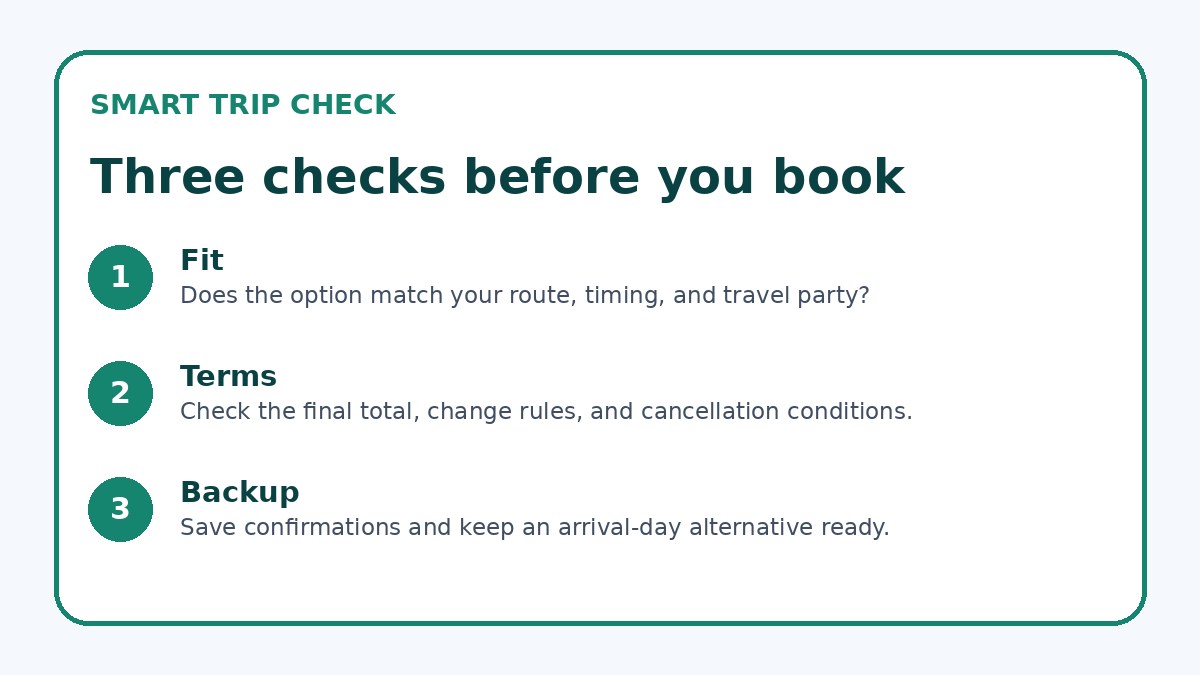
Before you book
- Map door-to-door walking times from your accommodation to each candidate departure station and to your final Osaka arrival point.
- Check elevator/escalator locations and luggage locker availability on the station maps for both departure and arrival terminals.
- Confirm reserved seat and baggage rules on the operator’s official booking page before purchasing any ticket.
- Allow buffer time for finding platforms, gates, and ticket counters—add at least 20 minutes for large stations.
- If you have oversized luggage, arrange hotel-to-hotel luggage forwarding or choose a station with easy elevator access.
- Compare door-to-door total travel time and number of platform transfers, then pick the route that matches your priority weights.
How to compare direct and connecting options
When comparing options, list each route’s number of transfers, total door-to-door door walking time, and the complexity of each transfer. A direct Shinkansen from Tokyo or Shinagawa to Shin-Osaka offers minimal transfers and predictable timing, but surface trains and buses require tradeoffs: fewer monetary costs versus more platform changes and longer walking. For budget itineraries that combine local trains, account for seat availability and comfort on peak trains; standing for long periods and managing luggage during multiple platform changes can make a cheaper trip more stressful.
Use a simple scoring approach: assign weights to priorities (time, cost, luggage ease, simplicity), then score each candidate route. Always verify final train platform assignments, baggage rules, and seat reservation details on the operator’s booking page before committing. You can consult Trip.com for a quick comparison of current availability and conditions, but double-check the operator’s website for the latest train times, platform information, and luggage services to make an informed choice.
Frequently asked questions
Should I prefer Shin-Osaka or Osaka Station when I arrive?
Pick Shin-Osaka if your priority is a direct high-speed arrival with the fewest intercity transfers—ideal if you plan continued rail travel. Choose Osaka Station (Umeda) if your hotel or main activities are in central Osaka because it reduces last-mile transfers into the city center. Consider luggage and station layouts: Shin-Osaka is built for intercity flow, while Umeda is denser with many exits. Before you buy tickets, verify which station minimizes your actual walking and transfer time from platform to accommodation.
How much time should I allow for transfers inside large stations?
In major Tokyo and Osaka stations, allow at least 15–30 minutes to move between ticket gates and platforms, more if you have heavy luggage or unfamiliarity with the station. Factor in extra time during peak commuting hours when concourses and escalators are crowded. If your itinerary includes a connection on a different operator or level, add another 10–20 minutes to pass through gates and locate the departing platform. For reserved-seat departures, aim to arrive early enough to locate your car and stow luggage comfortably.
Can I check platform or seat details before I book?
You can often view platform, train type, and seat reservation options on the rail operator’s official website or booking platform, but platform assignments sometimes change shortly before departure. Always confirm seat reservation availability and any baggage allowances on the operator’s final booking page before purchase. For a quick availability check across suppliers, Trip.com is an optional resource, but treat operator pages as the authoritative source for platform and seat details.
Final planning note
Planning Tokyo to Osaka transfers is mainly about aligning priorities—speed, cost, luggage ease, and simplicity—with the right stations. Decide which matters most, map door-to-door times, and compare the number of platform changes and the availability of elevators or luggage services at each station. Use a simple scoring approach to weigh your priorities, and always confirm seat reservations, baggage rules, and platform assignments on the operator’s booking page before you finalize tickets. With modest advance planning, you can turn what feels like a complex network of terminals into a straightforward, stress-free transfer that fits your travel style.
Continue planning
Check current options and final conditions
Use the provider page to confirm live availability, the final total, cancellation terms, and every condition that matters to your trip.
This evergreen planning guide was created with AI-assisted drafting and a structured quality review. It does not display live prices, schedules, availability, visa guidance, or provider rankings. Verify current details before booking. Some links are affiliate links; we may earn a commission at no additional cost to you.