For most couples, the practical question when booking Seoul to Busan flights is simple: do you value maximum convenience and fewer hassles, or are you willing to accept an extra connection to save time, money, or access a preferred schedule? The straight answer: if you want the least fuss and fastest door-to-door travel, prioritize direct flights; if you’re flexible and want more schedule or price options, compare connecting itineraries carefully. Couples should decide together which tradeoffs matter—total travel time, airport transfers, luggage handling, seat selection and the chance to sync with arrival plans. Below I explain how to compare direct and connecting options side-by-side, what to check on the airline’s booking page, and how to make the choice that fits your relationship priorities and travel style.
See current options before you compare the details
Availability and final conditions change. Open Trip.com now or keep reading for the practical comparison.
How direct vs connecting flights differ for couples
A direct flight keeps your journey simple: one boarding, one security pass (if already airside), and fewer points where something can go wrong. For couples, simplicity means fewer decisions under stress—less time splitting up to manage bags, and no need to worry about rechecking luggage or navigating a busy transfer terminal together. Direct flights are often the best fit when you have a short trip window, a tight schedule on either end, or when one partner prefers to avoid the added movement and unpredictability that come with connections.
Connecting flights can increase choices and sometimes save money or match specific departure/arrival times not offered nonstop. For two travelers that don’t mind the extra step, a connection can allow you to travel at more desirable hours, combine two low-cost segments, or fly with a carrier that offers better seat configurations or loyalty benefits. The tradeoffs include transfer complexity, longer overall travel time, and the possibility that a delay on the first leg affects both of you—so build buffer time and understand how the itinerary handles missed connections.
Key factors couples should compare before booking
Start by comparing total door-to-door travel time, not just airborne time. Include transport to and from airports, estimated wait at security, and connection windows. Couples should also look at seat availability together—can you guarantee adjacent seats on both legs? Confirm whether both tickets allow seat selection on the same reservation; split reservations can force separate seat assignments. Consider sleep comfort: evening nonstop flights let one partner nap without the interruption of a transfer; connecting schedules may fragment rest and increase stress.
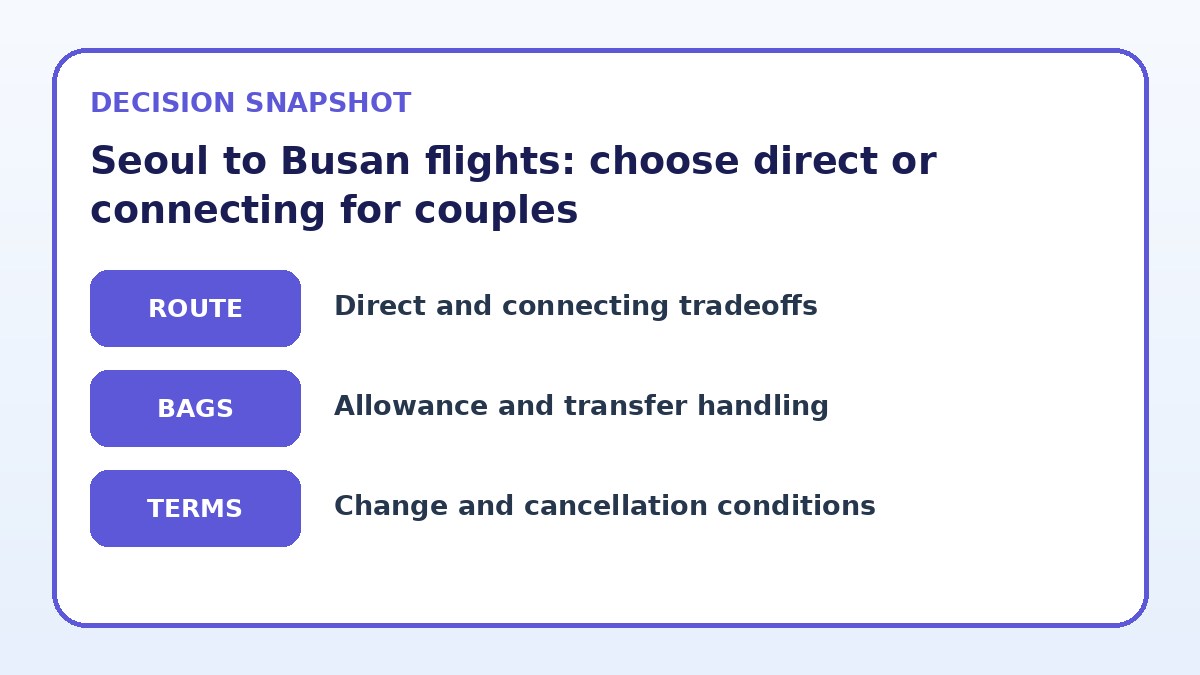
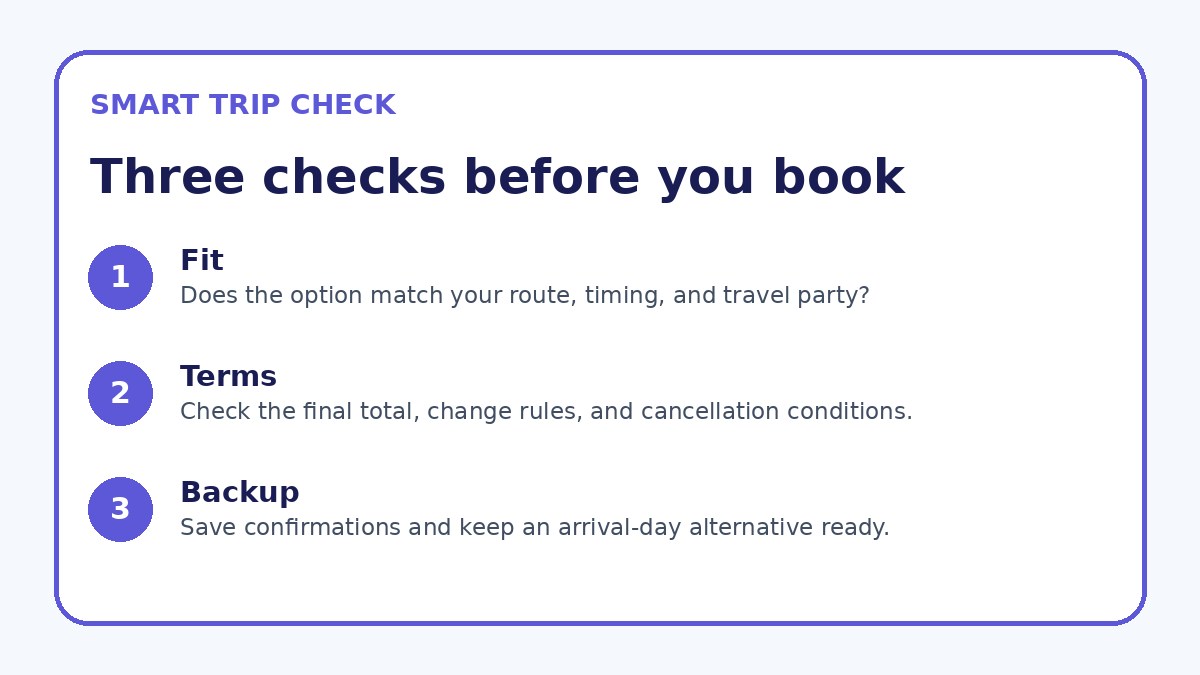
Next, check baggage rules and transfer handling: does the same carrier or alliance transfer checked baggage automatically, or will you need to collect and recheck bags? For couples with one checked bag and one carry-on, the logistics differ from two checked bags. Verify change and cancellation terms for the whole itinerary, especially if you’re combining different airlines. Finally, think about contingency plans—what happens if you miss a connection? Prefer itineraries that offer protected connections or same-ticket coverage, and confirm this on the airline’s or broker’s final booking page.
| Approach | Best for | Tradeoff to check |
|---|---|---|
| Direct flights | Couples who prioritize simplicity, minimal transfers, and shorter door-to-door time. | Fewer schedule variants and possibly higher fares or less flexibility in departure times. |
| Connecting flights | Couples seeking more schedule options or potential cost savings and are flexible with transfers. | Longer travel time, more transfer complexity, and higher disruption risk if delays occur. |
| Hybrid approach (outbound direct, return connecting) | Couples wanting a smooth arrival and more flexible return options to fit plans. | Requires juggling different ticket rules and confirming baggage transfer on the connecting leg. |
| Same-ticket connections vs separate bookings | Same-ticket for protection and easier baggage transfer; separate bookings for maximizing low-cost options. | Separate bookings increase the risk of missing independently purchased connections without carrier protection. |
Ready to check the option that fits your plan?
Use your exact dates and traveler details so the provider page can show the current total and conditions.
Practical decision criteria tailored to couples
Use these relationship-focused questions to decide: Do you prefer minimizing stress and transitions, or saving money and maximizing time options? Are both partners equally mobile and comfortable navigating busy transfer hubs? If one partner needs predictable, low-activity travel (for health, motion sickness, or anxiety), a nonstop flight likely provides a better experience. If both of you enjoy a little flexibility and the itinerary keeps convenient connection times, a connecting option can unlock more departure choices and possibly better seat types.
Also weigh timing against plans in Busan: an earlier nonstop arrival may give you more afternoon to explore together, while a cheaper connecting option might push arrival late and require a night of focused recovery. Consider how you’ll split responsibilities at transit points—who manages bags, who checks navigation—and whether you want to book seats that let you sit together or cuddle during the flight. These social and comfort choices matter more on short domestic routes than purely financial comparisons.
Before you book
- Confirm both passengers are on the same reservation so you can choose seats together and simplify changes.
- Verify whether checked baggage is included and whether it transfers automatically between legs.
- Compare total door-to-door time including airport transfers, security, and connection buffers.
- Check minimum connection times and whether terminal changes require leaving and re-clearing security.
- Review change, cancellation and missed-connection policies on the airline’s final booking page.
- Reserve seats as early as possible and confirm any special assistance or meal requests with the operating carrier.
Booking tips and what to verify before you confirm
Before pressing buy, read the carrier’s final booking page carefully and verify a few facts: whether checked baggage is included and moved between legs, whether both passengers are on the same reservation for seat selection, and the minimum connection time allowed. When using third-party sites, cross-check the itinerary on the operating airline’s site so you can confirm policies directly. Trip.com can be a convenient place to compare current availability and conditions, but always verify final baggage, change and check-in rules on the airline’s page before payment.
For connecting itineraries, leave comfortable buffers between legs—especially if you need to change terminals or re-clear security. If you have time-sensitive ground plans on arrival, choose an itinerary with an early guaranteed arrival window and consider travel insurance or flexible tickets if your schedule is fixed. Finally, pick seats together as early as allowed, and confirm special requests (extra legroom, meal needs, or assistance) directly with the operating carrier so the airline can accommodate both travelers reliably.
Frequently asked questions
Is a nonstop flight always the fastest option between Seoul and Busan for couples?
A nonstop flight is typically the fastest airborne option, but total door-to-door time depends on airport transfers and check-in. If your nearest airport or travel to and from terminals is quicker for a connecting route, a well-timed connection could match or beat a nonstop schedule. For couples, also include the time it takes to manage luggage and move together through the airport. Compare the full journey time and practical ease—nonstop usually wins for simplicity, but verify ground travel and connection logistics before you decide.
How much connection time should couples leave between flights?
Aim for a comfortable buffer rather than the absolute minimum; that usually means leaving extra time for baggage transfer, walking between gates or terminals, and a bite to eat. If you must re-clear security or collect and recheck luggage, add significantly more time. If the itinerary is on the same ticket and the airline guarantees the connection, you can be more conservative, but when tickets are separate, build a larger cushion. Check the airline’s stated minimum connection time and add at least 30–60 minutes for personal comfort when booking as a couple.
What are the main risks couples face with separate bookings for each leg?
With separate bookings, each ticket is treated independently: if the first airline is late and you miss the second flight, the second carrier is not obligated to rebook you for free. This can leave you paying for a new ticket or long rebooking waits. Separate bookings can also complicate baggage transfer—often you must collect and recheck bags between flights. For couples, this increases stress and coordination needs; if you choose separate tickets to save money, plan longer transfer times and have contingency funds or flexible options ready.
Final planning note
Choosing between direct and connecting Seoul to Busan flights as a couple comes down to prioritizing convenience versus flexibility. Direct flights minimize transitions, making coordination and travel-day stress easier to manage—ideal when you want a smooth arrival and more predictable timing. Connecting itineraries expand options and sometimes lower costs, but they require more planning, longer transfers, and contingency thinking. Discuss your priorities together, verify baggage and seat policies on the airline’s booking page, and choose the itinerary that best matches both partners’ comfort levels and on-the-ground plans in Busan. With a little advance checking and seat coordination, either approach can fit a memorable couple’s trip.
Continue planning
Check current options and final conditions
Use the provider page to confirm live availability, the final total, cancellation terms, and every condition that matters to your trip.
This evergreen planning guide was created with AI-assisted drafting and a structured quality review. It does not display live prices, schedules, availability, visa guidance, or provider rankings. Verify current details before booking. Some links are affiliate links; we may earn a commission at no additional cost to you.