If you’re arriving in Tokyo late at night and traveling alone, pick your airport transfer and first-night neighborhood so you can get from the terminal to a safe, convenient base with minimal stress. The practical approach: choose between a direct pre-booked airport transfer or a planned public-transport route that ends near a well-lit, 24-hour-access accommodation. Reserve a hotel or capsule with 24-hour check-in or clear late-check policies, know which terminal you land at, and have a fallback plan in case of delays. Decide whether you want the convenience of a door-to-door option, the cost savings of trains and airport buses, or the combination of a late-night train plus a short taxi for the last mile. Below are the tradeoffs, decision tips, and a checklist to help you compare routes and book confidently.
See current options before you compare the details
Availability and final conditions change. Open Trip.com now or keep reading for the practical comparison.
Deciding your priority: speed, cost, or simplicity
First pick what matters most to you after a long flight: being in your room quickly, keeping costs low, or avoiding transit changes and walking with luggage. A direct, pre-arranged transfer scores highest for speed and simplicity because it reduces navigation in an unfamiliar city. It also minimizes interaction late at night when you may be tired. However, direct transfers can be less flexible if your arrival time shifts; verify cancellation and change policies on the provider’s booking page before you finalize. For solo travelers, peace of mind often outweighs small savings.
If budget is the main constraint, public transit or late-night airport buses are typically cheaper than private transfers but require more navigation and may have limited late-night schedules. Also consider mixed approaches: take an overnight bus to a major station and a short taxi for the last leg. Weigh how comfortable you are carrying, storing, or wheeling luggage across platforms and up stairs. Factor in transfer time, number of changes, and how tired you’ll be when deciding.
Choosing the right arrival terminal and transfer type
Tokyo has multiple international airports and terminals; where you land affects your transfer choices and available late-night services. Check which terminal your carrier uses and whether your flight could be routed through another airport or terminal—compare direct and connecting flight options if offered. For each terminal, look up official transport pages and up-to-date timetables on the provider’s site before booking. If a timetable or service frequency could alter your plan, have a second option that doesn’t require precise timing, such as a taxi or 24-hour transfer.
When comparing transfer modes, match them to your arrival time: some trains stop running well before midnight while airport buses may have later services but fewer pickup points. If your arrival is after public transport ends, prioritize options that still run overnight, or confirm that a taxi or private shuttle can pick you up at your terminal. Always verify real-time service status on the operator’s final booking page or official transport websites, and consider using Trip.com or similar platforms for a quick comparison of current availability and booking terms.
| Approach | Best for | Tradeoff to check |
|---|---|---|
| Pre-booked private or shared transfer | arrivals late at night who want door-to-door service and minimum navigation | less flexibility with schedule changes and often higher cost compared with public transport |
| Public train or metro plus short taxi | travelers comfortable with transit who want to balance cost and convenience | requires more navigation and may fail if trains stop running near your arrival time |
| Night bus to major station | those prioritizing lower cost and direct station access for onward travel | fewer routes and stops; may leave you with a longer last-mile walk at night |
| Direct taxi or ride-hail from terminal | solo travelers who prefer simplicity and immediate departure regardless of time | usually the most expensive option and subject to traffic and drop-off regulations |
Ready to check the option that fits your plan?
Use your exact dates and traveler details so the provider page can show the current total and conditions.
Picking a neighborhood and type of accommodation
For a first night after a late arrival, choose a neighborhood with easy connections to your planned activities the next day. Areas near major stations—where multiple lines converge—reduce morning transfers and give you route flexibility. Seek hotels or capsule accommodations that explicitly offer 24-hour reception or late check-in instructions so you don’t have to coordinate tight arrival windows. Look for properties with luggage storage, clear entry procedures, and accessible entrances; these details are important when arriving tired and solo.
If you value quick exits and minimal navigation, book near the station you’ll use for onward travel. If you want a quieter first night, select neighborhoods a short taxi ride from central stations. Check recent guest notes about late check-in and safety; when provider-specific facts might change, verify the property’s late-arrival policy, reception hours, and key-collection procedures on the official booking page. Avoid assuming late check-in is available without confirmation, and save the property’s contact details to text or call on arrival if needed.
Before you book
- Confirm which airport terminal your flight will use and save the terminal name and map in your phone.
- Book accommodation with explicit 24-hour reception or clear late-check procedures and save the contact number.
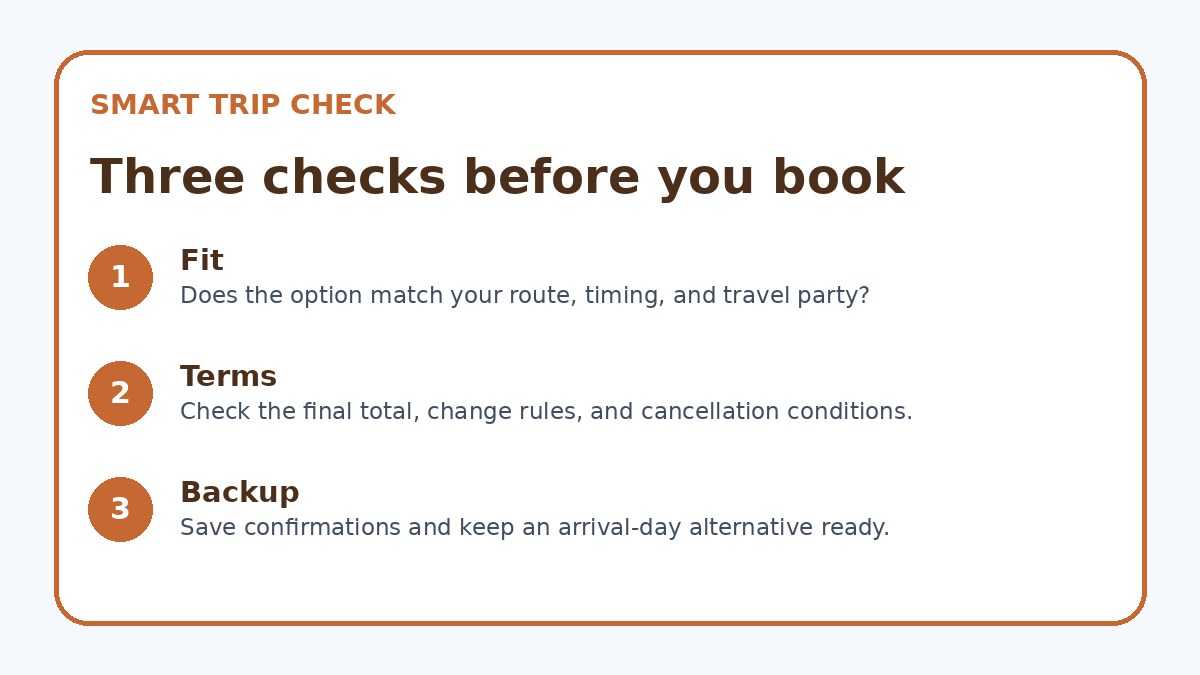
- Compare at least two transfer options (private pickup, train+taxi, night bus) and note cancellation terms.
- Screenshot your hotel booking, the hotel address in Japanese script, and your chosen transfer confirmation.
- Charge devices and bring a portable battery; download offline maps and any necessary ride-hailing apps.
- Plan a realistic backup: a nearby staffed 24-hour station, a capsule hotel, or a taxi rank if your primary plan fails.
Safety, communication, and contingency planning
Solo travelers should plan clear communication steps: save the hotel address in Japanese script, carry a screenshot of your booking confirmation, and know how to contact your accommodation from the terminal. Have an offline map or bookmarks for the transport route, and a portable charger for your phone. If you plan to use taxis or ride-hailing, confirm which apps operate in Tokyo and whether the driver needs the pickup point translated into Japanese. Keep receipts and a physical map or card to show the driver your destination if digital signals fail.
Prepare contingencies for delays, missed connections, or closed services: identify a nearby 24-hour facility (hotel lobby, convenience store, or staffed station) and keep emergency numbers handy. If your flight could be redirected or you face long immigration delays, alert the hotel in advance and check cancellation or late-arrival policies. When relying on public transport, confirm the last departure times for the date of travel; when using private operators, confirm on their final booking page whether late pickups are included or require a surcharge.
Frequently asked questions
Is it safe to arrive in Tokyo late at night as a solo traveler?
Tokyo is generally considered safe compared with many large cities, but solo travelers should still follow common-sense precautions: choose well-lit streets, stay near major stations, and book accommodation with clear late-arrival procedures. Save your hotel address in Japanese and a local contact number, avoid poorly lit shortcuts with luggage, and keep valuables secure. If you feel uncertain on arrival, use a staffed area such as an airport information desk, police box (koban), or a staffed train station to get directions and help. Always have a backup plan documented in case services or connections change.
How do I decide between a public-transport route and a private transfer?
Start by comparing arrival time, budget, luggage, and energy level. Public transport is typically cheaper and fast during operating hours, but it often requires transfers, navigation, and stairs or elevators. A private transfer reduces walking and complexity—useful if you arrive very late, carry lots of luggage, or simply want to reach your hotel quickly. Check whether public services run at your arrival time, and verify cancellation or change policies for private transfers on the provider’s booking page. If unsure, plan one public option and pre-book a private backup you can cancel if not needed.
What should I verify on booking pages before I finalize a transfer or hotel?
Before booking, confirm terminal pickup details, late-arrival or 24-hour reception policies, and whether the transfer provider allows changes for delayed flights. Look for explicit notes about where the driver will wait, how to contact them, and when you must cancel to avoid a penalty. For transport services, verify the route, last-departure time for your travel date, and any luggage restrictions. When details could change, use the provider’s final booking page or official site to confirm current terms; Trip.com can be useful to compare availability, but always cross-check directly with the operator for crucial arrival and pickup conditions.
Final planning note
Arriving late in Tokyo as a solo traveler doesn’t have to be stressful if you decide your priorities and prepare accordingly. Choose whether you’ll pay for the convenience of a direct transfer or save by using public transport and a short taxi; in either case, reserve a property that accepts late check-ins and keep contact details handy. Verify terminal-specific transport options and double-check any time-sensitive schedules or provider conditions on the booking page before committing. With a clear primary plan, a confirmed backup, and a few safety measures, you’ll turn a late arrival into a calm first night in Tokyo and be ready for the city the next morning.
Continue planning
Check current options and final conditions
Use the provider page to confirm live availability, the final total, cancellation terms, and every condition that matters to your trip.
This evergreen planning guide was created with AI-assisted drafting and a structured quality review. It does not display live prices, schedules, availability, visa guidance, or provider rankings. Verify current details before booking. Some links are affiliate links; we may earn a commission at no additional cost to you.