Short answer: for most first-time visitors to Taipei, a rental car is optional and often unnecessary. The city’s compact, transit-rich core, dense neighborhoods, and plentiful taxis and ride-hailing options make exploring central Taipei easier without a car. However, a rental becomes attractive if your plan includes multiple day trips to remote east-coast scenic areas, flexible arrivals and departures with lots of luggage, or traveling with infants or mobility needs that make public transfers awkward. This guide helps you weigh convenience against headaches like traffic, parking, and local driving norms. Read on for practical decision criteria, what to compare before booking, and a quick checklist of what to verify on booking pages and at pick-up.
How Taipei’s transport and city layout affect your choice
Taipei’s center is compact and organized around an extensive MRT (metro) network, thorough bus routes, and dense neighborhoods where walking is efficient. Major tourist clusters—such as Ximending, the National Palace Museum area, and Taipei 101—are well-served by public transport and taxis. Traffic congestion can be significant during peak hours, and parking in central districts is limited and often metered or available only in private lots. These realities make public transit and point-to-point taxi trips faster and less stressful for many first-time visitors than navigating unfamiliar streets and finding parking.
Outside the core, however, public transport frequency drops and destinations spread widely. Scenic coastal roads, mountain trails, and smaller towns are easier to reach with private transport if you want to follow a flexible schedule, stop spontaneously, or carry outdoor gear. If your trip mixes city sightseeing with several rural or coastal day trips, a hybrid approach—using Taipei’s transit for in-city days and a short-term rental for specific outings—often balances convenience and cost effectively.
Driving realities: traffic, signage, and local rules to consider
Driving in and around Taipei involves navigating busy roads, frequent scooters, and dense intersections. Motorcycles are a major presence and may filter through traffic and bunks between lanes; anticipate close passing and frequent lane changes. Road signage is largely bilingual on major arteries but can be primarily Chinese in smaller streets. Familiarizing yourself with local driving etiquette, typical speed limits, and the city’s lane-use rules reduces stress. Also plan for toll roads if you travel outside the city—these are common on routes to the east and south and often require electronic or cash payment arrangements.
If you are unfamiliar with left-versus-right driving conventions—Taiwan drives on the right—double-check that your rental vehicle and personal habits align safely. International driving permits, home-country licenses, or translations may be required depending on your nationality; confirm this precisely on the rental company’s booking page. Finally, consider whether you want GPS or a local SIM with data; navigation apps help, but mobile reception, routing through narrow lanes, and paying attention to signs are still necessary when driving in urban and rural areas.
| Approach | Best for | Tradeoff to check |
|---|---|---|
| No rental (public transit + taxis) | Visitors staying mainly within central Taipei and those on short trips | Lower hassle and cost in the city but limited flexibility for remote day trips. |
| Full trip rental (rent for entire stay) | Travelers prioritizing complete flexibility and multiple off-the-beaten-path days | Higher cost, parking difficulty, and more time managing vehicle logistics. |
| Hybrid (city transit + occasional day rental) | First-time visitors who want easy city days and select rural excursions | Needs extra planning to coordinate rental days and pick-up/drop-off timing. |
| Guided day trips or private transfers | Those who want door-to-door service without driving responsibilities | Less spontaneous control over schedule and dependent on tour/operator availability. |
Costs and logistics: when a rental adds value
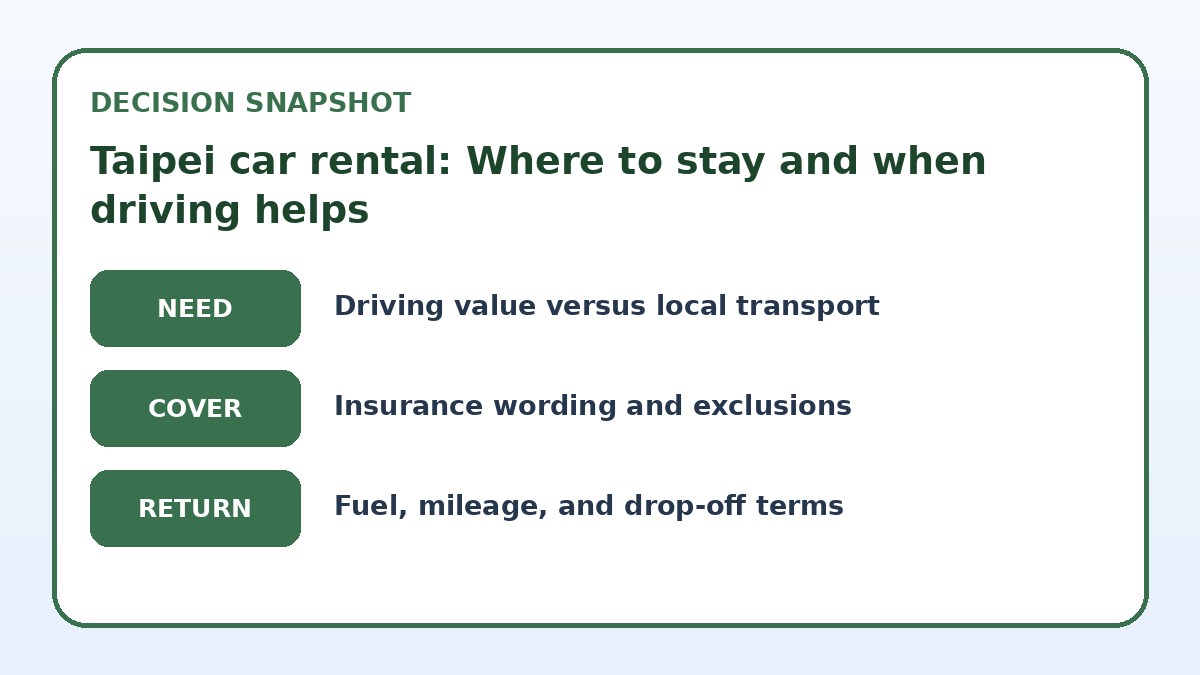
Cost isn't just the rental rate: factor in fuel, parking fees, tolls, insurance upgrades, and time spent finding parking or sitting in traffic. For small groups split across many fares, a rental may offset taxi costs and offer simpler luggage logistics. Families with young children often find rentals more convenient because strollers, car seats, and frequent stops are handled at your own pace. If your itinerary includes remote national parks, seaside towns, or multiple stops in one day, the ability to carry gear and control timing is a real advantage.
Logistically, pick-ups at airports or major hubs are convenient but check whether there are extra relocation fees for different drop-off locations. If you plan several out-and-back day trips, consider renting per day rather than hourly to avoid misunderstandings. Also clarify fuel policy, roadside assistance coverage, accident procedures, and what to do if you need to extend or change dates—confirm these details directly on the rental provider’s booking page. Trip.com may be a convenient place to compare current availability and conditions, but always verify contract specifics with the listed supplier.
Before you book
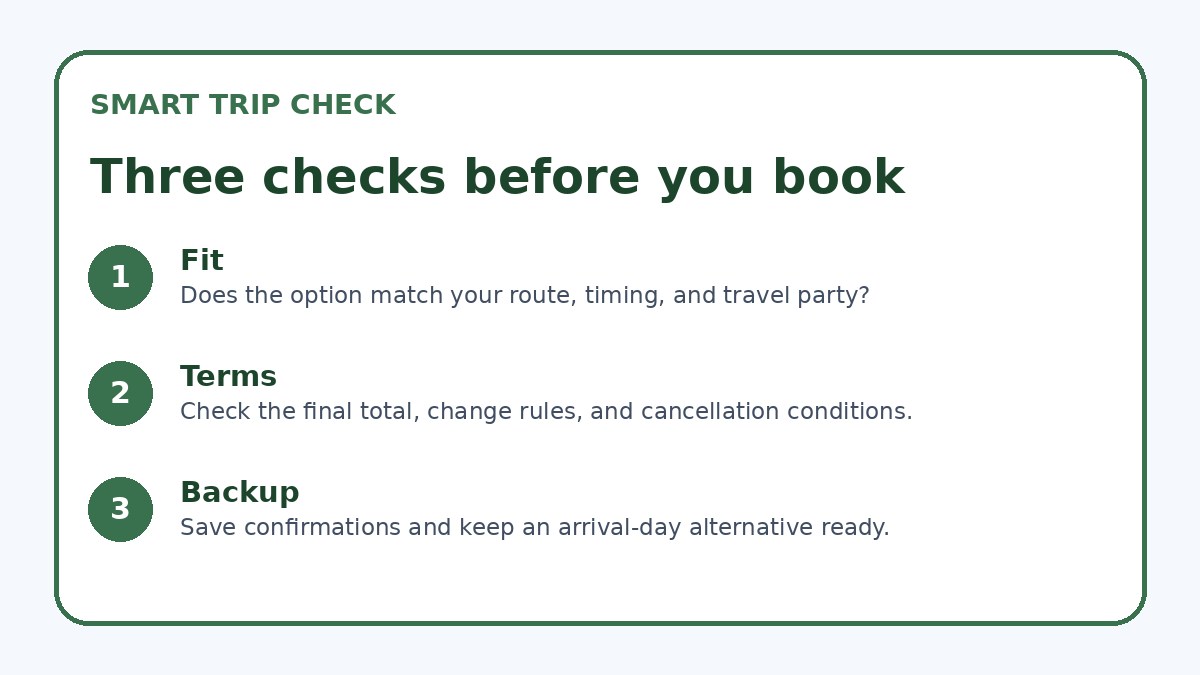
- List the number of full rural day trips and compare their transit options; rent a car only if public transport adds excessive time or complexity.
- Confirm what type of driver’s license the rental company accepts and whether you need an international driving permit or official translation.
- Check pickup and drop-off locations, opening hours, and whether different return points incur extra fees on the booking page.
- Review insurance coverages, deductible amounts, roadside assistance, and what to do in case of accidents—verify via the rental contract.
- Plan parking ahead: identify hotel parking policies, nearby public lots, and likely costs for the neighborhoods you’ll visit.
- Decide whether to add GPS, toll devices, or child seats and confirm availability and extra charges before you book.
Alternatives and hybrid approaches that often work better
For many first-time visitors, a hybrid approach is best: rely on Taipei’s MRT, buses, and scooters for city days and book one or two day rentals or guided tours for distant excursions. Guided day trips include transport and local knowledge, removing the stress of driving on unfamiliar roads while letting you reach farther attractions. Car-sharing or hourly rentals can also suit short suburban visits without the commitment of a full-day hire. Combining transit and occasional car use gives flexibility without full-time driving responsibilities.
If you prefer private transport for specific segments—airport transfers, early-morning departures to catch a ferry, or mountain drives—arrange private taxis or booked transfers for those legs. These can be compared by price and cancellation policy on travel booking platforms; again, verify provider terms before confirming. Ultimately, matching your rental decisions to the number of rural days, group needs, and comfort behind the wheel keeps your Taipei trip smoother and more enjoyable.
Frequently asked questions
Is driving around Taipei difficult for foreign visitors?
Driving in Taipei’s urban core can be challenging for visitors due to heavy traffic, many scooters, frequent lane changes, and limited parking. Major roads often have multiple lanes and traffic can be dense during rush hours. If you are comfortable with urban driving, confident reading bilingual signage, and used to sharing roads with motorcycles, driving is manageable. Otherwise, using the MRT, buses, and taxis reduces stress and often gets you to central attractions faster. For rural or mountainous drives, allow extra time and be prepared for narrower roads and steep grades.
Can I use a foreign driver’s license to rent a car in Taipei?
Requirements vary by rental company and your nationality. Some providers accept certain foreign licenses for short-term rentals; others require an International Driving Permit (IDP) or official translation. Because policies change, check the rental company’s booking page for exact documentation requirements, acceptable license countries, and any age restrictions. Also confirm whether you need to carry both your home license and the IDP or other paperwork while driving. Failing to present required documents at pick-up can result in refusal to release the vehicle.
How should I budget parking, tolls, and fuel if I rent a car?
Budgeting beyond the base rental rate is important: set aside funds for fuel, expressway tolls, parking fees in city districts, and any device or transponder rental for automated toll payment. Parking in central Taipei is commonly paid by the hour; overnight hotel parking may be more expensive or limited. On long drives outside the city, toll roads can shorten travel time but add cost—confirm whether the rental includes a toll device or how payments are handled. Confirm fuel policy (full-to-full vs. other options) on the booking page to avoid unexpected refueling charges.
Final planning note
Deciding whether a Taipei car rental fits your first trip hinges on where you plan to go and how comfortable you are driving in dense urban traffic and around many scooters. For most first-time visitors focusing on central attractions, Taipei’s MRT, buses, and taxis offer faster, less stressful mobility than renting a car. If your itinerary includes multiple rural day trips, traveling with bulky gear, or you value complete scheduling freedom, a rental or targeted day hire becomes more compelling. Use the checklist to verify license rules, insurance, pickup/drop-off logistics, and parking before booking—confirm those contract details directly with the supplier. Balancing the tradeoffs will help you pick an approach that keeps your trip flexible and fun.
Continue planning
Check current options and final conditions
Use the provider page to confirm live availability, the final total, cancellation terms, and every condition that matters to your trip.
This evergreen planning guide was created with AI-assisted drafting and a structured quality review. It does not display live prices, schedules, availability, visa guidance, or provider rankings. Verify current details before booking. Some links are affiliate links; we may earn a commission at no additional cost to you.