
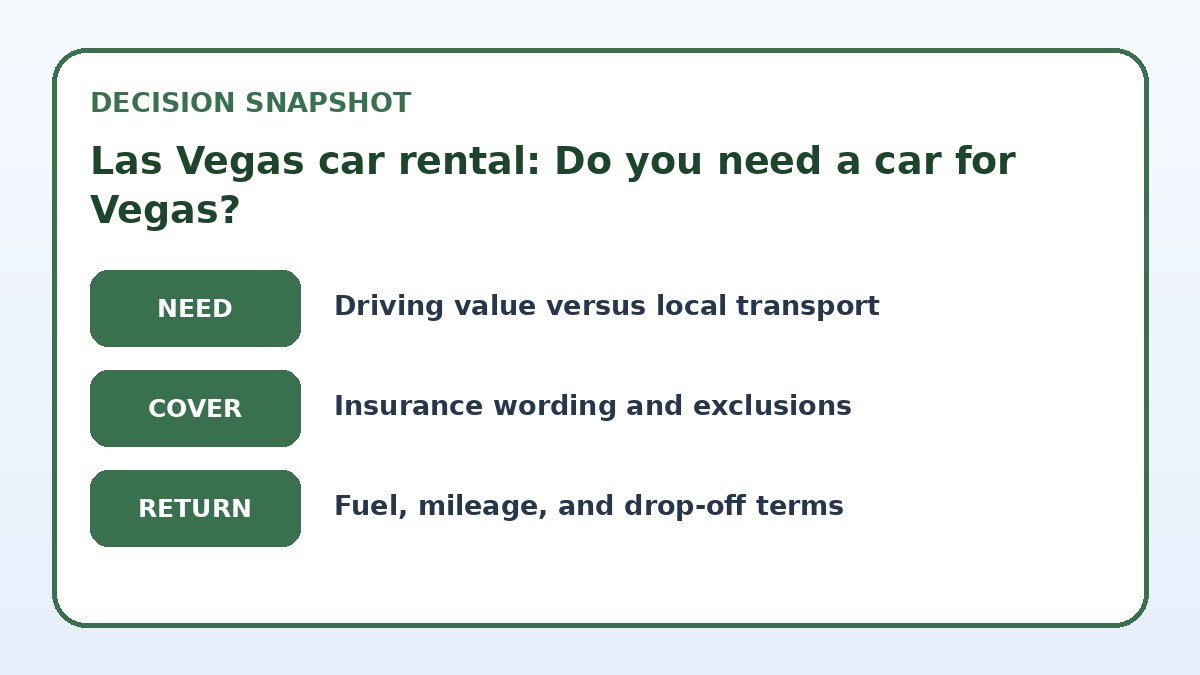
Practical answer first: many first-time visitors don’t need a Las Vegas car rental for a Strip-centered trip, but a car makes sense if you plan day trips, want to visit parks or nearby towns, or value flexible timing. The Strip and downtown are compact, heavily serviced by taxis, rideshares, shuttles, and walking; parking at casinos can be free or paid and traffic is usually manageable at non-peak hours. If your plan includes Hoover Dam, Red Rock Canyon, Mount Charleston, the Valley of Fire, or exploring neighborhoods across the valley, a car saves time and lets you set your own schedule. Below I explain the tradeoffs—parking, cost and convenience, timing, luggage logistics, and alternatives—so you can match transportation to your itinerary and appetite for driving in an unfamiliar city.
When a Las Vegas car rental is unnecessary
If your first trip is concentrated on the Strip, Fremont Street, and casino resorts, you may not need a car. The Las Vegas Strip is walkable in sections, and major properties offer internalways, free intra-resort shuttles, and valet or self-parking options. Rideshare apps and taxis cover short hops easily and can be cheaper than paying for parking or daily rental rates, especially for solo travelers or couples without a lot of baggage. For late-night returns after shows, rideshares are usually plentiful at key pickup points near casinos and entertainment venues.
Public transit and the monorail can cover some east-west moves, but routes are limited: check current maps and timetables before you rely on them. Also consider how much walking you’re comfortable with—casinos can be long and spread out—and whether you’ll be carrying purchases or costumes from shows. If your plan includes busy arrival or departure logistics (large family groups, multiple suitcases, or early morning flights), a private transfer, airport shuttle, or short-term rental for specific days might be a better option than a multi-day car rental.
When renting a car makes sense
Rent a car if your itinerary includes day trips away from the valley, such as Hoover Dam, Red Rock Canyon, Valley of Fire, or a drive into Southern Utah or California. Those destinations involve driving on highways and park roads where public transit is scarce or non-existent; having your own vehicle lets you arrive early, leave late, and explore side routes at your own pace. Families with kids, travelers with mobility needs, or anyone bringing specialized gear (bikes, hiking equipment) will find a car simplifies logistics and reduces the time spent coordinating multiple rideshare trips.
A car also fits well for multi-hotel stays or if you plan to base yourself in suburban neighborhoods where dining and grocery options are spread out. Staying off-Strip often lowers accommodation costs but increases the value of a rental because you’ll be further from nightlife and central attractions. Weigh the time you’ll save getting between dispersed points against the cost and effort of parking and navigating unfamiliar streets; if those savings are high, a rental is probably worth it for your trip.
| Approach | Best for | Tradeoff to check |
|---|---|---|
| No rental: walk, rideshare, monorail | Short, Strip-focused itineraries and travelers who prefer not to drive. | Less flexibility for outside attractions and possible higher per-trip costs for multiple rides. |
| Multi-day rental from airport or city lot | Visitors planning several day trips or traveling with family and luggage. | Higher total cost due to daily fees, parking, and insurance compared with single transfers. |
| Rent only for specific days | Itineraries mixing on-Strip days with a few long day trips. | Requires coordination for pickup/drop-off and potential extra fees for short-term rentals. |
| Private transfer or shuttle plus local rides | Groups, early flights, or travelers wanting door-to-door service without driving. | Less spontaneous flexibility and potentially higher cost for multiple separate transfers. |

Cost, parking, and insurance tradeoffs
Compare the headline rental rate with add-ons before you book: airport surcharges, taxes, parking fees, fuel, and insurance or collision-damage waivers can significantly increase the effective cost. Casino properties often change parking policies between complimentary and paid, and luxury hotels may require valet fees. If you plan multiple stops or long drives, fuel and mileage are also practical considerations. Always check the rental company’s final booking page for exact charges and unfavourable rules—such as age surcharges, cross-border restrictions, and fuel penalties—so you can budget accurately.
Insurance deserves separate attention: credit card coverage and personal auto policies sometimes cover rentals, but coverage scope varies. Before declining a rental company’s loss-damage waiver, confirm whether your personal auto insurer or card issuer provides primary or secondary coverage and what conditions apply (theft, damage, roadside assistance). If you prefer a simpler experience, taking the rental company’s protection might trade cost for peace of mind. Verify refund or modification terms in case your plans change and you cancel or shorten the rental period.
Before you book
- List your daily activities and mark which require a car (day trips, gear transport, multiple venues spread across town).
- Check hotel parking policies and fees for each property you might use, including valet versus self-park options.
- Compare full rental terms on the provider’s final booking page: total cost, insurance, mileage limits, and fuel rules.
- Confirm whether your credit card or personal auto insurance covers rental damage and what documentation is required.
- Plan arrival and departure logistics: does airport pickup save time even if it costs more than an off-site location?
- Reserve a smaller car if city parking is tight, and photograph the vehicle at pickup to document existing damage.
Practical tips for driving and saving time
Download and set up rideshare apps and a reliable navigation app before you arrive; they’ll help when you park and walk or when a car is unnecessary. If you do rent, choose pickup and drop-off locations with the least hassle: off-airport and downtown rental sites sometimes have lower fees but check transfer options to the lot. Time your drives to avoid weekday morning and evening rush hours on Interstate 15 and major arteries; planning departures and returns mid-morning or early afternoon reduces congestion and speeds trips to nearby attractions.
When parking on the Strip, read the hotel’s parking rules before settling on a property: garage entrances, validation policies, and event surcharges vary and can affect your daily costs and convenience. Keep an eye on pedestrian-heavy zones—Strip crowds, bright signage, and frequent stops at intersections make driving slower than distances alone would suggest. Finally, always inspect the rental for existing damage, note it on the rental agreement, and take photos at pickup and return to prevent billing disputes.
Frequently asked questions
Can I park for free at Las Vegas casinos if I rent a car?
Parking policies vary significantly between properties and can change over time. Some casinos offer complimentary self-parking for hotel guests or validated customers, while others charge for valet or garage access, especially during big events. Always verify parking rules for the specific hotels on your itinerary—check the hotel’s official pages or ask the front desk before arrival. If parking costs are important to your budget, include them when you compare the total cost of renting versus using rideshares and transfers.
Are rideshares and taxis reliable alternatives to a rental in Las Vegas?
Yes—rideshares and taxis cover the main tourist zones reliably and are convenient for point-to-point trips, nights out, and airport transfers. They spare you parking hassles and insurance decisions but add up if you make many trips or travel with a group carrying gear. Surge pricing, event-related demand, or wait times can affect availability, so have a backup plan for busy evenings. For complex day trips or remote park access, a rental remains the more dependable option.
Is driving in Las Vegas difficult for first-time visitors?
Driving around Las Vegas is manageable for drivers comfortable with U.S. urban roads, but it requires attention—heavy pedestrian traffic on the Strip, frequent lane changes, and event congestion can be stressful. Familiarize yourself with local road layouts, use a reliable navigation app, and avoid peak commute times when possible. If you’re not confident driving in busy tourist areas, consider renting only for day trips or hiring a driver; that way you get the benefits of a car without the pressure of navigating crowded central streets.
Final planning note
Deciding on a Las Vegas car rental comes down to where you’ll spend most days and how much freedom you want beyond the Strip. If your first visit centers on casinos, shows, and dining within a compact area, skipping a rental simplifies logistics and often reduces cost and stress. If you plan multiple outings to natural areas, intercity drives, or will be based off-Strip, a car pays off in time saved and flexibility. For mixed plans, consider renting only for the days you need a vehicle or pairing a short rental with rideshares. Always compare total costs, read final booking terms for fees and insurance, and verify parking policies at each hotel before you book. If you want a quick availability check, you can compare options on Trip.com but confirm all provider-specific details on the rental company’s official booking page.
Continue planning
Check current options and final conditions
Use the provider page to confirm live availability, the final total, cancellation terms, and every condition that matters to your trip.
This evergreen planning guide was created with AI-assisted drafting and a structured quality review. It does not display live prices, schedules, availability, visa guidance, or provider rankings. Verify current details before booking. Some links are affiliate links; we may earn a commission at no additional cost to you.