If you have a business trip to Sydney to schedule, the most useful rule is this: pick a booking window that matches how flexible your itinerary, employer policy, and meeting dates are. For fixed meeting dates and corporate approval lag, prioritize refundable or changeable fares and hotel rates even if they cost a bit more. When dates are tentative, focus on low-penalty change policies and hold options rather than the cheapest prepaid package. Before you click purchase, compare the identical travel dates, number of travelers, refund and change terms, baggage and transfer inclusions, and cancellation deadlines across options. That comparison reveals whether a bundled package is truly saving money or simply shifting risk—and it’s the only reliable way to decide between booking flights and hotels separately or as a package.

Test package value fairly
| Booking approach | Best for | Tradeoff to check |
|---|---|---|
| Bundled package (flight + hotel) | Travelers who want a single transaction and simple logistics when dates are firmly fixed. | May tie you to nonrefundable components or mixed flexibility across flight and hotel, so check identical date and change terms. |
| Separate flight and hotel bookings | Travelers seeking maximum control over fare classes, loyalty benefits and individual cancellation terms. | Requires more time to compare identical inclusions; risk of mismatch between flight times and hotel check policies. |
| Flexible fare with prepaid hotel | Trips with confirmed flights but uncertain ground plans, balancing flight flexibility and lower hotel prepay costs. | Prepaid hotel savings can vanish if plans change—ensure the hotel’s refund window aligns with your risk tolerance. |
| Hold or refundable option while awaiting approvals | Corporate travelers who need to secure space without committing until internal approvals are complete. | May carry small fees or higher rates for the privilege of holding; verify how long the space is guaranteed and cancellation rules. |
Check current package and separate options
Use identical dates, travelers, room needs, baggage, and flexibility so the comparison stays meaningful.
What to compare before judging a package
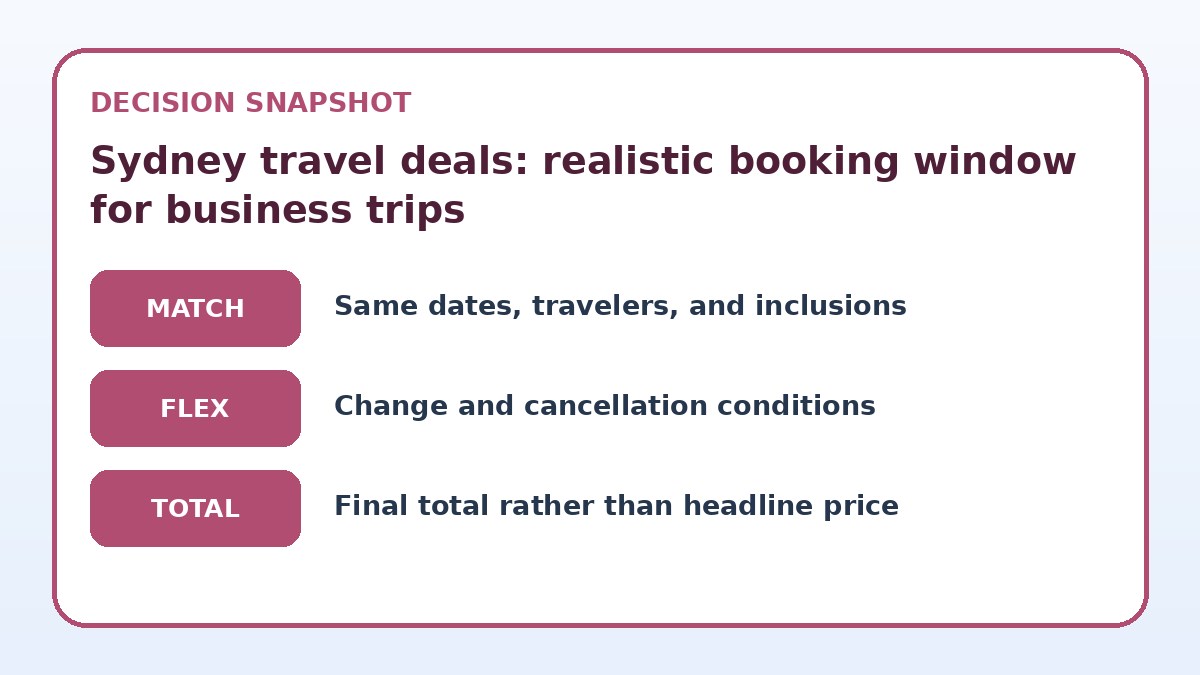
Start by lining up identical trip parameters across every option you’re considering. That means the exact travel dates, number of travelers, cabin and room types, check-in and check-out times, and the same baggage allowance for flights. If a provider lists transfers, daily breakfast, or refundable rates, confirm whether those apply to all travelers in the booking and whether they’re conditional—like subject to minimum nights or specific room categories. Many apparent package savings vanish when you add the same inclusions to a standalone booking.
Next, inspect change and cancellation windows closely. A package may lock you into a cheaper prepaid hotel or a nonrefundable fare that’s only marginally cheaper than a flexible alternative once you factor in the risk of date changes. For business travel, calculate the value of flexibility: estimate potential change costs if a meeting shifts one or two days. Finally, verify corporate reimbursement rules and approval timelines—if your company requires preapproval, a refundable or holdable option often avoids wasted money and administrative headaches.
Inclusions and how they affect business value
Not all 'inclusions' deliver the same business value. A package that includes airport transfers may matter if you have tight schedules or late arrivals; if your company pays for taxis or rideshares instead, the transfer inclusion is less valuable. Likewise, included breakfast has little value if you’ll be in early meetings or entertaining clients off-site. For flights, priority boarding or extra baggage only matters if your itinerary, equipment, or dress code requires it. Assign a practical monetary or convenience value to each inclusion relative to your needs.
When considering hotel inclusions, check the terms that affect work: reliable Wi‑Fi, business-center access, early check-in or late check-out, and proximity to client offices or meeting venues. Confirm whether meeting room credit or breakfast applies to all booked rooms, whether Wi‑Fi is genuinely unlimited and suitable for video calls, and whether the hotel enforces quiet hours that could conflict with late conferences. If an inclusion isn’t relevant to your trip’s objectives, it shouldn’t sway your booking decision.
Look past the headline total
Compare inclusions and change conditions before deciding whether a package is genuinely useful for this trip.
Deal comparison checklist
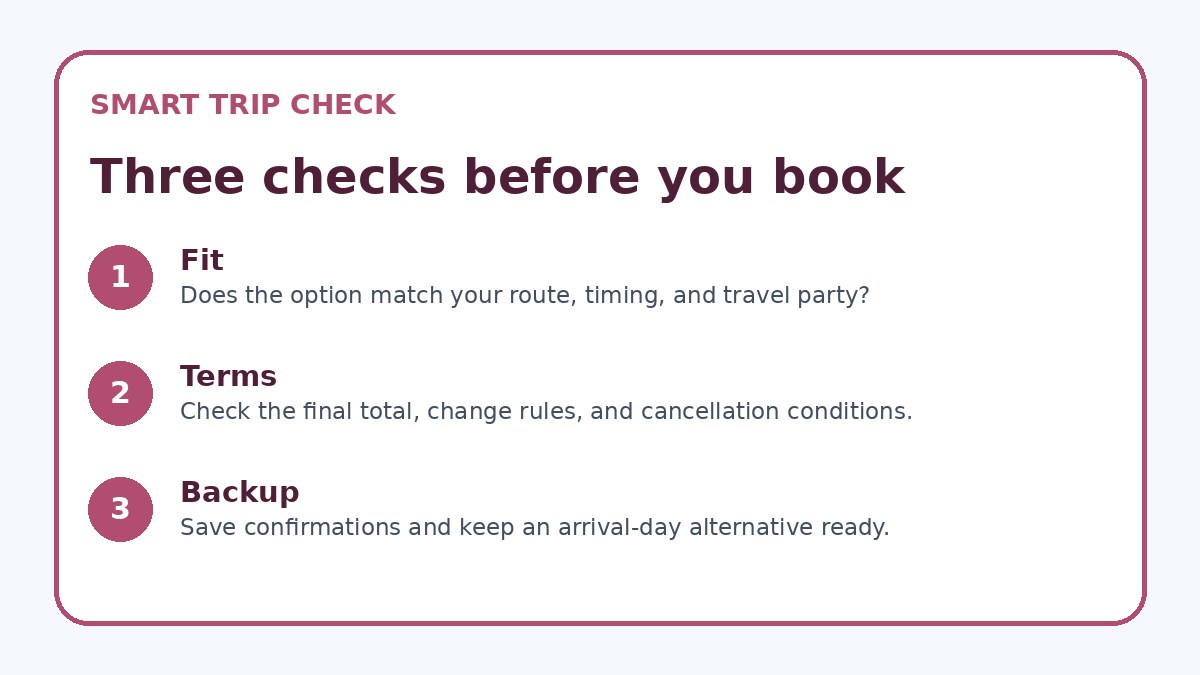
- Confirm meeting dates and internal approval deadlines before locking in nonrefundable fares or prepaids.
- Compare the exact travel dates, number of travelers, cabin/room types, baggage allowances, and inclusions across all options.
- Read the provider’s final booking page for change fees, cancellation deadlines, and whether fare differences apply on changes.
- Verify whether your company’s travel policy or corporate rate affects eligibility, reimbursement, or booking channel requirements.
- Assign a practical value to each inclusion (transfers, breakfast, Wi‑Fi) and discard options whose inclusions don’t meet trip needs.
- If using an aggregator like Trip.com to compare availability, still open the supplier’s final booking page to confirm the full terms.
Flexibility: booking rules that matter for business trips
The shape of change and cancellation rules is the single biggest determinant of a booking-window choice for business travel. Look beyond whether something is refundable: compare the exact deadlines (how many days before departure), the fees for changes, and whether fare differences apply. Some low-fare tickets allow free date changes but charge for cabin upgrades; other fares waive change fees but not the fare difference. For hotels, confirm whether a 'free cancellation' window applies to the specific room rate you want and whether the property requires a credit card guarantee for no-show penalties.
Also verify any hold or booking modification tools the provider offers. Some channels allow a short free hold for corporate bookings or a modest fee to change dates, which can be valuable if approvals are pending. Where available, check whether your employer’s travel program provides special corporate rates with better flexibility—those details will appear on the final provider booking page. If you compare options on Trip.com or another aggregator, use it to surface choices but always read the provider’s terms before finalizing.
Traveler-specific value and final terms to confirm
Different business travelers place value on different things: sales reps may prioritize proximity to clients and flexible check-in, consultants may need refundable calendars, and executives may want lounge access and premium seating. Identify which elements you cannot compromise on—timely arrival windows, a quiet room for calls, or ability to change plans with minimal penalty—and rank them. Make the booking decision that preserves your top priorities even if it means a slightly higher headline price.
Before you finalize any purchase, verify the final booking page for exact fare class, baggage allowances, cancellation penalties, and any third-party supplier terms such as transfers or partner hotel policies. Confirm what documents (receipts, folio items) you’ll receive for expense reporting. If you rely on a corporate card or travel policy, check whether the selected rate is eligible for those payment and approval flows. Only after these provider-specific details match your requirements should you complete the booking.
Travel Deals & Booking Strategy questions travelers ask
How far in advance should I book flights to Sydney for a business trip?
There’s no single answer that fits every corporate traveler. If your meeting dates are fixed and approvals are in place, booking earlier can secure seat availability in your preferred cabin and reduce the chance of split itineraries. If approvals or client schedules are tentative, prioritize changeable fares or holds—even if they cost more—so you can adjust without steep penalties. Always compare the change and cancellation rules for the specific fare class before purchasing and confirm those terms on the provider’s final booking page.
Are bundled packages generally better value than separate bookings?
Bundles can be convenient and sometimes save time by consolidating one payment and itinerary, but they’re not universally better value. The critical test is whether the bundle’s inclusions and flexibility match what you would get by booking flights and hotels separately for the same dates, traveler count, and baggage allowances. If a bundled rate imposes tighter nonrefundable rules or removes loyalty benefits, those costs may outweigh headline savings. Always verify the exact terms on the supplier’s final confirmation before relying on any claimed bundle advantage.
What specific policy details should I verify when choosing flexible options?
Look for exact deadlines (how many days or hours before travel when changes or cancellations are permitted), explicit fee amounts or fare-difference rules, and whether changes are allowed online or require calling the provider. For hotels, check what constitutes a chargeable no-show, whether deposits equal one night or full stay, and the latest possible free-cancellation time. For both flights and hotels, confirm whether third-party intermediaries, codeshare segments, or partner hotels have different rules; those distinctions will appear on the provider’s final booking page.
Final decision note
Choosing a realistic booking window for a Sydney business trip means matching the booking’s flexibility to your actual decision timeline and employer rules. For fixed meetings, buy the flexibility you need—refundable fares or flexible hotel rates—to avoid costly rebookings. If your calendar is tentative, prefer holds or low-fee change options even at slightly higher cost. Always compare identical dates, traveler counts, and inclusions when evaluating bundles versus separate bookings, and read the provider’s final booking terms before committing. Use aggregators like Trip.com to surface options, but finalize choices only after confirming the supplier’s conditions match your business requirements.
Continue planning
Check current options and final conditions
Use the provider page to confirm live availability, the final total, cancellation terms, and every condition that matters to your trip.
This evergreen planning guide was created with AI-assisted drafting and a structured quality review. It does not display live prices, schedules, availability, visa guidance, or provider rankings. Verify current details before booking. Some links are affiliate links; we may earn a commission at no additional cost to you.