If you’re planning your first trip to Sydney and want room to change plans, focus on cancellation flexibility from the start. The practical answer: compare the refund and change terms for flights, hotels, ferries, and paid tours before you pay—look for clear timelines, penalties, and whether credits or vouchers are offered instead of refunds. Flexible fares and refundable rooms reduce stress but often cost more or impose other limits, such as nonrefundable extras or stricter rebooking windows. This guide explains what flexibility looks like for common booking types, the tradeoffs you’ll face, and the exact details to verify on provider booking pages so you can balance peace of mind with cost and convenience.
See current options before you compare the details
Availability and final conditions change. Open Trip.com now or keep reading for the practical comparison.
What cancellation flexibility usually means for flights
Airline policies vary widely: some published fares allow free cancellations or changes within a short window after booking, while others are nonrefundable but permit name changes or rebooking for a fee. For first-time visitors, decide whether you want a refundable fare that you can cancel for money back, or a lower-cost ticket that provides only flight credits or requires a change fee. Remember that ancillary items—seat selection, baggage, and travel insurance—often have separate rules and may not be refundable even if the base fare is.
When evaluating flight options, check whether the fare rules explicitly state how refunds are processed: to the original payment method, as a travel credit, or only transferable within the same airline group. Also confirm how long refunds take and whether the airline waives change fees under certain circumstances (illness, travel advisories). Because these details can change rapidly, always verify fares and rules on the airline’s official booking page and, when comparing platforms, double-check the provider’s final terms before completing payment.
Hotel bookings: refundable rates, vouchers, and small print
Hotels typically offer at least two rate types: flexible (refundable) rates and prepaid nonrefundable deals. Flexible rates usually allow cancellation up to a stated time before arrival—commonly 24 to 72 hours—while prepaid deals require full payment and often no refund. For a first-time visit to Sydney, weigh whether the higher cost of a refundable room is worth the possibility of itinerary change. If the saved amount on a prepaid deal covers nonrefundable items you’re comfortable losing, that option can be sensible; otherwise choose refundable and accept a higher nightly rate.
Read the hotel policy closely: some refundable rates still exclude city taxes or charge a penalty for late cancellations, and third-party bookings can have different terms than booking directly. Confirm whether any deposit is taken at booking or at check-in, who processes refunds, and how long refunds will take. If you plan to add extras—airport transfers, breakfast, or experiences—check whether those add-ons are refundable under the same policy or are sold separately with stricter rules.
| Approach | Best for | Tradeoff to check |
|---|---|---|
| Refundable fares and flexible hotel rates | Travelers wanting full refund options and minimal stress from plan changes | Higher upfront cost compared with prepaid or nonrefundable deals |
| Prepaid discounts and nonrefundable tickets | Travelers with fixed plans who prioritize lower price over flexibility | Little to no refund if plans change; may require buying separate insurance |
| Vouchers, credits, and open-date bookings | Those who expect to travel again soon and can reuse credits | Value tied to provider’s future availability and sometimes expiry dates |
| Third-party booking versus direct booking | Shoppers comparing convenience and bundled options across platforms | Direct bookings often simplify refunds; third parties may add complexity or different terms |
Ready to check the option that fits your plan?
Use your exact dates and traveler details so the provider page can show the current total and conditions.
Tours, attractions and ground transport: timing matters
Smaller tour operators, specialty experiences, and ferry or cruise bookings frequently set specific cut-off times for free cancellation—sometimes 24 to 48 hours, other times several days. Larger attractions may offer day-before refunds, but some limited-capacity experiences are nonrefundable. For experiences you care a lot about, look for flexible booking options or purchase travel insurance that covers cancellations for covered reasons. If you’re booking through a marketplace or travel agent, verify whether the agent or the operator will handle refunds and what proofs or documentation are required.
For public transport and intercity ground travel, cancellation policies differ from packaged tours. Ferry tickets and rail passes may be nonrefundable or only refundable for unused portions; e-tickets sometimes allow exchanges but not cash refunds. Before you finalize a booking, confirm the exact lead time for cancellations and the entity you must contact. If your schedule is tentative, prioritize providers offering exchanges or open-date vouchers that let you rebook without forfeiting full value.
Before you book
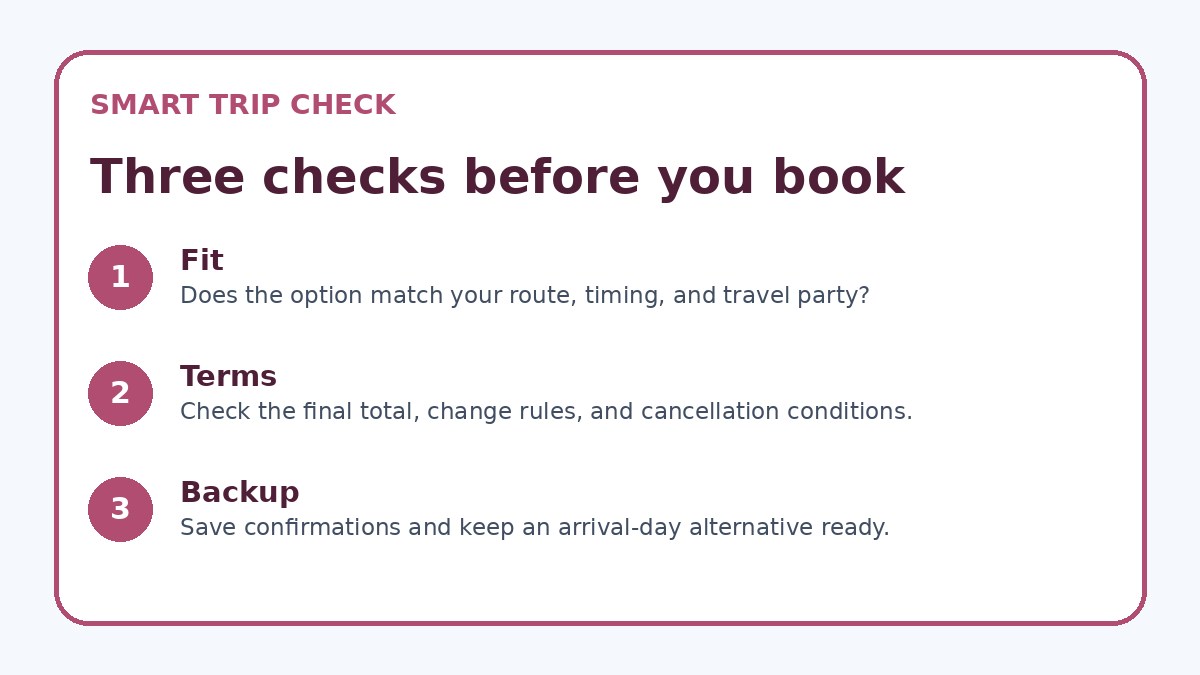
- Before payment, open the full cancellation policy and copy or screenshot the exact refund deadlines and penalties shown on the provider’s booking page.
- Compare refundable and nonrefundable rates side-by-side to calculate the premium you’d pay to cancel and whether that premium fits your risk tolerance.
- Verify who issues refunds or credits—airline, hotel, tour operator, or booking platform—and how long processing typically takes.
- Confirm whether ancillary purchases (bags, seats, transfers) are refundable under the same policy or sold separately with stricter terms.
- Check whether your credit card or a travel insurance policy would cover cancellations for reasons you consider plausible.
- Retain booking confirmation emails and policy screenshots; follow up promptly with the provider if a cancellation is needed to preserve your rights.
How to decide: balancing flexibility, cost, and certainty
Start by listing what you can and cannot change: flexible dates, fixed event tickets, or multi-segment flights. If your trip has one immovable anchor—say, a conference date or a booked wedding attendance—buy flexibility around that element and accept nonrefundable savings elsewhere. Calculate the worst-case outlay if you canceled each option and compare that to the premium for refundable rates; this will show whether the added cost is reasonable insurance or an unnecessary expense for your risk tolerance.
Also consider alternatives to fully refundable bookings: travel insurance with trip cancellation cover, credit card protections, or booking providers with generous rebooking policies. When comparing options for the same product, look beyond the price tag and check the cancellation timeline, refund mechanism, and whether recovery is automatic (refund) or credit-based (voucher). Keep screenshots of booking confirmation pages and refund policies; these can help resolve disputes if rules are applied inconsistently.
Frequently asked questions
Can I rely on flexible fares or refundable hotel rates to avoid losing money if plans change?
Flexible fares and refundable hotel rates do reduce the risk of losing money, but they are not identical across providers. Some refundable options return funds to your original payment method, while others issue credits that must be used with the same provider. Timing and processing windows vary; a refundable booking may still require you to cancel within a specific period to get money back. Always read the precise language on the booking page and confirm whether any fees apply before assuming full reimbursement.
Is travel insurance a better option than paying for refundable rates?
Travel insurance can be cost-effective if it covers the kinds of cancellations you’re worried about, such as illness, family emergency, or covered travel disruptions. Insurance typically doesn’t reimburse for changes of mind, so if you expect frequent schedule shifts, refundable rates might be more valuable. Check insurance exclusions, the claims process, and whether the insurer requires documentation. Compare the insurance premium plus nonrefundable fare loss against the price difference for refundable fares to choose the most economical protection.
What specific details should I verify on a booking page before finishing a purchase?
Confirm the cancellation deadline (date and time), the refund type (cash refund, travel credit, or voucher), any fees or penalties, and who issues refunds. Look for clauses about travel advisories or force majeure events and whether third parties or payment processors influence refund timing. If booking through an agent or marketplace, read their terms to see how they handle disputes. When in doubt, use the provider’s contact details on the booking page to get a written confirmation of the policy you rely on.
Final planning note
For first-time visitors to Sydney, deciding how much cancellation flexibility you need comes down to weighing the cost of refundable options against the financial and emotional cost of changing plans. Start by identifying trip elements that must not move, then buy flexibility around those items while economizing elsewhere. Always verify exact refund mechanics, deadlines, and the refunding party on the provider’s booking page before you pay, and keep screenshots and confirmations. If you want to compare current availability and policy wording from multiple sources, Trip.com can be one place to check, but verify final terms on the airline, hotel, or operator’s own booking page before you commit.
Continue planning
Check current options and final conditions
Use the provider page to confirm live availability, the final total, cancellation terms, and every condition that matters to your trip.
This evergreen planning guide was created with AI-assisted drafting and a structured quality review. It does not display live prices, schedules, availability, visa guidance, or provider rankings. Verify current details before booking. Some links are affiliate links; we may earn a commission at no additional cost to you.