If your family is traveling from Toronto to Montreal, the single most useful early decision is how you'll handle the door-to-door transfer: will you go straight to the main train station, use a nearby bus terminal, or transfer via an airport or suburban hub? Choosing the right arrival and departure points affects how much walking, waiting, and re-packing you'll do, and it changes whether you need local transit, taxis, or a rental car for first and last miles. This article walks parents through the practical choices—how to match your party’s mobility, luggage, child seats, and nap schedules to different station and terminal layouts—so you can pick an option that reduces stress on travel day. It also lays out the tradeoffs families should weigh, what to verify on provider booking pages, and checklists to complete before you leave home.
See current options before you compare the details
Availability and final conditions change. Open Trip.com now or keep reading for the practical comparison.
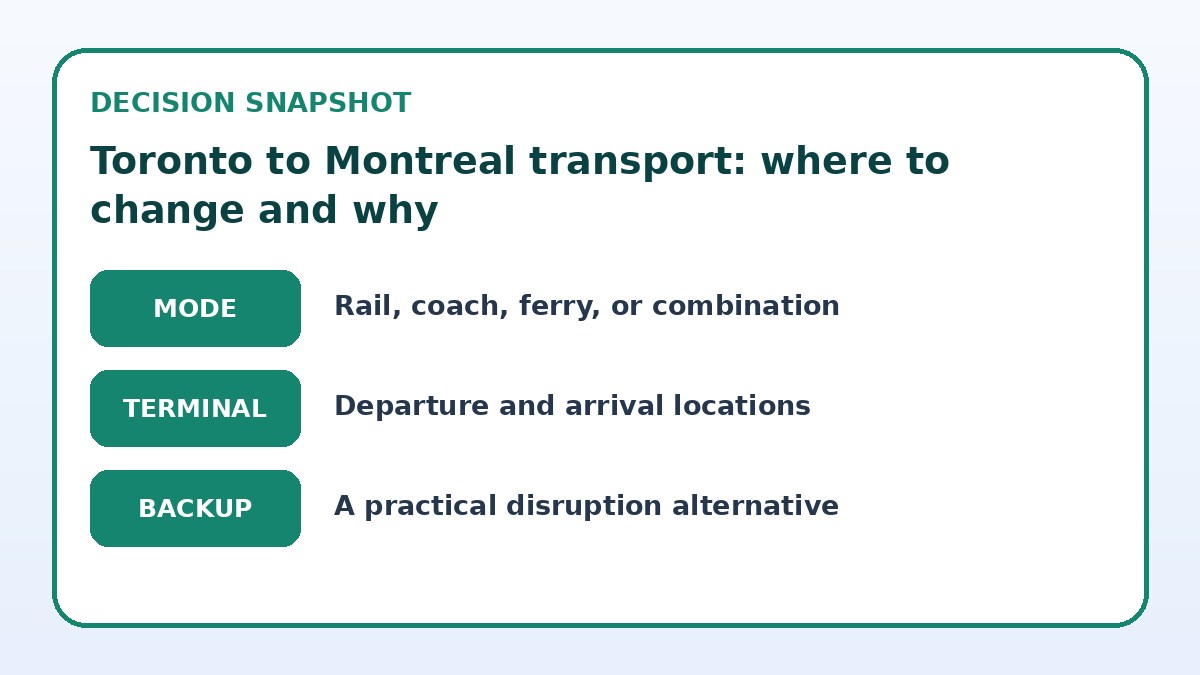
Choosing departure and arrival nodes for families
Families should view the trip as several linked legs: home to departure node, the main intercity leg, and arrival onward travel. For Toronto to Montreal transport, common departure nodes include major train stations and bus terminals and occasionally airports or suburban stations if you prefer a drive-in approach. Choose the node that minimizes the number of times you’ll handle luggage and children; for example, a single taxi straight to a central station usually beats a cheap peripheral terminal plus a local transfer. Think beyond price: a short, simple route with predictable boarding and seating will often keep smaller children calmer than a convoluted cheaper itinerary.
Also consider what facilities you need at each node. For families, priorities are sheltered waiting areas, diaper-changing rooms or family washrooms, elevators and ramps for strollers, and easy access to taxis or rideshares. If anyone uses mobility aids or has a stroller, verify whether the departure and arrival buildings have step-free access and where vehicle drop-off points are located. When you’re comparing options, sketch the walking route from drop-off to the platform or gate so you can estimate whether you’ll need extra time or assistance.
Transfers between stations, terminals, and airports
Transfers can be the most stressful part of an overland family journey. Some itineraries require moving between a train station and a separate bus terminal, or between an airport and a downtown station. For each possible pairing, note the practical transfer modes available—local train, express bus, taxi, rideshare, or booked shuttle—and whether those options allow immediate loading of luggage and child seats. Avoid tight connection windows: allow extra buffer for bathroom breaks, diaper changes, and a chance to settle children before the next leg. If a connection involves public transit with limited luggage space, a taxi or rideshare might be worth the extra cost to avoid juggling bags and children.
When changes involve airports, add the extra time needed for moving between terminals or from an airport to a city station; airports often have long corridors, security checkpoints, and luggage trolleys that can complicate a quick transfer. For families traveling with strollers or car seats, check whether you can gate-check items or whether they must be checked at the curb. Whatever transfer you plan, write down the pickup/drop-off points and the expected travel time range, and save local contact numbers for taxis and station customer service to avoid scrambling if a connection runs late.
| Approach | Best for | Tradeoff to check |
|---|---|---|
| Central station arrival/departure | Families wanting minimal local transfers and easy access to taxis and hotels | Often busier and may require booking seats in advance to sit together |
| Peripheral terminal with cheaper fares | Price-sensitive families willing to handle an extra transfer | Adds a layer of logistics, walking, and potential delays between nodes |
| Airport-to-city combination | Groups combining flights and rail/bus for one itinerary | Longer transfer corridors and extra time for moving between terminals |
| Door-to-door taxi or private transfer | Families prioritizing convenience, car seats, and direct loading/unloading | Higher cost and variable availability during peak times |
Ready to check the option that fits your plan?
Use your exact dates and traveler details so the provider page can show the current total and conditions.
Seating, luggage, and child priorities during booking
When comparing tickets and operators, families should prioritize seating arrangements and luggage allowances over minor savings. Look for reservations that allow adults to sit with young children and where group seating can be guaranteed. If you rely on accessible seats, stroller spaces, or specific luggage compartments, verify those options on the provider’s final booking page and contact customer service to confirm. Notes in secondary sources can be outdated; always check the operator’s current rules for baggage size, stroller policies, and whether prams must be folded before boarding.
Think about where you want your luggage during the trip: overhead racks, luggage carriages, or underseat storage. If your party contains napping children, a quieter coach or a reserved compartment may be worth the tradeoff of slightly higher cost or different departure times. For longer journeys, pack a small daybag with essentials—snacks, wipes, a change of clothes—so you do not need to access larger suitcases during the ride. Policies and amenities can change; confirm specifics such as permitted luggage items, seat pitching, and family compartments on the operator’s official booking page before finalizing.
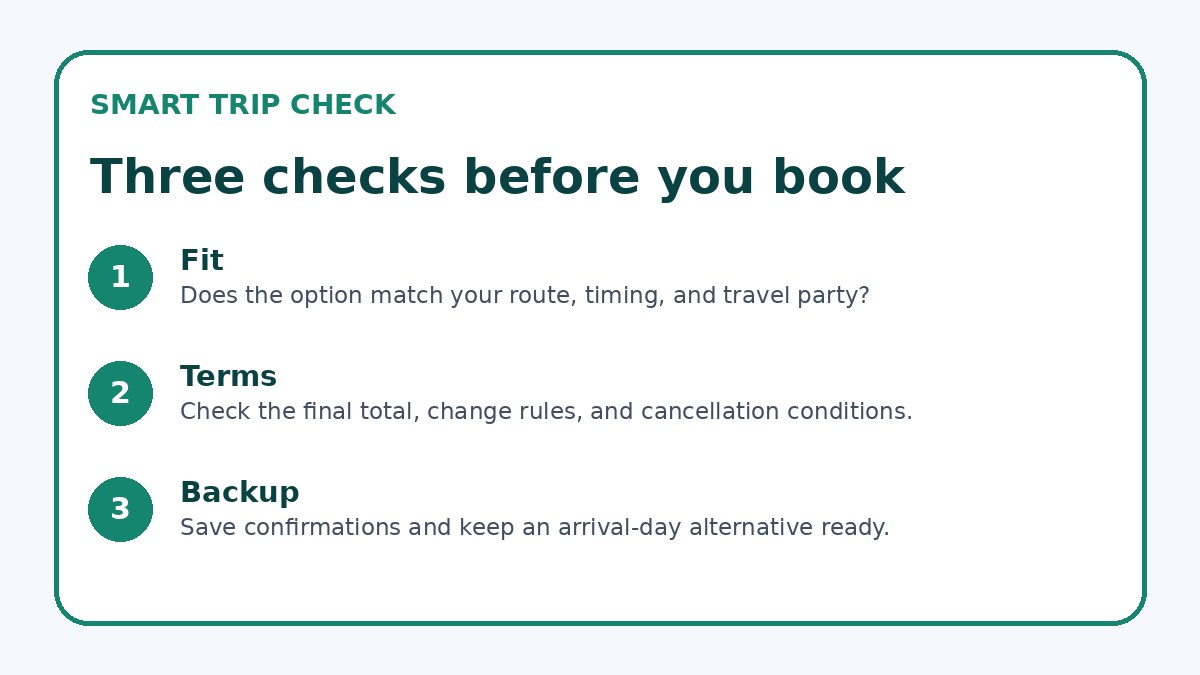
Before you book
- Confirm step-free access, elevators, and family restrooms at both departure and arrival nodes on the operator’s official site.
- Reserve adjacent seats or a family seating block where possible; verify seating assignments on the provider’s booking page.
- Pack a carry-on daybag with snacks, medicines, wipes, and spare clothes to avoid opening checked luggage mid-trip.
- Pre-book taxis or rideshares with child-seat options if you need them, and save driver contact details for day-of coordination.
- Map the walking route between curbside drop-off and the platform/gate and allow extra time for strollers and luggage.
- Take screenshots of tickets and the operator’s transfer instructions; note emergency and customer-service numbers before travel.
Day-of travel: timing, drop-off, and arrival plans
Create a trip timeline that begins at least one hour earlier than you think you need, then adjust based on your family’s habits. For example, factor in extra time for loading a car, navigating toddler delays, or waiting at security lines if transferring via an airport. Identify the station or terminal’s family drop-off point so you can unload without crossing traffic; many large stations have designated curbside or short-term parking areas helpful for quick goodbyes. If you plan to use a rideshare or taxi, pre-book where possible and verify the pickup point because app descriptions sometimes differ from local signage.
On arrival in Montreal, have a clear plan for the first 30 minutes: where you’ll collect luggage, where restrooms and family facilities are, and how you’ll complete the final leg to your accommodation. If you need public transit, research whether your arrival node has direct bus or metro links and whether those vehicles accommodate strollers and luggage easily. If someone in your party is napping, consider a short taxi to preserve rest rather than forcing a transfer with many stairs. Finally, save up-to-date contact numbers and a screenshot of your tickets so you can resolve issues quickly without relying on data reception.
Frequently asked questions
Should families prefer departing from a central station or a suburban terminal for Toronto to Montreal travel?
Departing from a central station usually reduces the number of transfers and walking with luggage and children, and it often has better access to taxis and hotels. A suburban terminal can be cheaper or closer to where you’re staying, but it typically requires an additional transfer—public transit, taxi, or shuttle—to reach the main intercity route. For families, that extra handoff can mean repacking luggage, managing strollers on buses or trains, and introducing more scheduling risk. Weigh the savings against the hassle of another connection and the needs of children and anyone with mobility concerns.
How much transfer time should I build in when switching between a train station and an airport?
Transfers between an airport and a train station require more buffer than a single-mode connection because airports have long corridors, potential security lines, and luggage logistics. For families, add time for restroom stops, changing children, and moving strollers or car seats. Instead of trusting a single recommended minimum, plan a window wide enough to recover from small delays—longer if you have lots of luggage or tight schedules. Always verify transfer options and recommended connection times on the carrier’s booking pages and ask staff about the typical transfer routes and possible travel-time variations.
Can I bring a stroller and car seat on intercity services between Toronto and Montreal?
Policies on strollers and car seats differ by operator and can change; therefore, check the provider’s current rules on their official booking page before you travel. Some operators allow strollers on board if folded, with storage in designated areas, while others offer limited space or require gate-checking. Car-seats may be permitted in a parent’s seat but might not be supplied by the operator. If you rely on a car seat, plan for a taxi or private transfer that guarantees installation, or confirm whether the operator can accommodate one during booking.
Final planning note
Planning Toronto to Montreal transport for a family is less about finding the single cheapest ticket and more about minimizing stressful handoffs. Choose the departure and arrival nodes that keep transfers straightforward, prioritize seating together and step-free access, and give yourself generous buffers for bathroom breaks, stroller handling, and naps. Verify all specifics—luggage rules, stroller policies, seat reservations, and transfer points—on the provider’s booking page before you finalize anything. For side-by-side availability checks, you can consult broad aggregators like Trip.com, but always treat their listings as a pointer and confirm details with the operator. With a clear plan, a packed daybag, and contingency time, your family trip between Toronto and Montreal will be much smoother.
Continue planning
Check current options and final conditions
Use the provider page to confirm live availability, the final total, cancellation terms, and every condition that matters to your trip.
This evergreen planning guide was created with AI-assisted drafting and a structured quality review. It does not display live prices, schedules, availability, visa guidance, or provider rankings. Verify current details before booking. Some links are affiliate links; we may earn a commission at no additional cost to you.