If you’re flying solo from Hanoi to Ho Chi Minh City, the most practical approach is clear: travel with a manageable carry‑on, confirm airline baggage rules, and plan airport arrival time based on whether you check bags or require extra services. For one-hour flight sectors like this, time in the terminal is often the biggest friction point, not the flight itself. Decide early if you want the convenience of a checked bag or the speed of carry‑on only — each choice changes when to leave your accommodation, how long security will take, and whether you’ll need a baggage drop or collection. This article gives direct, usable steps up front, then explains tradeoffs, how to compare direct and connecting flights, and which provider details to verify on booking pages so your transfer between Vietnam’s two biggest cities is smooth and predictable.
See current options before you compare the details
Availability and final conditions change. Open Trip.com now or keep reading for the practical comparison.
Decide carry‑on versus checked bag
For a short domestic hop such as Hanoi to Ho Chi Minh City, a carry‑on usually saves time. With a single small wheeled bag and a personal item, you skip baggage drop queues, avoid waiting at arrivals, and move faster between airport and city. A carry‑on also reduces the chance of delayed or misplaced luggage, which matters when you’re solo and may be on a tight schedule. Consider what you truly need for your stay: a change of clothes, chargers, and essential toiletries will often fit in a 7–10 kg bag. If you’re carrying business materials, fragile items, or more shoes and outfits than fit in one bag, a checked bag might still be necessary.
When a checked bag makes sense, accept the extra time and plan accordingly. Most airlines ask passengers to check in earlier when they have hold luggage and set cutoffs for baggage acceptance well before departure. That means leaving your accommodation earlier and allocating additional buffer for busy periods like morning and early evening flights. Also factor in the time to collect your bag at Tan Son Nhat or Noi Bai arrival halls; depending on flight sequencing and baggage handling, luggage may take 10–30 minutes to appear. If avoiding delays is a priority, a well‑packed carry‑on remains the simplest option.
Timing your airport arrival and check‑in
Plan your arrival time by combining the airline’s stated check‑in time with real‑world buffers. For carry‑on only passengers, arriving 60–75 minutes before domestic departure is often sufficient if you have mobile or online check‑in and no extra services. That window covers security and a modest queue at the gate. If your airline requires an earlier check‑in or you need assistance, add 15–30 minutes. Check whether the airline offers dedicated fast lanes — those can reduce time but confirm availability and eligibility on the airline’s booking page before assuming access.
When checking luggage or traveling during peak hours, add more margin. Airport traffic, security lines, and baggage drop counters can peak with morning business flights and early evening connections; arriving 90–120 minutes before departure is a safer bet in those cases. Also leave time for transport to the airport: traffic in Hanoi and Ho Chi Minh City can be unpredictable, especially at rush hour. Build in a local cushion so a taxi or ride‑hailing delay doesn’t force you to skip check‑in or miss the flight.
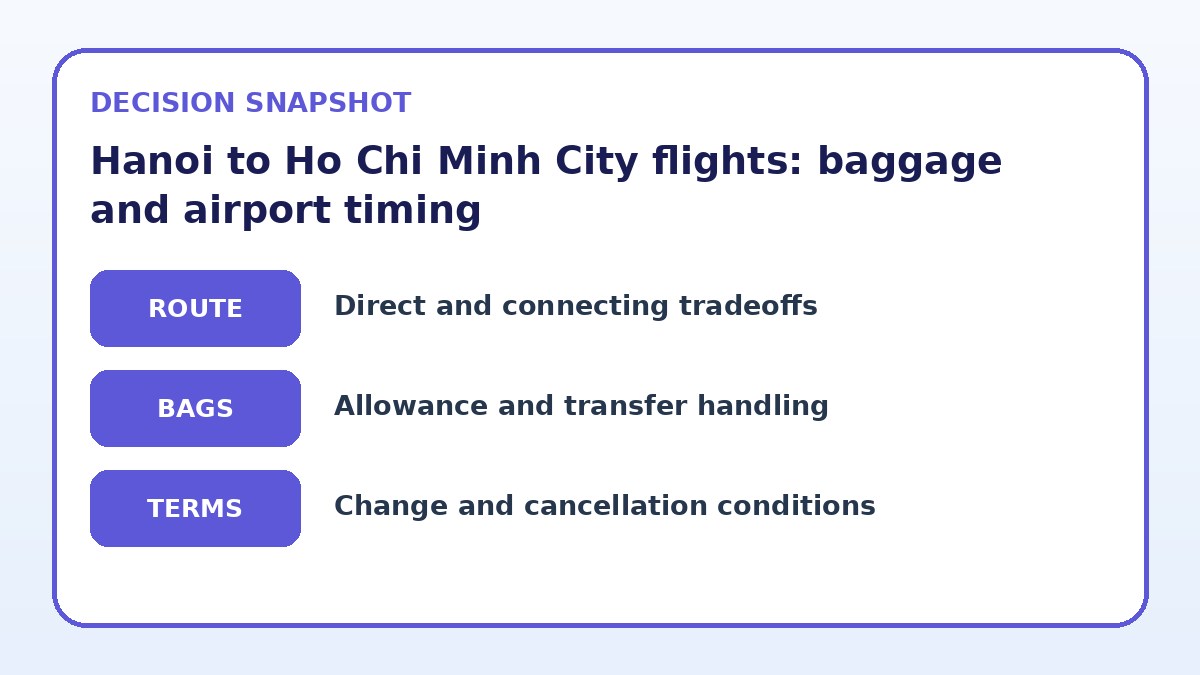
| Approach | Best for | Tradeoff to check |
|---|---|---|
| Carry‑on only | Fast airport flow and minimal waiting | Limited wardrobe and souvenir capacity |
| Checked luggage | Longer stays or bulky items | Longer check‑in and baggage claim time |
| Direct flight | Quickest door‑to‑door travel | May be pricier or less flexible timing |
| Connecting itinerary | Tighter budget or specific timing needs | Higher chance of delays and re‑handling baggage |
Ready to check the option that fits your plan?
Use your exact dates and traveler details so the provider page can show the current total and conditions.
Comparing direct and connecting flights
Direct flights between Hanoi and Ho Chi Minh City are common and usually the fastest way to travel between the two cities. When evaluating options, compare total door‑to‑door travel time, not just airborne time. A cheaper ticket with a connection might save money but add transfer time, extra airport procedures, and greater risk of missed onward flights or lost baggage. If a connection shortens total travel time or significantly improves schedule alignment with your plans, it can be worthwhile—otherwise prioritize a nonstop itinerary for simplicity.
When connecting is an option, factor in minimum connection times recommended by the airline and the airports involved. If you must change terminals, understand local transfer procedures: some transfers require re‑clearing security or moving between domestic and international areas, which adds time. If you select a single booking with the same airline or alliance, baggage may be checked through; if you book separate tickets, expect to collect and re‑check bags. Always verify connection rules and baggage transfer policies on the carrier’s final booking page before you book.
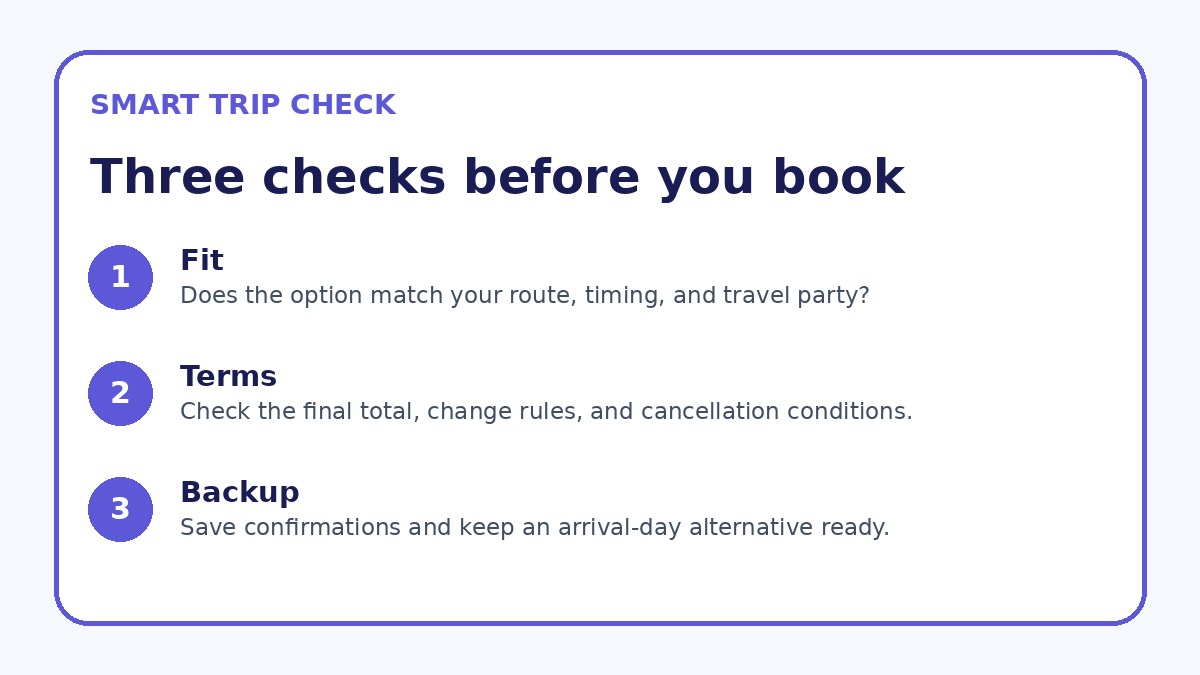
Before you book
- Confirm the airline’s carry‑on dimensions and weight on the carrier’s final booking page before assuming bag size acceptance.
- If checking a bag, arrive at the airport at least 90 minutes before departure and allocate extra time for baggage drop queues.
- Complete online check‑in and save a digital boarding pass to reduce time at counters and speed through security.
- Pack essential items (documents, medication, charger, small snack) in your personal item for immediate access after landing.
- Photograph travel documents and keep emergency contacts and local transport options saved in your phone before departure.
- Verify whether your itinerary is a single ticket or separate legs and check baggage transfer rules on booking confirmation.
Practical packing and airport tips for solo travelers
Organize essentials for easy access: travel documents, phone, charger, a power bank, medications, and a small snack. Use a compact toiletry pouch that follows liquid restrictions, and keep electronics in a separate compartment for faster security screening. Wear shoes that are quick to remove if security requires; avoid large belts or excessive metal. Also bring a lightweight rain layer—Vietnam’s weather can change quickly and an unexpected shower may complicate transfers between terminals or the taxi rank.
Think about security and comfort as a solo traveler. Mark your bag with a distinctive tag and keep valuables in a money belt or inside zippered compartments. Photograph your passport data page and e‑ticket on your phone (stored securely) in case of loss. If you’ll be arriving late at night in Ho Chi Minh City, prearrange safe onward transport or check the availability of airport taxis and ride‑hailing services. Finally, if you anticipate remote work, confirm power and Wi‑Fi availability at departure and arrival lounges ahead of time so you can plan buffers around connectivity needs.
Frequently asked questions
How early should solo travelers arrive at the airport for Hanoi to Ho Chi Minh City flights?
If you travel with only hand luggage and have completed online check‑in, arriving about 60–75 minutes before departure is often sufficient for domestic flights. Allow extra time—aim for 90–120 minutes—if you check baggage, travel during peak hours, need special assistance, or want extra buffer for road traffic. Confirm the airline’s stated check‑in and baggage drop deadlines on its booking page, because some carriers require earlier arrival times for checked bags or specific services.
What essentials should I keep in my carry‑on for a short domestic hop?
Keep passport or ID, boarding pass, wallet, phone, charger or power bank, medication, a small snack, and a lightweight rain layer in your carry‑on or personal item. Also include a change of clothes if you’re anxious about baggage delays. Organize these items in easily reachable compartments so you bypass rummaging at security or the gate. If you plan to work in transit, bring noise‑cancelling earbuds and confirm lounge or Wi‑Fi access before relying on airport connectivity.
Should I choose a direct flight or a cheaper connecting option between Hanoi and Ho Chi Minh City?
For most solo travelers, a direct flight is preferable because it reduces complexity and the chance of missed connections or lost luggage. Consider a connecting option only if it meaningfully reduces total travel time or cost after you factor in transfer risks and added procedures. If you seriously contemplate a connection, check minimum connection times and baggage transfer policies on the airline’s booking page and ensure any self‑transfer intervals include generous buffers for delays.
Final planning note
Traveling solo from Hanoi to Ho Chi Minh City is straightforward when you align baggage choices with realistic airport timing. Choosing carry‑on only simplifies the process and shortens required arrival windows; checked luggage suits longer stays but requires you to arrive earlier and accept potential waits at baggage claim. Compare direct and connecting flights by total door‑to‑door time and verify baggage and check‑in rules on the airline’s final booking page before you commit. With a compact, well‑organized bag and a conservative buffer for transit and security, you’ll reduce stress and keep control of your schedule between Vietnam’s two major cities.
Continue planning
Check current options and final conditions
Use the provider page to confirm live availability, the final total, cancellation terms, and every condition that matters to your trip.
This evergreen planning guide was created with AI-assisted drafting and a structured quality review. It does not display live prices, schedules, availability, visa guidance, or provider rankings. Verify current details before booking. Some links are affiliate links; we may earn a commission at no additional cost to you.