If you're traveling from London to Paris for the first time, the single most useful thing to plan is how you'll get between stations and terminals at both ends. Trains and flights use different London stations and Paris terminals, and choosing the right arrival and departure points affects taxi time, transfer options, luggage handling, and connections to your accommodation. Start by deciding whether you want the predictability of train-to-train transfers (fewer security hoops, city-center stations) or the flexibility of flights (more airline choices but airport transfers). Once you know whether you'll prioritize speed, cost, or simplicity, you can compare specific stations, check onward transit links, and pick transfers that match your arrival window and luggage needs.
See current options before you compare the details
Availability and final conditions change. Open Trip.com now or keep reading for the practical comparison.
Choose your arrival and departure points
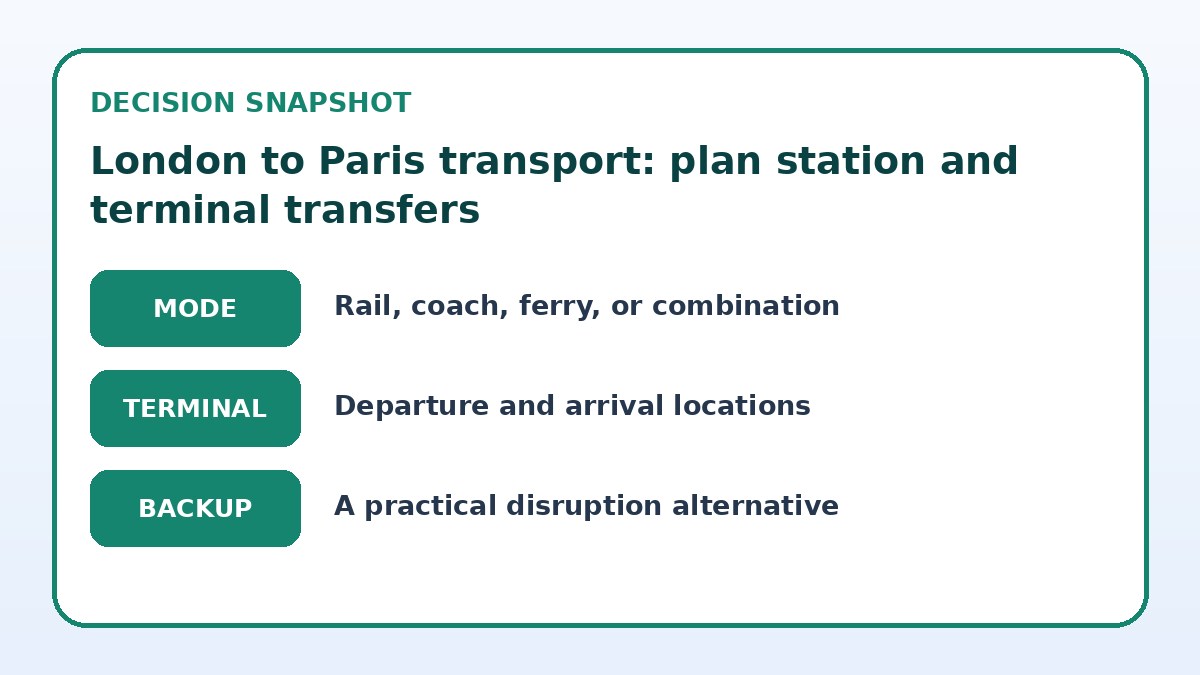
London to Paris travel commonly involves either rail stations or airports, and your first decision shapes the rest of your plan. For many travelers, trains arrive and depart from major city-center stations that put you closer to central Paris neighborhoods; airports typically sit farther out, adding transfer time and the need to navigate airport procedures. Consider where you will start and end each day: if your London hotel is near central stations, a train might save time despite a longer scheduled journey. Conversely, if you must fly for a specific airline or fare, factor in the extra steps at departures and arrivals when comparing door-to-door time.
When comparing specific terminals or stations, map them relative to your lodging and any onward connections. Check which Paris terminal or station is served by your transport option—some services use multiple terminals with different onward transit links. Take note of the typical modes available from each point: local metro, suburban rail, intercity buses, rideshares, and taxis. Make a list of preferred arrival points and then cross-check which transfer options (direct metro lines, shuttle buses, or reliable taxi routes) link those points to where you'll actually be staying or visiting.
Transfer methods: trains, metros, buses, and taxis
Each transfer method has tradeoffs for time, cost, convenience, and luggage handling. Trains and metros are usually the fastest through dedicated lanes or tunnels and avoid road congestion, but they can be crowded and may require stairs or limited elevator access for heavy luggage. Airport shuttles and coach services are designed to move travelers and handle bags, but they follow road traffic and can be slower at peak times. Taxis or rideshares add door-to-door convenience and help when you travel with a lot of luggage or during odd hours, but their travel time is subject to traffic and local driving regulations.
Think about your priorities before choosing a transfer method: if minimizing stress with heavy bags is key, a direct taxi or private transfer may be worth the extra cost. If you prioritize predictability during busy hours or want to save money, check whether a dedicated airport express or regional rail offers direct links between stations and terminals. Also plan for contingencies—if a connecting metro line is disrupted you’ll want a backup route. Finally, verify accessibility information if you or someone in your party needs elevators, ramps, or step-free access.
| Approach | Best for | Tradeoff to check |
|---|---|---|
| Train-to-train transfers (city-center stations) | Travelers staying in central neighborhoods who want predictable city-to-city transit | May require walking with luggage between platforms and timed connections |
| Flight arrivals and departures (airports) | Those needing specific airlines or international connections not served by trains | Adds check-in, security, and longer ground transfers to and from city centers |
| Taxi or rideshare transfers | Passengers with heavy luggage, mobility needs, or late-night schedules | Faster door-to-door but subject to road congestion and cost variability |
| Airport/coach shuttles and express trains | Budget-conscious travelers who want predictable fixed-route service | May stop at multiple points and take longer than a direct taxi during off-peak times |
Ready to check the option that fits your plan?
Use your exact dates and traveler details so the provider page can show the current total and conditions.
Timing and connection planning
When timing transfers, allow buffer time for real-world delays: road congestion, security queues, ticketing lines, and platform changes. For rail-to-rail transfers, shorter minimum connection times tend to work because you won’t need to clear security or check in, but you may need time to walk between platforms and find luggage storage if required. For flight connections, add time for check-in, baggage drop, security, and passport control where applicable. Always check whether your arrival and departure services publish recommended connection windows and plan a margin above those recommendations based on how comfortable you are with tight transfers.
Use a layered timing approach: estimate optimistic travel time, then add moderate and conservative buffers for peak traffic or delays. If you need to catch a late-evening onward service, choose an earlier arrival or leave a longer transfer window. Also consider the day of the week and local events—rush hour and strikes, for example, can lengthen transfers. Keep contact details and a contingency plan (alternate trains, nearby hotels, or flexible tickets) so you can adapt if your initial transfer option becomes impractical on the travel day.
Before you book
- Confirm exact departure and arrival stations or terminals and note the terminal/concierge meeting point on your booking confirmation.
- Map the transfer route from station or terminal to your accommodation and identify at least one public transit and one private transfer option.
- Allow a conservative buffer for transfers: add time for security, baggage handling, and potential road congestion when scheduling connections.
- Check luggage allowances and platform or terminal requirements on the operator’s final booking page before you travel.
- Reserve any required shuttle seats or prebook a taxi if traveling during very early or late hours to guarantee pickup.
- Save contact numbers and a local map screenshot offline in case of mobile data interruption during transfers.
Booking and what to verify before you finalize
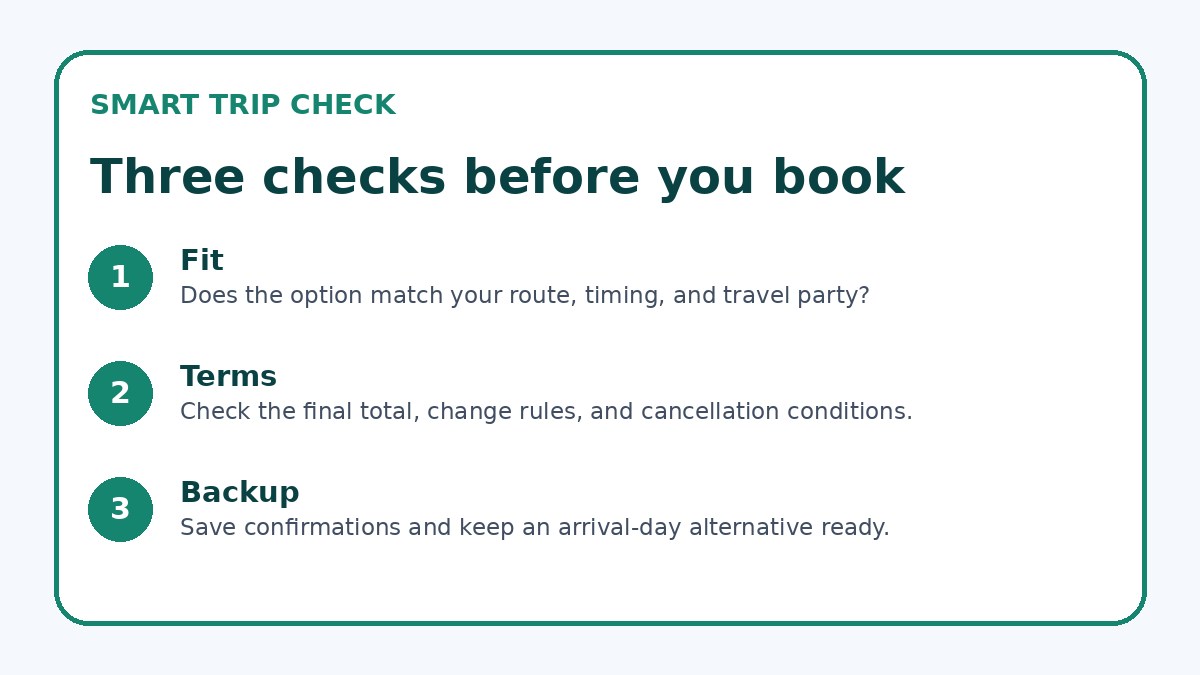
Before you book, confirm the exact stations or terminals and the transfer options that connect them. Verify platform or terminal assignments where provided by the operator, and check luggage allowances or whether a transfer requires a separate booking. If you are mixing providers—say a train into Paris followed by a flight out of a Paris airport—make sure you understand whether the operators assume responsibility for missed connections. Where details are subject to change, look at the provider’s final booking page for up-to-the-minute instructions about check-in, platform gates, and transfer recommendations.
If a provider advertises shuttle or transfer services, verify schedules and the meeting point in advance; many services require reservations for shuttles or have fixed pickup locations. Use official operator pages or your booking confirmation to find terminal maps and recommended transit routes. You can compare current availability and transfer conditions on Trip.com as one option, but always cross-check any critical details with the carrier or station authority listed on the confirmed booking before you travel.
Frequently asked questions
Is it faster to take a train or fly between London and Paris when considering transfers?
Whether train or plane is faster depends on door-to-door conditions, not just scheduled travel time. Trains often use central stations, reducing ground transfer time if your origin and destination are near the city center. Flights may have shorter airborne time but require extra time for check-in, security, and longer transfers to and from airports. To decide, compare estimated total travel time: time to reach the departure point, recommended arrival time before departure, in-transit time, and transfer time at the far end. Factor in luggage handling and your tolerance for tight connections.
How much connection time should I allow between an arrival in Paris and a departing service from a different terminal or station?
There’s no one-size-fits-all connection time; allow more than the absolute minimum. For rail-to-rail transfers in city centers, a comfortable window might be 45–90 minutes depending on walking distance and luggage. For airport-to-station or station-to-airport transfers, add time for security and passport control—plan at least 2–3 hours if you must check luggage or pass through busy terminals. Increase these buffers during peak travel periods or when you don’t have experience navigating the stations or airports involved.
Can I rely on public transit to reach Paris terminals from London arrivals late at night?
Public transit can be limited late at night, with fewer trains and reduced metro or bus frequencies. If you arrive late, confirm night services or consider a taxi, rideshare, or prebooked transfer that operates at your arrival time. Check operator timetables before you travel since night routes and schedules vary by day of week and may change for maintenance or events. If public transit isn’t available, arrange a reliable paid transfer and keep a backup contact number for your driver or the transfer provider.
Final planning note
Planning transfers between London and Paris is largely about matching arrival and departure points to your priorities: speed, convenience, cost, or luggage handling. Pick stations or terminals that minimize subsequent travel to your accommodation, and choose transfer methods that fit your comfort with walking, public transit, or hiring private vehicles. Build conservative time buffers, verify terminal and luggage details on the operator’s final booking page, and have contingency options for disruptions. With clear mapping, timed buffers, and one confirmed transfer method plus a backup, you’ll reduce stress and make the cross-Channel trip as smooth as possible.
Continue planning
Check current options and final conditions
Use the provider page to confirm live availability, the final total, cancellation terms, and every condition that matters to your trip.
This evergreen planning guide was created with AI-assisted drafting and a structured quality review. It does not display live prices, schedules, availability, visa guidance, or provider rankings. Verify current details before booking. Some links are affiliate links; we may earn a commission at no additional cost to you.