
If you’re booking a business trip to Jeju, the practical answer is straightforward: add up all likely costs—air or ferry fares, transfers, accommodation extras, meeting-day logistics, and contingency buffers—before you commit. For short stays, smaller line items like airport transfer surge fees, luggage charges, or dinner staging for meetings can change whether a deal is actually economical. Start by collecting pricing for the core items (travel to Jeju and hotel nights) and then layer on things that matter to your itinerary: ground transport to client sites, Wi‑Fi reliability, meeting room or co‑working access, and any paperwork or permits the host requires. Cross-check cancellation and change policies, and note where final provider pages require extra fees, payments at check-in, or identity verification. That upfront math makes comparing “deals” useful rather than misleading for busy professionals whose time is part of the cost.
See current options before you compare the details
Availability and final conditions change. Open Trip.com now or keep reading for the practical comparison.
Map the true trip budget: beyond headline fares
Headline deals—discounted airfares or promotional hotel rates—are useful starting points, but they’re rarely the whole picture. For business travelers, time is a cost equal to money: the cheapest flight that requires late-night transfers or long waits can erode productivity and increase incidental expenses such as meals, taxis, or a missed meeting fee. Build a worksheet that lists core elements (outbound and return travel, accommodation) and then add rows for airport-to-hotel transfers, local travel to meeting locations, meals outside included plans, and a modest contingency line for last-minute adjustments.
When comparing options, convert everything into a per‑day or per‑meeting cost so you can see tradeoffs clearly. For example, a pricier hotel next to your client’s office might save taxi fares and time, while a lower rate in a farther neighborhood could require early departures and extra taxi rides. Include amortized costs like corporate card fees, printed materials, and local SIM or roaming data if you need consistent connectivity. That arithmetic helps you weigh convenience against headline savings and decide which deal actually fits your employer’s priorities.
Check what’s on the hotel page and what to verify
Hotel descriptions often list business-friendly amenities, but the final booking page is where commitments appear. Confirm whether breakfast is included, whether Wi‑Fi is free in both room and meeting spaces, and whether quiet rooms or flexible check‑in/out are options. If you expect to host a client, check meeting-room availability, setup fees, and whether audio‑visual gear is provided or must be rented. Also verify any local taxes, city levies, or resort fees that are charged at the property rather than shown in the booking total.
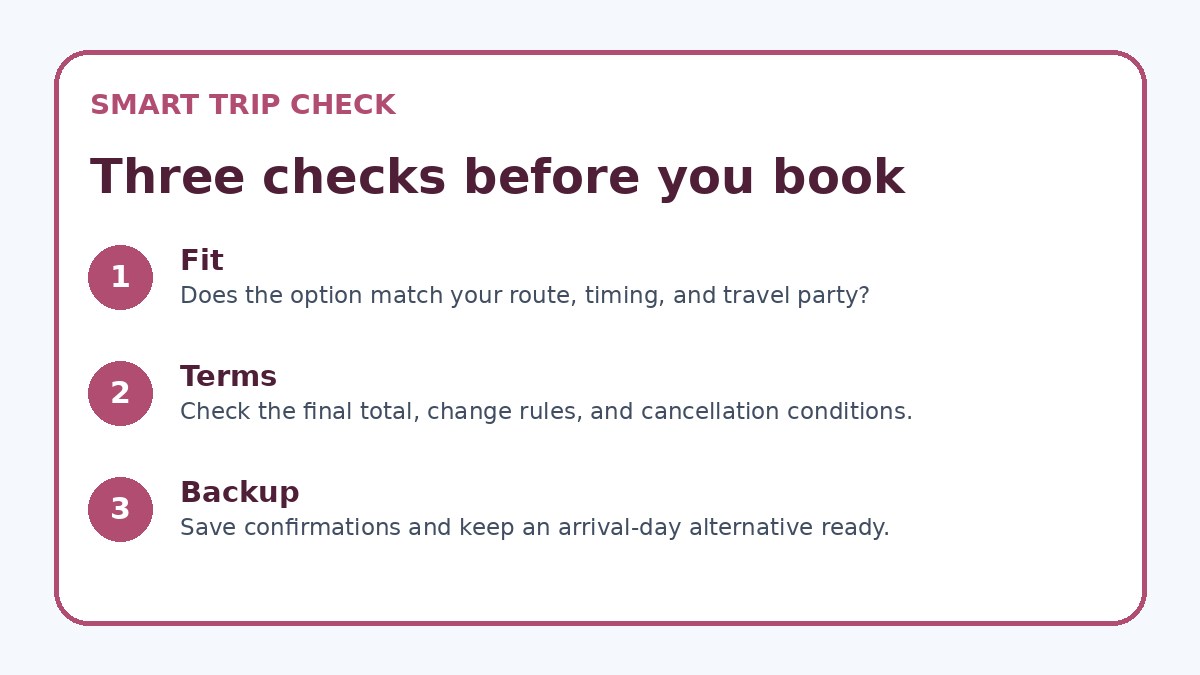
Pay attention to payment and cancellation terms. Many corporate travelers need flexible change or refund options; if a rate is nonrefundable, quantify the risk by comparing the nonrefundable amount to a flexible alternative. Read supplier notes for identity verification, deposit requirements, and whether third‑party bookings (business travel agencies, corporate portals, or sites like Trip.com) require immediate full payment or hold a reservation. When in doubt, take a screenshot of the final provider page showing the total and conditions before you confirm.
| Approach | Best for | Tradeoff to check |
|---|---|---|
| Lowest headline rate | Cost-sensitive travelers with fixed plans | May include restrictive cancellation rules and higher incidental costs for transfers or timing. |
| Flexible refundable fare | Trips with uncertain schedules or last-minute changes | Higher upfront cost but lower financial risk if plans shift. |
| Closer hotel with higher nightly rate | Busy schedules where time equals productivity | Fewer transportation costs but higher lodging spend. |
| Cheaper hotel farther away | Multi-night stays where savings compound | More time and taxi costs; potential for fatigue or missed meetings. |
Ready to check the option that fits your plan?
Use your exact dates and traveler details so the provider page can show the current total and conditions.
Transport choices: ferry, flight, and ground transfers
Jeju is reached by air or sea from the Korean Peninsula and by onward local transport once you arrive. When choosing flights versus ferries, weigh door‑to‑door travel time and luggage handling against fare differences. A faster flight that lands closer to your meeting schedule could justify a higher fare because it reduces time out of the office. Conversely, ferries may be attractive for flexible schedules or heavy cargo, but they often mean extra time and transfer planning at both ports.
For ground transfers on Jeju, look beyond advertised shuttle services. Confirm pickup locations, whether a shuttle requires advance booking, and how long transfers typically take during peak traffic. Check whether your hotel provides corporate shuttle options or discounted taxi partners. If you plan to rent a car, verify driver requirements and parking availability at both meeting sites and the hotel; if you rely on taxis or ride apps, estimate a realistic number of trips and include surge or late‑night premiums in your calculations.
Before you book
- Create a spreadsheet listing core costs (travel, hotel) and add rows for transfers, meals, connectivity, meeting-room fees, and contingency.
- Open the provider’s final booking page to confirm total price, taxes, required deposits, and explicit cancellation/change penalties; save a screenshot.
- Confirm hotel business amenities—Wi‑Fi reliability, early check‑in, meeting-room availability, and any extra setup or AV rental costs.
- Estimate local transfer needs: prebook shuttles or taxis where possible and add likely surge or late‑night fees to your budget.
- Verify corporate policy for reimbursements, required receipts, and whether corporate cards or personal holds are permitted for hotel incidentals.
- Set aside a small contingency fund in the trip total to cover an unexpected overnight, equipment rental, or last‑minute transport change.
Policies, contingencies, and who covers what
Confirm your company’s travel policy before booking: what expenses are preapproved, what receipt standards are required, and whether per‑diem or itemized reimbursement applies. If your employer covers lodging but not meals or transfers, structure bookings accordingly—choosing a hotel that includes breakfast or has an onsite restaurant could reduce out‑of‑pocket spending. When a rate requires a corporate guarantee or a personal card imprint, know whether your company will reimburse incidental holds or deposits.
Plan for contingencies such as last‑minute meeting changes, delayed flights, or equipment failures. Check the provider’s change and cancellation policy on the final page and note any service fees for modifications. Build a small contingency fund into the trip total—enough to cover an unexpected overnight, extra transfer, or replacement equipment rental—and know who in your organization approves emergency spend. That combination of financial buffer and clear policy alignment reduces stress and keeps the trip focused on business outcomes rather than surprises.
Frequently asked questions
Should I prioritize a hotel close to meetings or a lower nightly rate further away?
Prioritize proximity when meeting schedules are tight or when travel time would cut into billable work; the time saved can outweigh a higher room rate. For multi‑day trips with flexible meeting times, a lower nightly rate further away can be economical if you account for reliable transfer options and total taxi costs. Model both scenarios in your spreadsheet: list nightly cost plus estimated daily transfer expenses and compare the per‑day effective cost. Also factor in employee well‑being—reduced travel time can improve focus and reduce the risk of delays.
How do I compare flight and ferry options for Jeju without assuming direct routes?
List both flight and ferry options and record total door‑to‑door travel time, luggage handling, and transfer complexity for each. For flights, check whether connections are common on your dates and whether baggage or seat selection adds fees; verify these on the airline’s final booking page. For ferries, note port transfer times and any extra steps for cargo or passengers with large luggage. Translate both options into a total cost that includes transfer taxis, potential overnight layovers, and lost productive time to see which suits your schedule and budget.
What should I verify on the final provider booking page that’s often missed?
On the final booking page, check for line items such as local taxes, resort or service fees collected at the property, mandatory deposits, and whether Wi‑Fi or breakfast is truly included. Confirm cancellation and change fees, whether the reservation requires immediate full payment, and what identification or company documentation will be checked at arrival. If you used a third‑party site, compare the provider’s own page to ensure identical terms; Trip.com can be useful for initial comparisons, but always confirm final conditions and total costs on the supplier’s page before you finalize.
Final planning note
For business travelers to Jeju, the most reliable deals are the ones you can explain with numbers. Don’t let an attractive headline rate blind you to the costs that actually matter on a short business trip—time, transfers, meeting‑day needs, and cancellation risk. Build a simple comparison that totals fares, hotel extras, local transport, and a contingency buffer. Verify every key term on the supplier’s final booking page—payment timing, taxes, and change or cancellation fees—and align the booking with your company’s travel policy. That preparation reduces surprises, protects your schedule, and ensures the chosen deal supports your business objectives.
Continue planning
Check current options and final conditions
Use the provider page to confirm live availability, the final total, cancellation terms, and every condition that matters to your trip.
This evergreen planning guide was created with AI-assisted drafting and a structured quality review. It does not display live prices, schedules, availability, visa guidance, or provider rankings. Verify current details before booking. Some links are affiliate links; we may earn a commission at no additional cost to you.