If you're a couple planning to drive in Sydney, the single most useful thing you can do before booking is learn how insurance wording affects your responsibilities, excess, and out-of-pocket risk. Most rental contracts mix legal terminology with insurer language: collision damage waiver (CDW), loss damage waiver (LDW), liability cover, excess, and third-party property damage commonly appear, and small differences in definitions can change who pays for what after an accident. Read the rental agreement line by line — especially the definitions and exclusions — and compare that wording to any cover provided by your bank card or a separate travel policy. Decide what level of certainty you need: accept some residual risk to save money, or pay for excess-reduction to avoid the stress of disputes while on holiday. Below are clear ways to interpret key clauses and practical steps couples can take together when booking and at pickup.
See current options before you compare the details
Availability and final conditions change. Open Trip.com now or keep reading for the practical comparison.
Key insurance terms and what they mean to couples
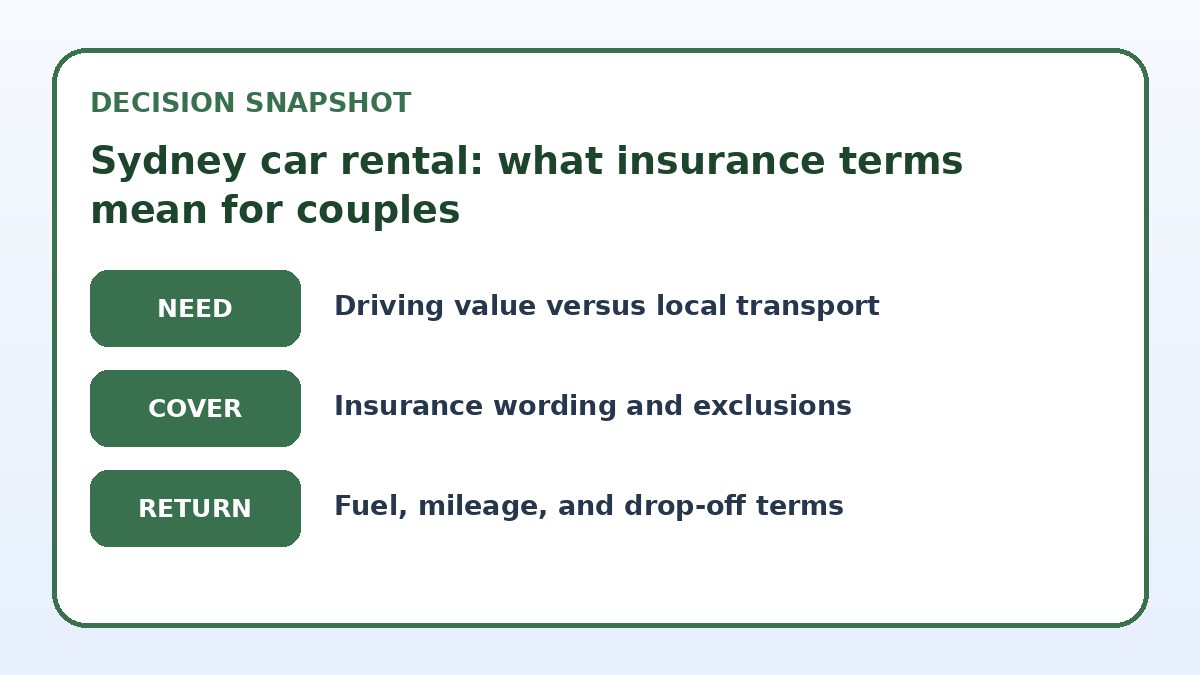
When you open a rental contract in Sydney, look first for definitions. Collision Damage Waiver (CDW) or Loss Damage Waiver (LDW) is often framed as a waiver of the rental company’s right to charge you for damage, but it usually does not eliminate your financial responsibility; instead, it reduces or removes the excess. Liability cover refers to third-party bodily injury and property damage — basic liability is often included to meet local minimums, but the policy limits and exclusions matter. The excess (also called deductible) is the amount you must pay before CDW covers damage costs; couples should treat excess as joint exposure if both are named drivers.
Exclusions and conditions are where surprises hide. Common exclusions include damage to tyres, windscreen, undercarriage, and loss from negligent acts (driving off-road, driving under the influence). Some contracts void coverage if an unauthorised driver operates the vehicle — check whether your partner is explicitly listed. Also note policies that require police reports for collision claims or that mandate returning the vehicle to a depot if damaged. For couples, clarify who will handle claims and who will be financially responsible if one party’s action triggers an exclusion.
How to compare the rental wording with other coverages
Couples often rely on credit card rental insurance or a separate travel policy — but words matter: does your card offer primary or secondary coverage? Primary cover pays without involving your personal insurance, while secondary cover only pays what your primary insurer or the rental company won’t. Verify whether card or policy wording covers the same perils the rental agreement excludes. For example, many cards exclude tyre and windscreen damage or refuse cover if certain driver ages or licence histories apply. Read the definitions in each document and line up the list of exclusions to see if gaps exist.
To compare effectively, make a short checklist: excess amount, types of damage covered, authorised driver rules, age restrictions, geographic limits, and procedures after an incident (police report, reporting window). Couples should exchange this checklist and confirm whose documentation will be presented at pickup. If the card or travel policy requires you to pay the rental company first and claim reimbursement later, factor that cash flow into your decision. When wording conflicts, prioritise the rental agreement’s clauses that directly affect immediate liability at the counter.
| Approach | Best for | Tradeoff to check |
|---|---|---|
| Pay rental-company excess-reduction | Couples prioritising convenience and stress-free claims | Higher upfront rental cost but typically lower out-of-pocket risk and fewer disputes. |
| Use credit card primary cover | Couples with strong card benefits and no large exclusions | May need to handle claims later and meet card issuer requirements for documentation. |
| Rely on secondary travel insurance | Couples seeking broader travel protection beyond rental damage | Usually reimburses after rental company and primary insurers; requires proofs and time. |
| Accept basic cover and self-insure (pay excess if needed) | Low-risk, short urban trips where partners accept possible expense | Lower cost up front but potential for significant unexpected bills if damage occurs. |
Ready to check the option that fits your plan?
Use your exact dates and traveler details so the provider page can show the current total and conditions.
Decision criteria for couples: risk tolerance and convenience
Decide as a pair how much uncertainty you’re comfortable accepting. Lower cost often means higher excess and more exclusions; higher upfront add-ons reduce hassle but increase the rental bill. Consider how you will use the car: city driving with short distances and easy parking typically carries lower damage risk than road trips on rural roads or along NSW coastal routes. If one partner will be the primary driver and the other the occasional driver, ensure both are listed to avoid coverage voids. Couples who want simple resolution often prefer paying for excess reduction at the desk to avoid potential disputes later.
Think about record-keeping and claim readiness. If you opt not to buy reduction, agree who will take photos, gather witness details, and contact the police in case of accidents. For those using credit card cover, confirm whether the card issuer needs a specific rental agreement clause or proof that you declined the rental company’s insurance. Balance convenience against the stress and potential out-of-pocket payments: sometimes paying a little more for peace of mind makes sense, particularly if one partner is unfamiliar with local driving conditions or will be driving at night or on unfamiliar highways.
Before you book
- Confirm both partners’ full names and licence numbers are listed as authorised drivers on the rental contract.
- Note the excess amount in writing and compare it to any credit card or travel policy excess provisions.
- Photograph the vehicle’s exterior and interior at pickup and ask the agent to record existing damage on the contract.
- Ask the agent to show insurance wording for any optional cover and get the new terms in writing before accepting.
- Verify whether tyres, windscreen, undercarriage, and third-party property damage are covered or explicitly excluded.
- Save screenshots or PDFs of the booking page and any insurer confirmation pages to show at pickup if wording differs.
What to verify at booking and at the pickup desk
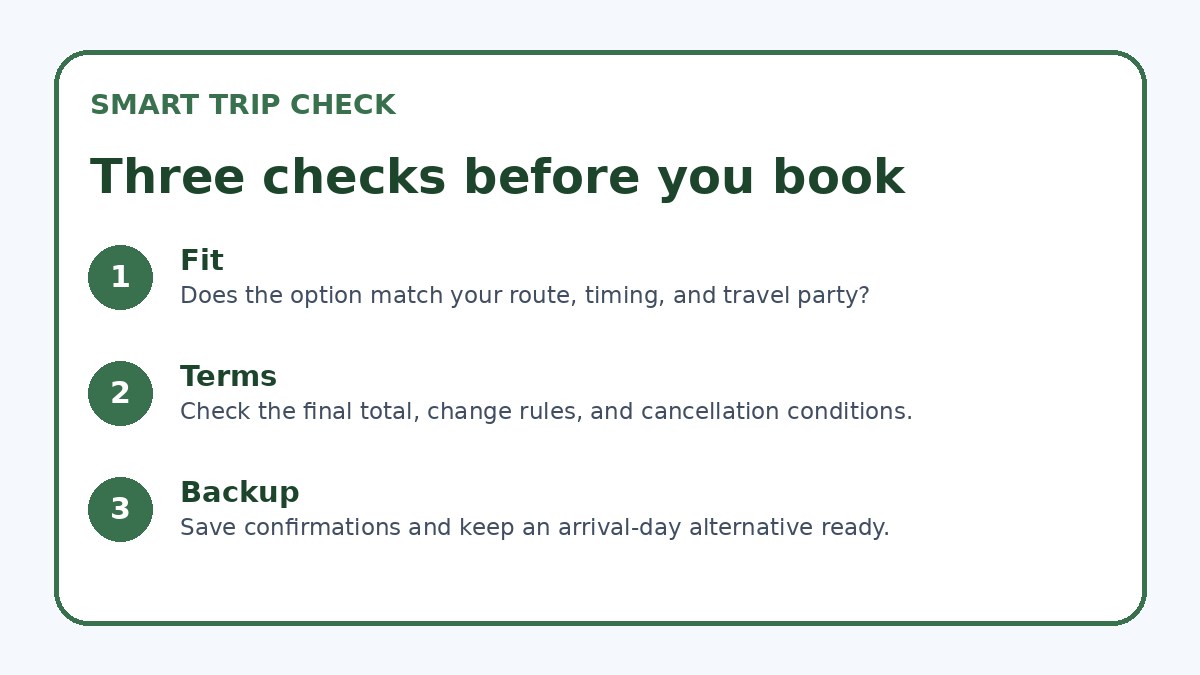
At booking, save or screenshot the rental agreement and any quoted insurance options. The written rate and the specific insurance wording shown on the booking page can differ from the contract at pickup, so note any promises or included cover. Before you finalise, check that both drivers’ names and licence details fit the provider’s requirements; missing or mismatched information can void coverage. If you’re relying on a third-party insurer, confirm on its final booking or policy page that the rental company and the vehicle type are covered and that no stated exclusions contradict the rental agreement.
At pickup, take time before driving away: inspect the car thoroughly with the agent, photograph every panel and existing marks, and ask the agent to initial or record damages they acknowledge. Get a written confirmation of the insurance level you selected and the excess amount — if the agent offers an on-the-spot upgrade, ask them to show the new wording and exclusions in writing. If you decline optional cover because you have other insurance, request the acceptance of that declination in writing in case the rental firm later tries to claim you didn’t refuse.
Frequently asked questions
Will my credit card automatically cover a Sydney car rental if I pay with it?
Not always. Coverage varies by card and issuer: some cards offer primary cover for rental damage, others only secondary cover. Terms often exclude certain vehicle types, ages, or specific perils such as tyres, windscreen, or off-road use. Card issuers typically require you to decline the rental company’s collision cover to activate benefits, and they may need original rental agreements, police reports, and repair invoices to process a claim. Before relying on card cover, check the issuer’s current policy wording and the provider’s final booking page for any wording that might conflict with the card’s requirements.
If both partners drive, do we both need to be on the rental agreement to be covered?
Yes: most rental contracts require every driver to be listed to be an authorised driver under the insurer’s terms. If one partner drives but isn’t listed, the rental company or insurer can deny cover and hold the listed driver financially responsible. There may be extra-driver fees, and some promotions waive those fees — always confirm in writing. When adding a driver, check age and licence length requirements as some policies exclude drivers under a certain age or with limited driving history; verify these details on the rental company’s final booking page before pickup.
How should couples handle a minor scrape or dent in Sydney to avoid claim hassles?
If the damage is minor and safe to do so, document the scene with time-stamped photos, exchange contact information with any other parties, and obtain a police report if required by the rental agreement. Report the incident to the rental company immediately and follow their instructions; failure to report promptly can breach the contract. If you have optional excess-reduction, present that at the desk and confirm whether any payment is due. Keep copies of all communications, receipts, and the rental agreement — these records are essential for claims or disputes after you return home.
Final planning note
For couples renting a car in Sydney, mastering the insurance wording before you book saves money, reduces stress, and avoids arguments when incidents happen. Focus on the excess, authorised-driver rules, and exclusions, and match those clauses against any credit card or travel insurance you plan to use. Decide together how much risk you’ll accept and who will handle documentation and claims. At pickup, insist on written confirmation of cover, photograph the vehicle thoroughly, and keep all booking screenshots and policy pages. Taking these steps leaves you free to enjoy Sydney’s sights with much less worry about what happens if something goes wrong.
Continue planning
Check current options and final conditions
Use the provider page to confirm live availability, the final total, cancellation terms, and every condition that matters to your trip.
This evergreen planning guide was created with AI-assisted drafting and a structured quality review. It does not display live prices, schedules, availability, visa guidance, or provider rankings. Verify current details before booking. Some links are affiliate links; we may earn a commission at no additional cost to you.