Practical answer: for solo travelers, target the two shoulder windows—late March to early May and late September to early November—to balance milder weather, fewer crowds, and better availability of Seoul travel deals. Book flexible refundable or changeable rates for at least the first night, choose a compact neighborhood with easy subway access, and compare accommodations and flights on multiple platforms before committing. Use the saved flexibility to arrive on weekdays, which often opens more weekday-only rates or last-minute single rooms. When checking deals, verify cancellation and change terms, any extra single-room supplements, and whether breakfast or a refundable deposit is included. If you use an aggregator like Trip.com, double-check the provider’s final booking page for true cancellation terms and check-in policies to avoid surprises.
See current options before you compare the details
Availability and final conditions change. Open Trip.com now or keep reading for the practical comparison.
Why shoulder seasons matter for solo travelers
Shoulder seasons give solo travelers a strategic balance between weather, crowds, and cost. In Seoul, spring and autumn bring comfortable temperatures that make walking neighborhoods and visiting markets more pleasant than midsummer humidity or midwinter cold. Crowds thin outside peak national holidays, so you can visit popular museums, palaces, and cafés with shorter waits. For someone traveling alone, smaller crowds mean easier solo seating at restaurants and more flexible reservations for small tables or solo-friendly activities.
The other practical benefit is availability: single rooms and smaller guesthouse beds are easier to find, and you are more likely to get the room or dorm type you prefer. That matters for last-minute plan changes—an unexpected weather day, a concert, or a local event—and lets you take advantage of midweek promos or rebookings without as much premium demand. Still, shoulder seasons are not empty; popular spots can be busy on specific festival dates, so check local event calendars when choosing your exact travel dates.
Where to base yourself to maximize deals and convenience
For solo travelers prioritizing deals and mobility, choose a neighborhood on a major subway line rather than an isolated bargain property. Areas like Hongdae, Myeongdong, Jongno (near Insadong), and Gangnam all offer a range of accommodations with quick subway access. Staying near a transfer station reduces time and cost spent on taxis and lets you pivot easily if a lower-priced room opens up elsewhere on short notice. Prioritize a location that feels safe at night and has 24-hour convenience stores and late dining options for solo arrivals or delayed plans.
When comparing properties, weigh room size and common areas against price. A slightly smaller private room can be worth it if the guesthouse has a kitchen or lounge where you can meet other travelers and store snacks, whereas a hotel with a 24-hour front desk provides more predictable late check-in. Confirm on the provider’s booking page whether single-occupancy rates differ from double occupancy and whether any extra fees apply for late check-in, key deposits, or housekeeping—these details change across properties and platforms.
| Approach | Best for | Tradeoff to check |
|---|---|---|
| Book refundable flexible rates | Travelers who value schedule freedom and can pay a bit more to avoid stress | Higher upfront cost and sometimes limited availability of the cheapest rooms |
| Book the lowest nonrefundable fare | Travelers with fixed dates who want the lowest headline cost | Little or no ability to change dates without losing most of the fare |
| Split-stay across neighborhoods | Solo travelers who want to experience multiple areas and catch weekday deals | Extra packing and moving time between accommodations |
| Wait for last-minute single-room openings | Agile travelers comfortable with some uncertainty seeking potential savings | Risk of fewer options and higher stress if nothing suitable appears |
Ready to check the option that fits your plan?
Use your exact dates and traveler details so the provider page can show the current total and conditions.
How to compare Seoul travel deals without relying on a single source
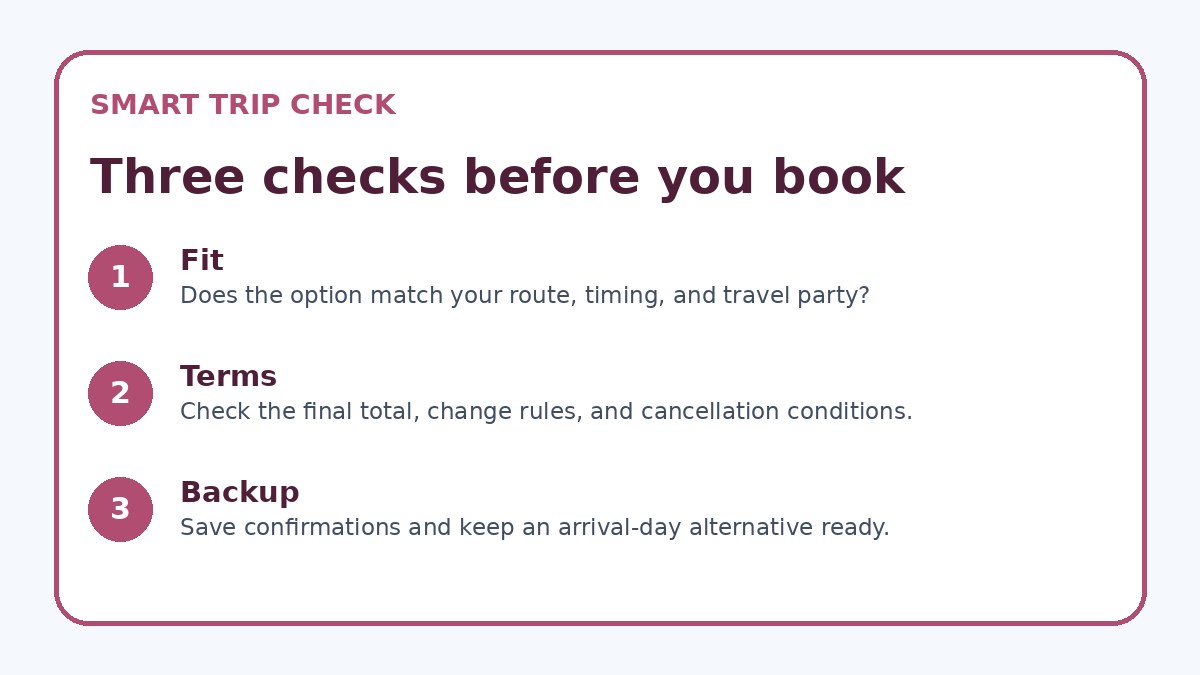
Start with a few aggregators to see a broad selection, but always open the property or airline’s final booking page to verify the exact cancellation policy and any service fees. Flight options often include direct and connecting itineraries; compare total travel time, transfer risks, and layover length against modest savings. For accommodations, check whether the rate includes breakfast, taxes, or city fees, and whether a refundable option is available. Aggregators are helpful, and you may run a quick compare on Trip.com, but consider the supplier’s own terms as the definitive source for cancellations and check-in rules.
When comparing, create a short list of must-haves—easy subway access, luggage storage, reliable Wi-Fi, and flexible cancellation—and score each option against them. Factor in the impact of arrival day: weekday arrivals can unlock lower room rates or better single-room availability, while weekends and festival dates push prices and reduce flexibility. Finally, read recent guest comments about late check-in and communication responsiveness; for solo travelers arriving late or changing plans, host responsiveness matters more than star ratings.
Before you book
- Check local event calendars for Seoul to avoid festival dates that can invalidate shoulder-season savings.
- Compare refundable and nonrefundable rates on the provider’s final booking page before confirming any deal.
- Choose accommodations on or near a main subway line to shorten daily transfers and give booking flexibility.
- Book the first one or two nights with flexible terms so you can shift arrival or cancel without large penalties.
- Confirm single-room policies and any extra fees for solo occupancy on the property’s official policy page.
- Pack layered clothing, a compact umbrella, and a power bank to stay adaptable to spring rain or crisp autumn winds.
Packing, timing, and booking tactics for shoulder-season savings
Pack layers and a compact umbrella for spring, and breathable but warm layers for autumn—temperatures can swing within a day. That lets you keep plans flexible; you won’t be forced into indoor activities by weather. For day-by-day planning, put high-priority outdoor visits early in your stay so you can swap days if forecast changes. Bring reusable masks, a portable charger, and small change for subway kiosks and convenience store purchases; solo travelers find light self-sufficiency reduces friction and keeps options open.
On the booking side, watch refundable or changeable short-stay rates for your first two or three nights so you can shift arrival days if needed. If you spot a lower nonrefundable fare, compare the savings against potential change fees and the difference in experience if you must switch plans. Consider splitting your stay—two nights in a central neighborhood and a few later nights further out—to take advantage of weekday deals and reduce the effect of any single date change on your whole trip. Always re-check policies on the final supplier page before paying.
Frequently asked questions
When exactly are Seoul’s shoulder seasons and why choose them as a solo traveler?
Shoulder seasons fall in spring (roughly late March through early May) and autumn (roughly late September through early November). These windows generally bring milder temperatures and fewer tourists than summer or winter high seasons, which makes moving around the city simpler for a solo traveler. Reduced crowding means shorter waits at popular sites, easier solo seating at restaurants, and better availability of single rooms. The tradeoff is that weather can be changeable—spring may include rainy days and autumn can have the occasional cold snap—so pack layers and plan for some indoor options.
How can I safely hunt for the best Seoul travel deals without risking my itinerary?
Start by listing your nonnegotiables—neighborhood, mobility needs, and refundability. Compare prices across aggregators and the supplier’s own site, then inspect the supplier’s final booking page for exact cancellation, change fees, and check-in rules. Favor refundable or changeable rates for at least the first nights so you can adapt arrival dates. If a deeply discounted nonrefundable option appears, weigh the savings against potential rebooking costs. Finally, save copies of reservation confirmations and screenshots of policies in case terms display differently later.
Should I take connecting flights to save money when traveling solo to Seoul?
Connecting flights can lower the headline airfare but introduce transfer risk—missed connections, longer total travel time, and more ground-level uncertainty. For solo travel, factor in your tolerance for those risks and the length of layovers: short connections increase stress while longer ones add fatigue. Compare the total door-to-door journey time and the cost difference, and check whether the fare allows changes or refunds in case you need to adjust. If using an aggregator, verify baggage transfer and minimum connection times on the airline’s official page before booking.
Final planning note
Planning Seoul travel deals around shoulder seasons is a tactical choice for solo travelers who want comfortable weather, thinner crowds, and more flexible availability. The practical steps are simple: pick dates in spring or autumn, base yourself near a major subway line, secure flexible booking for the first nights, and compare options across aggregators and suppliers while verifying cancellation and check-in terms on the provider’s final page. Balance the savings of nonrefundable offers against the value of flexibility, and use weekday arrivals or split stays to capture better room availability. With modest preparation and adaptable packing, you’ll maximize convenience and minimize stress while exploring Seoul on your own terms.
Continue planning
Check current options and final conditions
Use the provider page to confirm live availability, the final total, cancellation terms, and every condition that matters to your trip.
This evergreen planning guide was created with AI-assisted drafting and a structured quality review. It does not display live prices, schedules, availability, visa guidance, or provider rankings. Verify current details before booking. Some links are affiliate links; we may earn a commission at no additional cost to you.