If you’re a solo traveler planning to rent a car in Sydney, the most practical first step is to pick the pickup and return setup that reduces stress and saves time. Decide whether you want airport pickup, downtown collection, or an off-airport location by weighing convenience against extra fees and public transport options. Confirm the exact address, after-hours procedures, identification and credit card requirements, fuel policy, and whether one-way returns are allowed. Before you book, examine the provider’s cancellation rules and the insurer’s excess for single drivers. Those few checks will prevent the majority of common problems—late-night waits, missing documents, unexpected surcharges—and leave you free to explore Sydney’s harbour roads and coastal drives with confidence.
See current options before you compare the details
Availability and final conditions change. Open Trip.com now or keep reading for the practical comparison.
Where to collect: airport, city or third-party lot
Choosing the pickup location shapes your first few hours in Sydney. Airport counters are the most straightforward for arrivals: you walk off the plane, follow rental signage, and transfer to the car. That convenience often comes with concession fees, extra terminal logistics and busier counters. City or suburban branches can be quieter and closer to certain hotels or neighbourhoods, but make sure the pickup time aligns with branch opening hours and confirm how to get there from your arrival point. Consider the time of day you arrive and whether you want to start driving immediately or spend a night in the city first.
Third-party lots or off-airport hubs sometimes offer lower headline rates but add complexity. These sites typically provide a free shuttle—check shuttle frequency, pickup point in the terminal, and any waiting fees. If you plan to arrive late, confirm the shuttle’s operating window or whether you’ll need a taxi. When cost and availability look similar, favour the location that gives you the least transfer time from your arrival terminal and the most predictable operating hours; that reduces fatigue and risk on day one of a solo trip.
After-hours pickup and drop-off: what to verify
Solo travelers often arrive outside normal office hours, so after-hours procedures matter. Ask the provider exactly how they handle late pickups: will a representative meet you, is there a secure key box, or must you collect from a designated 24-hour desk? If a third-party handles late check-ins, verify their identity and what documents they will request. Also check whether the car will be inspected with you on arrival; without a joint inspection, disputes over pre-existing damage are harder to resolve, so insist on photographic proof of the vehicle’s condition if staff are not present.
For after-hours returns, detail is equally important. Confirm the authorized drop-off bay, whether you should return with a full tank, and the process for reporting damage or theft found after you leave. If the rental company requires keys in a drop-box, note whether the box is monitored or the vehicle will be secured by staff. Request written instructions and a photo of the drop location if possible. Keep a timestamped photo of the returned vehicle (all sides) and the keys in the drop-box as your evidence in case of disputes.
| Approach | Best for | Tradeoff to check |
|---|---|---|
| Airport pickup and return | Convenience after flying; minimal transfers | Often higher fees and busier counters at peak times |
| City branch pickup and return | Closer to hotels and daytime flexibility | May require transport from airport and limited hours |
| Off-airport lot with shuttle | Lower headline rates and less crowded facilities | Shuttle waits, potential extra time and dependence on operator schedule |
| After-hours lockers/drop-box returns | Arrivals/departures outside branch hours | Requires thorough photo evidence and clear instructions to avoid disputes |
Ready to check the option that fits your plan?
Use your exact dates and traveler details so the provider page can show the current total and conditions.
Documentation, ID and insurance specifics for solo drivers
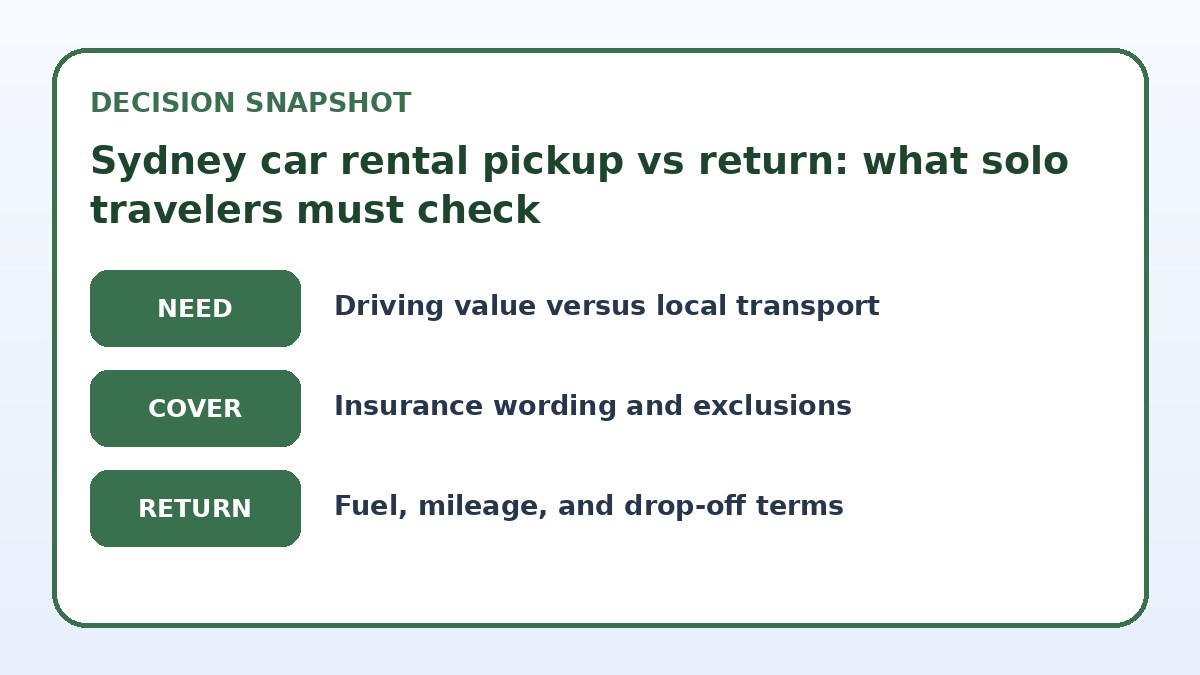
When you book, check the exact ID and payment documents required for solo drivers. Most providers require a full physical credit card in the renter’s name to cover the security deposit—prepaid cards and some debit cards are sometimes excluded. Confirm whether your driver’s licence must be the original, if you need an international driving permit, and whether additional ID (passport) is requested. If you plan to add a secondary driver later, check fees and whether that person must be present at pickup; solo travelers who anticipate sharing driving on longer legs should sort this in advance.
Insurance and liability terms need careful reading. The basic rate often includes a collision damage waiver that still carries an excess payable by the renter. If you decline additional cover, confirm the excess amount and whether certain roads, drivers, or uses (like unsealed roads) void coverage. Ask whether your personal travel insurance or credit card provides primary or secondary coverage for rentals, and verify the insurer’s documentation requirements for claims. Always take screenshots or save the insurer’s terms that the rental company cites as applicable during booking.
Before you book
- Confirm the exact pickup address, terminal shuttle details, and hours on the provider’s final booking page before you travel.
- Verify ID and payment requirements: type of card accepted, need for original driver’s licence, and any additional ID required.
- Request and save written after-hours pickup/return instructions and photograph the vehicle on collection and return from all angles.
- Check fuel policy (full-to-full recommended) and note nearest petrol stations to your planned drop-off point.
- Ask about one-way availability, permitted return locations, and any relocation or interstate fees in writing.
- Save the insurer’s rental-coverage terms and any screenshots the provider references so you can prove coverage details if needed.
Fuel, mileage and one-way rules that affect solo itineraries
Fuel policy and mileage limits change the real cost of a rental and influence how you plan daily drives. Typical fuel policies include full-to-full, where you return the vehicle with the same fuel level—this is usually the simplest and fairest. Other options sell you a tank up front and charge for refuelling later, sometimes at higher rates. Check which policy applies and whether local petrol stations near your intended return point are convenient; running low in outer suburbs or at night can become an annoyance for a single traveler.
One-way rentals are handy for coastal or inland loops but often attract relocation fees or require advance permission for cross-state drops. Confirm that your chosen return location is approved, and ask about any mileage caps for one-way hires. If you’re planning long drives toward Blue Mountains, South Coast or beyond, ensure unlimited mileage is included or compatible with your route. Finally, check whether specific roads or ferry crossings are permitted by the rental agreement; some contracts exclude unsealed roads, and unauthorised use can void insurance.
Frequently asked questions
Can I pick up a rental car in Sydney if I arrive late at night?
Yes, many rental providers accommodate late arrivals, but procedures vary. Confirm on the final booking page whether the location operates a 24-hour desk, uses a locked key box, or sends a shuttle. Ask for the exact terminal pickup point, the contact phone number for night staff, and how vehicle condition will be recorded if no attendant is present. If you arrive after documented shuttle hours, plan an alternate transfer to the pickup site and keep any receipts should a shuttle fee be charged.
What should a solo traveler check about insurance and excess?
Check the collision damage waiver’s excess amount and whether optional cover reduces it. Examine whether exclusions apply for unsealed roads, off-road use, additional drivers, or certain ages. If you intend to rely on a credit card or travel insurance for coverage, verify whether that policy is primary or secondary, which documentation a claim will need, and whether the rental company requires you to purchase local additional cover to validate the excess reduction. Take screenshots of the insurer’s terms quoted by the rental firm at booking.
Is it better to return the car to the airport or a city branch?
That depends on your schedule and priorities. Returning to the airport minimizes transfers when you have a flight and avoids needing to move luggage between locations, but it may mean higher fees or busier processing. A city branch can be quicker if you’re staying in central Sydney and want to avoid airport congestion, provided its hours match your departure. Compare the time, transfer cost, and any one-way or relocation fees on the provider’s final booking page to decide which option reduces stress for your itinerary.
Final planning note
For solo travelers in Sydney, the pickup and return terms determine whether your rental feels like an enabler or an extra hassle. Start by choosing the location that matches your arrival and departure plans, then verify after-hours procedures, fuel and mileage policies, one-way rules, and exact ID and payment requirements on the provider’s final booking page. Keep photographic evidence of the vehicle at pickup and return, save the insurer’s terms, and record any written instructions the company supplies. With a few minutes of verification before booking, you’ll avoid most common disputes and enjoy the flexibility to explore Sydney’s harbour, coastal and hinterland roads confidently.
Continue planning
Check current options and final conditions
Use the provider page to confirm live availability, the final total, cancellation terms, and every condition that matters to your trip.
This evergreen planning guide was created with AI-assisted drafting and a structured quality review. It does not display live prices, schedules, availability, visa guidance, or provider rankings. Verify current details before booking. Some links are affiliate links; we may earn a commission at no additional cost to you.