Practical answer first: before you book any flight, hotel, or package to Singapore as a solo traveler, add every predictable expense into a single trip total — fares, taxes, baggage, local transport, attraction tickets, daily meals, taxes and tourist levies, optional tours, and a small contingency for incidental costs. That consolidated number shows whether a deal is truly within your budget. Once you have that benchmark, compare options on price-per-night (including hotel fees), total door-to-door travel time, and cancellation flexibility. Use the final provider booking page to verify taxes, baggage rules, exact cancellation fees, and any mandatory local charges. If you want a quick place to check availability, Trip.com can be one of several comparison points, but always confirm details with the carrier or hotel directly on the final booking screen.
See current options before you compare the details
Availability and final conditions change. Open Trip.com now or keep reading for the practical comparison.
Build a realistic total-trip budget before comparing deals
Start by listing each discrete cost you will almost certainly face on a Singapore trip. Include the base airfare, all taxes and fuel surcharges you see at checkout, checked-baggage fees or carry-on rules if you plan to bring luggage, and any optional seat or meal charges. Add ground transport from the airport to your first night’s accommodation and the usual daily transport budget based on whether you expect to take the MRT, buses, taxis, or ride-hailing services. Let this be an itemized spreadsheet or a simple list so you don’t mentally skip smaller predictable items that add up.
Next, plan daily living costs conservatively. Estimate breakfasts, lunches, and dinners according to the sort of places you’ll eat — hawker centres, midrange cafés, or restaurants — then add modest allowances for coffee, snacks, and museum or attraction tickets. If you want specific experiences such as a guided night tour or a rooftop attraction, price those separately. Finish with a contingency line (for example, 10 to 20 percent of daily expenses) to cover incidental purchases, supplements, or short-notice changes.
Compare lodging by total stay cost, not headline nightly rate
A lower nightly price can be misleading once you add required charges or convenience tradeoffs. When comparing hotels and hostels, expand your calculation to include mandatory fees reported at checkout, local taxes, tourism levies, and any mandatory resort or service charges. Also account for whether the rate includes breakfast or if you’ll need to pay separately. For short stays, some central properties with higher nightly rates can save money overall because they reduce daily transport and taxi costs.
Think about practical solo-traveler tradeoffs: a private room in a guesthouse may be cheaper than a hotel but might be located farther from major MRT lines, increasing your commuting time and expense. Conversely, a higher nightly rate in a central neighborhood can reduce transit needs and give better safety and convenience at night. Check cancellation terms carefully; sometimes slightly higher flexibility is worth the extra cost if your schedule could shift.
| Approach | Best for | Tradeoff to check |
|---|---|---|
| Book lowest headline fare and cheapest room | Travelers with rigid budgets who accept longer commutes and fewer included services | Often adds hidden transport, baggage, and convenience costs that raise the real trip price |
| Pay more for central hotel and flexible fare | Solo travelers prioritizing time, safety at night, and easy cancellations | Higher upfront cost but may reduce daily transport and last-minute booking risk |
| Bundle flight and hotel in a package deal | Those who want a one-stop price and simpler booking workflow | Packages can mask separate fees; verify provider checkout and cancellation conditions |
| Compare independent bookings for each leg | Flexible travelers who want to optimize each component for price or schedule | Requires more research and risk management if plans change or connections fail |
Ready to check the option that fits your plan?
Use your exact dates and traveler details so the provider page can show the current total and conditions.
Assess flight and itinerary choices with full transparency
When examining airfare offers, always verify what the fare includes on the carrier or booking site’s final page. Look for baggage allowances, change and cancellation fees, whether meals are included, and any seat assignment charges that apply to your ticket type. If an itinerary lists connections, note the minimum layover listed and whether you would need to clear immigration and recheck bags at a connecting airport. These operational details can materially affect both the convenience and the true cost of getting to Singapore.
Compare direct and connecting itineraries by weighing price against total travel time and risk. A cheaper connecting flight may save money but lengthen travel or increase the risk of missed connections, which can lead to additional costs. For solo travelers especially, think about late arrivals and whether you'll need an extra night’s accommodation because of scheduling. Verify final baggage rules, transit visas if any, and change fees on the official carrier page before booking.
Before you book
- Add every fare component to a single spreadsheet: base fare, taxes, fuel surcharges, baggage fees, and seat charges before comparing offers.
- Estimate daily living costs by neighborhood, including transit, meals, and typical attraction fees, then add a contingency line.
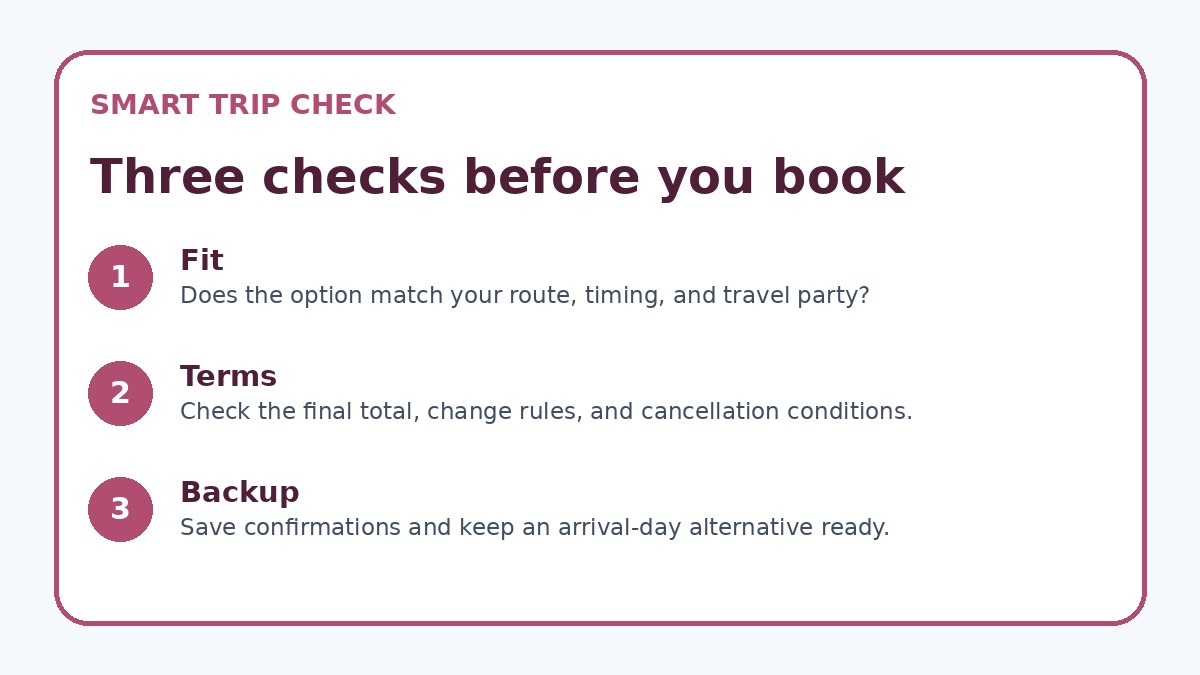
- Open the carrier or hotel final booking page to confirm cancellation rules, change fees, and any mandatory local taxes shown at checkout.
- Compare total door-to-door travel time and overnight needs—include possible extra nights if arrival or departure times are inconvenient.
- Decide whether trip insurance is worth the premium for your itinerary and activities and review policy exclusions on the insurer’s documents.
- Re-check airport transfer options and prices for your arrival time and plan the first-night logistics before making the reservation.
Include local logistics and policy checks before confirming
Before you finalize bookings, confirm practical local details that affect cost and ease. Check airport transfer options and their published prices, and whether your arrival time limits public transport choices. Inspect the final hotel page for check-in/check-out rules, deposit requirements, and any incidental hold on a card. If you plan to buy attraction tickets in advance, compare on-site rates with official vendor pages and note refund rules; many attractions and tours have different cancellation windows that change how flexible your plan can be.
Finally, verify health, entry, and travel insurance needs and decide whether to include trip cancellation coverage. Insurance premiums vary based on refundability, trip length, and activities planned; read policy exclusions carefully and confirm coverage on the insurer’s final documentation. When dealing with third-party platforms, use them for initial comparison but check the provider’s own booking terms for the binding conditions and precise fees.
Frequently asked questions
How do I know if a Singapore travel deal is truly cheaper than another option?
Start by comparing total out-of-pocket costs for the exact trip scenario: add the headline price plus taxes, baggage fees, transfers, and any mandatory hotel charges. Then factor in realistic daily expenses for your style of travel and any optional activities you plan. Compare the total sums rather than just the headline fares or nightly rates. Finally, check cancellation and change fees on the final booking page; a lower price might not be cheaper if it’s nonrefundable and your plans could shift.
Should solo travelers prioritize location over nightly price in Singapore?
Location often matters more for solo travelers because central lodging can reduce transit time, nighttime safety concerns, and incidental taxi costs. Higher nightly rates centrally can be offset by savings on daily transport and convenience, especially on short stays. That said, if you’re comfortable using the MRT and plan more daytime sightseeing, a cheaper room in a well-connected outer neighborhood can work. Calculate total stay costs including daily transport to judge which choice gives better value.
What booking details must I verify on the provider’s final page before paying?
On the provider’s final booking page confirm the full price breakdown and all mandatory taxes or surcharges that appear at checkout. Check the precise baggage allowance and fees for your fare class, the exact cancellation and change policy including any penalties, and whether extras like breakfast or transfers are included. If you’re buying a package, read the fine print about refunds and separate supplier rules. Always save or screenshot the final terms and the confirmation after purchase for reference.
Final planning note
For solo travelers, the smartest Singapore travel booking strategy is simple: total your expected trip cost, then use that number to compare flight, hotel, and package options. Don’t let a low headline fare or nightly rate blind you to added baggage fees, transport to and from the airport, mandatory hotel charges, or the time cost of being farther from the city center. Verify cancellation and change fees on the provider’s final booking page and decide how much flexibility you need. With a realistic total-trip budget and the right verification steps, you’ll pick a deal that matches your time, comfort, and financial priorities.
Continue planning
Check current options and final conditions
Use the provider page to confirm live availability, the final total, cancellation terms, and every condition that matters to your trip.
This evergreen planning guide was created with AI-assisted drafting and a structured quality review. It does not display live prices, schedules, availability, visa guidance, or provider rankings. Verify current details before booking. Some links are affiliate links; we may earn a commission at no additional cost to you.