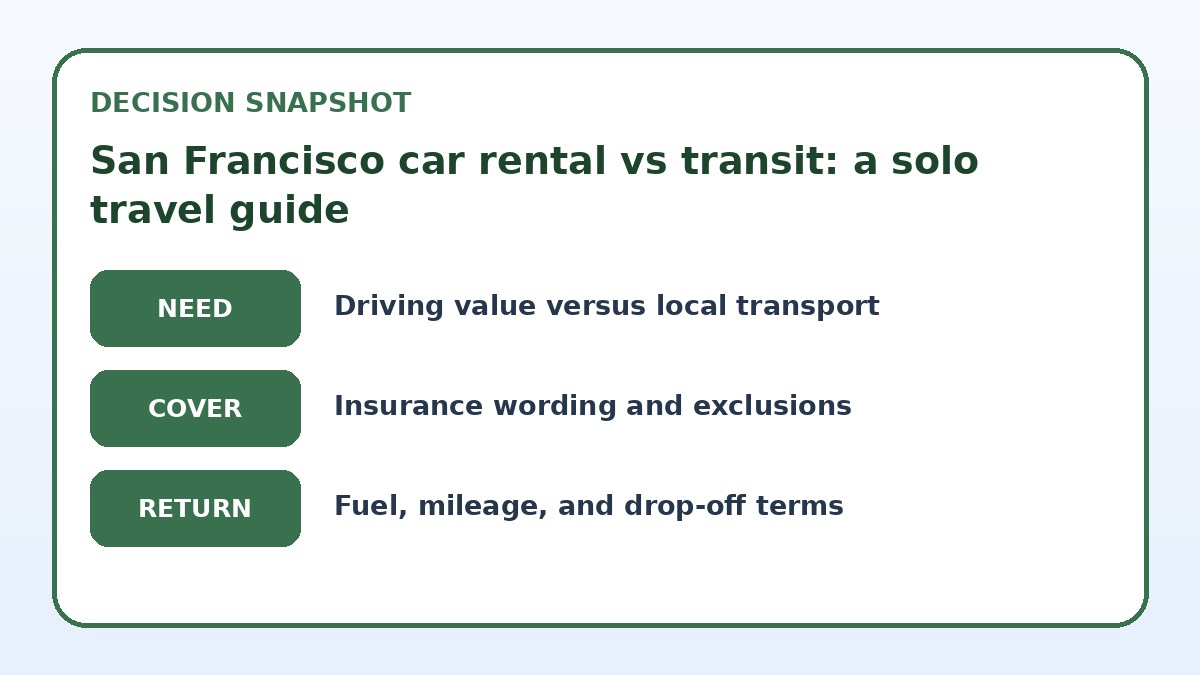
Short answer: for most solo itineraries that focus on central neighborhoods, museums, and short day trips, public transport plus occasional rideshares will be simpler and cheaper than renting a car. Driving becomes worth it when your plan includes multiple exits from the urban core—drives to Point Reyes, Big Basin, wine country, or a flexible coastal route—or when you must visit widely separated sites on a tight schedule. Before you book a car, weigh four practical frictions: parking availability and cost in your planned neighborhoods, pickup and return logistics at the rental location, what exactly the insurance covers and costs, and whether you have a reliable non-driving fallback. Below you’ll find tradeoffs, how to check policy details on rental pages, and a clear non-driving fallback plan if you decide to leave the car out of your trip.
When driving actually improves your San Francisco itinerary
Driving adds clear value when your solo trip stretches beyond the dense city center. If you plan multiple day trips that leave the Bay Area for natural parks, scenic highways, or dispersed wine regions, a rental car shortens transfers and gives schedule control that public transit rarely matches. Consider also flexibility needs: a car lets you change plans mid-day, carry equipment like hiking gear, or reach trailheads and lookouts without long feeder bus rides or multiple transfers.
That value must be balanced against urban constraints. Narrow streets, limited parking, and frequent congestion in popular neighborhoods can turn short hops into slow, expensive chores. Estimate your true driving mileage and parking time rather than just distance: a two-mile drive in the Mission or North Beach can take longer and cost more than a short transit trip. If most of your sightseeing will be inside the central neighborhoods, the marginal convenience of a car may not justify the extra effort.
Decide whether driving earns its place
| Mobility strategy | Best for | Cost or friction to check |
|---|---|---|
| Public transit (Muni, BART, ferries, buses) | City-focused sightseeing, tight budgets, and avoiding parking headaches. | Less flexibility for out-of-town day trips and carrying bulky gear; requires planning transfers and some walking. |
| Rental car (self-drive) | Multiple regional day trips, remote trailheads, and travelers needing full route control. | Parking, congestion, pickup/return friction, and insurance complexities add cost and time in the city. |
| Rideshares and taxis | Door-to-door convenience inside neighborhoods or when traveling late at night. | Costs add up for many short trips; surge pricing and variable availability can affect timing and budget. |
| Bike and micromobility (rental bikes, e-scooters) | Short neighborhood trips, waterfront routes, and avoiding parking while enjoying the city. | Limited range for long day trips, weather-dependent, and not suitable for heavy luggage or long coastal drives. |
Check live rental choices only after the route test
Use the exact driver, dates, pickup point, and return plan to compare current conditions.
Insurance wording and what to verify on the rental page
Insurance options and coverages are a decisive factor for many solo travelers. Standard rental offers often present loss damage waivers (LDW), collision damage waivers (CDW), supplemental liability insurance, and roadside assistance as optional add-ons. On any rental page, read the policy descriptions carefully: verify the deductible amount, whether CDW covers tire and windshield damage, if theft protection applies when you leave items in the car, and whether the quoted price includes or excludes taxes and local fees tied to coverage.
Also confirm who is listed as an authorized driver and whether your own auto insurance or credit card provides primary or secondary coverage when renting. If you depend on a credit-card benefit, check the issuing bank’s terms for rented vehicles in the U.S. and follow the card’s rules for reporting claims. When uncertain, save screenshots or PDFs of the rental terms and insurer wording shown on the final booking page; those are the records you’ll need if anything goes sideways.
Compare the full rental conditions
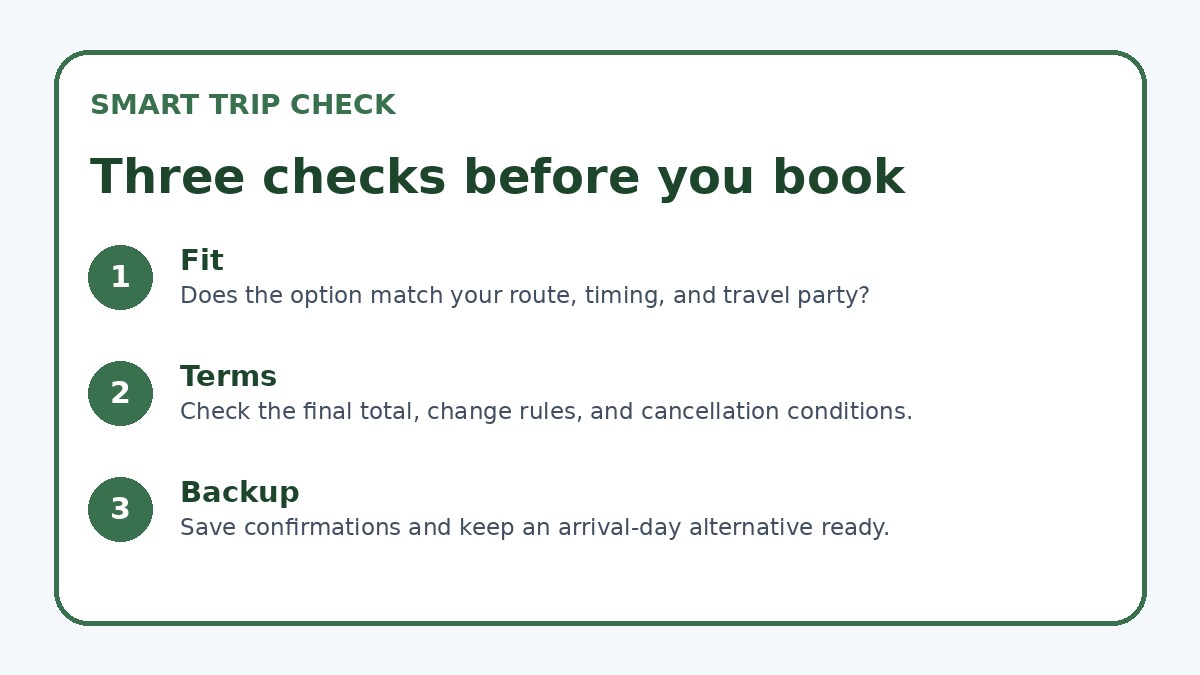
Confirm insurance wording, exclusions, deposit, fuel, mileage, and return terms on the final page.
Pickup, return friction, and practical logistics
Pickup and return details can consume hours if you don’t plan them. Airport counters usually open longer hours and offer more staff—but factor in airport shuttle time and any city congestion on the way in or out. Neighborhood rental locations can be convenient if they are near your lodging, but they may have limited hours, require appointments, or impose after-hours drop fees. Check the exact street address, hours, and whether the provider requires a phone call or an in-person inspection for returns.
Also ask how fuel, cleaning, and tolls are handled: some companies charge inflated refueling fees, add automatic toll transponders with associated markups, or assess cleaning charges for even minor messes. Document the car’s condition with photos during pickup and again at return to avoid disputes. If you plan to pick up late at night or return very early, verify availability and any after-hours instructions on the rental confirmation page before committing.
Car rental terms to verify
- Group your daily plans by neighborhood and mark public-transit connections to test a non-driving itinerary.
- On the rental page, screenshot insurance wording, deductible amounts, and any roadside assistance terms before booking.
- Confirm the exact pickup/return address, hours, and any after-hours drop rules or additional fees.
- Estimate parking options and costs at each overnight stop or attraction, and identify at least one affordable garage or lot.
- Check whether your credit card or personal auto insurance offers rental coverage and keep the insurer’s claim phone number handy.
- Save transit apps, BART and Muni trip planners, and a local rideshare app to your phone as redundancy for last-minute changes.
A robust non-driving fallback for the solo traveler
Even if you start with a car in mind, have a non-driving fallback that keeps your itinerary viable. Map your key daytime activities by neighborhood so you can group them on transit-friendly days: concentrate museums and waterfront time in the Embarcadero/Financial District, plan Golden Gate Park and Richmond visits together, and reserve Mission/Valencia exploration for another day. Learn which BART, Muni, and ferry lines serve those clusters and note typical transfer points so you can rework each day quickly if you cancel a rental or face unexpected parking barriers.
Identify dependable alternatives: a Muni day pass for heavy local use, a regional transit pass if you’ll use BART for an outbound trip, and ride-hailing for late-night or off-route legs. Keep a list of practical pickup locations and approximate ride times between neighborhoods rather than precise schedules, and save links to transit system trip planners or compare options on Trip.com if you want a quick cross-check of current availability.
Car Rental & Road Trip questions travelers ask
Is a San Francisco car rental worth it for a three-day solo trip?
For a three-day stay concentrated in central neighborhoods—Union Square, Fisherman’s Wharf, the Mission, and Golden Gate Park—renting usually isn’t worth the hassle. Transit, walking, bikes, and occasional rideshares cover most must-see sites efficiently. If you plan at least one full-day excursion outside the metro area (for example, a multi-stop coastal drive or several wineries in dispersed locations), a rental can be justified. Decide by mapping each day: if two-thirds of your stops require long out-of-city transfers, opt for a car; otherwise use transit and rideshares.
What specific insurance terms should I check on the rental booking page?
Look for the deductible amount under any collision or loss damage waiver, and whether damage to tires, glass, and undercarriage is excluded. Confirm if theft protection applies and whether the policy covers unauthorized driver incidents. Check whether roadside assistance is included or sold separately and whether there’s an explicit sign-off for toll transponder charges. If your credit card claims to cover rentals, read the card’s terms on primary vs. secondary coverage and whether you must decline the rental company’s CDW to use card benefits.
How do I plan pickup and return to minimize friction as a solo traveler?
Choose a pickup location that fits your arrival logistics—airport counters for longer hours, neighborhood branches if close to your lodging. Verify hours and whether reservations require a phone check-in; some locations close early or have limited staff. Photograph the vehicle thoroughly at pickup, note fuel level, and record the odometer reading. For return, confirm the drop-off procedure (key drop box, parking stall, staff inspection) and allow extra time for traffic. Save the provider’s after-hours instructions and any shuttle details on your phone.
Final decision note
Deciding whether to rent a car in San Francisco as a solo traveler comes down to route value and friction tradeoffs. If your days stay within the compact, transit-rich core, public transport combined with occasional rideshares will usually be faster, less stressful, and cheaper once parking and insurance are considered. Choose a rental when your agenda includes multiple out-of-city day trips or you need flexible door-to-door routing. Whatever you pick, verify insurance wording and pickup/return rules on the rental provider’s final booking page, plan a non-driving fallback clustered by neighborhood, and document everything at car handover to avoid surprises.
Continue planning
Check current options and final conditions
Use the provider page to confirm live availability, the final total, cancellation terms, and every condition that matters to your trip.
This evergreen planning guide was created with AI-assisted drafting and a structured quality review. It does not display live prices, schedules, availability, visa guidance, or provider rankings. Verify current details before booking. Some links are affiliate links; we may earn a commission at no additional cost to you.