Practical answer up front: before you search Seoul to Hong Kong flights, gather exact travel dates, traveler ages and passport names, preferred departure airport in Seoul, trip length, and a clear max-connection tolerance. With those details in hand you can compare direct versus connecting options, check baggage allowances and connection minimums, and compare refundable or changeable fare conditions. The tradeoff most travelers face is route-versus-fare: direct flights shorten travel time and reduce transfer risk but often cost more; connecting itineraries may be cheaper but add complexity and baggage/connection risk. This article walks first-time visitors through the decision criteria you should use, gives a side-by-side comparison of four selection approaches, and ends with a six-point pre-booking checklist so you don’t miss anything when you move to live availability pages.
See live routes for your exact travel day
Compare direct and connecting choices with the same baggage and traveler details.
Routing: direct versus connecting options
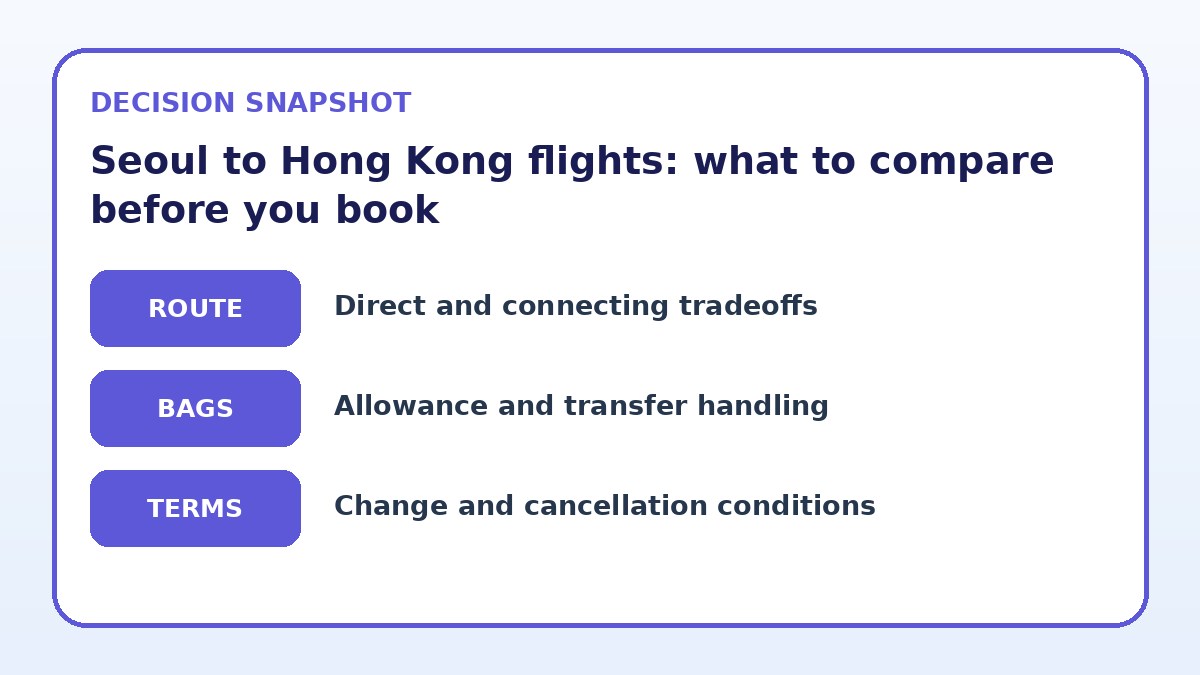
When comparing routes, start by checking whether direct flights operate on your dates. Direct flights typically reduce total travel time and simplify arrival and immigration in Hong Kong; they also reduce the chance of missed connections and lost baggage. Connecting itineraries often require transferring at a second airport and increase complexity: monitor minimum connection times, terminal changes, and whether the connection involves an overnight layover that adds hotel or transit costs.
If both direct and connecting options appear, compare total door-to-door time including transit to and from airports and typical security wait times. For many first-time visitors, a slightly higher fare for a direct flight is worth the simplicity. However, if you’re comfortable managing a connection and the itinerary saves significant money, ensure you have at least a conservative buffer for transfer times and that the airline’s contract of carriage supports smoother rebooking if a connection is missed.
Baggage and connection risk: what to verify
Before booking, read the fare rules to confirm checked-bag allowance for each traveler on every flight segment. Some lower-priced fares exclude checked bags or offer different allowances on partnered carriers; mixing airlines on a single ticket can change who is responsible for transferring baggage at a connecting airport. If an itinerary requires you to collect and recheck baggage during a connection, factor in extra transfer time and the possibility of lost luggage if tight schedules are chosen.
For itineraries involving separate tickets or low-cost carriers, plan for the risk that disrupted inbound flights won’t trigger automatic rebooking on the next carrier. If you prefer to avoid that risk, prioritize through-ticketing on one reservation or add buffer time for connections. Also verify whether small cabin dimensions are included in the allowance—carry-on restrictions can differ and lead to unexpected gate-checking or fees at boarding.
Compare flight-selection strategies
| Flight strategy | Best for | Risk to check |
|---|---|---|
| Choose direct flights only | Travelers prioritizing speed, simplicity, and lower connection risk | Usually higher fares and fewer schedule options compared with connections |
| Opt for cheapest available itinerary | Budget-focused travelers willing to manage tight connections and complexity | Higher risk of baggage issues, missed connections, and restrictive fare rules |
| Pick through-ticket connecting itineraries | Those seeking lower fares with the protection of single-reservation rebooking | Longer travel time and potential for longer layovers compared with direct service |
| Mix carriers on separate tickets for savings | Experienced travelers who can absorb connection risk and arrange buffer time | No guaranteed protection between carriers and extra time or cost to rebook if disrupted |
Recheck the complete itinerary
Confirm airports, connection handling, baggage, and change conditions before deciding.
Schedule fit: pick times that match your comfort and plans
Match flight departure and arrival times to your tolerance for early mornings, late nights, and airport transfers. If you need to be in Hong Kong for a specific event or hotel check-in window, prioritize arrival times that leave room for immigration and transit to your accommodation. Allow for potential delays in clearing customs and collecting bags, and consider how late arrivals might affect ground transport availability or additional overnight stays.
Also consider how flight times affect your jetlag management and daily plans: a midday arrival gives time to settle in, while a late arrival may mean sleeping through what would have been a productive first day. If you are traveling with children or those needing assistance, choose flights with longer connection times and daytime operations to reduce stress during transfers and arrivals.
Flight details to verify
- Collect exact traveler names as they appear on passports, full passport numbers, nationality, and birthdates before searching fares.
- Choose your preferred Seoul departure airport (ICN or GMP) and estimate travel time to that airport at your planned departure hour.
- Decide whether a direct flight or connecting itinerary is acceptable and set a maximum total journey time and minimum connection window.
- Confirm the checked and carry-on baggage allowances for each fare option and note any segment with different rules or separate-ticket requirements.
- Open the fare rules on the airline or booking page and copy change, cancellation, and refund conditions into your decision notes before payment.
- Have backup dates and a second-choice itinerary ready so you can compare live availability quickly and avoid errors during booking.
Fare conditions: refunds, changes, and the small print
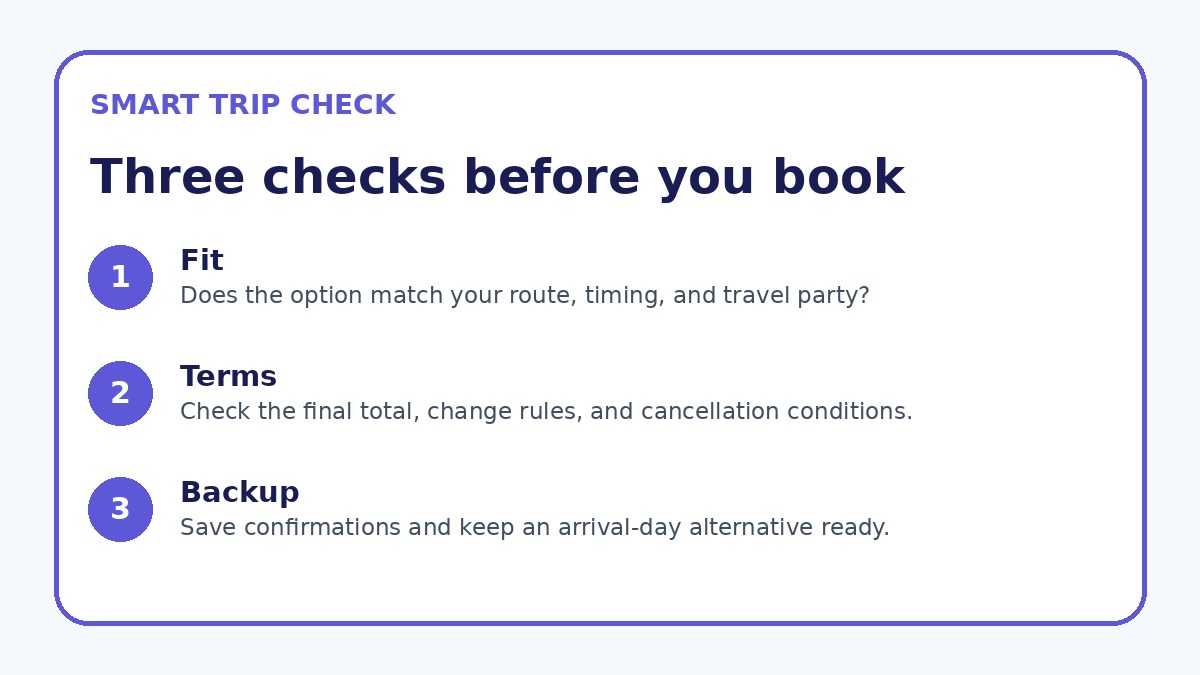
Fare conditions can be decisive. Before you book, open the fare rules on the booking provider’s site and verify change fees, refundability, name-change rules, and whether refunds are credited as a voucher. If you need flexibility, choose a fare that allows fee-free or low-cost changes, or consider adding trip protection if available. When comparing channels, ensure the fare class and baggage allowances are the same—some third-party booking sites present fares with different inclusions.
When provider-specific facts could change, check the airline or booking platform’s final booking page for the exact fare conditions and restrictions before paying. Verify payment currencies, whether carrier-imposed surcharges apply, and what documentation the airline requires at check-in. If you use a metasearch or agency like Trip.com to compare options, confirm the fare conditions on the airline’s booking page before finalizing the purchase.
Flight Guide questions travelers ask
Should I always book a direct Seoul to Hong Kong flight if I want to minimize risk?
Direct flights reduce the number of moving parts—no interline connections, fewer chances for missed transfers, and usually simpler baggage handling—so they are often the lowest-risk choice for first-time visitors. However, direct service can be more expensive and sometimes less frequent on certain dates. If you find a significantly cheaper connecting itinerary, weigh the savings against the need for longer layovers, terminal transfers, or separate-ticket risks. Always check the carrier’s contract of carriage and baggage rules before booking to understand who is responsible if a connection fails.
How much connection time should I allow when booking flights via a transit airport?
There’s no single correct minimum; it depends on whether the connection is within the same terminal, requires immigration checks, or involves collecting and rechecking baggage. For through-ticket connections on the same airline or alliance, a moderate minimum (often at least an hour or more) may be sufficient, but many travelers prefer a larger buffer to reduce stress. For separate tickets or connections requiring terminal changes or exiting and re-entering security, plan several hours and consider an overnight if schedules are tight. Verify minimum connecting times and terminals on the airline’s booking page once you have flight options.
What fare conditions should first-time travelers prioritize when choosing Seoul to Hong Kong flights?
Prioritize clear change and cancellation policies, baggage inclusion, and the currency and method of refund if you need to cancel. If flexibility is important, select fares that permit changes with minimal fees or offer at least partial refunds. Also check whether name corrections are allowed and whether any fare differences apply if you change dates. For multi-segment or multi-carrier itineraries, verify who issues refunds or rebookings. Always confirm these details on the airline or final booking page before completing payment.
Final decision note
Booking Seoul to Hong Kong flights as a first-time visitor becomes much simpler when you decide your priorities and gather exact traveler and schedule details beforehand. Start by choosing whether you value total travel time or the lowest upfront fare, then verify baggage allowances, minimum connection times, and fare-change conditions on the carrier’s final booking page. Use the six-item checklist to prepare exact names, preferred airport, acceptable connection windows, and backup dates before comparing live options. With those items ready you can quickly narrow choices, compare true fare conditions, and book with confidence—checking the airline’s final page for the exact rules before paying.
Continue planning
Check current options and final conditions
Use the provider page to confirm live availability, the final total, cancellation terms, and every condition that matters to your trip.
This evergreen planning guide was created with AI-assisted drafting and a structured quality review. It does not display live prices, schedules, availability, visa guidance, or provider rankings. Verify current details before booking. Some links are affiliate links; we may earn a commission at no additional cost to you.