
If you’re traveling solo in Paris, the single most useful decision is choosing the balance between location and room comfort. A central arrondissement saves transit time and gives you more hours for museums or cafés, but small rooms and street noise are common. Conversely, stepping slightly farther out usually gets you larger, quieter rooms and a better chance of a separate work area or private bath, though each trip to the city center will take longer. Start by listing what you’ll spend the most time doing—walking museums, nightly dining, or working from your room—and use that to weight location versus space. This guide gives a practical checklist, tradeoffs, and sensible comparisons so you can pick a Paris hotel that suits how you actually want to spend your days and nights.
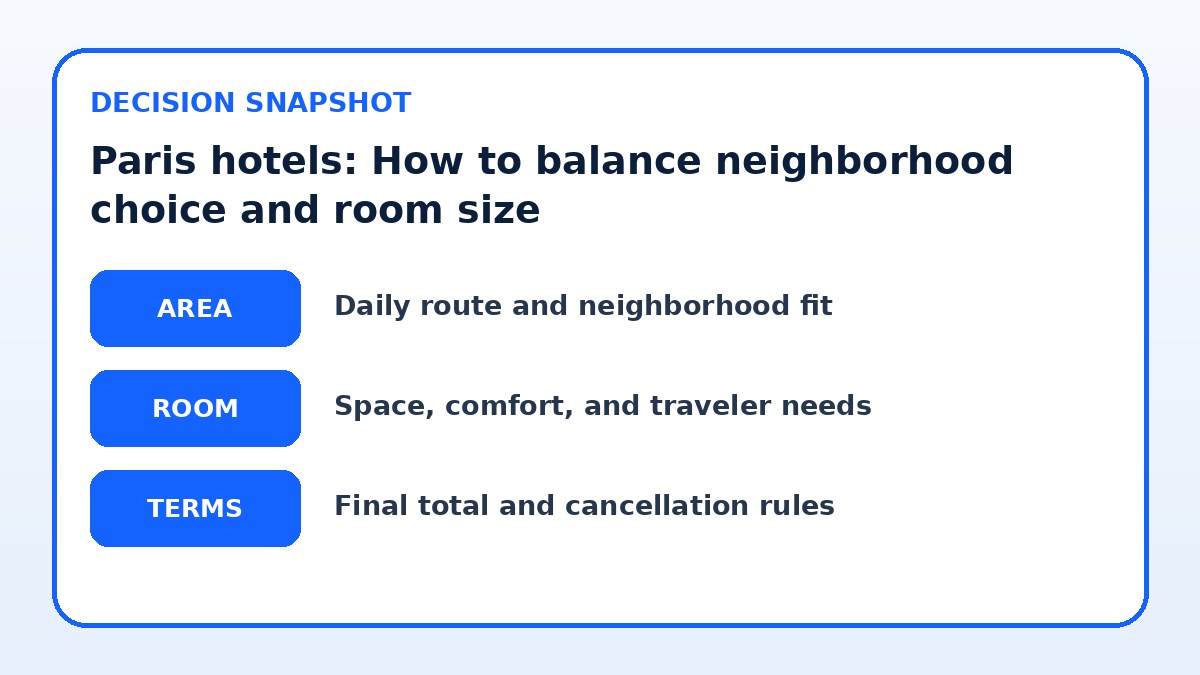
See current options before you compare the details
Availability and final conditions change. Open Trip.com now or keep reading for the practical comparison.
Decide what you’ll spend the most time doing
Begin by listing the top three activities you expect to do in Paris: museum hopping, café time, walking neighborhoods, evening shows, or working from your room. If your days are packed with daytime sightseeing across central arrondissements, staying close to the Seine, the Louvre, or Saint-Germain can reduce transit time and give you an advantage when attractions open or close. A short stroll between your hotel and main points of interest often means more flexibility during the day and the option to return for a midday rest without losing time.
If your trip centers around relaxed mornings, long dinners, or remote work, comfort matters more than immediate centrality. Bigger rooms, a desk, reliable Wi‑Fi, and quieter streets are harder to find in the most central, historically dense neighborhoods. Choosing a hotel one or two metro stops from the center—near Canal Saint‑Martin, Montparnasse, or parts of the 11th and 12th—often gives better room size and soundproofing while keeping central Paris within easy reach.
Understand neighborhood tradeoffs and transit
Paris’s neighborhoods differ sharply in feel and convenience. The 1st, 2nd, 4th, and parts of the 7th and 8th arrondissements are ultra‑central and superb for walking to major attractions; expect smaller rooms and higher foot and vehicle noise. The Marais (3rd/4th) offers a lively streetscape and boutique feel but narrow buildings and compact rooms. Uptown areas like the 16th or 17th are quieter and residential, with larger rooms, but you’ll rely on the metro or buses for most sightseeing.
When comparing hotels, map walking times and metro connections rather than just straight‑line distance. A hotel slightly farther from a landmark with a direct metro line can still save time. Also factor in late‑night transit if you’ll be returning after shows: check night bus or RER schedules where relevant. For safety and convenience as a solo traveler, note how well‑lit the area is at night, whether taxis are readily available, and whether there are 24‑hour shops or cafés nearby.
| Approach | Best for | Tradeoff to check |
|---|---|---|
| Central hotel in 1st/4th/7th arrondissement | Sightseeing-heavy solo travelers who want to walk to major attractions and minimize transit time | Smaller rooms, higher noise levels, and potentially less evening quiet for working or long sleeps |
| Larger room near Montparnasse or Canal Saint‑Martin | Solo travelers prioritizing space, quieter nights, and remote work or longer stays | Adds short daily transit time to central attractions and possibly fewer late‑night dining options nearby |
| Boutique hotel in the Marais or Latin Quarter | Travelers who want atmosphere, cafés at doorstep, and walkable culture | Historic buildings often mean quirky layouts, limited elevators, and compact bathrooms |
| Modern hotel near major transit hubs (Gare du Nord, Gare de Lyon) | Those who value direct train connections and efficient transfers to airports or regional trips | Areas can be busy and noisy during the day; room sizes vary and can be modest near hubs |
Ready to check the option that fits your plan?
Use your exact dates and traveler details so the provider page can show the current total and conditions.

Room features that matter most to solo travelers
Decide which room features justify sacrificing location. If sleep quality is crucial, prioritize hotels that explicitly list soundproofing, double glazing, or courtyard views. If you plan to work or use a laptop, confirm there’s a proper desk and reliable wired or high‑speed Wi‑Fi. If you value privacy and comfort, request rooms with full bathrooms rather than shared facilities. Small extras like a safe for valuables, a kettle or small fridge, and good lighting can significantly improve solo stays.
Don’t assume bed sizes or layouts; single‑traveler rooms in central Paris can still be compact, so verify bed dimensions and whether rooms are labeled ‘single,’ ‘double,’ or ‘twin.’ If mobility or services matter—elevator access, luggage assistance, or 24‑hour reception—check these on the hotel’s booking page. For boutique properties in old buildings, ask about stairs and luggage storage, because helpful staff can often store bags even when standard check‑in times are strict.
Before you book
- Map walking time from the hotel entrance to your two highest-priority attractions to assess real daily transit.
- Confirm room size, bed type, and bathroom arrangement on the hotel booking page before committing.
- Ask the hotel about soundproofing, window orientation (courtyard vs street), and typical noise sources at night.
- Verify elevator access, stairs, and luggage storage options if you have heavy bags or mobility concerns.
- Check Wi‑Fi setup and request a confirmation of speed or wired options if you plan to work from the room.
- Read the cancellation policy and late-arrival instructions on the hotel’s official page prior to payment.
How to compare value: price, comfort, and convenience
Value isn’t just the nightly rate; it’s time saved, sleep quality, and peace of mind. Compare the effective cost by estimating time lost to transit versus money saved on room size. For instance, a cheaper hotel farther away might cost you a lot of commuting time daily if your schedule is tight. Conversely, paying a bit more for a central location may allow you to walk to several attractions and avoid frequent metro rides.
When you shortlist hotels, use a consistent checklist to compare — neighborhood, walking minutes to your top two sites, room size and amenities, noise exposure, and transit options. For any claim that matters—Wi‑Fi speed, elevator access, room size, or safety features—verify on the hotel’s final booking page or contact them directly. You can also compare current availability on Trip.com as one of several sources, but always confirm the room details and policies with the hotel before booking.
Frequently asked questions
Is it better to stay in central Paris or a quieter neighborhood for a four-night solo trip?
For a four‑night trip, central Paris usually wins if you plan intense daytime sightseeing: you’ll save transit time and get more walking hours. If you prefer restful evenings, larger rooms, or a calmer pace between activities, select a quieter neighborhood one or two metro stops out; the extra transit time is often manageable for four nights and can make for better sleep and workspace. Balance your priorities: more daytime activity leans toward central, while evening relaxation and comfort lean toward quieter residential areas.
How can I assess noise and safety around a hotel before booking?
Use satellite and street‑view maps to inspect nearby streets, bars, and major roads, and scan recent guest reviews for comments about noise and nighttime safety. Look for rooms that face internal courtyards rather than busy streets if noise is a concern. For safety, note distance to well‑lit boulevards, presence of 24‑hour shops or hotels nearby, and whether the property has secure entry. Always verify specifics like night reception and secure access on the hotel’s booking page before you finalize a reservation.
What room features should I prioritize as a solo traveler who also needs to work occasionally?
Prioritize a clear workspace—desk with comfortable chair and good lighting—and reliable internet, ideally with wired options if you’ll upload large files. A quiet room with double glazing, or one on a higher floor facing a courtyard, reduces interruptions. Also confirm power outlet locations and whether adapters are provided. If you’ll have video calls, request an assurance of stable Wi‑Fi from the hotel and test connectivity quickly on arrival so you can change rooms if necessary.
Final planning note
Choosing Paris hotels as a solo traveler comes down to honest priorities: do you want to be steps from sights or do you want a calmer, more spacious room? There’s no single correct answer—only tradeoffs. Start by deciding which daily losses you can tolerate: extra commuting minutes or smaller sleeping quarters. Use a consistent checklist to compare walk times, room dimensions, noise exposure, and essential amenities. Confirm details like Wi‑Fi, elevator access, and cancellation terms directly on the hotel’s booking page. With those verifications in hand, you’ll book a place that matches how you actually plan to spend your days and nights in Paris.
Continue planning
Check current options and final conditions
Use the provider page to confirm live availability, the final total, cancellation terms, and every condition that matters to your trip.
This evergreen planning guide was created with AI-assisted drafting and a structured quality review. It does not display live prices, schedules, availability, visa guidance, or provider rankings. Verify current details before booking. Some links are affiliate links; we may earn a commission at no additional cost to you.