If your priority is reliable timing and the ability to change plans, start by comparing rail options, then coach and air combinations as secondary choices. For a Tokyo to Kyoto business trip the practical question is not which mode is fastest on paper but which ticket type and end-to-end plan handle last-minute meeting changes, luggage needs, and transfers to hotels or client sites. Rail (including high-speed bullet services and conventional lines) typically offers the smoothest city-center to city-center routing. Coaches or flights can be useful when rail seats are constrained, when you need airport or regional connections, or when a single refundable ticket is available. This guide focuses on ticket flexibility: refundable and exchangeable fares, change fees, transfer friction between terminals and stations, checked-luggage policies, and how to plan a simple disruption backup that keeps you business-ready.
Terminal fit and door-to-door practicality
Start by mapping where you need to be in Tokyo and Kyoto, and which terminals or stations are nearest those points. For many business travelers, a central Tokyo station (Shinjuku, Tokyo Station, or Shinagawa) plus Kyoto Station provides the simplest door-to-door connection because both are served by frequent urban transit and taxis. If your meeting is near a business district far from major stations, factor in the additional transfer time and the reliability of taxis or office shuttles. A ticket that saves minutes on the main leg can be a poor choice if it forces long, uncertain transfers at either end.
When comparing options, include the time and friction of moving with luggage, clearing security or platform gates, and the availability of reserved seats. Trains generally allow you to step off and take a taxi quickly; flights involve check-in and security lines and usually require airport transfers. If you value minimizing walking and luggage handling, put higher weight on tickets that include seat reservations and confirm baggage allowances, and on itineraries that arrive at stations with direct transit or taxi access to your final meeting venue.
Choose the end-to-end journey plan
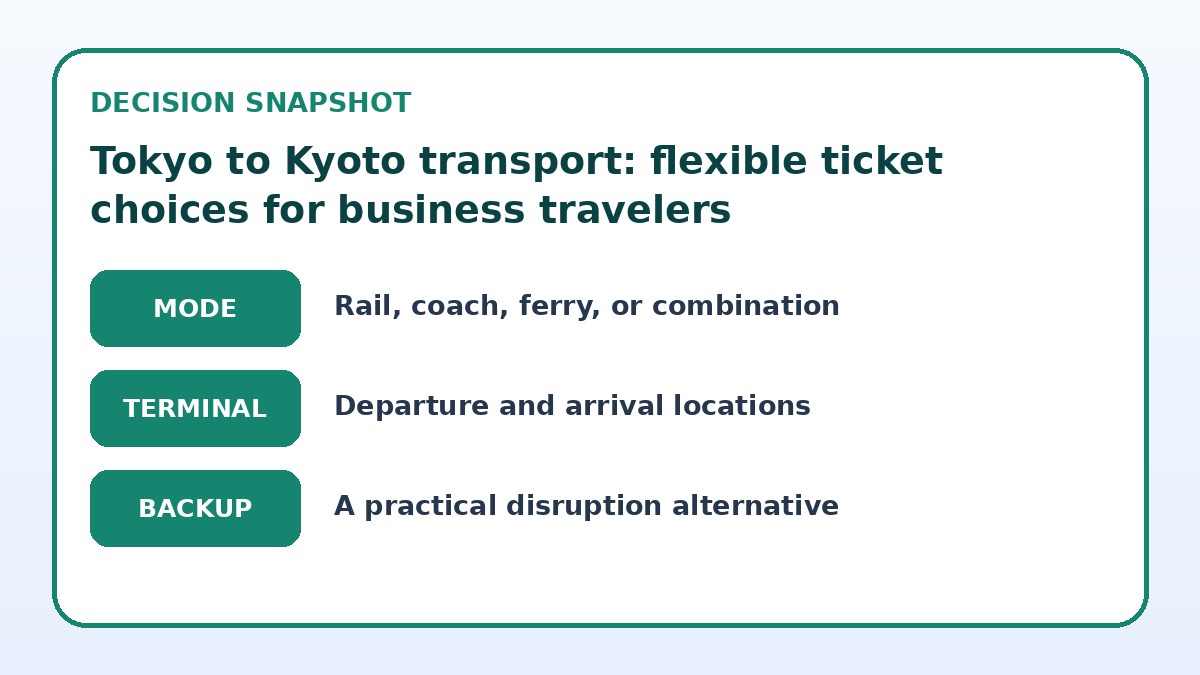
| Journey approach | Best for | Friction to check |
|---|---|---|
| Flexible rail ticket with reserved seat | Business travelers needing predictable city-center arrivals and easy luggage handling. | Higher base fare but lower transfer friction and simpler on-the-day changes. |
| Standard non-changeable rail fare plus backup purchased separately | Cost-conscious travelers who can accept buying a backup ticket if plans shift. | Lower initial cost but potential extra expense and time if you must change plans. |
| Coach or bus with open return ticket | Flexible schedules where refunds are needed and direct station access is acceptable. | Longer door-to-door time; may require earlier departure to avoid delays. |
| Flight or flight-plus-rail combination | Travelers with complex multi-destination itineraries needing airport connections. | More transfer time and security friction; verify baggage and change policies carefully. |
Check live intercity options
Look beyond the ride itself and compare terminals, transfers, luggage, and arrival fit.
Luggage, transfer friction, and seat reservations
Luggage rules and how seats are allocated affect your schedule flexibility more than many travelers expect. A reserved seat on a rail service removes the stress of finding space during peak periods and reduces the chance you’ll need to take an earlier or later service when trains are busy. If carrying presentation cases, samples, or multiple bags, prefer ticket types that explicitly allow checked items or have generous on-board space policies. Always review the carrier’s final booking page to confirm baggage allowances and whether seat reservations are included or sold separately.
Transfer friction grows when you have to move between terminals or add a domestic flight. Factor in real-world tasks like collecting luggage, walking between platforms or terminals, and clearing security. If a connection seems tight on published schedules, choose a more flexible fare that allows changes without heavy penalties. For business travelers who prefer low physical friction, a slightly more flexible or refundable rail ticket that keeps you in the city center often beats a cheaper, less flexible option that requires an airport transfer.
Timing flexibility and how to compare fares
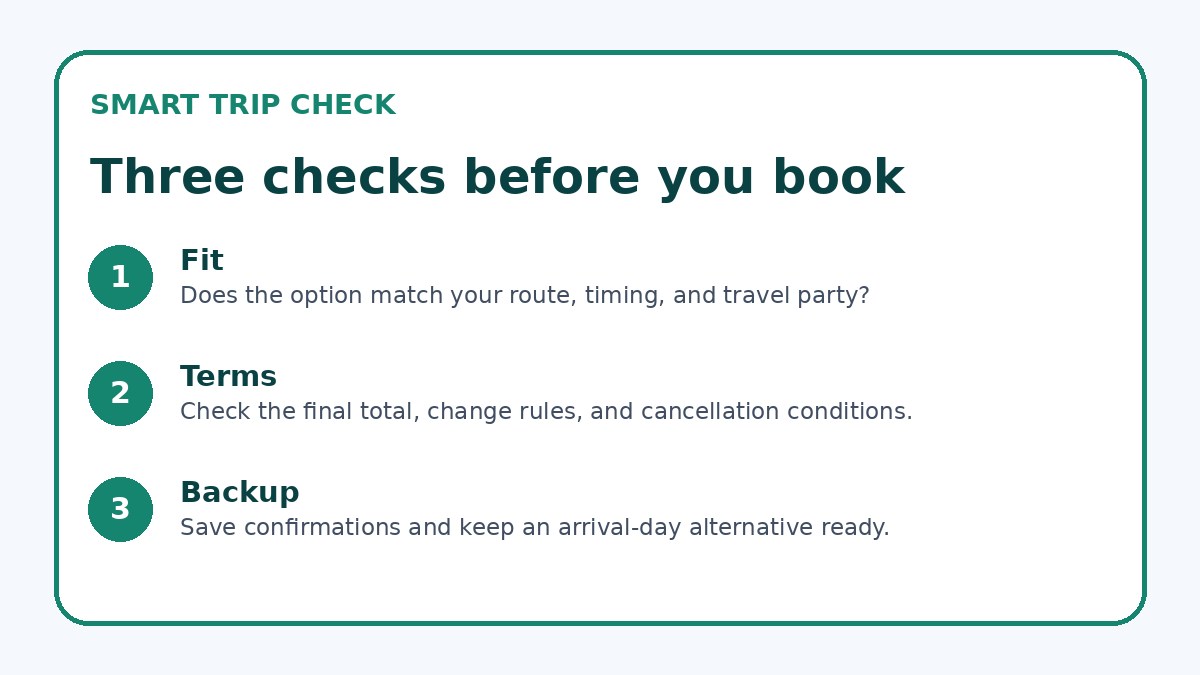
When comparing fares, look beyond labels like “standard” or “special” and find the exact change and refund rules on the provider’s booking page. Key variables include how many hours before departure you can change without a fee, whether changes can be done online, and whether the fare is transferable. For business travelers who may need to move meetings, prioritize fare classes that allow same-day changes or no-penalty cancellations within a reasonable window. Also compare whether reserved seats can be rebooked to different services on short notice, which preserves your itinerary if a meeting runs long.
If both direct and connecting options exist, evaluate the operational risk of connections. A direct high-speed rail service reduces reliance on a connecting flight or regional train that could be affected by weather or congestion. When evaluating tickets for connections, check whether the operator protects you in the event of missed onward travel (for example, through automatic rebooking or waived fees) and always verify these protections on the operator’s final booking page before purchase.
Compare the practical alternatives
Use the final page to confirm what is actually offered on your dates and save a workable fallback.
Intercity travel checklist
- Confirm on the operator’s final booking page whether your ticket is refundable, changeable, and what fees apply for each action.
- Map door-to-door transfers from your Tokyo origin to Tokyo station or airport, and from Kyoto station or airport to your meeting address.
- Reserve seats where possible or buy a fare that includes reservations to avoid being bumped or forced onto a different service.
- Identify at least two alternative services within a 60–120 minute window and note whether your fare class can use them.
- Pack presentation materials in your carry-on and photograph ticket confirmations and ID to speed rebooking if needed.
- If your itinerary involves a flight, verify baggage transfer rules and allow extra time for security and terminal transfers.
Disruption backup and practical contingency planning
A simple backup plan prevents schedule crises. Identify one or two alternative trains within a one- to two-hour window of your preferred service, and know whether those alternatives accept your fare class or require an upgrade. If your ticket is non-changeable, prepare an alternative purchased ticket that can be used if you need to travel earlier or later. Keep contact numbers and apps for station customer service, major coach lines, and a taxi service handy. Trip.com can be used as a quick way to compare current availability, but always confirm terms on the operator’s official site.
For higher-risk travel days (severe weather forecasts, public holidays, or tight connecting plans), consider buying a flexible fare even if it costs more. Communicate contingency steps with colleagues or clients so they know when to expect delays. Pack essentials in carry-on to avoid lost-luggage impact on meetings. Finally, store digital copies of your tickets and booking confirmations, and make a single-page plan that lists alternatives, local transfer times, and the actions you’ll take if your original service is disrupted.
Rail & Intercity Transport questions travelers ask
Should I always choose a refundable ticket when traveling for business between Tokyo and Kyoto?
Not always. Refundable or fully changeable tickets reduce stress when meetings shift, but they cost more. Balance the probability of needing a change with the fare premium. If meetings are firm and you can commit to times, a reserved non-refundable rail ticket may be fine. If there’s any chance of same-day changes or cancellations, choose a fare that allows online changes without excessive fees. Verify the exact refund and change window on the provider’s final booking page before purchasing so you understand the financial risk.
How do I decide between a high-speed rail ticket and a flight for a Tokyo to Kyoto business trip?
Compare door-to-door time rather than the scheduled in-vehicle time alone. High-speed rail usually delivers city-center to city-center service with minimal transfer gaps, which is valuable when meetings are centrally located. Flights add check-in, security, and airport transfers that can lengthen total travel time and increase transfer friction. If your start or end points are near airports, or you need onward international connections, a flight might make sense. Always check baggage rules, change penalties, and terminal transfer times on the operator’s booking page before deciding.
What practical backups should I arrange for a disrupted Tokyo to Kyoto journey?
Prepare two simple backups: a nearby later train you can reach with a seat reservation-friendly fare, and an alternative mode such as a coach you can buy at short notice. Keep contact details for station customer service and a local taxi service. Store digital ticket copies and know how to request immediate rebooking through the operator’s app or counter. When disruption risk is higher, consider buying a flexible fare that allows same-day changes, and inform colleagues of your contingency so meetings can be adjusted if needed.
Final decision note
For Tokyo to Kyoto business travel, the most practical choice often prioritizes flexible rail tickets with seat reservations because they minimize transfer friction and support quick door-to-door movement. That said, the right approach depends on where your meeting is located, how likely your schedule is to change, and how much transfer time you can tolerate. Compare actual change and refund rules on the final booking page before buying, and always plan simple backups that let you shift to the next train or an alternate mode without losing the day. With these checks in place you’ll reduce stress, protect your schedule, and stay focused on the business at hand.
Continue planning
Check current options and final conditions
Use the provider page to confirm live availability, the final total, cancellation terms, and every condition that matters to your trip.
This evergreen planning guide was created with AI-assisted drafting and a structured quality review. It does not display live prices, schedules, availability, visa guidance, or provider rankings. Verify current details before booking. Some links are affiliate links; we may earn a commission at no additional cost to you.