If you're planning Singapore as a solo traveler, the practical short answer is: for most city-centered itineraries, use public transport; rent a car only if your plan includes remote day trips, heavy gear, or very flexible schedules. Singapore’s rail and bus network covers downtown, most museums, major parks, and main neighborhoods quickly and cheaply, and it removes parking stress. A rental gives freedom for outskirts, nature reserves, or cross-border driving plans, but it also adds driving rules to learn, parking costs to manage, and the hassle of navigating city traffic. This article walks through core decision criteria—time, cost, flexibility, comfort, and experience—and explains tradeoffs so you can match the choice to a realistic solo itinerary. Practical tips and a short checklist near the end help you verify key details before you book anything.
See current options before you compare the details
Availability and final conditions change. Open Trip.com now or keep reading for the practical comparison.
How public transport performs for solo travelers
Singapore’s metro (MRT) and bus systems are designed for commuter efficiency, with frequent services on main lines and easy transfers across the central area. For a solo traveler staying in the central neighborhoods and visiting museums, markets, or the waterfront, public transport usually offers predictable journey times and lower stress because you don’t need to worry about parking or congested roads. Cards and contactless options make paying straightforward, and services run late enough for most evening plans within the city.
Public transport also supports spontaneous solo exploration: short hops between attractions are inexpensive, and ride-hailing apps fill gaps for late-night returns or shorter trips that don’t align with MRT lines. Using public transport keeps you rooted in local rhythms—walking nodes between stations, spotting local foods, and encountering neighborhood life more naturally than when inside a car. For most solo travelers on typical tourist itineraries, this combination of affordability, safety, and coverage is the default practical choice.
When renting a car makes sense for a solo trip
Renting a car is worth considering if your plan involves reaching natural areas, industrial heritage, or islands that require overland access not well served by transit. If you’re carrying bulky gear—photography equipment, camping supplies, or sports equipment—or prioritizing flexible start times for day trips, a car reduces logistical friction. For itineraries that layer multiple remote stops in a single day, a vehicle can save time compared with public transport timetables and multiple transfers.
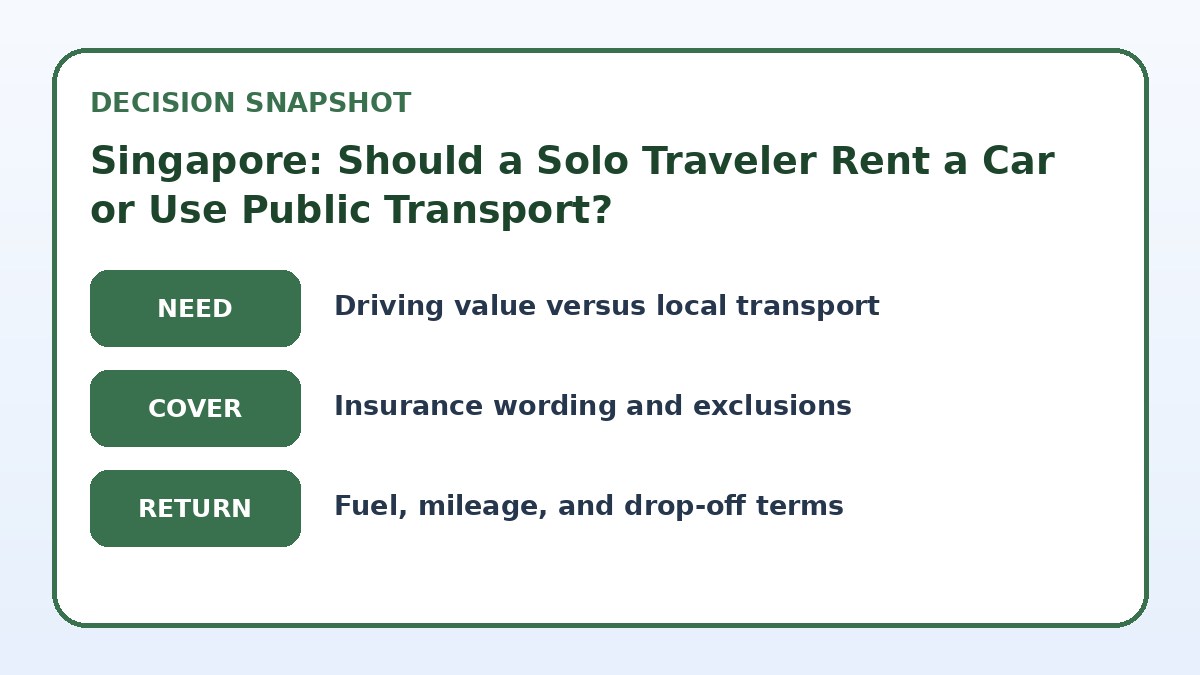
However, solo drivers must factor in non-obvious costs and responsibilities: locating and paying for parking, understanding road pricing systems, adhering to local driving customs, and securing appropriate insurance. A rental also adds cognitive load while you navigate and drive in unfamiliar surroundings. If you decide to rent, research road rules, verify what is included in the rental agreement, and plan where you’ll park before you set out to avoid surprises that can negate the convenience advantage.
| Approach | Best for | Tradeoff to check |
|---|---|---|
| Public transport | Urban sightseeing, short hops, and low-stress solo travel | Less flexible for remote destinations and early starts; subject to timetables |
| Car rental | Door-to-door access to nature, carrying bulky gear, and multi-stop rural days | Adds parking, local driving rules, and rental insurance responsibilities |
| Mixed approach | City stays with occasional rented car days for specific excursions | Requires planning to book and return rentals; may cost more overall |
| Ride-hailing plus transit | Late nights, short gaps in transit coverage, or single-direction transfers | Can be pricier than transit if used often and subject to surge pricing |
Ready to check the option that fits your plan?
Use your exact dates and traveler details so the provider page can show the current total and conditions.
Cost, convenience and safety tradeoffs
Compare direct costs like fares and rental rates but also include recurring and one-off expenses: parking, vehicle entry charges, fuel, and insurance for a rental; and fare caps, occasional ride-hailing surges, and longer travel times for transit. Convenience varies by itinerary: a short downtown hop is usually quicker on the MRT, while a multi-stop rural route may be quicker with a car. Think about the value of your time—long waits and transfers can make transit less attractive even if it’s cheaper.
Safety and comfort add another layer. As a solo traveler, you may prefer the predictability of public transport in an unfamiliar place, particularly late at night or in busy areas. Driving introduces fatigue and responsibility, which can reduce enjoyment on a solo trip. If you anticipate jetlag, busy days, or complex navigation, public transport keeps the focus on the experience rather than on managing a vehicle.
Before you book
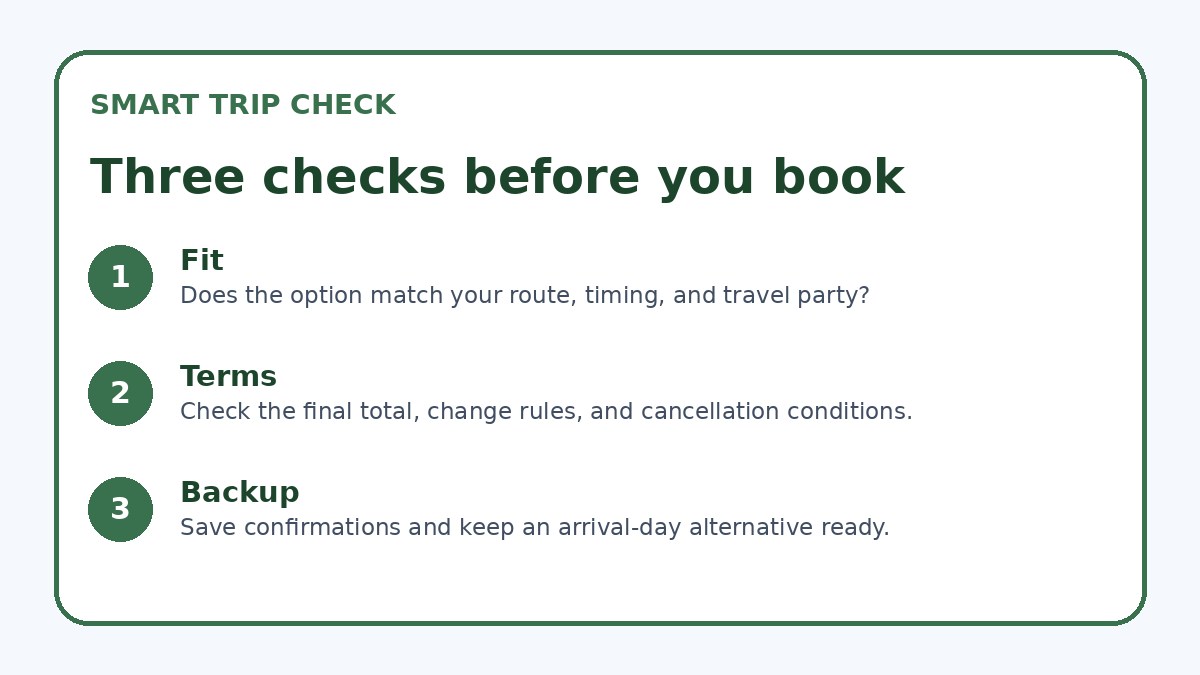
- Map each day’s stops and mark which are directly served by MRT or frequent buses versus those needing a car or multiple transfers.
- If considering a rental, confirm what insurance and roadside assistance are included and what extra coverage you may want.
- Check parking availability and likely parking costs at any non-urban sites you plan to visit by car.
- Verify the accessibility of your key attractions on the provider’s final pages or local transport websites before booking.
- Decide whether you’ll return a rental each night to avoid urban parking fees or keep it overnight and budget accordingly.
- Plan fallback options—identify nearby transit stops or ride-hailing zones in case driving or rentals become impractical.
How to decide: matching your itinerary to the right choice
Start by mapping your planned stops and timing each day: if most activities are inside the central urban area and easily reachable by MRT or bus, public transport is the simpler answer. If you need door-to-door access to rural parks, require multiple early starts, or will carry bulky equipment, lean toward a rental. Also weigh personal preferences—do you enjoy the control and privacy of a car, or prefer to relax and let others handle navigation and parking?
Finally, identify decision points you can check before booking: confirm the accessibility of your specific attractions by transit, check parking availability at planned rural sites, and verify rental insurance coverage for solo drivers. Use that information to run a quick cost-time comparison for your actual days. This pragmatic matching of itinerary and travel mode helps you make a clear, backed-up choice rather than a guess.
Frequently asked questions
Can a solo traveler rely only on public transport to see Singapore’s main sights?
Yes—most central and popular sights are connected by MRT lines or frequent bus routes, making it feasible to base yourself in a central neighborhood and travel without a car. Public transport typically covers major museums, markets, waterfront areas, and many parks, and ride-hailing fills timing gaps. If you plan side trips to remote nature reserves or require flexibility for early or late departures, those are the main scenarios where a car becomes more attractive. Always check the exact transit access for your chosen sights before finalizing plans.
What practical documents and checks do I need before renting a car in Singapore?
Before booking a rental, verify the rental company’s driver requirements, required ID, and any specific licensing rules for international drivers. Confirm which insurances are included and what optional coverages are advisable for solo drivers. Read the rental agreement for fuel policy, mileage limits, and cross-border rules if you plan to leave the country. Where provider policies can change, check the final booking page for up-to-date terms, deposit amounts, and any additional fees you must accept at pickup.
Are there safety concerns for solo travelers using public transport or driving?
Public transport in Singapore is generally safe and well-lit; standard solo-traveler precautions—watch personal belongings, avoid deserted stations late at night, and pick well-reviewed services—apply. Driving introduces risks linked to unfamiliar roads, local traffic rules, and fatigue; solo drivers should avoid long driving stints without breaks. Whether using transit or a car, plan contingency options, keep emergency contacts handy, and ensure your phone has maps and a local SIM or roaming data to access navigation and local help if needed.
Final planning note
For most solo travelers spending time in Singapore’s urban core, public transport will be the simplest, most stress-free choice: it’s efficient, widely connected, and keeps you focused on exploring rather than on driving tasks. Rent a car when your itinerary genuinely requires flexible door-to-door access, heavy equipment transport, or multiple rural stops in a single day. Use the checklist and comparison points above to model your actual days, tally likely costs and time, and verify provider terms on the booking pages before commitment. A pragmatic, itinerary-led decision will minimize surprises and make your solo trip more enjoyable.
Continue planning
Check current options and final conditions
Use the provider page to confirm live availability, the final total, cancellation terms, and every condition that matters to your trip.
This evergreen planning guide was created with AI-assisted drafting and a structured quality review. It does not display live prices, schedules, availability, visa guidance, or provider rankings. Verify current details before booking. Some links are affiliate links; we may earn a commission at no additional cost to you.