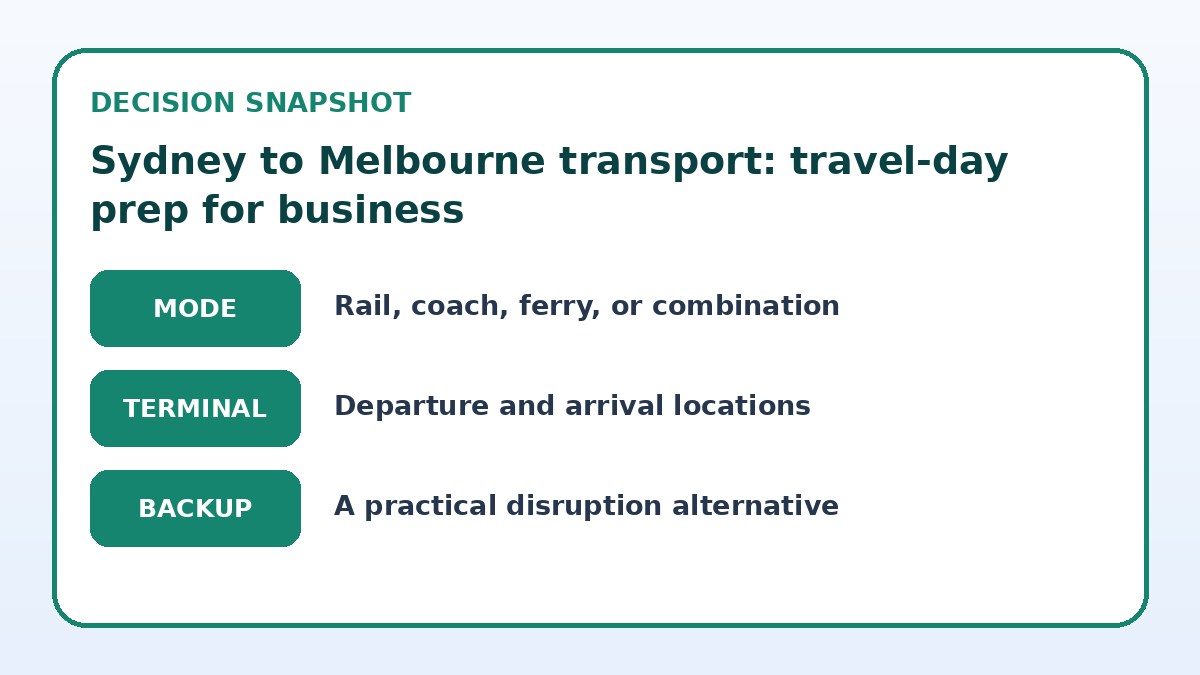
If you need to travel from Sydney to Melbourne for work, the most practical thing is to pick the transport mode that balances time, reliability and your ability to work on the move, then prepare the travel day with checklist-style discipline. That means confirming departure and arrival locations, arranging last-mile transfers, packing a compact office kit and building buffer time into your schedule. For many business travelers, the decision hinges on whether you need phone or laptop productivity en route, how flexible your meeting times are, and how important predictable arrival times are for onward connections or ground transport. Below, you’ll find a clear set of choices, tradeoffs and a step-by-step plan to make the travel day run smoothly.
See current options before you compare the details
Availability and final conditions change. Open Trip.com now or keep reading for the practical comparison.
Choosing the transport mode: speed versus workspace
Start by matching the nature of your meetings to what each transport mode realistically supports. If your priority is the fastest possible door-to-door time and you can’t be delayed, faster flight options may look appealing, but remember to factor in time to get to the airport, security lines, and ground transfer at the other end. Trains or high-quality coach services can offer a more relaxed boarding process and a steadier onboard workspace, while driving gives you complete schedule control but requires attention and can be tiring before a meeting. Think less about headline travel time and more about how productive and rested you’ll be when you arrive.
Next, consider connectivity and the ability to work en route. If you have sensitive material or need uninterrupted calls, a private car or a reserved train seat with table space often provides the best environment. Flights can be productive for short bursts of offline work, email triage, or final presentation checks, but phone calls may be limited and interruptions common. Compare options on the basis of how well they let you complete core work tasks and arrive in the right state for your first appointment, not just on advertised duration.
Plan the travel day schedule and buffers
Lay out your travel day as a sequence of timed milestones: departure from your location, arrival at the departure hub, check-in or boarding, estimated travel duration, arrival, and last-mile transfer to your final meeting spot or hotel. For each milestone add a buffer that reflects risk: tight urban traffic, peak security queues, or potential service delays. For business travelers, a conservative buffer reduces stress and gives you room to handle a late flight, an overflowing train, or a slow ride-share pickup without compromising important meetings. When schedules remain uncertain, aim to arrive earlier at your destination rather than shave minutes off the trip.
Also coordinate with other stakeholders: inform your host, meeting attendees, or team of your travel timings and your realistic arrival window. If you are traveling across time zones or have meetings soon after arrival, build in a short recovery window to check equipment, download any last files and reorient yourself. When relying on third-party booking pages for trains or flights, verify final pickup/drop-off locations and recommended arrival times on the provider’s booking page; details like recommended check-in time and platform or terminal entry points can change and must be checked at the time you finalize plans.
| Approach | Best for | Tradeoff to check |
|---|---|---|
| Flight (fastest door-to-door if airports close) | Travelers with tight schedules who accept airport steps and transfers | Airport procedures and ground transfers can erode time advantages and limit uninterrupted work |
| Train (steady workspace, less hectic boarding) | People who need reliable onboard workspace and lower stress boarding | Slower than a flight for pure speed; platform access and punctuality vary by service |
| Private car or rideshare (flexible door-to-door) | Itineraries requiring direct pickups, heavy luggage, or confidential work calls | Subject to road traffic and fatigue; not always the fastest during peak congestion |
| Coach or premium bus (simple logistics, fewer transfers) | Cost-conscious travelers who prefer straightforward boarding and predictable stops | Less privacy and desk-like space for concentrated laptop work; longer journey time |
Ready to check the option that fits your plan?
Use your exact dates and traveler details so the provider page can show the current total and conditions.
Packing and tech checklist for the travel day
Create a compact, prioritized carry-on with only what you need for the meeting and the travel day. Essentials typically include a laptop or tablet in a protective sleeve, a charger and an adaptative cable kit, noise-reducing earphones, a portable battery with enough capacity to recharge your devices, and printed or offline copies of critical documents. Add a modular meeting kit: a compact notebook, a pen, business cards, and one clean shirt or blouse in a garment bag if you need a quick refresh. Keep toiletries minimal but include stain remover or a lint roller for last-minute presentation issues.
Organize digital files for quick access: place meeting slides, contracts or reference documents in a single folder and make them available offline or in a secure cloud folder. Log out of non-essential accounts and ensure any sensitive documents are encrypted or behind a company VPN if accessing public Wi‑Fi. Finally, download the transport provider’s app or save the booking confirmation and travel route screenshots to your phone so you can view them without a signal. Trip.com can be used to compare current availability when you’re ready to book, but always verify final pickup points and travel conditions on the provider’s confirmation page.
Before you book
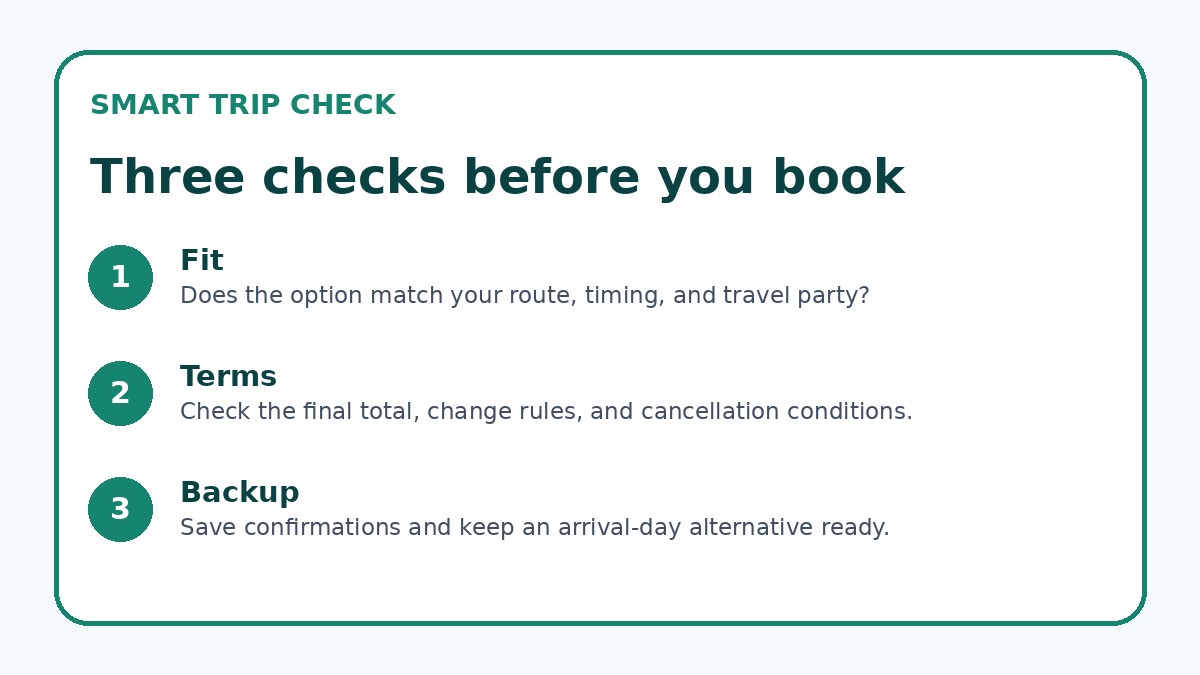
- Confirm the exact departure terminal or station and the recommended arrival/check-in window on the provider’s booking page.
- Reserve a seat or upgrade if onboard workspace and power access are important for your productivity.
- Pack a carry-on with chargers, noise-cancelling earphones, a power bank, printed meeting materials and a spare shirt.
- Book or prearrange last-mile transport and save contact numbers and pickup points in your phone.
- Download necessary files for offline access and ensure VPN or company security settings are ready before departure.
- Notify your host or meeting attendees of your travel window and share an estimated arrival time with a buffer.
Arrival logistics and last-mile execution
Before you travel, map the last-mile from arrival to your meeting location and identify alternatives. Check where taxis, rideshares, station shuttles or hotel transfers pick up; note likely hold-up points like baggage claim or taxi queues. If you expect to walk or take public transport, preview the route and time it would take with typical traffic or service patterns. Having a secondary plan for last-mile transport—such as a pre-booked car or a nearby colleague contact—reduces stress if the first option is unavailable or delayed, and it keeps you focused on preparing for your meeting rather than logistics.
On arrival, claim your luggage and move to a pre-decided spot to set up: a quiet corner of the terminal, a business lounge if you have access, or a short café where you can connect briefly. Use this time for a final tech check, catching up on urgent emails or rehearsing key points. If your meeting is immediately after arrival, freshen up and confirm the travel estimate to the meeting location. If possible, aim to be at the meeting venue with at least ten minutes to compose yourself; visible calm and punctuality send a stronger impression than rushing in frazzled.
Frequently asked questions
Should I choose a morning or afternoon travel slot for business between Sydney and Melbourne?
Choose a travel slot that minimizes the chance of cascading delays into your first commitment. Morning departures can be preferable if you want the day to be forward-looking and are willing to accept early departures and potential morning traffic to hubs. Afternoon travel may avoid peak check-in queues and give you time to wrap up local morning tasks, but can be affected by accumulated delays later in the day. Consider the meeting time, how much buffer you need on arrival, and whether you need quiet time en route; then pick a slot that leaves you comfortably prepared rather than cutting it close.
Can I effectively work on the way between Sydney and Melbourne?
Yes, but effectiveness depends on mode and the tasks you need to complete. A reserved train seat with a table, a private car or a business lounge at a hub offers the best conditions for focused, uninterrupted work. Flights can support short, concentrated tasks and offline prep, but calls and prolonged laptop work are often interrupted. For any mode, bring a power source, download files for offline use and use noise control measures. If confidentiality is a concern, prefer private transport or ensure connections use secure company networks and encrypted files.
What should I verify on final booking pages before I complete a Sydney to Melbourne transport reservation?
On the provider’s final booking page, confirm departure and arrival locations, exact terminal or platform information, recommended check-in or boarding times, baggage rules, and seat assignment options. Also verify cancellation or change terms, available seat types and whether onboard power or Wi‑Fi is included if you rely on them. If you need upgrades or special assistance, check how to request these and whether they are confirmed. Use the provider’s information as the authoritative source for operational details rather than third-party summaries.
Final planning note
Preparing a business travel day between Sydney and Melbourne hinges on choosing the travel mode that aligns with your priorities—speed, reliable arrival times, or ability to work en route—and then planning the day with conservative buffers and an organized carry-on. Confirm the finer operational details on the provider’s booking page, prearrange last-mile transport, and keep digital and printed copies of essential files. Small routines—like a compact tech kit, offline access to documents and a pre-decided backup plan for delays—pay off enormously in reduced stress and better meeting performance. With a few deliberate checks and a prioritized packing list, you’ll arrive ready to do business.
Continue planning
Check current options and final conditions
Use the provider page to confirm live availability, the final total, cancellation terms, and every condition that matters to your trip.
This evergreen planning guide was created with AI-assisted drafting and a structured quality review. It does not display live prices, schedules, availability, visa guidance, or provider rankings. Verify current details before booking. Some links are affiliate links; we may earn a commission at no additional cost to you.