
If you're taking New York City to Boston transport with children, the practical core of planning is: pick the travel mode that fits your family rhythm, pack a compact day kit, confirm final departure details with the carrier, and build buffer time for breaks. For many families, the decision narrows to train, bus, car, or flight — each has predictable tradeoffs around comfort, mobility with luggage, and on-the-go entertainment. Before booking, check the provider’s final page for baggage rules, boarding locations, family or group seating options, and any required documentation. This article focuses on the travel day: what to prepare at home and on the route, how to compare options when booking, and simple routines to keep kids calm and comfortable while you move between two major cities.
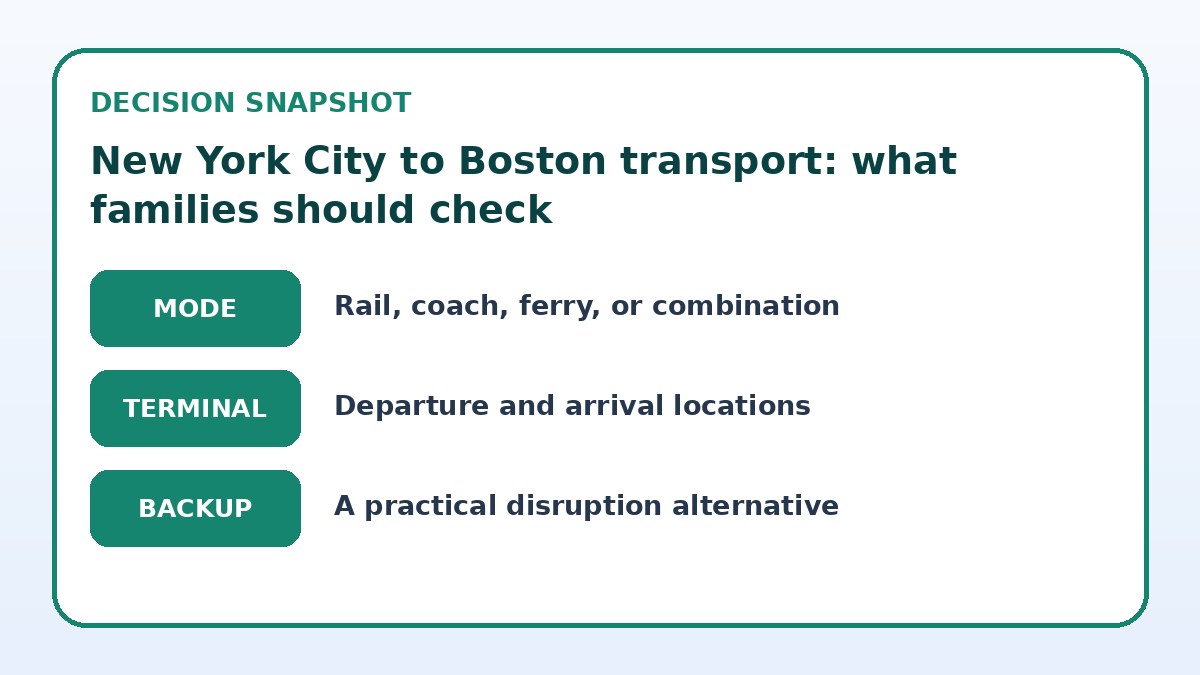
See current options before you compare the details
Availability and final conditions change. Open Trip.com now or keep reading for the practical comparison.
Choosing the travel mode that fits your family
Start by listing what matters most to your family on the travel day: low transitions, room to spread out, the ability to move around, or the fastest scheduled trip from city center to city center. Trains typically minimize city-center transfers and let kids walk the aisle; buses often cost less and have frequent departures; driving gives full control over stops and luggage but shifts the driving burden to a caregiver; flying may save time for older kids but adds airport check-in and security steps. Write down priorities and constraints—who will handle bags, how long children tolerate sitting, and whether stroller or car seats must be transported.
When you compare options, examine not just advertised trip times but what the travel day will feel like: door-to-door time, how many changes or handoffs are required, and how comfortable the seating and restrooms look for young children. For any provider you consider, check their final booking page for baggage allowances, whether car seats are permitted or required, family or group seating policies, and any special boarding that helps families. If you use a third-party comparison like Trip.com, use it to shortlist choices but verify critical rules on the operator’s own confirmation page.
Packing and organizing for a smooth travel day
Pack a compact travel-day kit that stays with you: individual snack packs, refillable water bottles, wipes, a small first-aid kit, any regular medications, and a couple of favored small toys or comfort items. Include a thin blanket or sweater, a change of clothes for toddlers, and sealed zip bags for spills. Keep important documents—tickets, IDs, reservation confirmations, and contact numbers—in a single, easily accessible folder or an app that’s working offline. If you expect unpredictable waits, pack layered activities: a simple puzzle, coloring tablets, and a charged tablet with pre-downloaded shows or audiobooks.
Organize luggage to match the chosen mode: a carry-on backpack with essentials for the travel day; one checked bag or trunk space for bulkier gear; and a collapsible stroller or carrier if it eases transfers. Label luggage clearly and keep one adult responsible for boarding and disembarking rhythm. For families using car seats, check whether the service allows installed seats or requires child restraints to be carried; for trains and buses, confirm stroller handling and whether there’s space to keep them near your seat. Planning how you’ll access snacks, wipes, and documents without unpacking main bags reduces disruptions.
| Approach | Best for | Tradeoff to check |
|---|---|---|
| Train | Families wanting fewer city transfers and room to move during the trip | May require early booking for adjacent family seats and verify baggage rules on the carrier page |
| Bus | Budget-conscious families who value frequent departures and simple ticketing | Less space and privacy; check restroom availability and luggage handling procedures |
| Car | Families needing full schedule control, stops, and door-to-door convenience | Driver bears full responsibility and you must plan parking and car-seat logistics |
| Plane | Families prioritizing shortest scheduled airborne time for older kids | Adds airport check-in and security steps—confirm baggage, boarding rules, and seat assignments |
Ready to check the option that fits your plan?
Use your exact dates and traveler details so the provider page can show the current total and conditions.
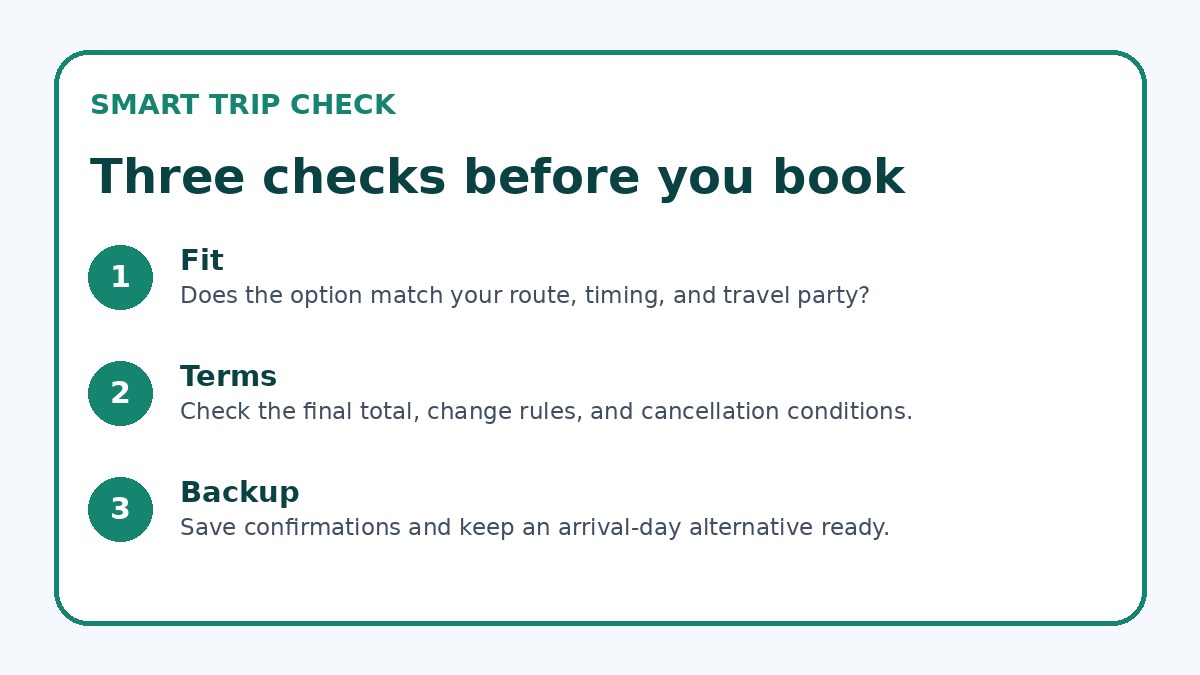
Managing time, transitions, and kids on travel day
Set a realistic timeline that includes time for downtown transit, security or boarding, restroom breaks, and an extra 20–30 minutes contingency for unexpected delays. Give children a clear routine and simple expectations: when to put on shoes, where backpacks will be, and what signals mean it’s time to move. Use visual or verbal countdowns tied to concrete actions—packing away toys five minutes before boarding, finishing a snack at a restroom stop—so kids know what’s coming and can mentally prepare. If you’re driving, map a few safe, family-friendly stops along the route; if on scheduled services, note nearest stations or stops for emergency diversions.
During the journey, rotate activities to avoid boredom: short interactive games, audio stories, and snack breaks at planned intervals. Encourage movement by letting kids walk a short stretch when safe, or choose seats with aisle access to stand periodically. Maintain a relaxed pace at arrivals—allow time to collect luggage, change diapers or clothes, and reorient before leaving the station, terminal, or parking lot. If you face delays, focus on low-drama solutions: quiet snacks, an engaging audio story, and calm explanations so children understand the pause without heightening anxiety.
Before you book
- Confirm the exact departure and arrival points (station/terminal names) on the carrier’s final booking page.
- Pack a travel-day kit with snacks, wipes, basic meds, chargers, and at least one favorite comfort item per child.
- Download or screenshot tickets, reservations, and directions; save them offline for areas with poor signal.
- Reserve or plan seating arrangements now if the carrier offers family seating or seat selection.
- Check stroller, car-seat, and large-bag policies and plan how you’ll store or carry them during transfers.
- Build at least 30 minutes of buffer into your schedule for each major transfer or city-center departure.
Final checks and decisions before you book
Before booking, confirm the exact departure and arrival locations, not just the city names: big cities can have multiple train stations, bus terminals, or airports. Check carrier pages for current boarding procedures, baggage weight or size limits, and whether family seating or priority boarding is offered. If a provider lists optional services—such as seat selection, on-board meals, or refundable tickets—decide which add-ons matter enough to include. Make sure any times or connections you rely on are presented on the carrier’s confirmation and understand what their change and cancellation policies say about family emergencies.
Compare direct versus connecting options carefully: a connecting trip might save money or open better times, but each transfer is an additional chance for stress, missed connections, and luggage handling. If the itinerary shows a connection, confirm minimum transfer time on the carrier’s page and verify whether the same carrier issues both legs or whether you’ll need to recheck-in. If traveling by car, check parking options at your origin and destination and whether you’ll need an accessible spot for loading strollers and car seats. Make the final booking when logistics, timing, and family comfort line up.
Frequently asked questions
What’s the easiest way to keep toddlers comfortable during a multi-hour trip?
Break the journey into short activity segments: 20–30 minutes of focused play or audio stories, followed by a movement break and a snack. Pack layered clothing so you can adapt to temperature swings in stations or vehicles, and bring a compact blanket. Choose an aisle seat if you expect frequent bathroom or stretching stops. Top up devices and pre-download entertainment to avoid streaming hiccups, and keep a small surprise activity tucked away to bring out when attention drops.
How should I handle car seats and strollers when using public transport between NYC and Boston?
Policies vary by carrier and mode. Before you travel, check the provider’s final booking page to see if strollers collapse for boarding, whether strollers can be stored at your seat, and if car seats are permitted on board or must be checked. Consider a lightweight, easily collapsible stroller for transfers and a travel car seat or harness for taxis and rideshares at your destination. Bring clear labels for gear and a small strap or bag to keep accessories together during moves.
How much extra time should I allow when traveling with children between the two cities?
Allow extra buffer beyond the posted journey time for restroom breaks, snack stops, and the slower pace of getting luggage and children settled. Add time for urban transfers—travel to and from stations or airports—and another cushion for unexpected delays like traffic or longer boarding lines. A practical rule is to add at least one planned stop or 30–60 minutes for each leg involving city-center access, and to arrive earlier than the carrier’s minimum recommended check-in if you anticipate needing help with luggage or managing young children.
Final planning note
Planning the travel day from New York City to Boston with kids is more about preparing routines and contingency than predicting exact travel times. Choose the mode that aligns with your family’s tolerance for transfers, space needs, and luggage complexity. Organize a compact day kit, confirm the carrier’s boarding and baggage details on their final booking page, and build realistic buffers for restrooms and unexpected stops. With a clear departure plan, labeled gear, and a mix of entertainment and movement, you’ll reduce stress and keep everyone calmer from the first departure to the final arrival.
Continue planning
Check current options and final conditions
Use the provider page to confirm live availability, the final total, cancellation terms, and every condition that matters to your trip.
This evergreen planning guide was created with AI-assisted drafting and a structured quality review. It does not display live prices, schedules, availability, visa guidance, or provider rankings. Verify current details before booking. Some links are affiliate links; we may earn a commission at no additional cost to you.