
For couples planning a trip to Singapore, the practical choice often comes down to which flexible booking terms fit your relationship with uncertainty. If you expect schedule changes, one partner prefers spontaneity, or flight connections could shift, a flexible rate can prevent stress and unexpected costs. Start by deciding how likely you are to change plans, how much you value price savings versus peace of mind, and whether you need guarantees about room type, bed configuration, or late check-in. Read the specific policy language on the hotel’s booking page for cancellation windows, modification fees, hold periods for prepayment, and what happens with third-party bookings. I’ll explain the tradeoffs, how to compare options, and a checklist of exact items to verify before you click confirm.
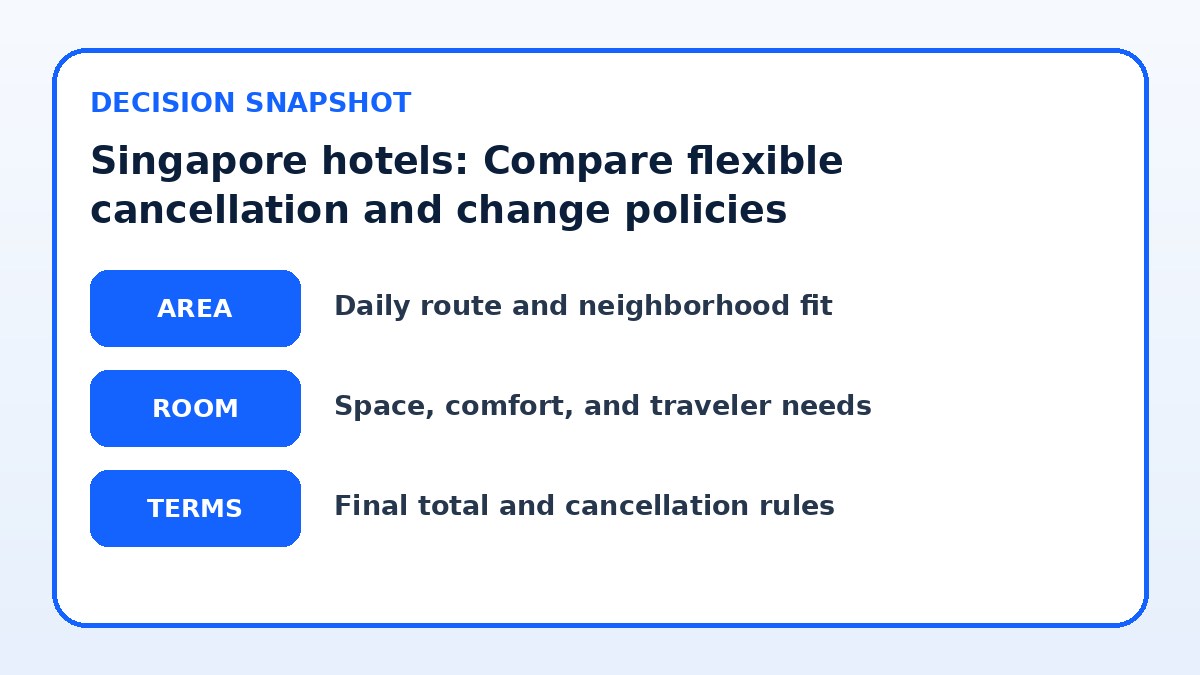
See current options before you compare the details
Availability and final conditions change. Open Trip.com now or keep reading for the practical comparison.
Define your couple’s flexibility needs before comparing rates
Start by clarifying how you and your partner approach change. Are you the couple who thrives on spontaneity, or do you prefer a tightly planned itinerary? If one partner has variable work or health commitments, a longer cancellation window matters more than a small price saving. Consider the trip components that are most likely to change: flight times, work meetings, family obligations, or visa processing. Knowing which elements are mutable helps you shortlist rate types—fully flexible for unpredictable plans, partially flexible for likely small tweaks, or non-refundable when plans are locked and you want to save.
Also discuss non-price priorities together: does one partner need a guaranteed twin or king bed? Will you arrive late at night and need a guaranteed check-in? Some flexible rates include guarantees about room type and early/late arrival; others do not. Decide whether you prefer the reassurance of confirmed room specifics or whether you’re comfortable with the hotel assigning rooms on arrival. When both partners agree on the level of flexibility, you can evaluate specific policies and pick the one that balances emotional comfort and budget.
How to read and compare cancellation and modification policies
Cancellation and modification language varies widely; read it like a contract. Look for concrete terms: the deadline for free cancellation (hours or days before check-in), whether changes are allowed without penalty, and how refunds are handled if you prepaid. Pay attention to time zones the hotel uses, because a 48-hour window might refer to local hotel time. Identify whether the policy distinguishes between cancellations made by the booker and those made by a third-party platform or travel agent—penalties might differ. If a charge is described as a 'deposit,' check whether it becomes non-refundable after a date, or whether that deposit is applied to the stay.
Also check how modifications are defined: some policies allow date changes without penalty but charge to change the room type or guest name. See whether the hotel allows partial changes (shortening a stay) and how refunds are calculated in those cases. When a rate mentions 'free cancellation until 3 PM two days before arrival,' confirm whether that deadline applies to the entire booking or each night separately. If anything is ambiguous, ask the property directly and save the written reply; booking pages and confirmation emails are the legal references you’ll need if disputes arise.
| Approach | Best for | Tradeoff to check |
|---|---|---|
| Fully flexible rate (free cancellation several days before) | Couples with uncertain schedules, work conflicts, or who value peace of mind over cost. | Higher nightly rate or deposit requirement compared with restricted options. |
| Partially flexible rate (fee for late changes, limited windows) | Couples who expect minor adjustments but can commit to broad dates in advance. | Some protection at moderate cost; read details on allowed modifications carefully. |
| Non-refundable rate (cheaper, no refunds) | Couples with fixed, confirmed travel plans looking to save money and accept loss risk. | Full financial loss if you cancel or change dates; needs strong confidence or insurance. |
| Pay-at-hotel with credit-card guarantee | Couples who prefer to delay payment but need a guaranteed room hold without prepaying. | Card holds may affect available credit and some hotels will charge if cancellation rules are missed. |
Ready to check the option that fits your plan?
Use your exact dates and traveler details so the provider page can show the current total and conditions.

Weighing price savings versus peace of mind for couples
Couples often trade off small savings for flexibility differently depending on trip purpose. For a romantic weekend with fixed dates—anniversary bookings, pre-booked shows, or a honeymoon leg—you might prioritize a guaranteed room and accept a slightly higher flexible rate. For exploratory travel with loose dates or when flights are on standby, a non-refundable rate could be tempting for its lower cost, but only if both partners are comfortable accepting full loss risk. Consider whether you already have refundable flights or travel insurance that covers cancellations; those safety nets make non-refundable hotel rates less risky.
Another angle is emotional cost: one partner’s anxiety over potential penalties can outweigh monetary savings. Discuss and quantify acceptable risk: what percentage of the total trip cost are you willing to lose if you cancel? If you need reassurance, pick a rate with free cancellation up to a few days before arrival, even if it costs more. If you want to save, limit non-refundable bookings to short, inexpensive stays where the loss would be manageable. Remember that price differences can vary considerably between properties, and that the value of flexibility depends on your personal risk tolerance.
Before you book
- Confirm the exact cancellation deadline and time zone stated on the hotel’s official booking page and save a screenshot.
- Verify whether the rate requires immediate prepayment or just a credit-card guarantee and what amount will be charged or held.
- Check if the policy explicitly guarantees room type, bed configuration, and late check-in or if those are assigned on arrival.
- If booking through an agent, confirm which entity issues refunds and whether you must contact the agent or hotel to cancel.
- Ask the hotel by email for written confirmation of any special conditions (early arrival, late departure, or name changes).
- Compare the flexible rate price difference to trip insurance costs to decide whether cheaper non-refundable rates plus insurance make sense.
Practical checks to do on the booking page and before confirming
On the hotel’s booking page, verify exact cancellation deadlines, how refunds are processed, and whether any taxes or service fees are non-refundable. Check whether the rate requires full prepayment or only a credit card guarantee; if prepayment is required, clarify the currency charged and the date the charge will be taken. Look for explicit language about room guarantees (bed type, view, connecting rooms) and late check-in policies. If the booking platform shows a policy summary and the property’s fine print, read both; discrepancies are common and the hotel’s policy text usually prevails.
If anything is unclear, contact the hotel directly and request written confirmation of the specific policy wording you care about—cancellation cutoff, modification fees, and what happens if your flight arrives late. Save confirmation emails and screenshots of the booking page. If you’re booking through an online travel agent, confirm whether the agent’s change or cancellation process differs from the hotel’s, and check whether refunds will come from the agent or the property. Trip.com can be useful to compare current options, but always verify the final terms on the hotel’s own booking page.
Frequently asked questions
Can I change the guest name or room details on a flexible rate booking for a Singapore hotel?
Many hotels allow name changes and minor room adjustments on flexible bookings, but policies vary. Some properties permit name swaps without penalty, while others treat a name change as a modification that could trigger a fee. Room detail guarantees—such as bed type, view, or adjoining rooms—may be explicitly stated or simply subject to availability. Always check the booking page for the hotel’s exact rules and, if necessary, email the hotel to get a written confirmation. Save that confirmation with your reservation; it’s the reference you’ll rely on if staff need to honor a requested change.
If I book a non-refundable rate, can travel insurance cover cancellations for couples?
Travel insurance can cover cancellations, but coverage depends on your policy’s terms and the reason for cancellation. Standard trip-cancellation insurance often reimburses prepaid, non-refundable expenses for covered reasons like illness, certain travel provider failures, or other specified events. Policies differ on what counts as a covered reason, and some require proof. If you plan to buy insurance to protect a non-refundable hotel booking, compare policies carefully and confirm that the insurer covers hotel-only cancellations and that the policy’s cancellation conditions match the risks you care most about.
How should couples handle late arrivals or early departures under flexible hotel policies in Singapore?
Late arrivals are usually accommodated, but some rates require you to notify the hotel if you will arrive after a certain hour; otherwise they may release the room. Check whether the booking confirms a guaranteed late check-in and whether there is a grace period. For early departures, many flexible rates allow changes but may charge a modification fee or prorate the refund. Before finalizing a booking, read the policy for early-departure penalties and ask the hotel how refunds are calculated if you shorten the stay. Keeping written confirmation of any agreed exception helps prevent disputes.
Final planning note
Choosing the right flexible booking terms for a couple traveling to Singapore is both practical and personal. Start by agreeing on your flexibility needs, then compare cancellation windows, prepayment requirements, and whether room specifics are guaranteed. Balance the monetary savings of restricted rates against the potential emotional and financial cost of a forced cancellation. When policies are ambiguous, request written confirmation from the hotel and save all booking communications. Use a platform like Trip.com to survey options, but always verify the final terms on the hotel’s own page before you commit. With clear expectations and a short checklist, you can pick a rate that protects your plans and your relationship.
Continue planning
Check current options and final conditions
Use the provider page to confirm live availability, the final total, cancellation terms, and every condition that matters to your trip.
This evergreen planning guide was created with AI-assisted drafting and a structured quality review. It does not display live prices, schedules, availability, visa guidance, or provider rankings. Verify current details before booking. Some links are affiliate links; we may earn a commission at no additional cost to you.