
Practical answer first: before you click Book, add every predictable cost—flight or train fare, accommodation, airport transfer, local transport, travel insurance, daily expenses, and contingency money—and compare the total against your trip priorities. For solo travelers to Hong Kong, that full-trip total determines whether a cheaper fare plus expensive transfers really saves money, or whether a pricier centrally located hotel reduces your local transport spend and saves time. Start by creating a simple spreadsheet or use a notes app to list fixed and variable costs per day and per trip. With that number in hand, you can make clear tradeoffs: fewer nights, shifting neighborhood, different transport options, or changing travel dates. The planning below explains what to include, how to compare options, and which provider pages to verify before final payment.
See current options before you compare the details
Availability and final conditions change. Open Trip.com now or keep reading for the practical comparison.
What to add to your Hong Kong trip total
Start by listing every predictable expenditure. Include your main transport to Hong Kong (flight or ferry), the airport-into-city transport option you’ll actually use, and transfers at either end. Add accommodation costs for all nights, any visa or entry-related charges, and the travel insurance premium that covers your exact trip dates and planned activities. Don’t forget mandatory extras like local SIM or eSIM, and items you’ll likely buy once there such as an Octopus card deposit or initial top-up for transit.
Then estimate variable daily spending: meals, attractions, short local rides, occasional taxis or ride-hailing, and a realistic souvenir or shopping allowance. If you plan to buy event or museum tickets in advance, include those fees now. Finally, set an emergency buffer—enough to cover a missed connection, a last-minute hotel change, or an unexpected medical expense—then add a small contingency for exchange rate shifts or card fees when withdrawing cash.
Comparing accommodation and location tradeoffs
For solo travelers, location affects both safety and convenience. A hotel or guesthouse in a central area can cost more per night but often reduces time and money spent on transit, making it easier to join evening activities and cut taxi fares. Conversely, a cheaper room in a far neighborhood may look attractive on price alone but can add daily commute expenses and reduce the time you have for sightseeing. Think about arrival and departure logistics: late or early flights make proximity to transport hubs more valuable.
When comparing listings, check what’s included: breakfast, Wi‑Fi, luggage storage, and check‑in flexibility. Read the provider’s booking page for final cleaning fees, deposit rules, and cancellation terms because those items can change the total cost when you reserve. If staying in a serviced apartment or hostel, verify whether bed types, private bathrooms, or shared facilities match your comfort and privacy needs—small differences can justify a higher nightly rate for a better solo experience.
| Approach | Best for | Tradeoff to check |
|---|---|---|
| Book cheapest flight and cheap hotel farther out | Travelers prioritizing low base cost and who don’t mind longer commutes | More time and expense on daily transport; less spontaneity in the evening |
| Pay more for central hotel and pay for slower transport | Solo travelers valuing convenience, safety, and time near attractions | Higher nightly rate may reduce funds for experiences or dining |
| Choose flexible fares and refundable accommodation | Those concerned about changing plans or health issues | Higher upfront cost but easier changes and refunds if needed |
| Buy nonrefundable deals and add travel insurance | Budget-focused travelers confident in fixed plans | Lower price but requires insurance to mitigate cancellation risks |
Ready to check the option that fits your plan?
Use your exact dates and traveler details so the provider page can show the current total and conditions.
Transport choices: flights, airport transfers, and local travel
Don’t equate the lowest advertised ticket with the lowest trip cost. Budget carriers may charge extra for seat selection, checked bags, and airport changes, while indirect itineraries can add overnight transit or visa complications. For each flight option you consider, add the likely extras and calculate door-to-door time and cost. When available, compare direct versus connecting routes by adding extra transfer hours and potential costs if baggage is checked through or not. Always verify final baggage allowance and fees on the airline’s booking page before paying.
Inside Hong Kong, mix public transport and occasional taxis to control costs. The MTR and buses cover most neighborhoods efficiently; an Octopus card or contactless payment capacity will simplify travel. For airport transfers, compare the cost and convenience of express rail, shuttle buses, or taxis depending on your arrival time and luggage. If you plan day trips to outlying islands or day excursions, estimate those ferry or coach fares and add them to the total so they don’t become an unplanned expense.
Before you book
- Add flight or ferry base fare plus all airline extras (checked bag, seat assignment, priority boarding) to your trip spreadsheet.
- Calculate airport-to-city transfer cost and the typical transport cost per day based on your planned neighborhood.
- List accommodation nightly rate and verify cleaning fees, taxes, and deposit rules on the booking page before reserving.
- Estimate daily food, attraction tickets, and minor purchases, then multiply by the number of days for a realistic variable budget.
- Select travel insurance and confirm exactly which events, activities, and pre-existing conditions are covered in the policy terms.
- Keep a written contingency amount for emergencies and check the final supplier pages for cancellation and refund procedures.
Insurance, refunds, and the final booking checklist
Travel insurance is an often-overlooked fixed cost that protects your investment. Choose a policy that covers medical evacuation, trip cancellation for your specific purchase conditions, lost baggage, and any high-risk activities you might do. When comparing policies, read what triggers a refund or change and whether pre-existing conditions require disclosure. Some credit cards include travel protections—verify coverage limits and what you must pay upfront versus what is claimable after the fact.
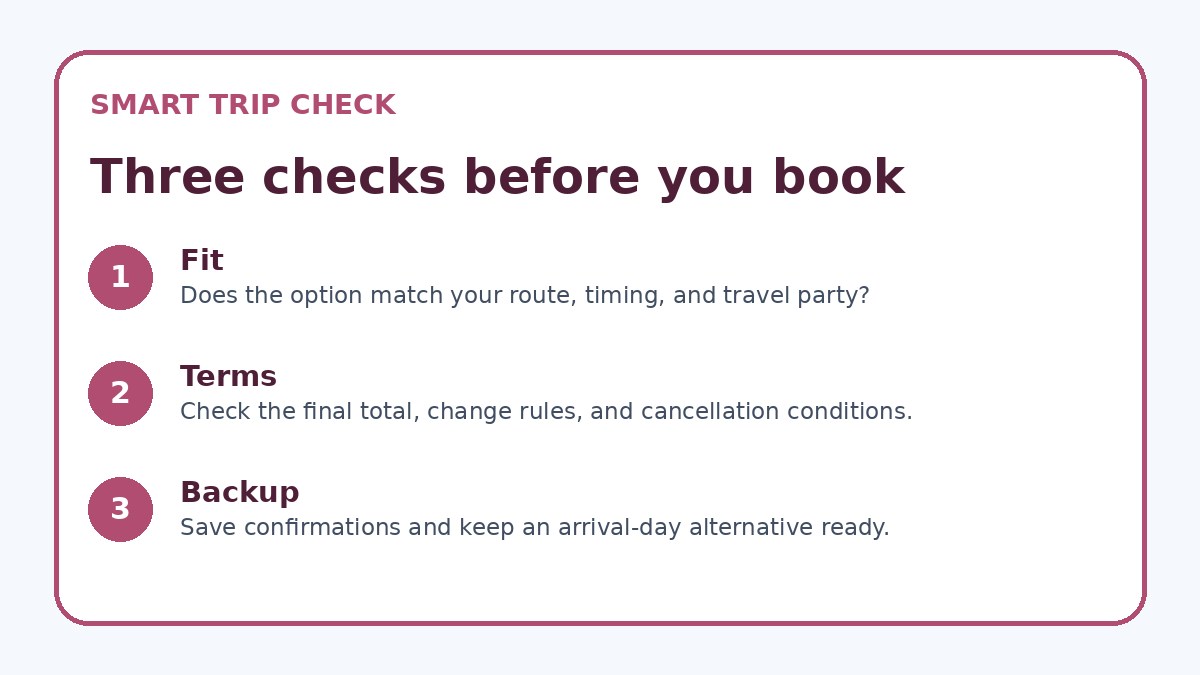
Before you press Confirm, revisit each provider’s final booking page: airlines for baggage and change fees, accommodations for cleaning and deposit rules, and tour operators for cancellation policies and what’s included. If you used a metasearch or aggregator, cross-check availability and total price on the supplier’s site. Trip.com may be a place to compare current availability and conditions, but always verify terms and the final total where you will actually complete the booking.
Frequently asked questions
How should a solo traveler decide between a centrally located hotel and a cheaper room farther away?
Weigh what you value more: saved money or saved time. A central location reduces travel time to attractions and can make evenings easier and safer for a solo traveler, while outlying accommodations often have lower nightly rates. Add likely extra daily transit costs and time to your total trip estimate—if transit eats into sightseeing or costs nearly as much as the hotel savings, paying a bit more for location usually makes sense. Verify on booking pages whether late check-in, luggage storage, or local transit access is available before deciding.
What transport costs specific to Hong Kong should I include when totaling my trip?
Include your international arrival fare plus the chosen airport transfer (express rail, bus shuttle, taxi), the initial deposit or top-up for local transit cards, and estimated daily MTR/bus fares. If you plan ferries to outlying islands or taxis for late-night returns, add those expected fares. Remember to check carrier pages for baggage rules and any added fees on the route you plan to book, because a low base fare may come with extra charges that change the door-to-door cost significantly.
Can travel insurance replace flexible booking options when trying to save money?
Insurance can reduce the financial risk of nonrefundable bookings but doesn’t always substitute for flexible fares. Many policies cover covered reasons for cancellation or delay—read the policy wording to see what is included and excluded. Flexible fares allow changes with fewer fees and sometimes faster refunds from providers, which insurance cannot speed up. Decide whether paying for flexibility or taking a cheaper nonrefundable rate plus insurance gives you better value after accounting for premiums and potential claim limitations.
Final planning note
Solo travelers planning Hong Kong trips benefit from totaling every expected cost before booking. A complete, honest spreadsheet that separates fixed and variable expenses will reveal whether a low headline fare or nightly rate truly saves money once transfers, extras, and time tradeoffs are added. Prioritize the decisions that affect your comfort and schedule—location, refundability, and transport mode—then verify final fees and terms on the supplier booking pages before you pay. With those checks done, you can book with confidence knowing the full trip cost matches your budget and travel priorities.
Continue planning
Check current options and final conditions
Use the provider page to confirm live availability, the final total, cancellation terms, and every condition that matters to your trip.
This evergreen planning guide was created with AI-assisted drafting and a structured quality review. It does not display live prices, schedules, availability, visa guidance, or provider rankings. Verify current details before booking. Some links are affiliate links; we may earn a commission at no additional cost to you.