
If you’re flying solo from Paris to Istanbul, the practical choices you make about baggage and how early to arrive shape the whole trip more than the minor comforts on board. Start by deciding whether to travel with carry-on only or add a checked bag: that choice affects arrival time at the airport, transfer options in Istanbul, and how much flexibility you have if plans change. Next, map the steps you'll take at the Paris airport you use (CDG or ORY), including check-in, security, and passport control, and build in buffer time for queues, transport delays, and any last-minute errands. This article gives a clear recommendation up front, then walks through the tradeoffs, what to verify with your carrier, and practical checklists so you can make a confident booking and leave home with fewer surprises.
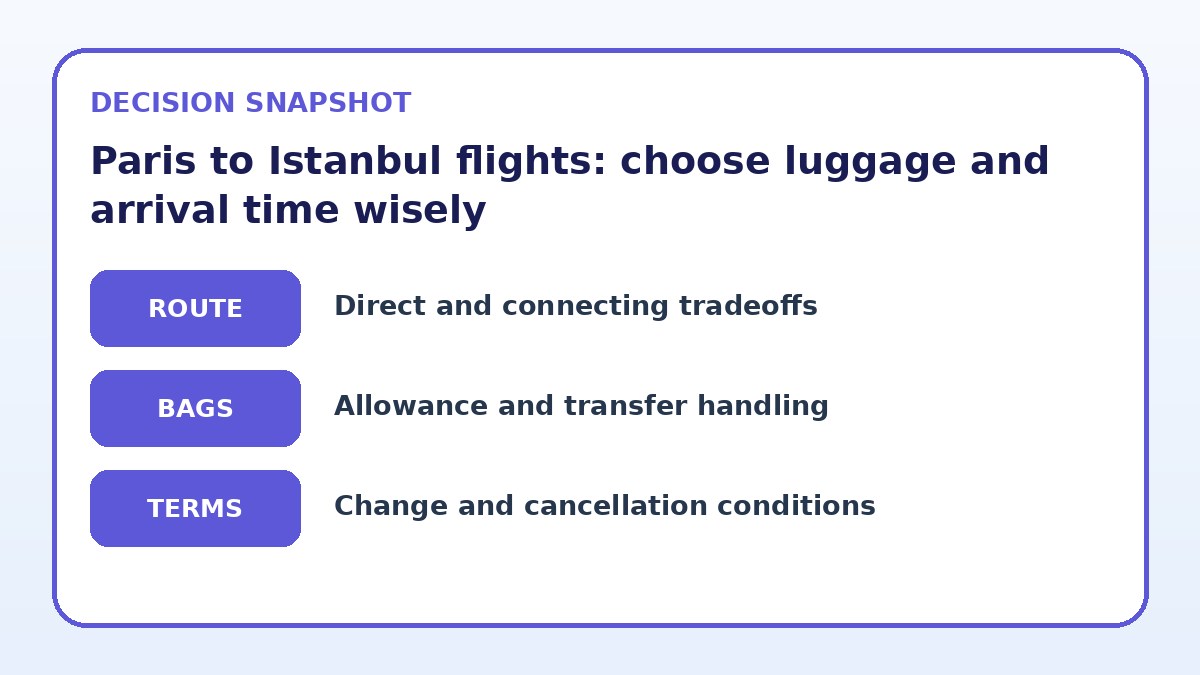
See current options before you compare the details
Availability and final conditions change. Open Trip.com now or keep reading for the practical comparison.
Decide carry-on only or checked luggage
Start with the trip length and activities. For short city breaks or week-long trips where you can re-wear layers and use hotel laundry, a carry-on plus a small personal item is often the fastest and simplest option. You avoid checked-bag queues on departure and wait time at the arrivals belt in Istanbul. However, be realistic about what fits: bulky footwear, work equipment, or special clothing may force a checked bag. Check the exact cabin dimensions and weight allowance on the airline booking page before you assume your bag will fit.
If you need a checked bag, plan how that changes your airport timing and transfers. Dropping a bag usually adds 20–40 minutes if you have to queue at the airline counter, longer at peak hours or with low-cost carriers that don’t include free check-in. In Istanbul, retrieve time can add another 15–30 minutes to your arrival. Factor those minutes into transport bookings—private transfers and pre-booked taxis will save time compared with public transit, but confirm meeting points and baggage handling options in advance.
Choosing how early to get to the Paris airport
A straightforward rule: arrive earlier when uncertainty is higher. For carry-on only with mobile check-in and no visa-on-arrival requirements you typically can arrive 90–120 minutes before departure for Schengen-to-non-Schengen flights, but this depends on your airline and terminal procedures. If you expect long security lines, need to visit a ticket desk, or are traveling during holidays, add another 30–45 minutes. Research typical queue times for your terminal and time of day—morning peaks and late-evening waves can change the sensible arrival window.
If you have a checked bag, or if your flight requires document checks at gate (for example extra ID or visa verification), add extra buffer. For connections or codeshares where passengers must re-check bags, aim for at least 2.5–3 hours at larger Paris airports. Always verify check-in and bag-drop closing times on the airline’s final booking page; if an airline closes bag drop 40 minutes before departure, that rule overrides any general advice about arrival times.
| Approach | Best for | Tradeoff to check |
|---|---|---|
| Carry-on only, direct flight | Solo travelers prioritising speed and minimal airport time | Limited clothing and gear space; strict carry-on size/weight rules |
| Checked bag, direct flight | Longer trips or varied weather where packing light is impractical | Longer check-in and arrival time; potential wait at baggage claim |
| Carry-on only, connecting flight | Cost-conscious travellers tolerating a layover for a cheaper fare | Tighter connections increase stress if delays occur; re-checking usually not needed |
| Checked bag, connecting flight | Those who need more luggage and accept longer transfer time | May require re-check and passport control, adding significant transfer time |
Ready to check the option that fits your plan?
Use your exact dates and traveler details so the provider page can show the current total and conditions.
Packing smart: essentials for a solo traveler
Organise your carry-on with zones: travel documents and valuables in an easily reachable pocket, electronics in a padded section, and a small toiletry kit that meets liquid limits. Include a quick-change outfit or at least a spare top and underwear in case checked luggage is delayed. For flights to Istanbul, consider a light layer for the cabin and a small foldable bag for day use once you arrive. Use packing cubes to compress clothing and keep things accessible—this makes security screenings faster and reduces stress when you’re navigating transfers alone.
Also pack for contingencies: a compact power bank (allowed in carry-on), printed copies and screenshots of key documents (booking reference, accommodation address, emergency contacts), some local currency, and prescription medication in its original packaging. If you’ll need Turkish lira on arrival, check options for pre-ordered cash or international ATMs at the airport; always verify card acceptance with your bank and the airline’s guidance about on-board or airport payment options before you travel.
Before you book
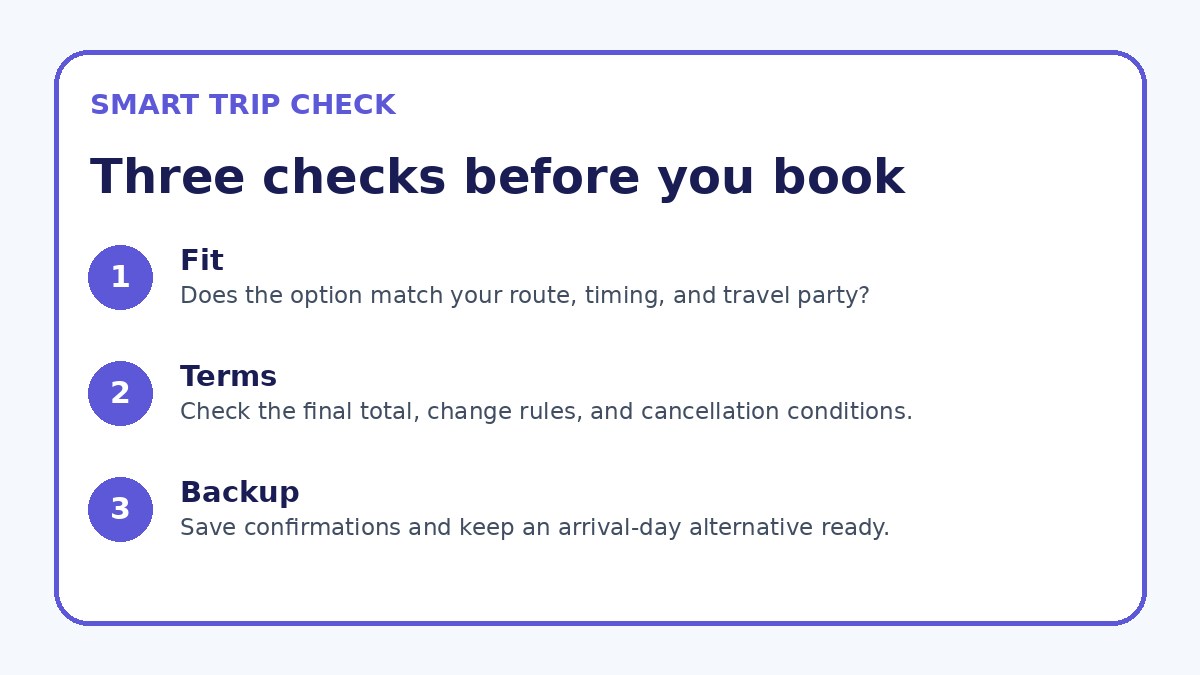
- Confirm your airline’s cabin dimensions, weight limits, and whether your fare includes checked luggage on the carrier’s booking page.
- Mobile check-in and a printed or digital boarding pass ready to save time at security, plus ID and passport accessible.
- If checking a bag, note the airline’s bag-drop closing time and schedule arrival at the airport to beat that deadline.
- Research your Paris departure terminal’s typical security and passport control wait times for your departure hour.
- Pack a small ‘arrival kit’ in your carry-on with chargers, a change of clothes, medication, and local currency or card.
- Save screenshots of your booking, accommodation address in Istanbul, and emergency contacts; share your ETA with someone trusted.
Compare direct and connecting flight options
When searching Paris to Istanbul flights, don’t assume direct is always fastest door-to-door. A nonstop flight reduces risk of missed connections and baggage re-checks, so it often saves time and stress. But direct flights may be more expensive or depart at inconvenient hours. If you consider a connection, compare total travel time including minimum connection time, the terminal layout at the transfer airport, and whether you’d need to clear passport control and re-check bags. Some connections allow you to stay airside and avoid re-clearing immigration, which saves time.
For any option, verify transfer rules on the booking confirmation page and in your airline’s transfer guide. If you prefer to reduce uncertainty, choose an itinerary with longer layovers—especially if you must change terminals or airlines. Conversely, if you prioritize speed and have a tight schedule, pick a direct flight and travel carry-on only. Trip.com is a reasonable place to compare current availability and connection details, but always confirm gate, baggage, and check-in specifics on the airline’s official page before finalising plans.
Frequently asked questions
How early should a solo traveler arrive at Charles de Gaulle or Orly for a Paris to Istanbul flight?
Recommended arrival depends on baggage and check-in status. If you have only a carry-on and checked in online, arriving 90–120 minutes before departure can be sufficient for many flights, but morning peaks or holidays may require more time. With checked luggage, plan for 2–3 hours at larger airports. Always confirm the airline’s stated check-in and bag-drop closing times on their official booking page—those deadlines determine the minimum arrival you must meet.
What are the main packing tradeoffs for solo travel between packing light and taking a checked bag?
Packing light saves time at departure and arrival and reduces the risk of delayed luggage, but it constrains what you can bring: fewer clothes, limited liquids, and potentially no spare shoes or bulky items. A checked bag gives you more wardrobe and gear options, useful for long stays or varied activities, but increases check-in and wait time, adds the risk of mishandling, and may incur fees. Decide based on trip length, activities, weather, and your tolerance for airport queues.
How should I plan transfers in Istanbul after arrival with different baggage choices?
If you travel carry-on only, you can head straight to ground transport, often saving 15–30 minutes compared with waiting for checked luggage. This is helpful if you’ve pre-booked a tight private transfer or need to catch a connecting domestic flight. If you have checked luggage, add time for baggage reclaim and customs where applicable. For airport-to-city transfers, confirm pickup points and help with luggage handling if you’ve booked a private meet-and-greet; otherwise allow extra time for public transport or shared shuttles.
Final planning note
Planning how you handle baggage and airport time makes the Paris to Istanbul journey smoother and less stressful for solo travelers. Start by honestly assessing what you need to carry and whether a checked bag is worth the extra time and potential fee. Use that decision to set your arrival window at the Paris airport, choosing a larger buffer when you expect queues or when checking bags. Prepare carry-on zones, essential documents, and contingency items to speed security and transfers, and always verify baggage allowances, bag-drop deadlines, and transfer rules on the airline’s final booking page before you go. With the right preparation you’ll spend less time waiting and more time enjoying Istanbul.
Continue planning
Check current options and final conditions
Use the provider page to confirm live availability, the final total, cancellation terms, and every condition that matters to your trip.
This evergreen planning guide was created with AI-assisted drafting and a structured quality review. It does not display live prices, schedules, availability, visa guidance, or provider rankings. Verify current details before booking. Some links are affiliate links; we may earn a commission at no additional cost to you.