If you want to get from Seoul to Tokyo with the least stress, pick a direct flight when convenience, predictable travel time, and simpler airport transfers matter most. Choose a connecting itinerary when you prioritize lower fares, flexible routing, or need to combine stopovers for sightseeing. For first-time visitors the main tradeoffs are straightforward: direct flights reduce the number of moving parts (one boarding, one arrival), while connections add flexibility but require buffer time and more attention to transfer logistics. This article lays out the pros and cons, shows how to compare itineraries practically, and gives checklists so you can make a decision that fits your trip pace, budget, and tolerance for complexity.
How direct and connecting options differ in practical terms
A direct flight between Seoul and Tokyo means a single air segment from departure to arrival with no scheduled intermediate stops that require passenger disembarkation for a change of aircraft. Practically this simplifies everything: one security pass, one boarding, and typically faster overall travel time. For first-time visitors the simplicity reduces stress when navigating unfamiliar airports, and makes arrival procedures in Tokyo — immigration, baggage claim, and onward ground transport — the only set of unfamiliar steps to manage.
A connecting itinerary involves at least one transfer at another airport en route. That transfer might be between terminals at the same airport or require changing airlines, which can mean rechecking baggage and passing through security again. Connecting options can widen time-of-day choices and access lower fares or routing through a hub city, but they add points of failure: missed layovers, longer total journey time, and more coordination for baggage, visa/transit rules, and ground transfers. Assess your tolerance for those extra moving parts when choosing.
Time, cost, and comfort — measuring what matters
Total travel time matters more than scheduled flight time alone: include airport transfer time on both ends, recommended check-in or arrival-before-departure windows, and layover durations. A direct flight may shave hours from your door-to-door clock even if the airborne time difference seems small. Comfort includes seat class, onboard amenities, and the stress of connections: fewer airport hops generally means less queuing, lower chance of crowded layovers, and a simpler plan if you want to sleep or arrive ready to explore Tokyo.
Cost comparisons should include more than the fare. If a connecting option looks cheaper, add potential baggage fees, transfer costs between terminals or airports, and the value of your time. Also check whether connections are on one ticket (through-check baggage, protected connections) or separate tickets (you may need to claim luggage and recheck). When provider details could change, verify baggage rules, minimum connection times, and whether the carrier protects missed connections on the final booking page.
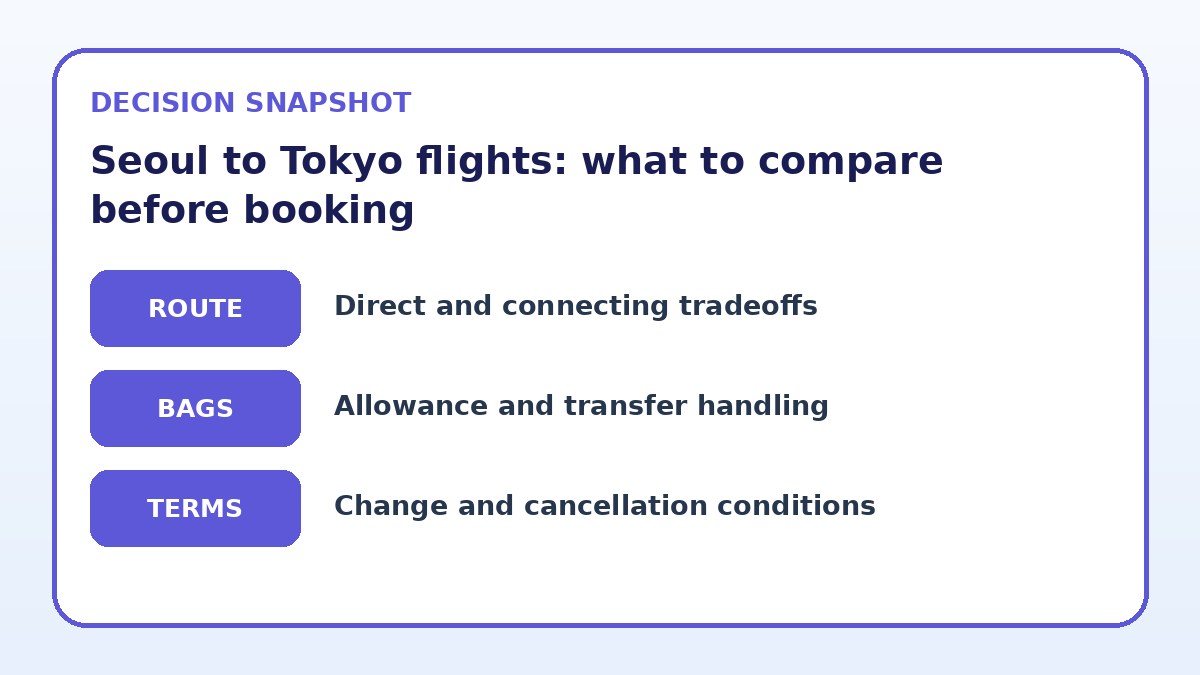
| Approach | Best for | Tradeoff to check |
|---|---|---|
| Direct flights | Travelers prioritizing speed, ease, and minimal airport transfers | Often less flexible on time-of-day and potentially higher base fares |
| Single-ticket connections | Those wanting lower risk with one itinerary and through-checked baggage | Longer total travel time and dependence on the carrier to protect connections |
| Separate-ticket connections | Budget-focused travelers seeking cheaper segments or customized stopovers | Higher risk of baggage recheck and missed-connection costs if delays occur |
| Long layovers or intentional stopovers | Travelers who want to add a brief visit en route or split a long journey | Adds complexity and requires checking transit/entry rules and luggage handling |
Transfer logistics and risk management for first-time travelers
If you choose a connecting itinerary, plan transfers conservatively. Allow plenty of time for disembarkation, customs if applicable, and moving between gates or terminals. Airports vary: some connections are quick and well signed, others require longer transit time or a shuttle. For connections that require changing airlines or terminals, read the booking page to confirm whether baggage is checked through and whether you must pass immigration to reclaim bags; these are critical details first-time travelers often overlook.
Risk mitigation also includes travel insurance or booking on a single ticket when possible so the airline rebooks you if a delay causes a missed connection. Carry essentials in your carry-on — medication, documents, a change of clothes — in case luggage is delayed. Finally, have contingency plans: know the contact points at each airline, keep digital and paper copies of tickets and passports, and build realistic buffer time if you have important onward commitments in Tokyo such as tours, rail reservations, or check-in deadlines.
Before you book
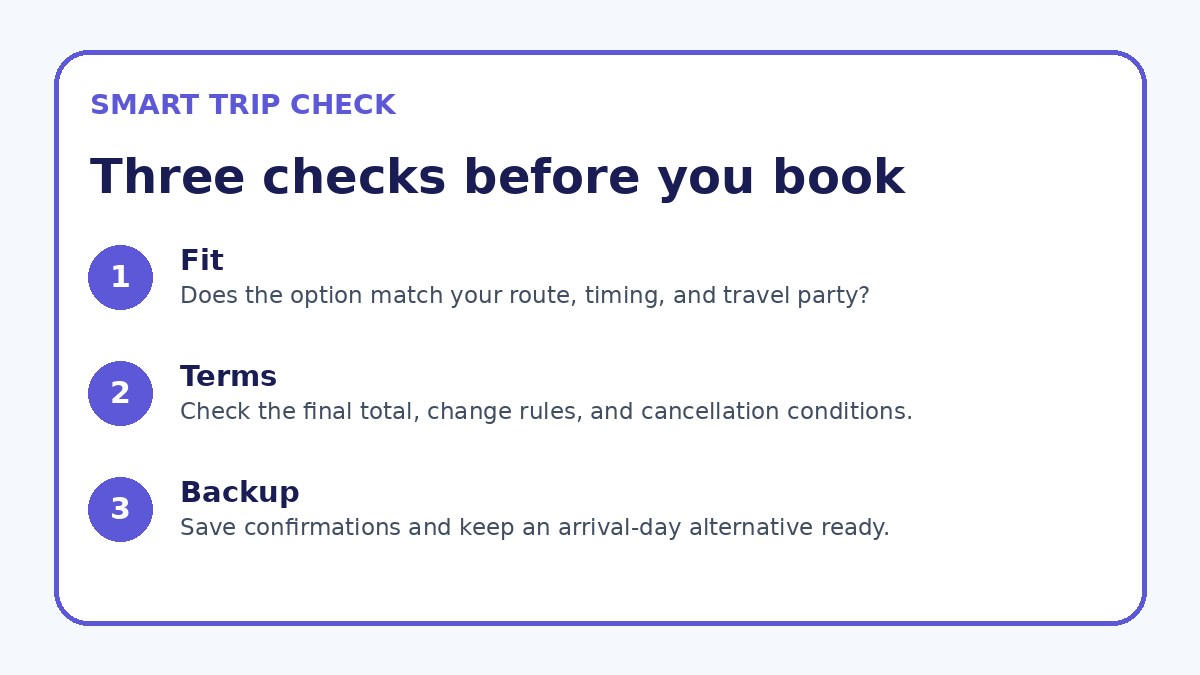
- Compare total door-to-door time, not just airborne duration, including transfers and local transport to airports.
- Confirm whether luggage is checked through on the booking page and what happens if you miss a connecting flight.
- Verify minimum connection times and terminal-change procedures on the airline or airport websites.
- Factor in extra fees (baggage, seat selection, airport transfers) when comparing the true cost of each itinerary.
- Build realistic buffer time for immigration, security, and possible delays before any onward plans in Tokyo.
- Save digital and printed copies of tickets, contact numbers, and transit instructions for each carrier on your itinerary.
How to compare options and make the final choice
Start by lining up a few candidate itineraries and compare total door-to-door time, cost after fees, number of transfers, and the type of ticket (single versus separate). For each candidate verify baggage rules, the minimum connection time the carrier recommends, and whether you must clear immigration during transfer. Use the booking provider’s final page to confirm the exact conditions — that’s the authoritative source for what you’ll actually pay and what services are included.
Consider your trip priorities: if you value time and simplicity — short city trips, tight schedules, or first international flights — prioritize direct flights. If you need a lower fare, want to include a stopover, or have flexible timing, weigh connecting flights but plan for buffer time and potential complications. You can optionally use a comparison site (Trip.com may be helpful) to see current availability, then verify details on the airline’s booking page before committing.
Frequently asked questions
Are direct flights always the fastest way from Seoul to Tokyo?
Direct flights remove intermediate stops and transfers, so they usually minimize the number of airport procedures and total travel interruptions. However, total door-to-door time depends on where you start in Seoul and which Tokyo airport you use, plus local transport and check-in windows. For some travelers a carefully timed connecting itinerary with shorter local transfers could have comparable door-to-door timing. Always compare the full travel plan — ground time, recommended airport arrival, and layover — before assuming a direct flight will be fastest.
How much connection time should I allow when booking a layover?
Allow more time than the bare minimum listed by booking engines, because you may need to change terminals, pass security, or reclaim and recheck baggage. If your connection is on a single ticket with the same carrier or alliance, the airline may set a protected minimum connection time that is usually sufficient; still add extra time if you dislike tight transfers. For separate tickets or unfamiliar airports, plan several hours to reduce stress. Check the airport layout and the carrier’s guidance on the final booking page for practical recommendations.
What should I check on the airline booking page before finalizing?
On the airline’s final booking page verify baggage allowances and fees, whether your bags will be checked through on connections, exact transfer rules (terminal changes, recheck requirements), and the carrier’s miss-connection policy. Confirm refund, change, and cancellation terms for your fare class. If you need special assistance or have a tight schedule, look for details about priority boarding, minimum check-in times, and whether transfers require passing immigration. These specifics determine how smooth your trip will be and may differ from summary listings.
Final planning note
For first-time visitors deciding between direct and connecting Seoul to Tokyo flights, the clearest rule is to match the itinerary to your priorities. Choose direct flights for simplicity, minimal transfers, and predictable arrival times. Opt for connections if you value lower fares, flexible scheduling, or a planned stopover, but plan extra buffer time and confirm baggage and transfer rules before booking. Use a comparison tool to shortlist options, then verify key details — baggage handling, minimum connection times, and protection for missed connections — on the airline or provider’s final booking page. With those checks, you can pick the option that best fits your comfort level and travel goals.
Continue planning
Check current options and final conditions
Use the provider page to confirm live availability, the final total, cancellation terms, and every condition that matters to your trip.
This evergreen planning guide was created with AI-assisted drafting and a structured quality review. It does not display live prices, schedules, availability, visa guidance, or provider rankings. Verify current details before booking. Some links are affiliate links; we may earn a commission at no additional cost to you.