If you’re arriving in San Francisco for the first time, the practical question is simple: how will you get to your hotel? This guide focuses on airport transfers — how to compare options, where each option makes sense depending on your arrival airport and neighborhood, and the key things to verify before you book. San Francisco has several airports and multiple transfer modes: public transit, shared shuttles, rideshares and taxis, private cars, and rental cars. Each balances cost, luggage handling, travel time, and predictability differently. Start by deciding which matters most to you (cost, comfort, or speed), then use the short checklist at the end to confirm pickups, baggage allowances, and real-time conditions on the provider’s booking page.
Which San Francisco airport did you land at?
San Francisco Bay Area arrivals might use different airports, and your transfer decision should start with where you land. San Francisco International (SFO) is the largest and has more direct public-transit options into the city. Smaller airports like Oakland (OAK) and San Jose (SJC) serve the region but typically add a connection or longer transfer to reach central San Francisco. If your ticket doesn't specify a direct arrival into San Francisco city limits, factor in the extra distance and potential traffic from those other airports when choosing a transfer method.
After identifying your airport, compare transfer options available from that airport specifically. Not every airport has the same shuttle routes, rideshare pickup locations, or public-transit lines. For each option you shortlist, open the provider’s booking or information page and verify current pickup instructions, any required shuttle stops, and whether there are extra fees for large luggage or certain pickup zones; these details can change and are set by the provider.
Public transit vs private pick-up: tradeoffs
Public transit (BART, local buses, and light rail depending on arrival airport) typically offers the lowest cost and predictable schedules on weekdays. It’s a good fit if you’re traveling light, comfortable with transfers, and your hotel is near a transit stop. Keep in mind that trains and buses have defined operating hours and may be less convenient late at night. Also consider how much you want to carry — steep stairs and crowded platforms can make public transit less appealing with lots of luggage.
Private options — taxis, rideshares, and booked private cars — give door-to-door service and simpler logistics, especially arriving late or with family. They reduce walking and transfer stress but can be more variable in price and subject to traffic. If you pick a private transfer, check the provider’s stated meeting point at the airport and whether they have a fixed office, an app-based matching process, or curbside pickup; always confirm where the driver will meet you on the provider’s final booking page.
| Approach | Best for | Tradeoff to check |
|---|---|---|
| Public transit (train + bus) | Budget-conscious travelers staying near transit stops | Lowest cost but requires transfers and managing luggage on public vehicles |
| Rideshare or taxi | Travelers wanting door-to-door convenience, odd-hour arrivals | Higher variable cost and possible surge pricing; traffic affects travel time |
| Shared airport shuttle | Solo travelers or small groups heading to common hotel areas | Cheaper than private car but multiple stops can extend total travel time |
| Rental car | Visitors planning regional day trips or flexible road travel | Convenient for exploring but adds parking costs and city driving stress |
Shared shuttles and group transfers
Shared airport shuttles can be a cost-effective middle ground: cheaper than a private car but more comfortable than carrying luggage on transit. These services collect multiple passengers headed to nearby hotels and neighborhoods, which reduces per-person cost but often adds stops and total travel time. If your schedule is flexible and you’re staying in a common hotel area (e.g., Downtown, Union Square), a shared shuttle could be a sensible choice.
When considering a shuttle, look for three specifics: where the shuttle meets passengers at the airport, whether the fare includes luggage and tip, and the estimated number of stops. Providers may list approximate total door-to-door times but these estimates can vary with traffic and routing. Verify the pickup location and any instructions to call or text upon arrival on the provider’s booking page before you rely on a shuttle.
Before you book
- Confirm which airport you land at and open that airport’s official transfer and ground-transportation page.
- If using rideshare or taxi, verify the official pickup/ride-hail zone and any app instructions on the provider’s booking or airport information page.
- If choosing public transit, map your route end-to-end with service operators to check transfers, station stops, and late-night schedules.
- For shuttles or private transfers, confirm the exact meeting point, luggage allowances, and whether the fare is door-to-door or drop-off at nearby hotels.
- If renting a car, check where the rental counter and lot shuttle pick-up are located at your arrival airport and compare hotel parking policies.
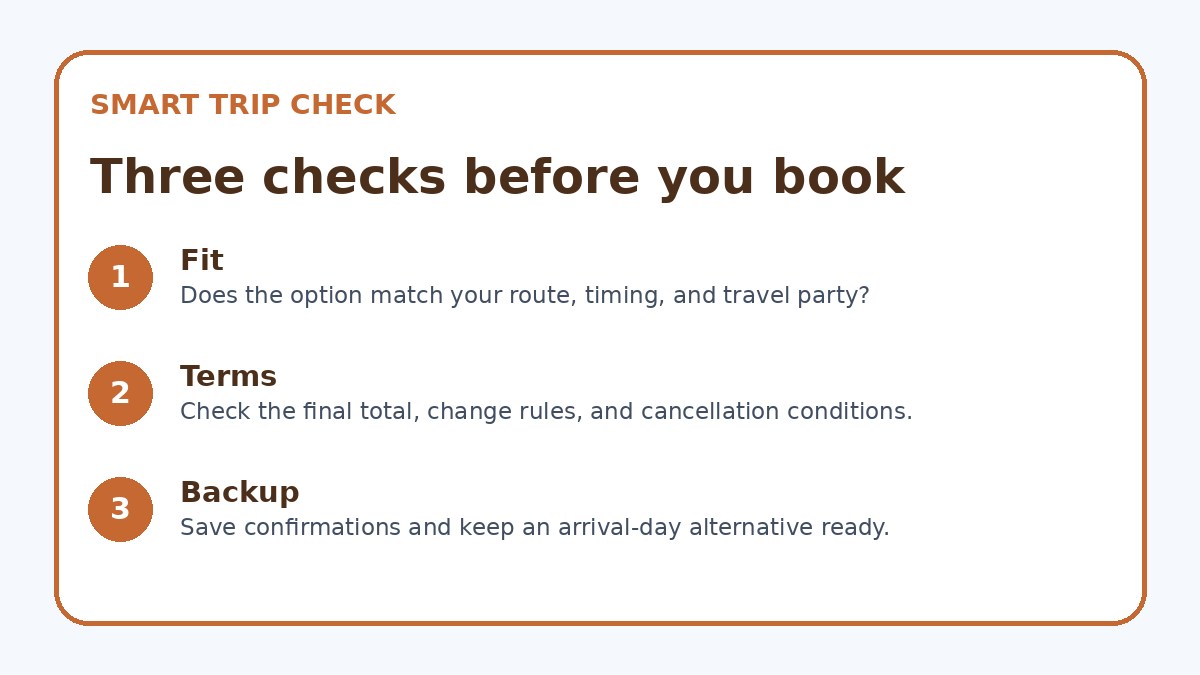
- Check real-time factors on the provider’s booking page before travel: service advisories, expected pickup wait times, and any special instructions for irregular arrivals.
Rentals and driving into the city
Renting a car at the airport gives you freedom to explore the Bay Area beyond San Francisco, but driving and parking in the city can be challenging and expensive. If your itinerary includes day trips to places like Muir Woods or wine country, a rental might be worth it. For short stays focused on downtown, hotels near public transit or a direct transfer usually avoid the hassles of urban driving and parking charges.
Before you book a rental, compare airport pickup versus off-airport locations, whether your hotel offers parking (and its cost), and any congestion or bridge tolls that might apply when crossing Bay Area bridges. Confirm the rental company’s pickup counter location at your arrival airport and the exact driving directions the company provides, since lot locations and shuttle procedures differ by airport.
Frequently asked questions
Is public transit from San Francisco International (SFO) easy for first-time visitors?
Public transit from major airports often provides a low-cost, reliable route into the city, and SFO connects to regional rail and bus services. For first-timers, the main considerations are luggage and transfers: stations, moving between terminals, and final connections to your hotel. Plan your route in advance, note the nearest station to your hotel, and check operator pages for elevator availability if you have heavy bags. If you value simplicity and door-to-door arrival, a rideshare or private pickup might be preferable despite higher cost.
How do I find rideshare pickup points at each Bay Area airport?
Airports designate specific curbside zones or consolidated pickup areas for app-based rides. Before you request a ride, open the airport’s ground-transport info and the rideshare app to confirm the correct pickup zone and any app instructions for meeting your driver. Some airports require you to walk to a central rideshare lot or use a short shuttle; others allow curbside meetups. Verify this on the airport’s or rideshare provider’s current pages so you avoid waiting in the wrong spot after landing.
Should I prebook a private transfer or wait until I arrive?
Prebooking gives peace of mind and a set pickup plan, which is helpful for late arrivals or traveling with family. However, waiting can provide flexibility if plans change and sometimes allows you to compare on-the-ground options. If you prebook, check cancellation terms and the provider’s instructions for flight delays. If you wait, be prepared for variable wait times and confirm the official airport pickup procedure in your rideshare or taxi app before you request a ride.
Final planning note
Getting from a Bay Area airport into San Francisco is an early decision that shapes your first impression. Choose based on what you value most: lower cost and independence (public transit), door-to-door ease (rideshare or taxi), cost-sharing with a predictable route (shared shuttle), or full driving freedom (rental car). Whichever mode you pick, verify the airport-specific pickup or meeting point, luggage policies, and any real-time service notices on the provider’s final booking page before you travel. For current availability or to compare options across providers, you can check Trip.com among other booking platforms, but always confirm details directly with the transport operator.
Continue planning
Check current options and final conditions
Use the provider page to confirm live availability, the final total, cancellation terms, and every condition that matters to your trip.
This evergreen planning guide was created with AI-assisted drafting and a structured quality review. It does not display live prices, schedules, availability, visa guidance, or provider rankings. Verify current details before booking. Some links are affiliate links; we may earn a commission at no additional cost to you.