
Practical answer up front: if you want fastest access to major sights and easy train connections, stay in Shinjuku or Tokyo Station/Marunouchi; for nightlife and shopping choose Shibuya or Shinjuku; for a quieter traditional feel pick Asakusa; and for family-friendly museums and parks consider Ueno. Each area offers a mix of convenient hotels, capsule or budget options, and luxury properties, but you’ll trade walking distance to a favorite spot for different transit or atmosphere compromises. Before booking, compare how close a hotel is to the station you’ll actually use, whether it has luggage storage, and what check-in policies it enforces. If you want to compare live availability and conditions, Trip.com can be one place to check current options, but always verify cancellation rules and exact room details on the hotel’s final booking page.
How to choose a neighborhood: decide by transit, vibe, and priorities
Choosing where to stay in Tokyo starts with practical priorities: which airport or station arrival you’ll use, whether you plan day trips by shinkansen, and how much time you want to spend walking versus riding trains. Tokyo’s neighborhoods are well connected by rail, but transfer-heavy itineraries or late-night plans change what’s convenient. A hotel two blocks from a major station reduces transfer time and makes morning sightseeing easier. Also consider the station exits—large hubs have many exits that lead to very different micro-neighborhoods, so check the hotel’s listed exit or nearest landmark.
Vibe matters as much as transport. If you want neon, crowds and late dining options, Shinjuku or Shibuya fit that picture. If you prefer quieter streets, traditional shops and a slower pace, Asakusa or Yanaka are better. Budget and space expectations differ by area: central business districts like Marunouchi and Ginza host high-end hotels with larger rooms, while capsule and compact business hotels concentrate near major stations in Shinjuku and Ueno. Match your tolerance for noise, crowds and walking to the neighborhood character when making a book-or-pass decision.
Central hubs: Shinjuku and Tokyo Station areas — who benefits most
Shinjuku is a top choice for first-time visitors who want maximum transport options: multiple JR lines, private railways and several subway lines plus direct airport buses. The area mixes budget business hotels with larger international chains and a huge range of restaurants and nightlife. Staying near the station or in the West Exit district keeps you well placed for day trips, city exploration and a short taxi ride to popular districts. Keep in mind that large stations can be disorienting—confirm which station exit your hotel is closest to before you arrive.
Tokyo Station and Marunouchi are best for travelers prioritizing shinkansen connections and a quieter, more formal hotel scene. This area is exceptionally convenient for onward rail travel and for business-type stays, with elegant hotels and easy walking to the Imperial Palace gardens. Yet the evening atmosphere is calmer than entertainment districts, so if you want bustling late-night streets and metropolitan energy, you may find it subdued. For families or travelers with early trains, proximity to Tokyo Station can outweigh the quieter nights.
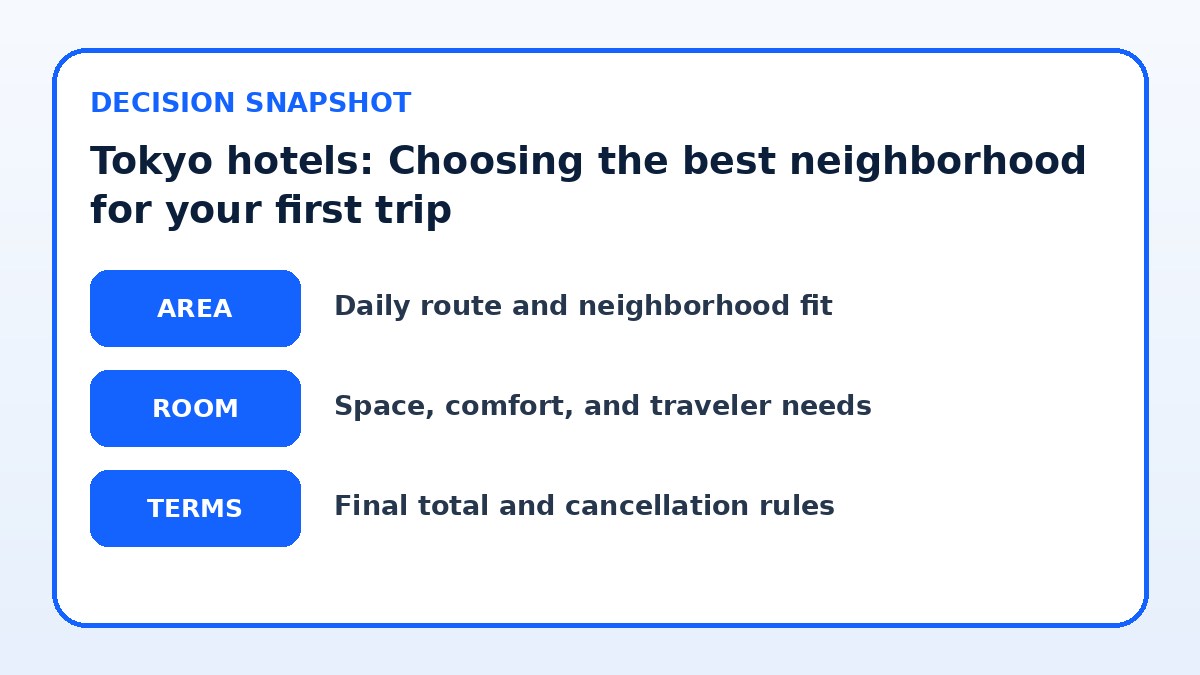
| Approach | Best for | Tradeoff to check |
|---|---|---|
| Stay near a major transport hub (Shinjuku, Tokyo Station) | Travelers prioritizing fast connections and minimal transfers | More bustle and larger, sometimes less characterful hotel surroundings |
| Stay in trendy districts (Shibuya, Harajuku) | Visitors focused on shopping, nightlife and youth culture | Can be noisy and less optimal for temple-heavy sightseeing routes |
| Stay in traditional neighborhoods (Asakusa, Ueno, Yanaka) | Families and travelers who prefer calm, cultural streets and museums | Longer rides to western city hotspots and some business districts |
| Choose a business district (Marunouchi, Ginza) | Guests wanting upscale hotels, quieter evenings, and easy airport or shinkansen access | Limited evening street-life and higher rates for similar room sizes |

Shopping and youth culture: Shibuya and Harajuku — pros and cons
Shibuya and nearby Harajuku appeal to travelers drawn to youth culture, fashion and vibrant street life. Shibuya Station links many subway and JR lines, making it useful for moving across the city while offering iconic visuals like the scramble crossing. Harajuku’s Takeshita Street and Omotesando provide unique shops and cafés for trend-focused visitors. Hotels here range from compact business rooms to stylish boutique properties; expect lively streets, especially on weekends, and plan quieter lodging if you’re sensitive to noise.
The tradeoff is that shopping districts can be spread out and not always the most direct base for visiting classical sights like Asakusa or the museums in Ueno. While train access is strong, you may end up transferring for some itineraries. If you plan a lot of shopping, dining, and nightlife within walking distance, these neighborhoods save travel time, but if your plan is temple-heavy sightseeing across town, a more central transit hub could be more efficient.
Before you book
- Confirm the hotel’s nearest station and exact exit number; map the walking route from that exit to the property before booking.
- Check whether the hotel offers luggage storage for early arrivals or late departures and read the provider’s policy on hold duration.
- Verify room size and bed configuration on the hotel’s booking page to ensure it matches your comfort needs and the number of travelers.
- Ask the hotel about quiet-room options or window orientation if you are sensitive to street noise, especially in Shinjuku or Shibuya.
- Compare the hotel’s cancellation and payment terms on the final booking page, and note any nonrefundable conditions or prepayment requirements.
- If you plan day trips by shinkansen, confirm travel time and convenience to the nearest station that serves bullet trains.
Traditional and family-friendly areas: Asakusa, Ueno and quieter options
Asakusa offers a close-to-tradition atmosphere with Senso-ji, old-style shops and river views. It’s a favorite for first-timers who want a slower pace, easy access to cultural streets and good local eateries. Ueno complements this with large parks, museums and a big station that serves several lines. Both areas typically have a mix of midrange hotels and guesthouses that cater to families and travelers seeking calm evenings. Evening dining is more local and less late-night clubby than central entertainment districts.
The main tradeoff is longer travel to western neighborhoods like Shibuya and Shinjuku for nightlife, or to Tokyo Station for shinkansen connections. For families with children, the park and museums can justify the extra transit time. If you rely on early-morning trains to other regions, check which lines serve your chosen hotel and whether direct connections exist; if not, factor in transfer time when planning day trips. Consider proximity to a subway or tram stop if you want to reduce transfers.
Frequently asked questions
Which Tokyo neighborhood is best for a first-time visitor with limited time?
For a short stay, base yourself near a major transport hub—Shinjuku or Tokyo Station—because both offer quick connections across the city and to airports or shinkansen. Shinjuku gives easy access to many subway and JR lines plus evening dining and shopping, while Tokyo Station (Marunouchi) is ideal if you need efficient rail links for day trips by bullet train. Choosing a hotel within a few minutes’ walk of the correct station exit will save precious time and reduce luggage hassles.
Is it better to stay in a quieter area and travel into the city each day?
Staying in a quieter neighborhood like Asakusa or Yanaka can offer a more relaxed experience, local atmosphere and family-friendly streets. The tradeoff is extra transit time to popular western areas such as Shibuya or Shinjuku, which may mean more transfers. If you don’t mind daily commuting and you prioritize tranquility, a quieter base can be rewarding. Confirm that your chosen hotel is near a reliable subway or tram line to minimize transfers and unexpected travel friction.
How should I compare hotel options when many listings look similar near big stations?
Don’t rely solely on star ratings—compare practical details: exact distance to the station exit, room size, bed layout, free Wi-Fi, luggage storage, and whether breakfast suits your schedule. Look for traveler comments about noise, elevator speed, and how easy it is to navigate the station to the hotel. When booking, verify the cancellation policy, check-in time, and whether the property charges for extra amenities on the hotel’s final booking page to avoid surprises on arrival.
Final planning note
Tokyo offers a neighborhood to match almost every first-time visitor’s priority: transit-first travelers find Shinjuku and Tokyo Station hard to beat; trend-seekers prefer Shibuya and Harajuku; families and those after traditional streets will appreciate Asakusa and Ueno. Make your decision by weighing transit convenience, the neighborhood vibe you want after long days, and practical room details like size and luggage policies. Before you confirm a booking, verify the hotel’s exact location relative to the station exit, cancellation and payment terms on the provider’s final page, and any facilities you need. If you want to compare current availability, Trip.com is one optional place to check, but always confirm critical details with the hotel’s official booking information.
Continue planning
Check current options and final conditions
Use the provider page to confirm live availability, the final total, cancellation terms, and every condition that matters to your trip.
This evergreen planning guide was created with AI-assisted drafting and a structured quality review. It does not display live prices, schedules, availability, visa guidance, or provider rankings. Verify current details before booking. Some links are affiliate links; we may earn a commission at no additional cost to you.