Practical answer first: many first-time visitors to Honolulu don’t need a rental car if they’re staying in Waikiki and plan to use buses, rideshares, shuttles, and day tours. A rental makes more sense if your itinerary includes West Oʻahu beaches, North Shore surf spots, hiking in varied locations, late-night exploring, or if you’ll be crossing to other island regions. Decide by matching where you’ll sleep, how independent you want to be, and how comfortable you are with parking and island driving. Read on for the tradeoffs, decision criteria, cost and convenience factors to compare, and a checklist to use before you book. If you want to compare live availability and pick-up options, sites such as Trip.com can show current rental choices, but verify any provider details on its own booking page before confirming.
Where you’ll stay and how that shapes the choice
Where you sleep in Honolulu is the single biggest factor. Waikiki is compact, walkable and well served by TheBus, shuttles, hotels, and short rideshares; if your lodging, restaurants, and beaches are in this area, the practical value of a rental falls sharply. Many visitors find they can rely on a mix of walking, buses with frequent routes, and occasional rideshares for early mornings or late evenings, avoiding the hassles of finding and paying for parking at busy city hotels.
If your plans call for rental condos, homes with grocery trips, or stays outside central Honolulu — for example in West Oʻahu, the North Shore, or near Pearl Harbor — a car is more useful. Outside Waikiki, public transit becomes sparser and tour pick-ups may be less convenient. Also weigh whether your hotel or vacation rental charges for parking, requires valet only, or limits vehicle size; those policies can erase any savings from a cheaper rental rate.
What you want to do: beaches, hikes, and day trips
Your itinerary choices dictate mobility needs. Day tours and organized activities cover many top attractions — Diamond Head hikes, Pearl Harbor visits, circle-island tours, and popular snorkeling spots — so if you prefer guided experiences, renting is less necessary. Tours often include transport and local guides who know the timing and parking, which simplifies logistics for first-time visitors who want to maximize sightseeing without worrying about directions.
But if your priority is flexible beach-hopping (Lanikai, Kaʻena Point, or multiple North Shore stops), spontaneous surf sessions, or hiking trails with remote trailheads, a car adds clear value. Driving lets you start early to beat crowds and access sites without relying on timed pickups. For these kinds of active, self-directed days, calculate the time you’ll spend driving and parking so you’re not trading convenience for long commutes.
| Approach | Best for | Tradeoff to check |
|---|---|---|
| No rental (transit, tours, rideshares) | Those staying in Waikiki who prefer low planning and walking-friendly days | Less flexibility for remote beaches and early starts; depends on schedules and availability |
| Full-trip rental | Guests with a self-driven island itinerary, multiple remote stops, or late-night plans | Higher costs for parking and fuel; more to manage (insurance, driving, parking rules) |
| Short-term rental (select days) | Visitors combining city stays with a couple of exploratory days off the beaten path | Requires planning pick-up/drop-off windows and may incur extra fees for short rentals |
| Hybrid: rental + tours | Travelers who want independence some days and guided convenience on others | You must coordinate timing and factor combined costs of both rental and paid tours |
Cost, convenience, and unseen friction
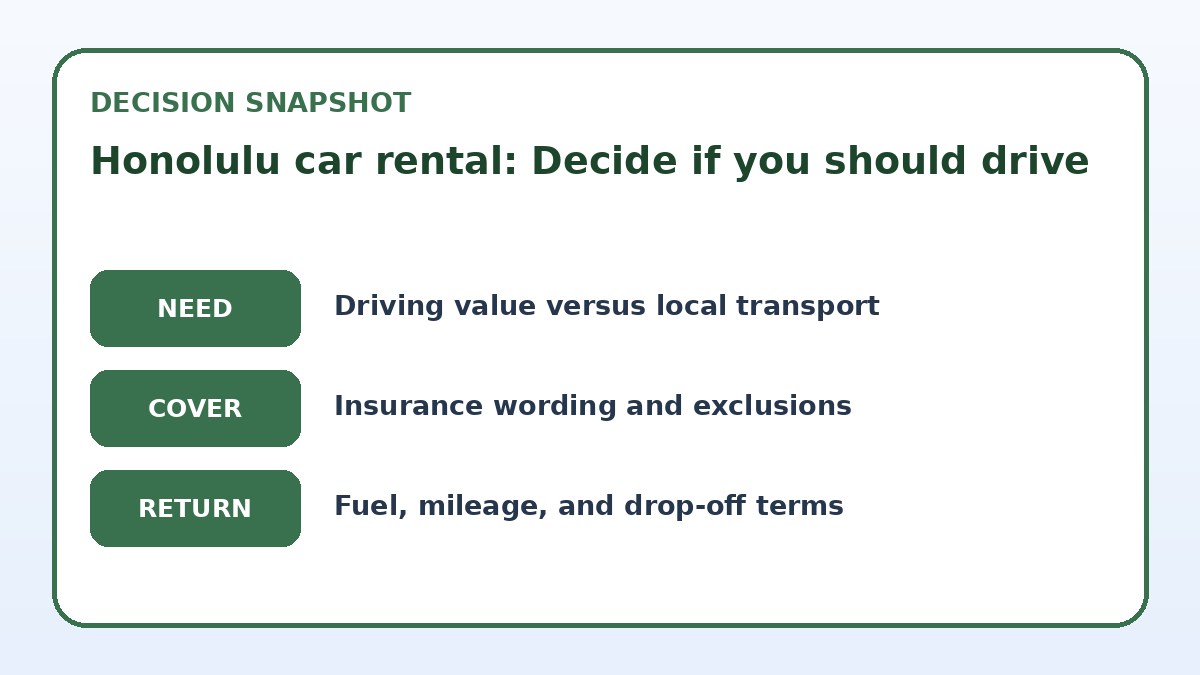
Rental rates fluctuate and depend on vehicle type, insurance choices, and demand; taxes and airport surcharges can add materially at pick-up. Beyond the daily rate, factor parking — some hotels charge steep nightly fees — fuel, tolls, and potential traffic delays. Also decide what insurance you need: your personal auto policy, credit card coverage, or the rental company’s protections. For first-time visitors, understanding what your existing insurance and cards cover is crucial before accepting optional extras.
Convenience considerations matter too. Airport pick-up can be quick, but city garages and one-way rentals may carry additional processes. Driving in Honolulu has a learning curve: unfamiliar roads, occasional congestion during commute hours, and narrow residential streets. If you’re a nervous driver or prefer not to park in busy areas, rideshares and buses reduce friction. Always verify provider pickup/drop-off locations, fuel policies, mileage limits, and any extra driver fees on the rental company’s final booking page.
Before you book
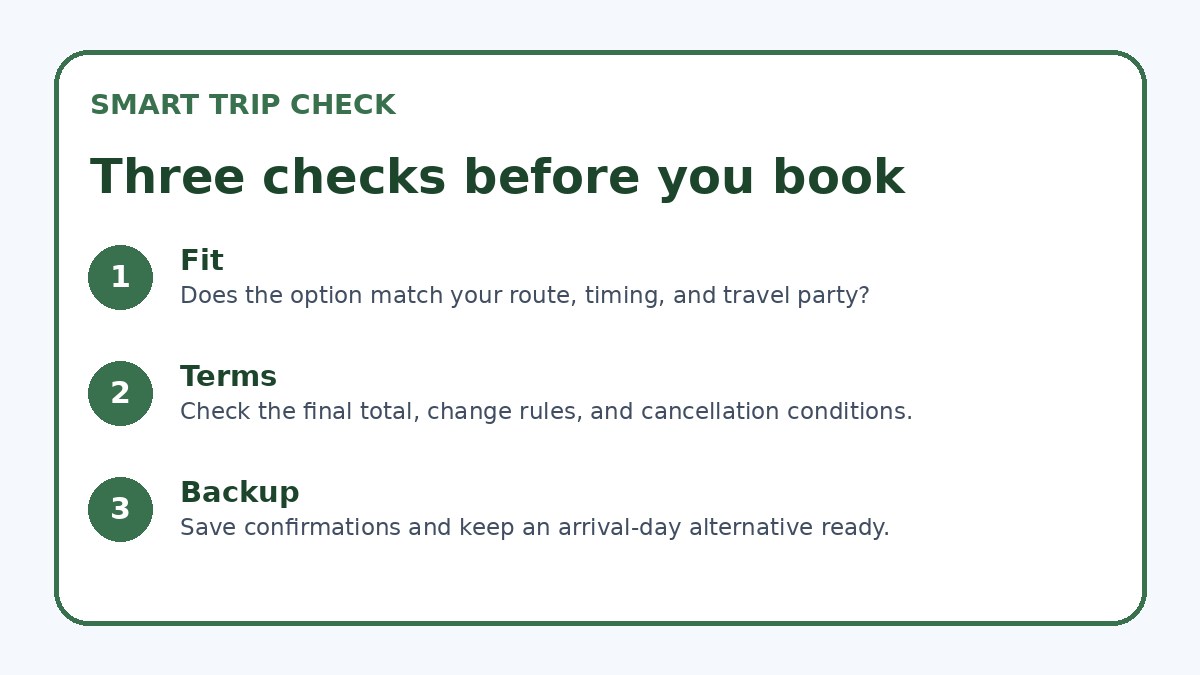
- Map your planned attractions and mark which are covered by tours or reachable by TheBus before deciding on a car.
- Confirm your lodging’s parking availability, cost, and any size or valet restrictions that affect vehicle choice.
- Check what your personal auto insurance and credit cards cover for rentals; request written confirmation if needed.
- Compare total estimated costs: rental daily rate plus parking, fuel, tolls, and insurance versus rideshare/tour expenses.
- If renting, verify pickup/drop-off locations, fuel policy, mileage limits, additional driver fees, and island driving restrictions on the provider’s booking page.
- Plan for traffic windows: avoid scheduling crucial drives during weekday morning and afternoon commute periods when possible.
Practical decision checklist and hybrid options
You don’t have to choose exclusively between renting and not renting — many travelers use a hybrid approach. Combine transit and tours with a short-term rental for a couple of days when you plan to explore beyond central Honolulu. Short local rentals can be picked up for a day or two, reducing overall rental days and parking costs while still providing the freedom to reach remote beaches or early-morning trailheads.
When deciding, run a quick itinerary exercise: map each planned stop, check transit or tour coverage, estimate driving and parking time, and total the projected costs. If a rental covers multiple separate trips that would otherwise need expensive rideshares or many transfers, it may pay off. Lastly, read the rental contract carefully for fuel policy, island driving restrictions, and airport access rules, and confirm any special conditions on the provider’s booking page before you finalize.
Frequently asked questions
Is parking difficult and expensive in Honolulu?
Parking in central Honolulu and especially Waikiki can be limited and often incurs nightly fees at hotels and some public lots. Street parking exists but may have time limits and enforcement; city garages can fill quickly during peak tourist times. If your lodging charges for overnight parking, compare that fee against rental savings. For beach days and popular attractions, plan to arrive early to secure free or low-cost public spots. Always confirm specific parking rules and costs directly with your hotel or property manager before booking.
Can I rely on public transit instead of renting a car?
TheBus serves Oʻahu comprehensively and is a cost-effective option for many travelers, with routes connecting Waikiki, downtown Honolulu, and many tourist sites. Transit schedules and route coverage are good for central areas but can be slower for reaching remote beaches or making multiple stops in a single day. For convenience, check route maps and estimated travel times for your full itinerary. If you plan several off-grid day trips, a rental or targeted tours may be more time-efficient than relying solely on public transit.
What vehicle should I choose if I decide to rent in Honolulu?
Match vehicle size to your group size and luggage needs while keeping parking constraints in mind; compact cars are easier to park and more fuel-efficient in urban areas. If you plan off-road excursions or long drives with four or more people and equipment, a larger car or SUV may be more comfortable. Consider fuel economy, trunk space for beach gear, and whether the vehicle fits your lodging’s parking. Confirm the car’s features, insurance options, and any fees for additional drivers on the rental company’s booking page before payment.
Final planning note
For many first-time visitors who will stay in Waikiki and rely on tours or public transit, a Honolulu car rental is unnecessary and can add parking hassle and costs. A rental becomes valuable when your plans include multiple remote beaches, flexible early starts, or multi-location day trips where public transit and tours won’t match your schedule. Use the hybrid approach—renting just for specific days—or combine rideshares with targeted rentals to balance cost and convenience. Above all, map your itinerary, check lodging parking policies, verify insurance coverage, and read the rental provider’s final terms before booking so you know what you’re committing to.
Continue planning
Check current options and final conditions
Use the provider page to confirm live availability, the final total, cancellation terms, and every condition that matters to your trip.
This evergreen planning guide was created with AI-assisted drafting and a structured quality review. It does not display live prices, schedules, availability, visa guidance, or provider rankings. Verify current details before booking. Some links are affiliate links; we may earn a commission at no additional cost to you.