Practical decision-making starts with one simple tradeoff: do you prioritize schedule flexibility (ability to change or wait for a better connection) or door‑to‑door convenience (fewer transfers, shorter total journey time)? As a solo traveler on the Seoul to Tokyo route, your choice affects how you search, which fare rules you accept, and how you manage baggage and connections. This article gives the direct answer up front — book the most convenient option you can afford if your trip times are fixed and you value simplicity; pick a more flexible fare or itinerary if your plans might shift or if you want cheaper possibilities when shopping multiple carriers. Below you’ll find the routing, baggage and connection risk, schedule-fit, and fare-condition considerations to apply when comparing options. Prepare exact travel dates, passport details, and a preferred arrival window before looking at live options to make head‑to‑head comparisons efficient.
See live routes for your exact travel day
Compare direct and connecting choices with the same baggage and traveler details.
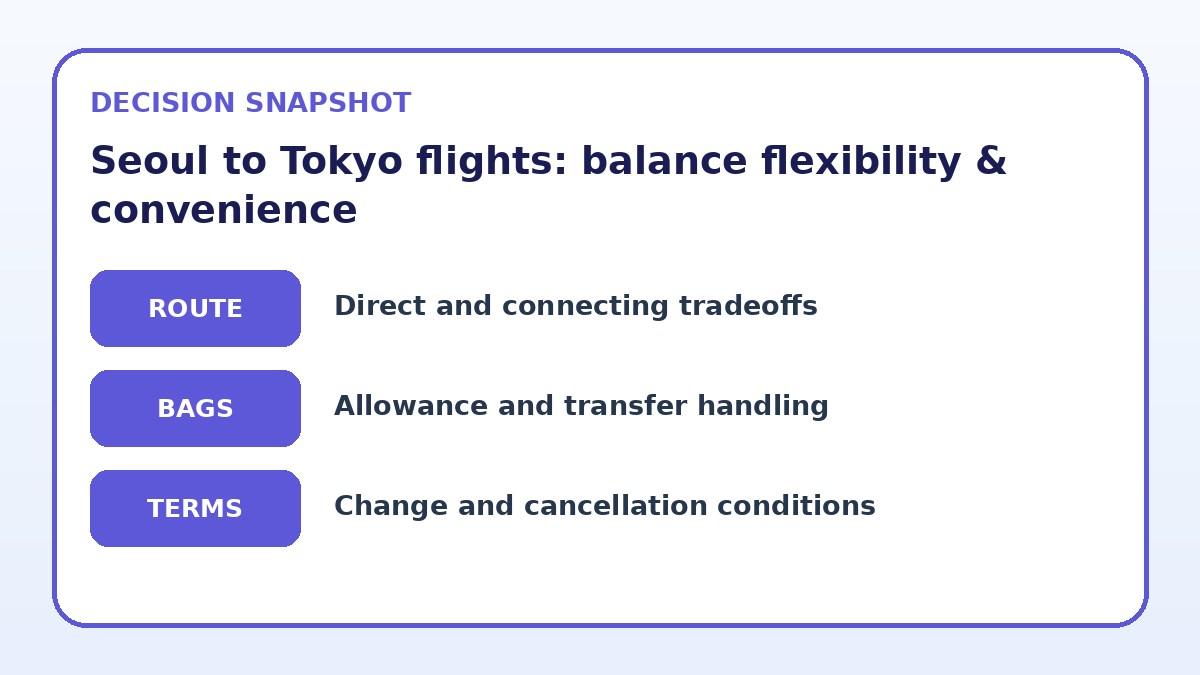
Routing: direct vs connecting and how to compare
On the Seoul to Tokyo corridor you’ll typically see a range of options including nonstop flights and itineraries that route through other cities. Begin by deciding how important a single-seat journey is to you: nonstop services reduce the number of steps and handoffs, which lowers the chance of delay‑related stress and missed connections. If a nonstop schedule matches your departure and arrival windows, it’s usually the simpler experience—especially as a solo traveler with limited recovery backup if something goes wrong.
If nonstops aren’t available at your preferred times or are too costly, compare connecting itineraries by looking at total elapsed time, number and length of connections, and whether connections are within the same airline alliance or require separate tickets. Single‑ticket connections handled by one carrier or alliance give you clearer protection if a delay causes a missed connection. For separate tickets, build in extra time and know how to recheck baggage and clear any transfers in each airport.
Baggage and connection risk for solo travelers
Baggage rules and how your bags are handled across connections materially affect convenience. For single‑ticket itineraries where the airline checks bags through to your final destination, you avoid rechecking and save effort between flights. With separate tickets you may need to collect and recheck baggage, which increases connection time and stress—especially if you navigate unfamiliar terminals alone. Ask the carrier’s booking page whether baggage is checked through, and verify size and weight limits for both carry‑on and checked items.
Connection risk is not only about missed flights but also about where you land and depart within large airports. Solo travelers should favor itineraries with longer minimum connection buffers if you have to clear immigration, transfer between terminals, or recheck luggage. When comparing options, add contingency time for passport control and security lines. If an itinerary looks tight on the search results, either choose a longer layover or opt for a different flight with fewer handoffs to limit potential problems.
Compare flight-selection strategies
| Flight strategy | Best for | Risk to check |
|---|---|---|
| Nonstop premium or flexible fare | Travelers who need reliable timings and quick transfers into the city | Higher fare for convenience and simpler baggage handling |
| Nonstop basic economy or sale fare | Solo travelers with fixed plans who prioritize lower base cost over flexibility | Restricted changes, possible extra fees for baggage and seat selection |
| Connecting single‑ticket itinerary (same carrier/alliance) | Those balancing lower fares with some protection against missed connections | Longer total travel time but typically through-checked baggage and rebooking support |
| Separate tickets for legs (mix-and-match carriers) | Travelers hunting the lowest fare or specific time combinations | More connection risk, potential need to recheck baggage, and no carrier protection across legs |
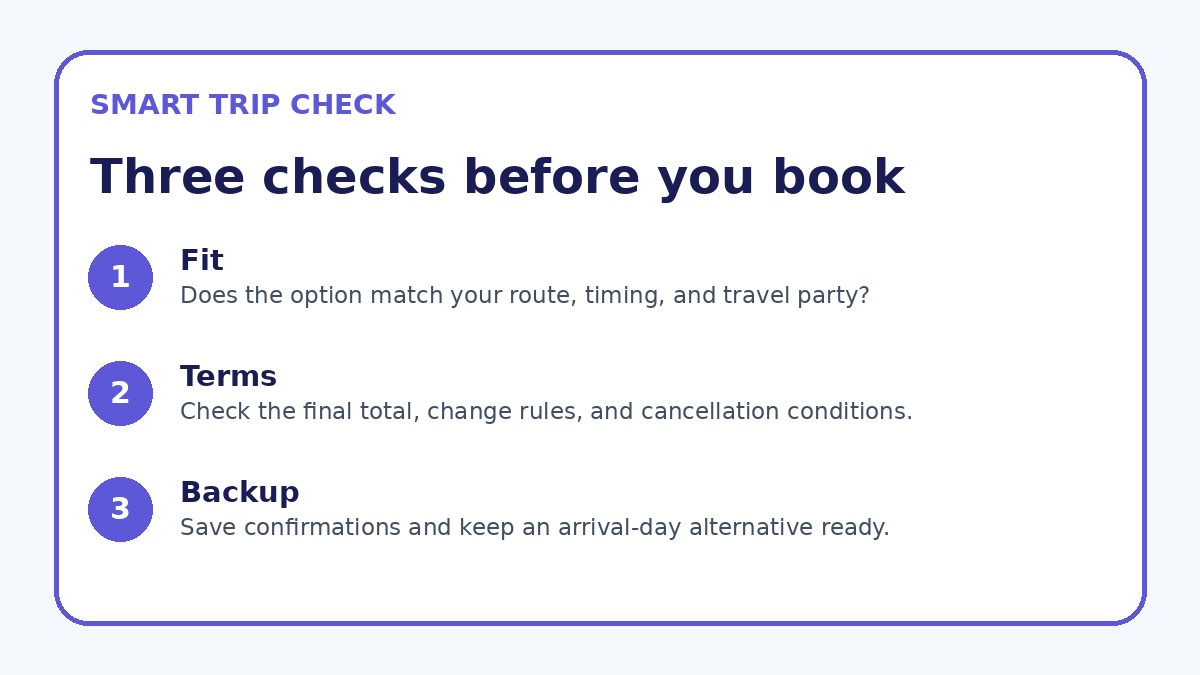
Recheck the complete itinerary
Confirm airports, connection handling, baggage, and change conditions before deciding.
Schedule fit: matching your day plans and recovery time
Think beyond departure and arrival times: factor in how flight times affect your first hours in Tokyo. An early‑morning arrival may maximize sightseeing time but requires an early wake‑up and possibly an overnight stay in Seoul. A late arrival might be easier to manage personally but could mean taking a taxi instead of public transit. For solo travelers, personal fatigue and the desire to navigate arrival logistics alone should guide which arrival windows you prioritize.
Also consider buffer days in your itinerary if you’re connecting through other cities or relying on tight inbound connections. If you have key appointments, tours, or reservations in Tokyo, choose schedules with higher reliability (nonstops or single‑carrier connections) and avoid the tightest connection margins. Before booking, decide the latest acceptable arrival time in Tokyo for your first day and use that constraint to filter options in the search engine.
Flight details to verify
- Pick exact outbound and return dates and write down acceptable arrival windows for Tokyo before searching prices.
- Note passport name, number, expiry date, and any visa requirement checks you must confirm on the carrier’s booking page.
- Decide whether a checked bag is essential; compare fares including baggage allowances on the final booking page.
- Filter search results for nonstop options first, then compare single‑ticket connections by total journey time and layover length.
- Open the final carrier booking page and read the full change, cancellation, and refund policy for the selected fare class.
- Build an arrival contingency: plan ground transportation options and a backup early‑night accommodation if your arrival time is late or uncertain.
Fare conditions: flexibility, change fees, and what to verify
Fare rules determine how easy and expensive it is to change your trip. Flexible fares or fare families labeled with free changes are helpful when plans might move; cheaper sale fares often have strict penalties or no refunds. When comparing options, read the carrier’s exact change and cancellation terms on the final booking page, not just summary text. Look for explicit statements about change fees, fare difference charges, and whether changes can be made online or require a call center.
Other fare‑condition details to confirm include how refunds are handled, whether name corrections are allowed, and how long a voluntary hold or reservation can be kept before ticketing. If you book separate tickets for two legs, recognize you may need to pay change fees on both tickets. Finally, verify baggage inclusion for the specific fare: a low‑cost or basic economy fare may exclude checked bags and seat selection, so check whether the total cost of extras still meets your convenience needs.
Flight Guide questions travelers ask
Should a solo traveler always choose nonstop Seoul to Tokyo flights?
Not always. Nonstops reduce transfer steps and often feel safer for solo travelers because there’s less chance of missed connections and simpler baggage handling. But nonstop schedules may not match your preferred times or budget. If nonstops push your arrival or departure outside your ideal windows or exceed your budget, a single‑ticket connecting itinerary with adequate layover time can be a reasonable compromise. If you consider connections, prioritize single‑ticket itineraries handled by one carrier or alliance to retain protection in case of delay.
How much connection time should I allow when switching flights in Seoul or Tokyo?
Connection time depends on whether you must clear immigration, collect and recheck luggage, or move between terminals. If your baggage is through‑checked and the connection is on the same carrier or alliance, shorter layovers are more feasible; still, allow extra time for security and gate changes. For separate tickets or when you must pass immigration and reclaim bags, add substantial buffer time to avoid rushing between terminals. Check airport maps and the airline’s minimum connection times on the booking page to set a safe margin for your personal comfort.
What fare details should I verify before finalizing a Seoul to Tokyo booking?
On the carrier’s final booking page verify the change and cancellation fees, whether changes can be completed online, and how refunds are handled. Confirm the ticketed baggage allowance for both carry‑on and checked items, and check seat selection rules if you prefer a specific seat. For connecting itineraries, ensure the ticket covers all legs on one itinerary; if booking separate tickets, understand the implications for missed connections and baggage. If you need specific assistance, check how to contact the carrier to manage changes.
Final decision note
Balancing schedule flexibility and convenience on the Seoul to Tokyo route comes down to clearly defined priorities before you search. If your dates and arrival window are fixed, favor nonstop or single‑ticket options that minimize transfers and simplify baggage handling. If your plans may shift, accept a higher‑flexibility fare or build contingency time into connections. Always verify baggage rules, change and cancellation conditions, and whether baggage is checked through on the carrier’s final booking page. Prepare exact dates, passport details, and a preferred arrival window to make side‑by‑side comparisons fast and accurate, and remember to weigh total door‑to‑door time rather than only flight duration.
Continue planning
Check current options and final conditions
Use the provider page to confirm live availability, the final total, cancellation terms, and every condition that matters to your trip.
This evergreen planning guide was created with AI-assisted drafting and a structured quality review. It does not display live prices, schedules, availability, visa guidance, or provider rankings. Verify current details before booking. Some links are affiliate links; we may earn a commission at no additional cost to you.