If you need to book Seoul to Taipei flights for business, prioritize the route-versus-fare tradeoff first: a marginally cheaper ticket with restrictive change or cancellation rules can cost you far more in flexibility than a slightly higher business-friendly fare. For many corporate travelers the choice is not simply price but schedule fit, luggage handling, and how easily a booking can be changed when meetings shift. This article gives a direct practical answer up front, then walks through how to compare routing options, assess baggage and connection risk, match schedules to your meeting windows, and interpret complex fare conditions so you can book with confidence and avoid last-minute surprises.
See live routes for your exact travel day
Compare direct and connecting choices with the same baggage and traveler details.
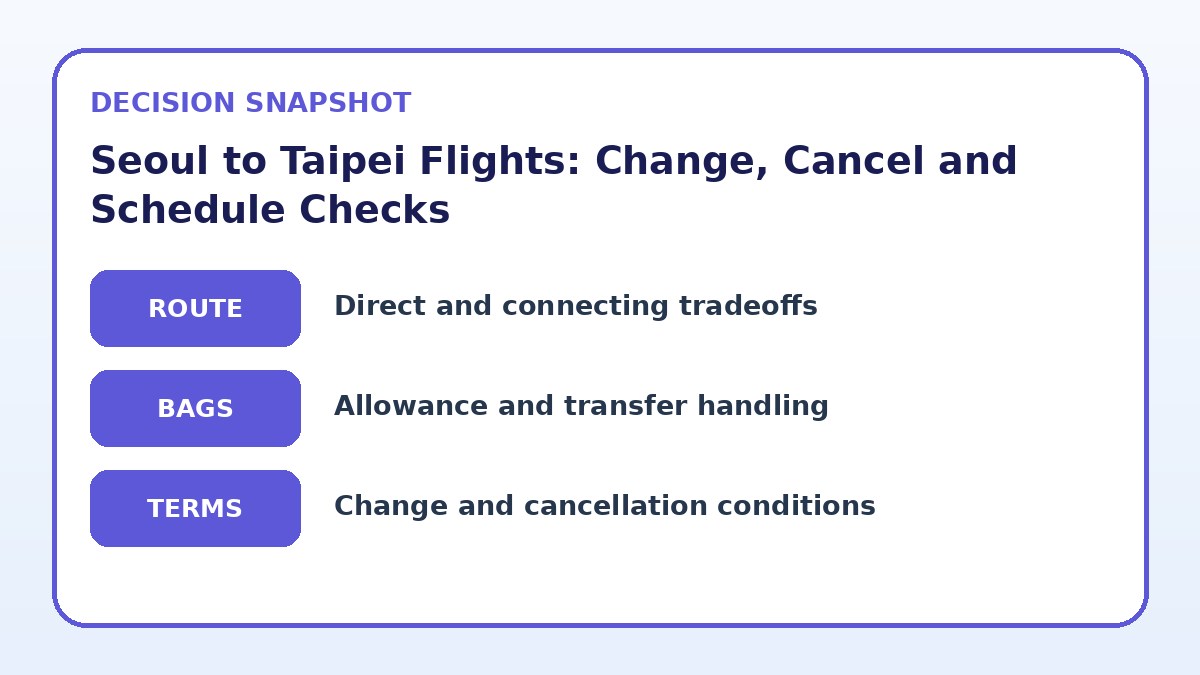
Routing: direct versus connecting choices
Compare direct and connecting options by thinking about the real cost of a missed connection. A nonstop or single-leg routing reduces the number of touchpoints where delays, rebookings, or lost luggage can occur. If a direct flight is offered between Seoul and Taipei, it generally simplifies transfers and minimizes transit time between meetings. However, direct service can come at a higher base fare or limited schedule times, so business travelers must weigh whether the convenience and lower connection risk justify the fare difference.
When considering connecting routings, examine the transfer airport, minimum connection times, and whether the same ticket covers both legs. A single-ticket connection usually provides some protection—if the inbound leg is delayed, the airline will typically rebook you on the next available flight on that carrier or its partners. But codeshares and separate-ticket connections may leave you responsible for missed onward flights. Before booking any connection, map the worst-case disruption scenario and decide whether the risk aligns with your flexibility needs and the importance of being on-site at a fixed time.
Baggage and connection risk for business travelers
Business travelers often travel with laptops, presentations, and a checked bag, so verify baggage rules for each fare class before booking. Low-fare economy or basic fares may exclude checked baggage and even limit carry-on size; that can force last-minute upgrades at the airport. If you plan to check luggage and change carriers during a connection, confirm whether your bags are through-checked to the final destination or require collection and recheck, which adds time and risk. That detail is visible on the airline’s baggage policy page and usually reiterated on the booking summary.
Assess connection risk beyond luggage: gauge how tight your transfer time is and the historical reliability of the connection airport if possible. Longer layovers reduce missed-connection risk but increase travel time and potential visa/entry needs for the transfer country. If you have a tight business schedule, favor routings and fares that allow protected connections on a single ticket, or build buffer time into your itinerary. Always verify on the airline’s final booking page whether baggage is through-checked and whether the carrier provides rebooking protection for missed connections.
Compare flight-selection strategies
| Flight strategy | Best for | Risk to check |
|---|---|---|
| Book the cheapest nonrefundable fare | Travelers with fixed dates and low change risk | Lowest upfront cost but high penalties and little flexibility if plans change |
| Buy a flexible or refundable ticket | Executives needing last-minute schedule freedom | Higher fare but easier changes, cancellations, and fewer administrative steps |
| Use a connecting itinerary on a single ticket | Balancing lower fares with some protection on missed connections | More time in transit and increased complexity than a nonstop, but rebooking support is usually available |
| Purchase separate legs to save fare | Cost-sensitive travelers willing to self-manage disruptions | Lowest control over missed connections and baggage handling; you bear full rebooking responsibility |
Recheck the complete itinerary
Confirm airports, connection handling, baggage, and change conditions before deciding.
Schedule fit: timing, buffer and crew constraints
Match flight times to your meeting windows with realistic buffers for check-in, security, and potential delays. Early-morning flights might look ideal for same-day arrivals but leave little room for delayed transport to the airport. Late-night or red-eye departures can save a day but may increase fatigue that affects performance in meetings. For business travel, prioritize arrival time that allows at least a short buffer before your first obligation—this reduces the pressure of unexpected delays and provides time to handle immigration, baggage, and travel to the meeting location.
Consider inbound and outbound schedule reliability and airline operational patterns that could affect your day. Some carriers operate the same aircraft early in the day at low-cost schedules and may have tighter turnarounds; other full-service carriers publish buffer-friendly schedules with more consistent departure windows. If you rely on the return flight for same-day evening travel, check policies for voluntary changes or standby options. Confirm on the booking page the exact departure and arrival times for your chosen date and understand how multi-leg itineraries might shift if airline equipment or routing changes occur.
Flight details to verify
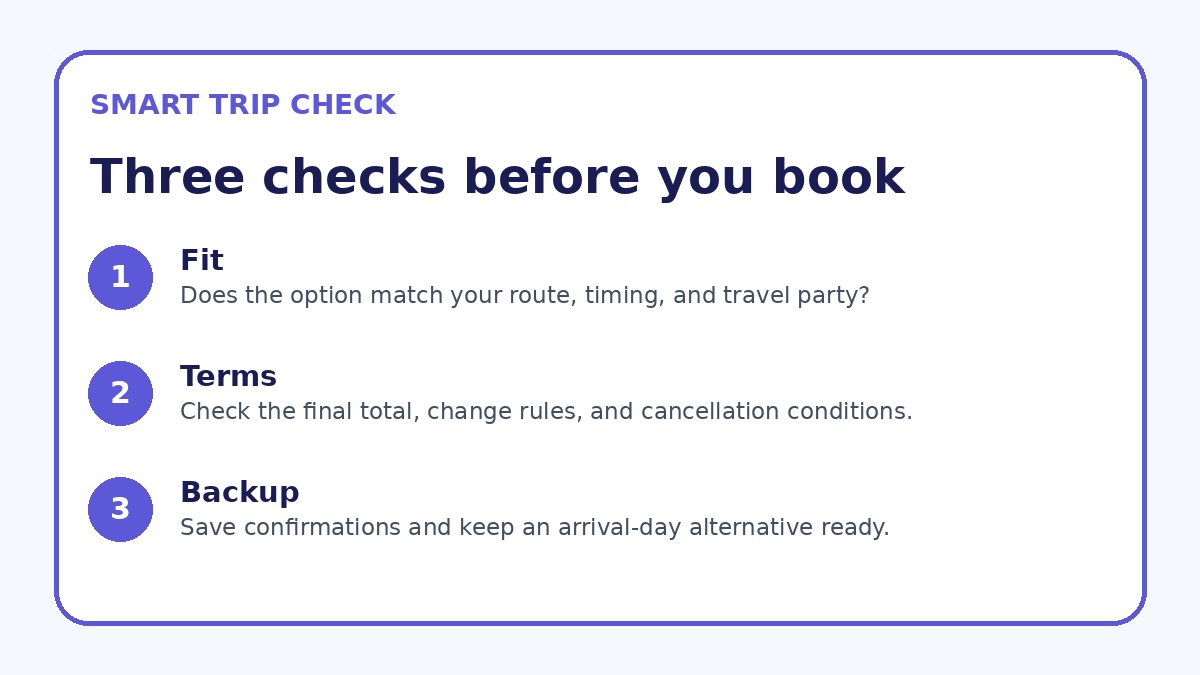
- Confirm exact travel dates, full traveler name as on passport, and preferred cabin before searching live fares.
- Check the fare rule text on the provider’s final booking page for change fees, permitted changes, and refundability.
- Verify baggage allowance and whether checked bags are included or must be purchased separately for each leg.
- Confirm if your itinerary is on a single ticket and whether that ticket includes protected connections.
- If booked through corporate rates, obtain written confirmation of any negotiated change or waiver terms.
- Save the booking reference and the airline’s modification phone number; test how to make an online change before travel.
Fare conditions: change, cancellation and corporate rules
Read fare rules line by line before purchase: look for fees, changeable fare classes, same-cabin rebooking rules, and whether changes are permitted online or require an agent. Flexible or refundable fares cost more but often include lower change fees or even free changes—features many business travelers value. Other fares may allow name changes, date swaps, or flight-time changes with a fee plus any fare difference. To avoid surprises, confirm the exact change and cancellation penalty shown on the provider’s final booking page and the method to request changes (online, phone, or through a corporate travel manager).
If your company has negotiated corporate fares or travel policy, verify whether it overrides public fare rules or gives access to waivers. Corporate agreements sometimes include reduced change fees, free rebookings for mission-critical travel, or dedicated ticketing processes that simplify modifications. Even with corporate contracts, keep a copy of the fare rule text and the ticket number, and know your expense approval workflow. When in doubt, contact the airline or your corporate travel desk and ask for the precise wording on changeability, refunds, and any administrative fees before finalizing the booking.
Flight Guide questions travelers ask
How do I compare change fees across airlines when booking Seoul to Taipei flights?
Start by pulling the exact fare rule or conditions page shown during checkout for each itinerary. Look for three details: the flat change or cancellation fee, whether the fare permits change only with a fare difference, and any windows when changes are free (for example within 24 hours of booking). Corporate waivers or frequent flyer status may alter these rules, so verify any account-specific benefits separately. Finally, check whether the airline allows changes online or requires phone or agent processing, which affects how quickly you can secure a new seat.
If my Seoul to Taipei itinerary has a tight connection, what protections should I confirm before booking?
Ensure the two flights are issued on a single ticket and check the airline’s minimum connection time for that airport pairing. Confirm whether the carrier will rebook you on the next flight if the inbound leg is late and whether your baggage is through-checked to the final destination. If the connection is on different carriers or separate tickets, accept that you may need to recheck luggage and purchase a later flight yourself. When uncertain, consider extra buffer time or opt for a direct service to minimize the operational risk.
Should I buy refundable tickets for routine business trips between Seoul and Taipei?
Refundable fares give maximum flexibility and reduce administrative friction for last-minute meeting changes or cancellations, but they come at a premium. For routine trips where schedules rarely change, a flexible nonrefundable fare with low change fees can be a cost-effective middle ground. Your decision should reflect the probability of changes, company reimbursement rules, and whether your employer prefers higher upfront fares to avoid complex change approvals. Always weigh the incremental cost against the expected value of avoided last-minute rebooking hassles.
Final decision note
For business travel between Seoul and Taipei, the right choice often balances schedule reliability, luggage needs, and fare flexibility more than raw price. Start by confirming exact dates, traveler details and any corporate fare rules, then compare nonstop versus connecting routes for connection risk and total door-to-door time. Read the fare rule on the airline’s final booking page—change and cancellation policies differ widely and determine how costly a schedule shift will be. If you need a quick place to view current availability and conditions, Trip.com can be used to compare options, but always verify the final terms on the carrier’s booking screen before confirming.
Continue planning
Check current options and final conditions
Use the provider page to confirm live availability, the final total, cancellation terms, and every condition that matters to your trip.
This evergreen planning guide was created with AI-assisted drafting and a structured quality review. It does not display live prices, schedules, availability, visa guidance, or provider rankings. Verify current details before booking. Some links are affiliate links; we may earn a commission at no additional cost to you.