Practical choice first: decide whether you want a mostly rail, coach, or mixed journey between Kuala Lumpur and Singapore — or a point-to-point flight — then plan how you will get to and from the stations or terminals at each end. For first-time visitors the hard part is not the ride itself but the station-to-door logistics: which train station, coach terminal, or airport is closest to where you’ll be staying, how much luggage transfer friction you can tolerate, and how much buffer time you need for immigration, taxis, and inter-terminal transfers. This article gives direct decision criteria — terminal fit, luggage and transfer friction, timing flexibility, and a disruption backup — so you can pick an approach that suits your itinerary and energy levels. Where provider details matter, I’ll tell you exactly what to verify on the operator or booking page before you commit.
Terminal fit: pick the station or airport that saves time
Start by mapping your start and end addresses against the main terminals and stations used on this route. City-center rail stations typically put you within short taxi or metro distance of central hotels; airports and some long-distance coach terminals often sit farther out and require a separate transfer. For each candidate station or terminal, note the typical taxi or public transit options, how many transfers they require, and whether those transfers are easy with luggage. If you will land late or arrive early, choose terminals that stay open and offer clear first/last-mile options to avoid long waits or expensive ad-hoc rides.
When comparing terminals, think door-to-door time, not only in-vehicle travel time. A fast overnight service that arrives at a peripheral terminal may still leave you worse off than a slower daytime option that drops you near your accommodation. Also check whether the terminal has luggage storage or porter services if you have a long layover. For first-time visitors, a single short taxi or metro connection often beats a lower fare that needs two transfers with heavy suitcases.
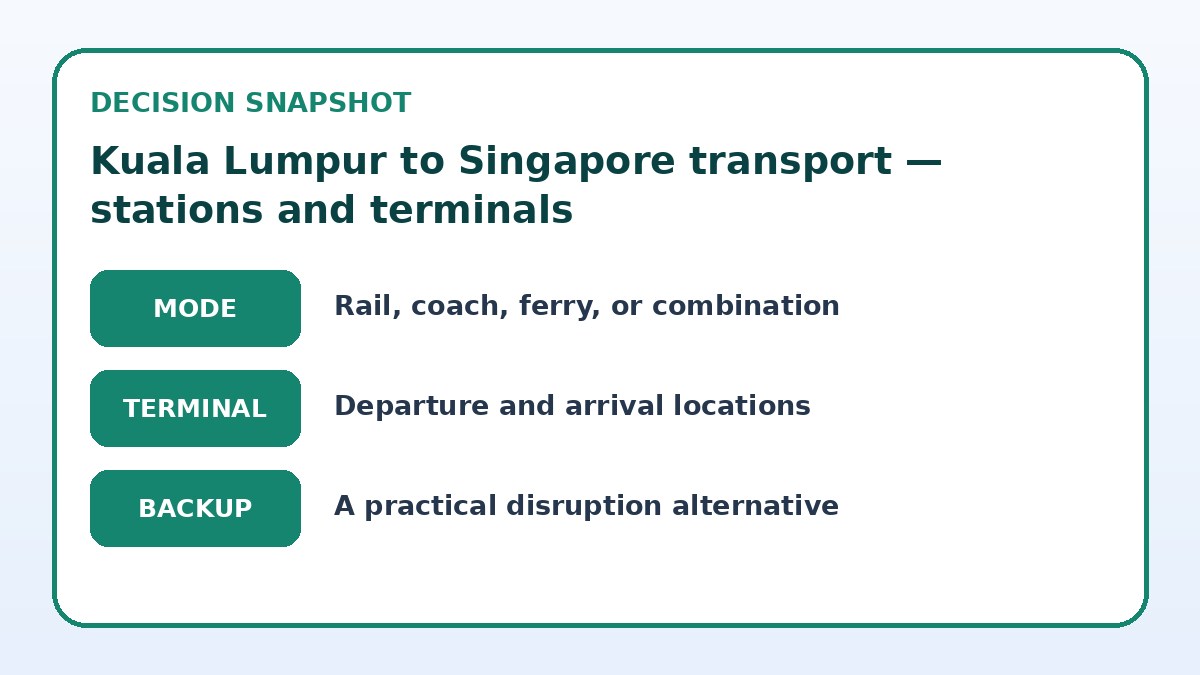
Choose the end-to-end journey plan
| Journey approach | Best for | Friction to check |
|---|---|---|
| Mostly rail (intercity train) | Travelers prioritizing city-center arrivals and a relaxed onboard experience | May require station transfers and platform walking with luggage; check arrival station onward connections |
| Coach or express bus | Those who want a simple door-to-door fare and flexible ticketing options | Coach terminals can be peripheral; verify exact terminal location and luggage service before booking |
| Fly (air travel) | Time-sensitive travelers who value shorter in-air time over ground transfer complexity | Airports often sit outside city centers, adding transfer time and security/immigration steps |
| Mixed (rail + coach or taxi) | People balancing cost and convenience who need to match terminals to hotel locations | More moving parts increase disruption risk; pre-plan each leg and keep backup options ready |
Check live intercity options
Look beyond the ride itself and compare terminals, transfers, luggage, and arrival fit.
Luggage and transfer friction: what you’ll actually carry
Different modes handle luggage differently: trains and coaches usually allow larger bags but routing through busy stations can mean stairs, crowded platforms, and longer walks between platforms. Flights typically impose stricter baggage limits and may require check-in and reclaim time. Think about how much you are prepared to wheel or carry, and whether you can handle stairs or a long platform drag. If you travel light, you gain flexibility to choose a more central station; if you have multiple large bags, prioritize options with straightforward curbside transfer or porter assistance.
Also consider the friction of moving between terminals at either end. Some rail stations place intercity platforms in a different building from local metro connections, or require a shuttle to the coach terminal. Note whether transfers are indoors and signposted or require exiting and re-entering through security or immigration areas. For cross-border journeys, always account for immigration queues: even if the main ride is fast, border processing and bag handling can add unpredictable time to your plan.
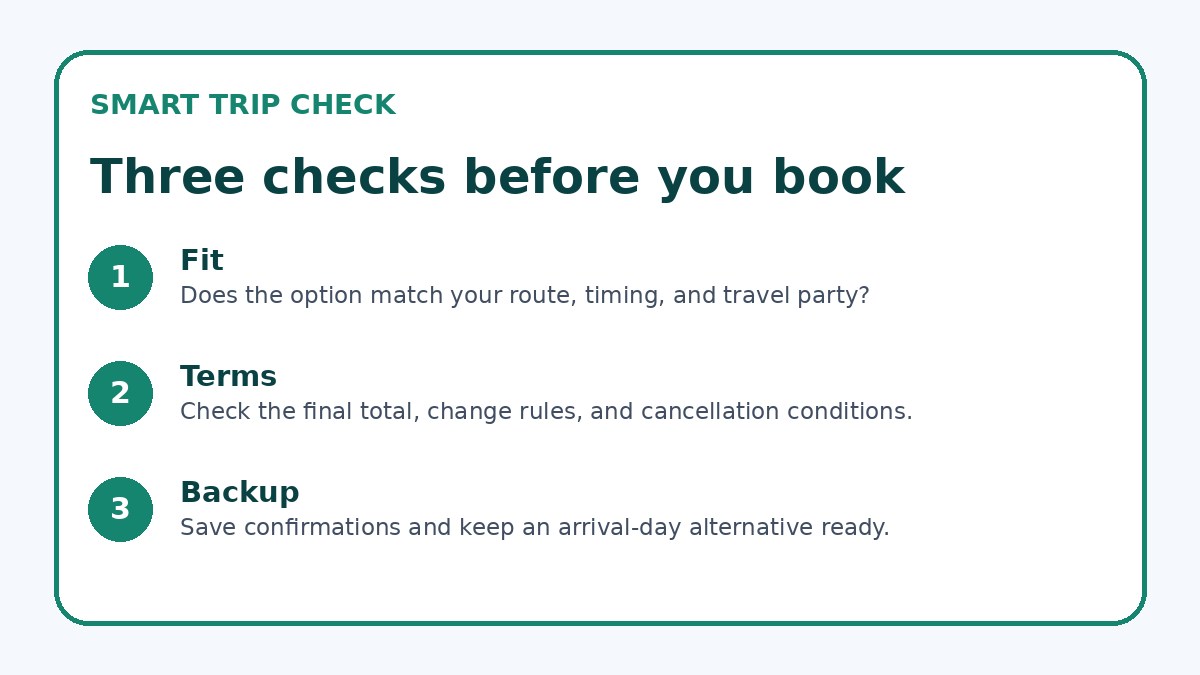
Timing flexibility: choose schedules that absorb delays
Match your journey choice to how flexible your plans are. If you have fixed appointments on arrival or limited check-in windows, opt for departures that give comfortable buffers and choose terminals with regular onward connections. Midday and evening services can be less congested, but peak-hour options may line up better with public transport, leaving fewer taxi shortages. For first-time visitors, a slightly slower option that arrives during daylight and into a central terminal often reduces stress and gives easier access to support services.
Build buffer time for known chokepoints: morning and evening peak traffic on roads, typical immigration rushes at border crossings, and scheduled maintenance windows reported by operators. If you need to make a same-day onward flight or train, increase your cushion. Where services have fixed departure times (coaches or long-distance trains), plan to arrive at the terminal early enough to manage ticketing and luggage checks without risking a missed connection.
Compare the practical alternatives
Use the final page to confirm what is actually offered on your dates and save a workable fallback.
Intercity travel checklist
- Map your hotel to nearby terminals and choose the arrival/departure point that minimizes taxi or metro transfers.
- Verify luggage allowance and handling rules on the operator’s booking page before finalizing tickets.
- Reserve at least one later service or a paid transfer as a backup if your schedule is tight.
- Check first- and last-mile options (metro times, taxi stands, ride-hailing) at both terminals for your planned arrival hour.
- Download digital copies and printouts of bookings and passport pages, and save operator contact numbers.
- Allow extra time for immigration or customs and plan to arrive at the terminal earlier than local advice if unfamiliar.
Disruption backup: simple alternatives if plans change
Before you travel, identify at least one realistic backup that keeps you moving: a later train or coach that uses the same terminals, a direct taxi transfer you can call, or a short flight if road links are unreliable. Save the contact info for terminal taxi desks, ride-hailing apps, and the operator’s disruption policy page. If your primary option involves multiple transfers, your backup should minimize those transfers so you reduce the number of things that can go wrong when time is short.
If you’re crossing a border, learn the immigration points you’ll use and whether alternate crossings exist nearby in case of unusually long queues. Keep flexible accommodation arrangements on the arrival day if uncertain. Finally, have digital and printed copies of key documents and booking confirmations, and know exactly which parts of your itinerary you can change on the operator’s booking page; verify cancellation or rebooking rules on that page before buying a ticket.
Rail & Intercity Transport questions travelers ask
How do I choose between train, coach, or flight for Kuala Lumpur to Singapore transport?
Compare door-to-door time rather than just in-vehicle duration. Trains usually put you closer to central neighborhoods; coaches may offer simpler point-to-point booking; flights save in-air time but add airport transfer steps. Factor in luggage size, how many transfers you’re willing to handle, schedule frequency, and how comfortable you are with immigration or security processes. For each option, check the terminal addresses and onward transit choices on the operator’s booking page before booking, so you can estimate real total travel time.
What should I verify on the operator’s booking page before buying a ticket?
Confirm the exact terminal or station name and address, luggage allowances and fees, boarding procedures, and any required ID or travel documents. Look for information about check-in windows, whether seat reservations are included, and the operator’s change or cancellation policy. If your itinerary relies on a timed connection, check whether operators offer on-the-day assistance for missed links. Where possible, save screenshots or PDFs of the terms so you can reference them if plans change.
What’s the simplest disruption backup if my planned service is delayed or canceled?
Identify one straightforward alternative that reduces transfers — a later direct coach or train to the same terminal, or a taxi/ride-hail straight to your destination. Keep the number for the terminal taxi desk and a ride-hailing app ready, and know the price range for a point-to-point transfer so you can decide quickly. Also ensure you can modify hotel check-in or notify your accommodation. For major disruptions, check the operator’s rebooking rules on their booking page and consider buying a flexible ticket if you need a firm contingency.
Final decision note
For first-time travelers, the best Kuala Lumpur to Singapore transport choice is the one that minimizes door-to-door stress. Start by matching your accommodation locations with terminal fit, then test luggage handling and the number of transfers needed. Prefer options that arrive into central, well-connected stations if you want simplicity; choose airports only when time savings outweigh extra transfers. Always verify terminal addresses and baggage policies on the operator’s booking page and set a single easy backup that reduces transfers. With those basics planned, you’ll be able to pick an approach that balances comfort, convenience, and resilience against disruption.
Continue planning
Check current options and final conditions
Use the provider page to confirm live availability, the final total, cancellation terms, and every condition that matters to your trip.
This evergreen planning guide was created with AI-assisted drafting and a structured quality review. It does not display live prices, schedules, availability, visa guidance, or provider rankings. Verify current details before booking. Some links are affiliate links; we may earn a commission at no additional cost to you.