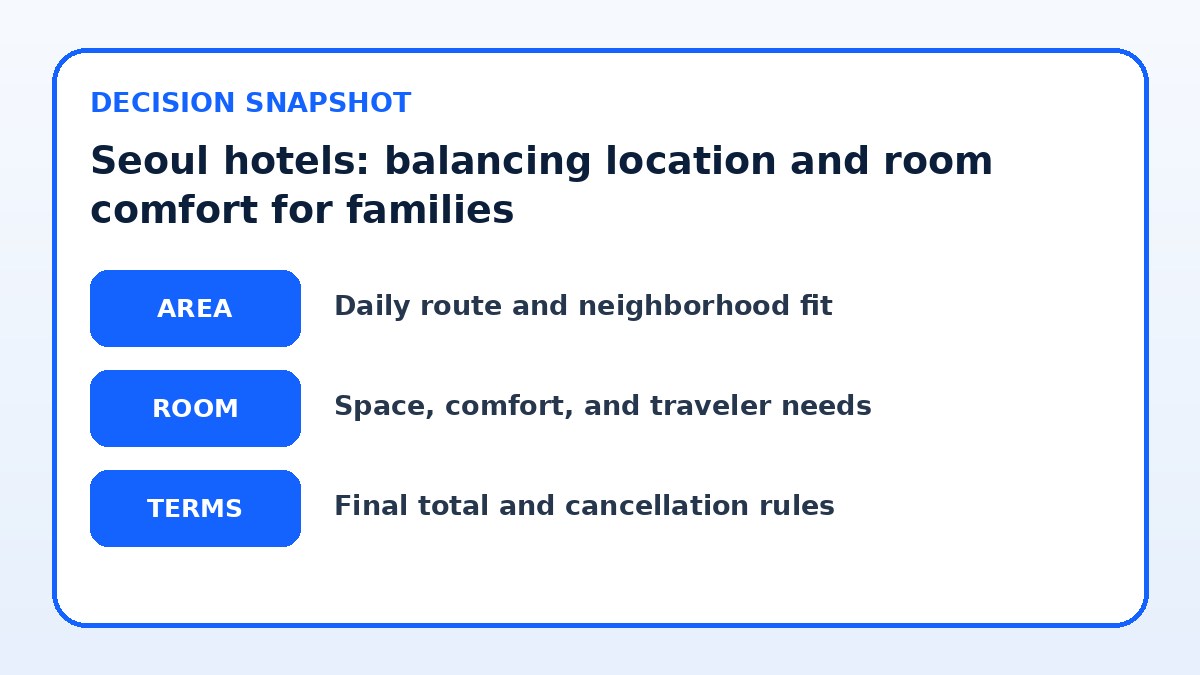
Pick the right Seoul neighborhood first, then match a room to how your family will spend each day. Families often trade a central address for quieter, larger rooms — or choose a roomy suburban apartment to save money and accept longer commutes. Start by deciding what a typical day looks like: museum mornings, theme-park afternoons, or late-night markets? That pattern determines whether proximity (short walks and subway transfers) or in-room space (suites, connecting rooms, kitchenettes) matters more. This article shows which Seoul areas suit different family rhythms, how to measure daily-route friction, what room features really help parents, and the exact booking terms to verify before you hit confirm. You’ll finish able to shortlist one or two neighborhoods and a clear room type to compare live hotel options.
Check live stays in the areas that fit
Use your dates and party size to compare current rooms after you narrow the neighborhood fit.
Choose a neighborhood by daily rhythm, not by name recognition
Families should start with a concrete daily-rhythm map: where will mornings, afternoons, and evenings typically happen? If mornings are for museums and afternoons for outdoor parks, a hotel near subway lines with easy transfers to those nodes reduces carry and wait time. If you expect late-night market visits or evening shows, staying near central hubs with frequent public transit and short evening walks keeps kids from getting overtired. Think in terms of trip legs — hotel to first morning stop, midday transfers, and return — and prefer neighborhoods that shorten the two longest legs of your typical day.
Don’t be swayed only by a neighborhood’s fame. Popular areas often mean better food and quick shops but can be noisier and more crowded during peak hours. Consider the practical items: how close is a convenience store, is there a small grocery for snacks, and are there medical services nearby? A slightly less central location can be a better choice if it puts you near the specific sights or parks your family will use daily, reducing the number of carriage or subway changes you’ll need.
Choose an area-selection strategy
| Area approach | Best for | Tradeoff to check |
|---|---|---|
| Stay in central hub (Myeongdong/Insadong) | Families wanting short evening walks and instant access to restaurants | Higher noise and smaller rooms compared with outskirts |
| Business districts near Seoul Station | Travelers needing direct transport links and quick train/bus connections | Fewer kid-focused attractions within walking distance; may be busier on weekdays |
| Riverside or Gangnam suburbs | Families seeking quieter, more spacious rooms and green spaces | Longer subway rides to historic central sights and night markets |
| Serviced apartments in residential neighborhoods | Extended stays needing kitchens and home-like layouts | Less immediate tourist infrastructure and potentially more coordination for daily sightseeing |
Measure daily-route friction: transfers, waits, and luggage pain points
Daily-route friction is the cumulative annoyance of each trip: how many transfers, how long the walk to a station, and whether elevators or escalators are available. For Seoul, where many families use the subway, count actual transfer legs and factor in stairs. A walkable 10–15 minute route with level sidewalks and elevator access is far friendlier than a 5-minute route that requires dragging a stroller up stairs. Also account for carrying small luggage between attractions; even a short taxi ride can save significant tiredness for little kids.
To estimate friction, sketch two or three sample days and mark the number of transfers and major climbs for each. Multiply by the number of outings you expect and weigh that against the benefits of cheaper or larger rooms farther out. If transfers add more than one extra 10–15 minute segment per day, the longer commute could outweigh room savings. Use transit maps and street-view to check station exits, elevator locations, and the presence of safe crosswalks near the hotel.
Now compare like with like
Keep the same dates, guests, room needs, and cancellation preferences while you compare the final choices.
Room and party needs: layouts and features that truly matter
Room type choices for families go beyond bed count. Prioritize a clear sleeping separation (a suite or a room with a partition) if children and adults keep different schedules. Connecting rooms are ideal for families of four or more; they give privacy without forcing infants into separate bookings. Kitchenettes are invaluable for toddlers, allowing you to reheat food or prepare simple meals and avoid stressful restaurant outings for every meal. Also check whether rooms include a small table or seating area where a parent can work or fold clothes without using the bed.
Sleeping arrangements deserve a verification checklist: exact bed sizes, availability of rollaway beds or baby cots, and whether extra beds occupy floor space and reduce safe play areas. Noise insulation and blackout curtains matter for daytime naps and early bedtimes. If you rely on high chairs or baby equipment, ask whether the hotel can provide them and whether there are any extra cleaning fees. Finally, confirm the connectivity and power outlets you’ll need for baby monitors, bottle warmers, or device charging.
Hotel booking check before payment
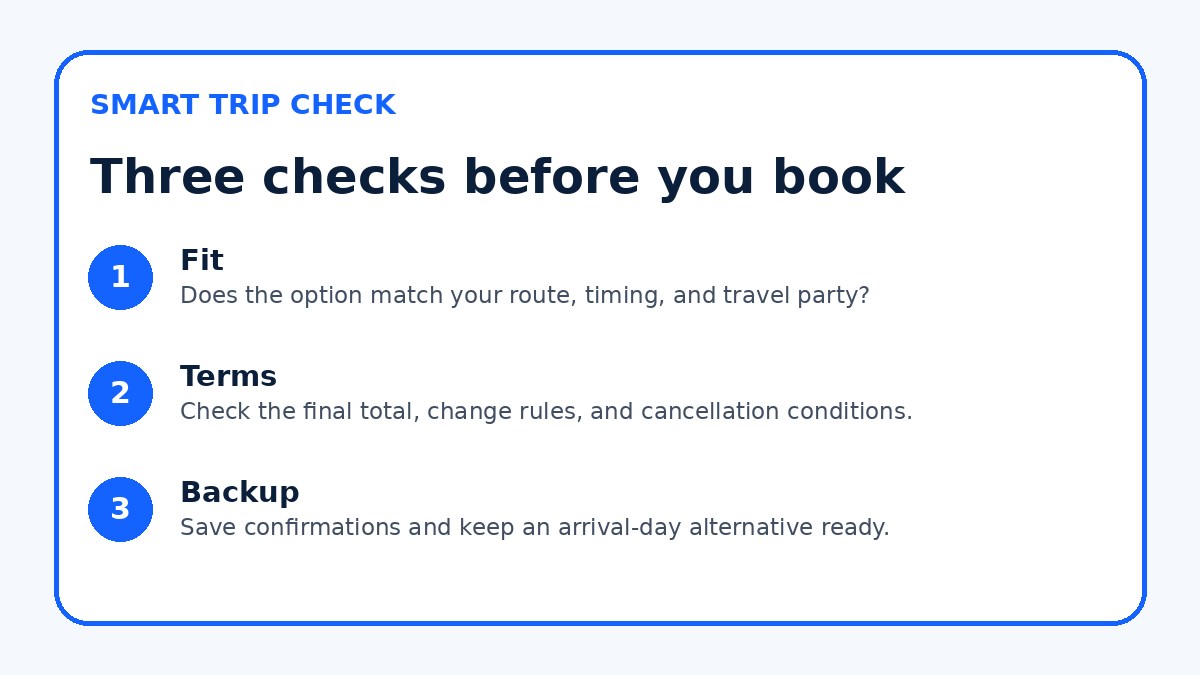
- Sketch two representative full days and mark each transfer, walk, and likely taxi leg to estimate daily friction.
- Confirm exact bed sizes, the availability of rollaway beds or cribs, and whether extra beds will reduce room usable space.
- Ask the hotel to confirm elevator access for strollers and luggage and request photos of the route from station exit to hotel entrance.
- Verify whether breakfast, local taxes, and service charges are included in the stated rate on the provider’s booking page.
- Request the hotel’s cancellation, modification, and deposit rules in writing before finalizing payment.
- Confirm on the booking page or directly if laundromat, kitchenette access, early check-in, and late check-out are available and whether extra charges apply.
Booking terms to verify before you commit
Before you book, check the cancellation policy, deposit rules, and whether the quoted room rate includes breakfast or local taxes. When traveling with children, specifically confirm the hotel’s definition of ‘child’ for free or discounted stays and how extra-person fees are applied. Ask for a clear explanation of any refundable versus non-refundable items on your itinerary and whether modifications are permitted without penalty. If you’re using loyalty points or special packages, review how those affect cancellations and changes.
Also verify operational details that impact a family stay: whether elevators are in service 24/7, if laundry facilities or same-day laundry service are available, and the hotel’s policy on early check-in/late check-out — both dependent on availability and often chargeable. For arrivals after long travel, confirm luggage storage options and late-arrival check-in procedures. Always re-check these items on the hotel’s booking page or by direct message, and consider comparing availability on Trip.com as one place to view current terms and inventory.
Hotel Guide questions travelers ask
Which Seoul neighborhood is best for families with young children?
There’s no single best neighborhood; pick based on your daily pattern. For families who rely on frequent, short outings and late-evening meals, central areas with many subway lines minimize transit time and let you return quickly for naps. If you prefer quieter evenings and larger rooms, riverside areas or Gangnam suburbs can offer more space and green areas but will add subway or taxi time to central attractions. Sketching sample days (morning to evening) will reveal whether proximity or room size will reduce stress most.
How important is a kitchenette or serviced apartment for a short stay?
For short stays, a kitchenette isn’t essential but can be a major convenience with toddlers or picky eaters: it allows simple reheating, early breakfasts, and storage of snacks. Serviced apartments excel for longer stays when doing laundry and preparing meals offset higher per-night rates. Consider whether the time you’d save preparing food (and the comfort of predictable meals) outweighs the added commute time if the apartment is farther from central attractions.
What should I check about bed arrangements and extra-person policies?
Ask hotels to spell out bed sizes and exact policies for children: what age qualifies for free stays, whether rollaway beds or cots are complimentary, and the physical impact of extra beds on room space. Request the room layout or photos so you know where a rollaway would fit and whether the room has a separate sleeping area. Also verify any extra-person charges, whether they’re per night or per stay, and whether those fees are refundable if plans change.
Final decision note
Balancing location and room comfort in Seoul comes down to matching daily rhythms with room functionality. If your plans include many short outings, evening activities, or you prefer to avoid taxis, choose a centrally located neighborhood that cuts transfers and keeps the family close to dinner and emergency conveniences. If longer downtime, space to spread out, or cooking matters more, a quieter district or serviced apartment will improve your daily life at the cost of extra commuting. Use the sample-day method to quantify daily-route friction, then filter hotels by room layout, child policies, and confirmed amenities. With those checks done, you’ll be ready to shortlist one or two neighborhoods and compare live hotel options confidently.
Continue planning
Check current options and final conditions
Use the provider page to confirm live availability, the final total, cancellation terms, and every condition that matters to your trip.
This evergreen planning guide was created with AI-assisted drafting and a structured quality review. It does not display live prices, schedules, availability, visa guidance, or provider rankings. Verify current details before booking. Some links are affiliate links; we may earn a commission at no additional cost to you.