Practical answer up front: if you need flexibility for a Seoul to Osaka trip, choose the fare class that explicitly lists free or low-cost date changes and refundable options, and verify the provider’s exact change/cancellation wording before paying. Business travelers should balance route convenience (direct vs. connection) against a fare’s change fees, reissue cost, and whether the fare allows refunds or only credits. Also check baggage rebooking rules and how connections are handled when an itinerary changes. This article explains the tradeoffs you’ll face—routing, baggage and connection risk, schedule fit, and fare conditions—and gives a straightforward checklist of what to prepare before checking live options so you can make a firm, efficient booking decision.
See live routes for your exact travel day
Compare direct and connecting choices with the same baggage and traveler details.
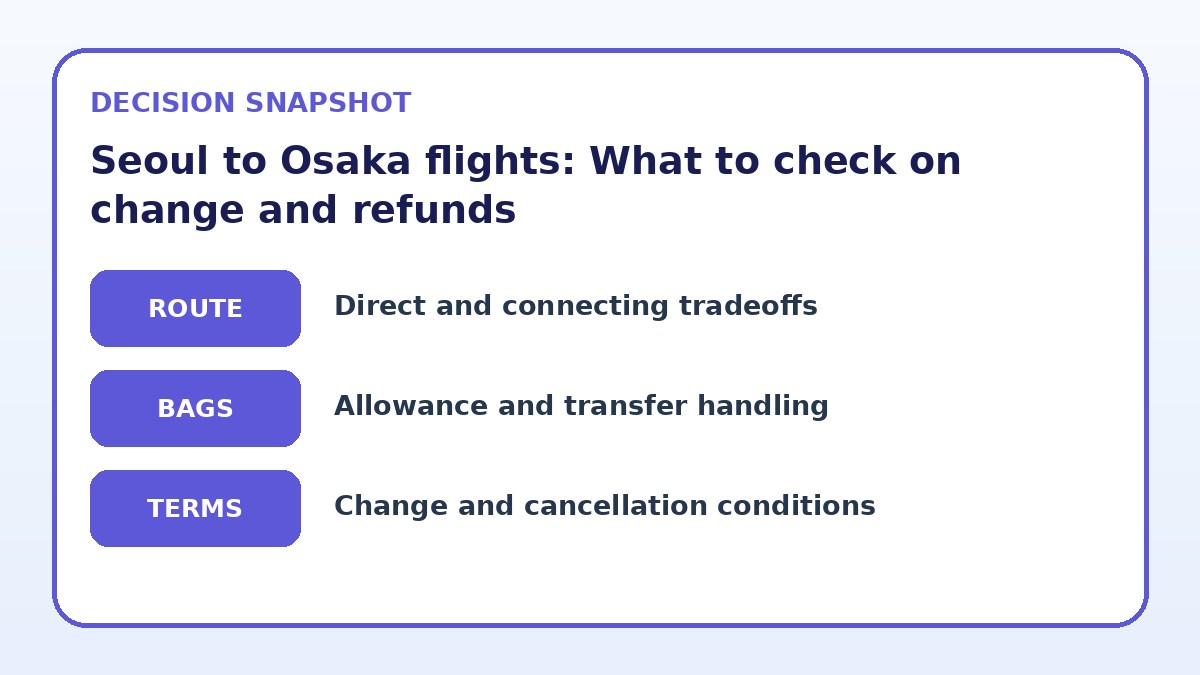
Routing: direct vs connecting and its impact on flexibility
A direct Seoul to Osaka itinerary usually reduces the operational and connection risk that comes with rebooking. If a business meeting shifts by a day, a direct flight typically requires only a single fare change or reissue; a connecting itinerary can force you to rebook two or more segments, which may multiply change fees or force a full-cabin reissue. When comparing options, explicitly check whether the ticket is sold as one single itinerary (one PNR) or as separate legs; single-PNR itineraries are easier to change through one transaction.
However, direct options may sit in fare classes with less flexibility or higher base fares. For business travelers who prioritize schedule certainty, calculate the time saved versus the monetary cost of refundable or flexible fare classes. When comparing connecting options, evaluate the minimum connection time, the same-airline or alliance status, and whether the carrier guarantees missed connections. Always verify the carrier’s wording about protection and who sells the ticket—if you buy through an agent, some protections or reissue processes could differ.
Baggage and connection risk when changing or canceling
Baggage allowances can behave differently on reissued tickets. In some cases a change to dates or flights may alter the fare class and its baggage entitlement, leaving you with reduced allowance or requiring payment to restore the original checked baggage. For business travel that routinely includes a checked bag or equipment, read the fare rules section that explains baggage changes on reissuance. If an airline’s public page is unclear, use the booking flow to simulate a change with the same passenger profile and baggage to see what fees appear before finalizing a purchase.
Connections add another layer of risk: if an earlier segment is changed and you miss a connection on separate tickets, the downstream carrier may treat that leg as a no-show. For single-ticket itineraries where the carrier controls both segments, carriers typically rebook passengers on the next available flight—but this is subject to fare class and operational constraints. Confirm whether a change preserves the original itinerary’s transits and whether checked bags are transferred automatically after reissue or require separate handling.
Compare flight-selection strategies
| Flight strategy | Best for | Risk to check |
|---|---|---|
| Buy a fully refundable business fare | Travelers wanting maximum schedule freedom and simple refunds. | Higher upfront fare cost and often limited seat availability in that fare class. |
| Buy a flexible change-fee fare (non-refundable) | Those who want lower cost than refundable fares but predictable change costs. | Change fees or fare differences still apply; refunds may be limited to credits. |
| Choose cheaper non-changeable fare with travel insurance | Price-sensitive travelers who can insure against specific disruptions. | Insurance claims add friction and payout conditions may exclude some changes. |
| Book a connecting itinerary with separate tickets | When direct options are costly and you accept higher connection risk. | Separate tickets increase missed-connection and rebooking complexity and cost. |
Recheck the complete itinerary
Confirm airports, connection handling, baggage, and change conditions before deciding.
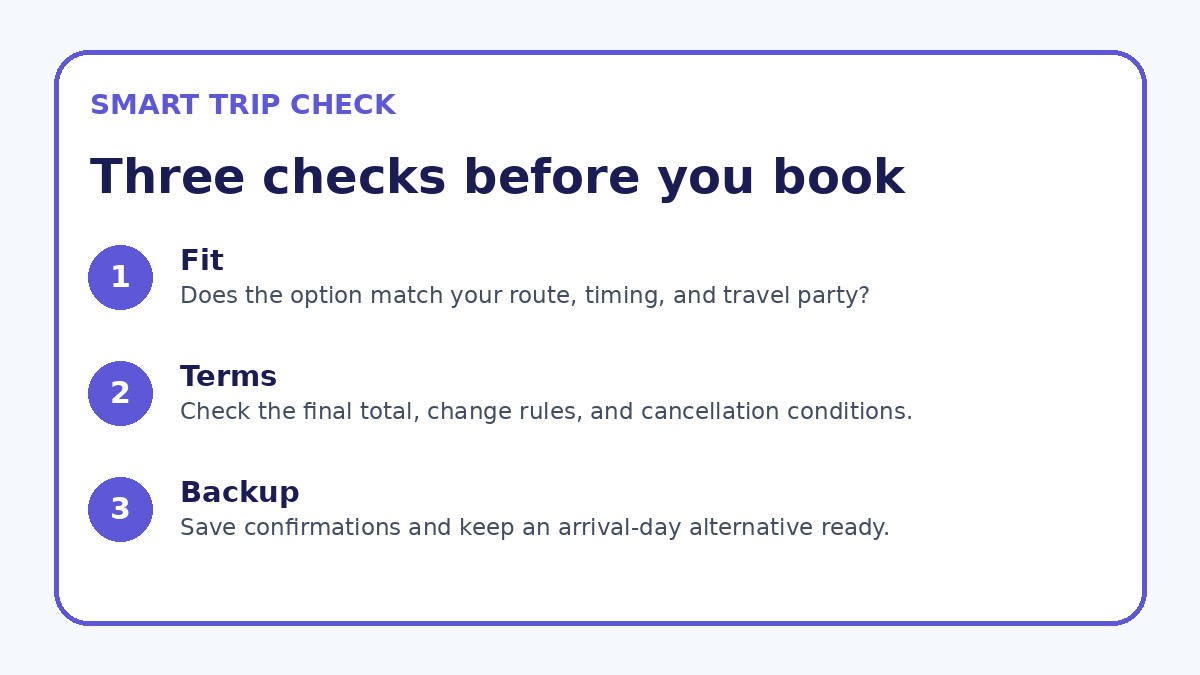
Schedule fit: matching business hours and backup plans
For business travelers the ideal flight lands with enough time to reach meetings and has return options if your schedule slips. When evaluating fare flexibility, consider whether the carrier permits same-day or close-in changes and what those changes cost. Some fares permit paid same-day switches with limited change fees, others allow free changes but only outside certain blackout windows. Test possible alternate dates and times during the booking process so you understand the logistical and financial impact of moving flights within your travel window.
Also plan a backup: if a meeting runs late, can you take a later flight on the same ticket or do you need to buy a new one? If a later seat is not included, check whether your priority status, a flexible business fare, or an add-on (e.g., refundable option) provides easier same-day change rights. Practical preparation—knowing which flights you could realistically switch to and how much a reissue would cost—reduces stress and prevents last-minute expensive choices.
Flight details to verify
- Record exact traveler names, passport/ID numbers, and company billing details before starting bookings.
- Simulate a date change in the booking flow to reveal the carrier’s change fee, fare difference, or credit policy.
- Confirm baggage allowance on the fare rules and whether it changes after a ticket reissue.
- Check if the itinerary is on one PNR (single ticket) or multiple tickets and note the rebooking process for each.
- Verify whether cancellations return funds to the original payment method or issue travel credits and any time limits.
- Save screenshots or the exact wording of change/cancellation rules from the final booking confirmation page.
Fare conditions: what to verify precisely before booking
Fare rules are where the decisive differences live: changes allowed (free, fee-based, or not permitted), cancellation refunds (full refund, credit, or no refund), and whether taxes and differences in fare are due on reissue. Don’t assume similar-sounding fare names have the same rules—open the full fare conditions during booking and read the change and cancellation section word for word. If you use a travel agency or corporate booking tool, verify whether their rules or fee handling differ from booking directly with the carrier.
When provider-specific facts could change, verify: the exact permitted change window, whether the ticket can be refunded to the original form of payment, who pays fare differences on reissue, and whether changes can be made online or require call-center intervention. If you must rely on the seller’s site to compare live options, have your precise traveler names, passport or ID details, and preferred alternate dates ready so you can simulate an actual change and see the final fee before purchase. Trip.com can be used once to compare availability and wording, but confirm the final policy on the carrier’s or seller’s checkout page.
Flight Guide questions travelers ask
Can I change a Seoul to Osaka flight the same day without a fee?
Same-day change policies depend on the fare class and carrier. Some carriers offer same-day confirmed or standby changes for a fee or free for high-status customers, while others limit same-day moves to specific fare buckets. Before booking, check the fare’s ‘same-day change’ or ‘same-day confirmed’ clause in the fare rules. If the booking platform compresses policy language, simulate a same-day change in the booking tool to see the actual charges shown before finalizing payment.
If my meeting is canceled, will I get a refund for an economy fare?
Refundability varies by fare type; many discounted economy fares are non-refundable and provide travel credit or no refund at all. The fare rules will state whether cancellations produce a cash refund, travel credit, or require a cancellation fee. If you need refundable rights, choose a refundable fare or buy a flexible add-on. Also check if your corporate policy or travel agency has negotiated different cancellation terms that apply to your booking.
How do baggage rules change if I switch to a different flight on the same ticket?
When you change to another flight under the same ticket, the airline may keep the original fare class and baggage allowance or reprice the ticket into a different fare that carries a new allowance. The fare rules typically explain whether baggage is linked to the original booking or recalculated on reissue. To avoid surprises, simulate the exact change during booking or contact the airline with your PNR and ask whether checked baggage will remain included after the specific change you’re considering.
Final decision note
For business travel between Seoul and Osaka the key decision is whether convenience and predictable rebooking outweigh higher upfront costs. Focus on the routing tradeoff first—direct flights simplify changes—then read fare rules for change fees, refunds, and baggage behavior. Prepare exact traveler details and alternate dates before you compare live options so you can simulate real changes and see final fees. Use the checklist to capture the seller’s exact wording, and confirm any ambiguous points on the carrier or seller checkout page before paying. That discipline makes change and cancellation outcomes foreseeable, which is the real value for a busy business traveler.
Continue planning
Check current options and final conditions
Use the provider page to confirm live availability, the final total, cancellation terms, and every condition that matters to your trip.
This evergreen planning guide was created with AI-assisted drafting and a structured quality review. It does not display live prices, schedules, availability, visa guidance, or provider rankings. Verify current details before booking. Some links are affiliate links; we may earn a commission at no additional cost to you.