Practical couples planning this intercity trip should choose the ticket that lets them change plans without turning travel into a headache. For Ho Chi Minh City to Da Nang transport, the central decision is not only speed but how easily you can change dates, transfer luggage, handle missed connections and arrive near where you actually want to be. Start by weighing train versus coach versus flight or a mix: trains and coaches often let you swap dates with modest rules and fit city-center terminals, flights are fastest but usually stricter, and mixed options (fly one way, train the other) give flexibility plus different arrival points. This article compares those choices with a focus on terminal fit, luggage and transfers, timing freedom, and a sensible disruption backup so couples can pick the most practical, stress-minimizing plan.

Terminal fit and door-to-door practicality
Where the service starts and ends changes the whole journey for couples. Trains and many long-distance coaches usually depart from central stations or bus terminals, which can reduce taxi time and give more options for accommodation near the platform. That matters when you want to drop luggage and walk to a cafe or check into a nearby hotel on arrival. By contrast, flights involve travel to and from airports that may sit outside the urban core, requiring extra transfer time and cost. When comparing options, map the exact origin and arrival terminals, then estimate taxi or rideshare time and cost to your preferred neighborhood so you can compare true door-to-door durations.
Couples should also consider how close terminals are to public transit and how late or early trains/coaches operate. A centrally located late-night coach stop may be preferable to an early airport pickup if you want to sleep in before traveling. If you value a short walk from arrival to dinner or an evening stroll, prioritize services that terminate near the district you plan to spend most time in. Finally, think about arrival logistics for each option: will you need to wait for a hotel check-in, or can you store bags easily at the station so your first hours in Da Nang are productive and relaxed?
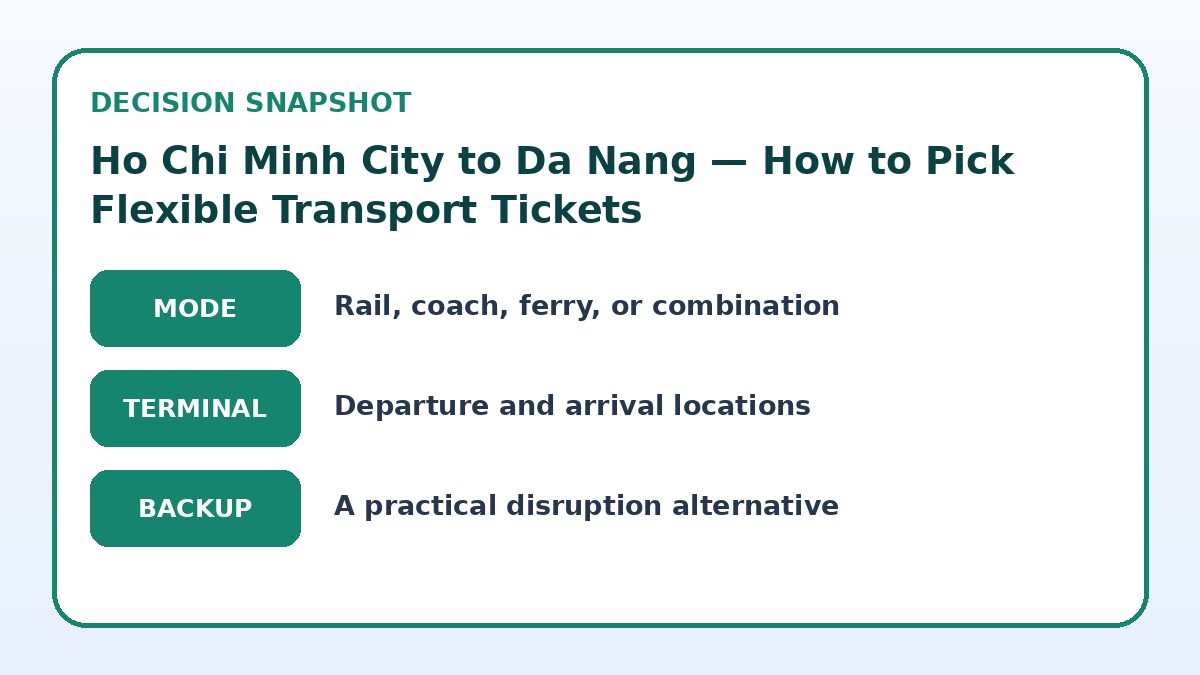
Choose the end-to-end journey plan
| Journey approach | Best for | Friction to check |
|---|---|---|
| Train for both directions | Couples who prioritize central terminals, luggage convenience, and easier same-day changes | Slower travel time and fewer daily departure options than flights |
| Flight one way, train or coach return | Couples balancing time savings with flexibility and different arrival/departure points | Requires managing two sets of ticket rules and more transfer planning |
| Coach for both directions | Couples on a budget who want reasonable flexibility and direct city-center stops | Potentially longer travel and variable luggage policies depending on operator |
| Mix multiple short legs (coach to airport, flight, local transport) | Couples needing bespoke door-to-door routing or specific timing windows | Higher disruption risk and more complicated luggage and connection management |
Check live intercity options
Look beyond the ride itself and compare terminals, transfers, luggage, and arrival fit.
Luggage, transfers and friction for two
Couples traveling together usually have more baggage and shared items; that affects which ticket flexibility matters most. Trains often allow bulkier luggage with fewer strict size checks, and boarding with two suitcases plus a backpack is usually straightforward. Coaches can vary — some have large underfloor bays while others limit carry-on size — so verify allowances before booking. Flights often have the strictest limits and fees, which can make date changes more expensive if baggage rules differ across fares. Always check the provider’s final booking page for exact baggage rules, acceptable dimensions, and transfer baggage handling policies.
Also factor in how transfers between terminals or transport modes will work with your luggage. A train station with lifts and taxis outside is lower friction than an airport that requires long shuttle connections and security re-entry. If you plan multi-leg travel (for example, coach to an airport then flight), time more padding between connections and confirm whether you must re-check luggage. For couples who prefer to keep things simple, pick the option that minimizes handling: fewer transfers, clearer baggage rules, and easy access to ground transport at arrival.
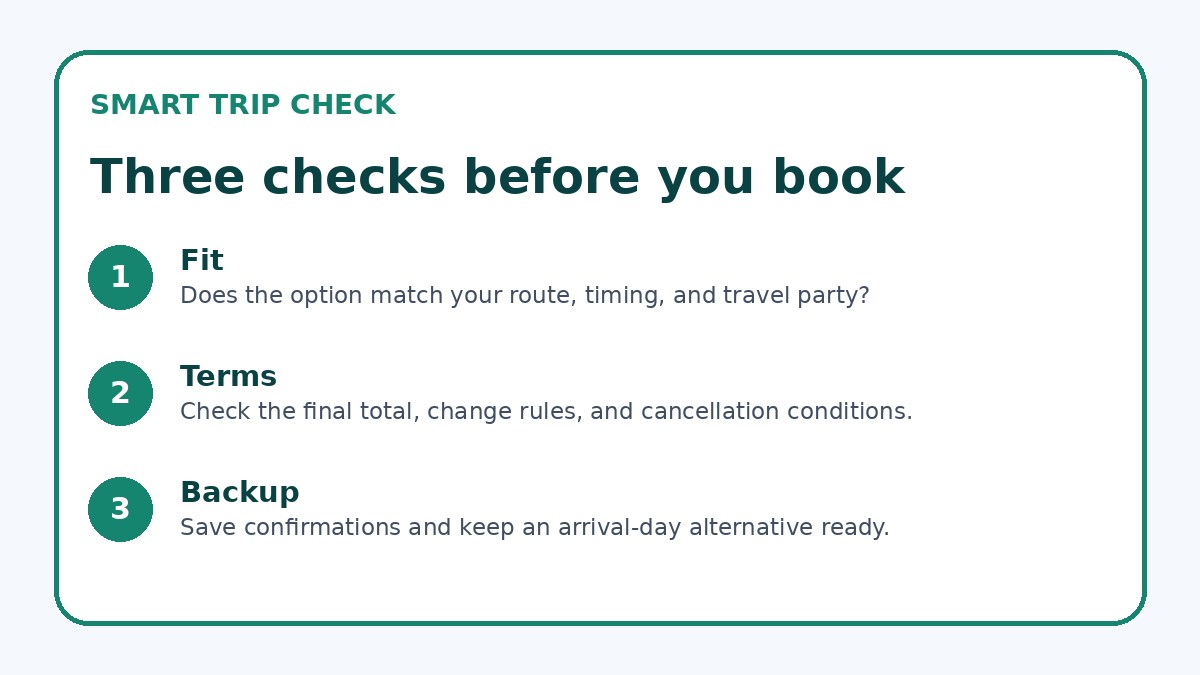
Timing flexibility and change/cancellation tradeoffs
When planning as a couple, ask how each mode treats changes. Trains and many full-service coaches often have flexible change windows or open-date tickets, but policies differ by operator and fare class; always read the booking terms page for the ticket you’re about to buy. Flights can vary widely: some airlines sell refundable or flexible fares while low-cost carriers attach high fees for changes or refunds. For true flexibility, consider booking a fare class that explicitly allows date or name changes without heavy penalties, and keep the provider’s change policy screenshot or confirmation handy in your travel folder.
Beyond official rules, timing flexibility includes frequency of service. Frequent departures let you adapt the same day if plans shift: a route with hourly trains or buses is inherently more forgiving than a single daily departure. For couples weighing spontaneity versus fixed schedules, check the timetable density and whether you can pay a modest fee to move to a different service on short notice. When comparing options, estimate the combined cost of a fare change, additional transfers, and any overnight accommodation that might be needed if you must rebook at short notice.
Compare the practical alternatives
Use the final page to confirm what is actually offered on your dates and save a workable fallback.
Intercity travel checklist
- Map exact departure and arrival terminals and estimate taxi/rideshare time and cost to your chosen neighborhoods.
- Read the specific change and cancellation rules on the provider’s final booking page before purchasing tickets.
- Confirm baggage allowances and whether luggage must be rechecked between legs when mixing modes.
- Compare frequency of departures to assess same-day rescheduling options if plans shift.
- Set aside buffer time for transfers and build a backup plan with a later alternative service.
- Save booking references, provider contacts, and screenshots of fare rules in a shared folder accessible to both travelers.
Practical disruption backup and contingency planning
No matter what you book, have a simple disruption backup that covers both of you: an alternative departure, standby plan, or a nearby overnight option. For couples, the easiest backup is a later same-day service on the same corridor or a flexible return/reschedule policy so one changed leg doesn’t ruin the whole trip. When using mixed modes, ensure each leg’s backup aligns — for example, a missed train that causes you to arrive too late for a booked flight will be costlier than a missed coach that can be caught later the same day. Sketch a two-step contingency: primary plan plus a realistic fall-back showing where you’ll sleep and how you’ll move if things go wrong.
Also prepare practical items to reduce disruption harm: carry a compact travel umbrella, photocopies or digital scans of tickets and ID, and a shared expense app for splitting taxi or rebooking fees quickly. If your plan relies on tight transfers, add generous buffer time and confirm transfer options in advance (official shuttle, rideshare, or pre-booked taxi). Finally, keep the contact details and booking reference for every leg handy; when you need to change or request assistance, having quick access to those details speeds the process and minimizes stress for both travelers.
Rail & Intercity Transport questions travelers ask
Which mode offers the most flexibility if our plans might change?
Generally, trains and some full-service coaches tend to be more flexible than low-cost flights because they often allow date changes or open tickets on certain fares. However, flexibility is defined by the individual fare class and operator, so check the change and refund policy on the provider’s booking page for the specific ticket you plan to buy. For maximum adaptability, choose a fare class that explicitly permits changes with reasonable fees and confirm how many days before departure any changes must be made.
Can we mix transport modes to balance speed and flexibility?
Yes—many couples fly one way to save time and take a train or coach the other way to arrive directly in town and retain flexibility. When mixing modes, plan the transfers carefully: verify luggage handover rules, allow generous connection buffers, and ensure the backup plan for each leg is realistic. Because different providers have separate policies, you may be liable for costs on each ticket, so keep receipts and give priority to options with clear rebooking procedures.
What should couples verify on the final booking page before paying?
On the provider’s final booking page, confirm the exact terminal names and addresses, the fare class and its change/refund rules, baggage size and weight allowances, any transfer or check-in requirements, and the provider’s contact details for changes. Also look for restrictions on same-day rebooking, deadlines for free changes, and whether tickets are date-locked. If anything is unclear, contact the operator directly before completing payment to avoid unexpected fees later.
Final decision note
Choosing the right Ho Chi Minh City to Da Nang transport for a couple comes down to balancing terminal convenience, luggage handling, timing freedom and a realistic disruption backup. Trains and coaches often win on central terminals and simpler luggage rules; flights win on speed but require careful scrutiny of fare flexibility. Mixed itineraries can give the best of both worlds but add complexity—so map door-to-door times, check exact fare rules on the booking page, and build a clear contingency. With those steps you’ll reduce stress and choose the option that keeps both partners relaxed and ready to enjoy Da Nang.
Continue planning
Check current options and final conditions
Use the provider page to confirm live availability, the final total, cancellation terms, and every condition that matters to your trip.
This evergreen planning guide was created with AI-assisted drafting and a structured quality review. It does not display live prices, schedules, availability, visa guidance, or provider rankings. Verify current details before booking. Some links are affiliate links; we may earn a commission at no additional cost to you.