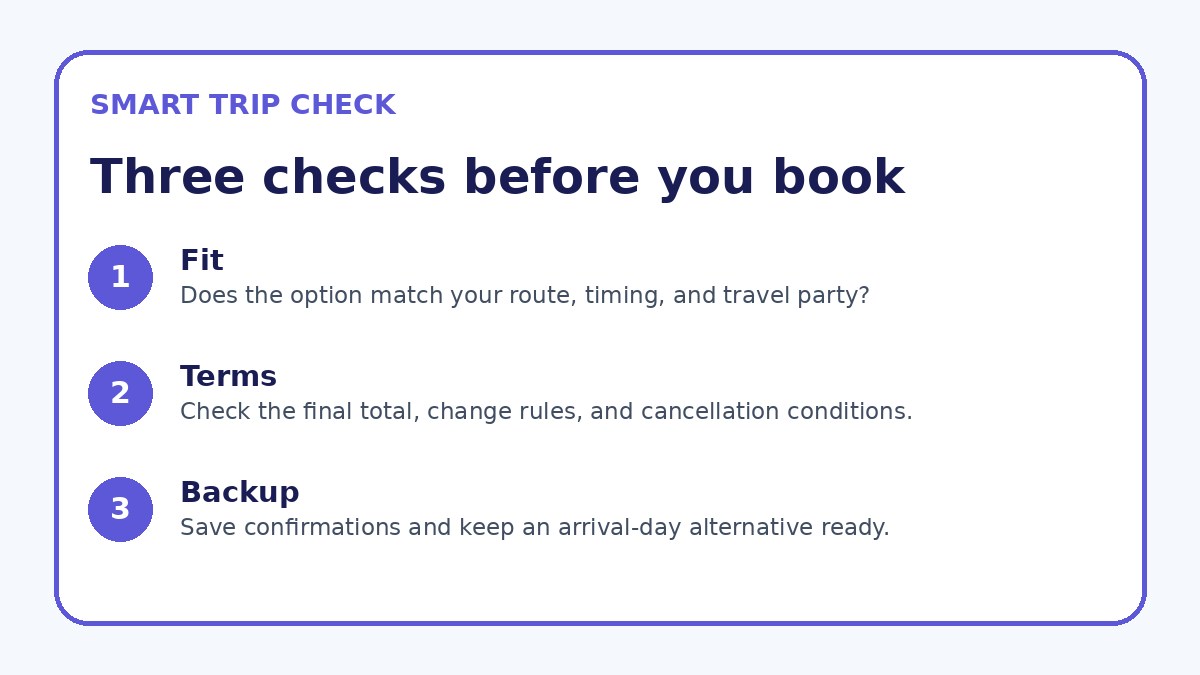
Practical answer first: for most couples the priority is a simple routing with at least 90–120 minutes for a connection, checked baggage allowance that matches both your needs, and fare conditions allowing flexible changes. Choose a direct flight where possible for the least hassle; if a connection is required, prefer a single-ticket itinerary that protects baggage and rebooking during delays. Before you search, pick exact travel dates, full traveller names as on passports, seat preferences and whether you want to check bags or travel carry-on only. That preparatory work will keep booking comparisons apples-to-apples and reveal which tradeoffs you’re willing to accept—lower fare versus longer layover, or more flexible change rules versus stricter economy fares. As you compare live options, verify each carrier’s connection policy, baggage rules, and change/cancellation conditions on the airline or aggregator booking page (Trip.com is a helpful place to compare availability).
See live routes for your exact travel day
Compare direct and connecting choices with the same baggage and traveler details.
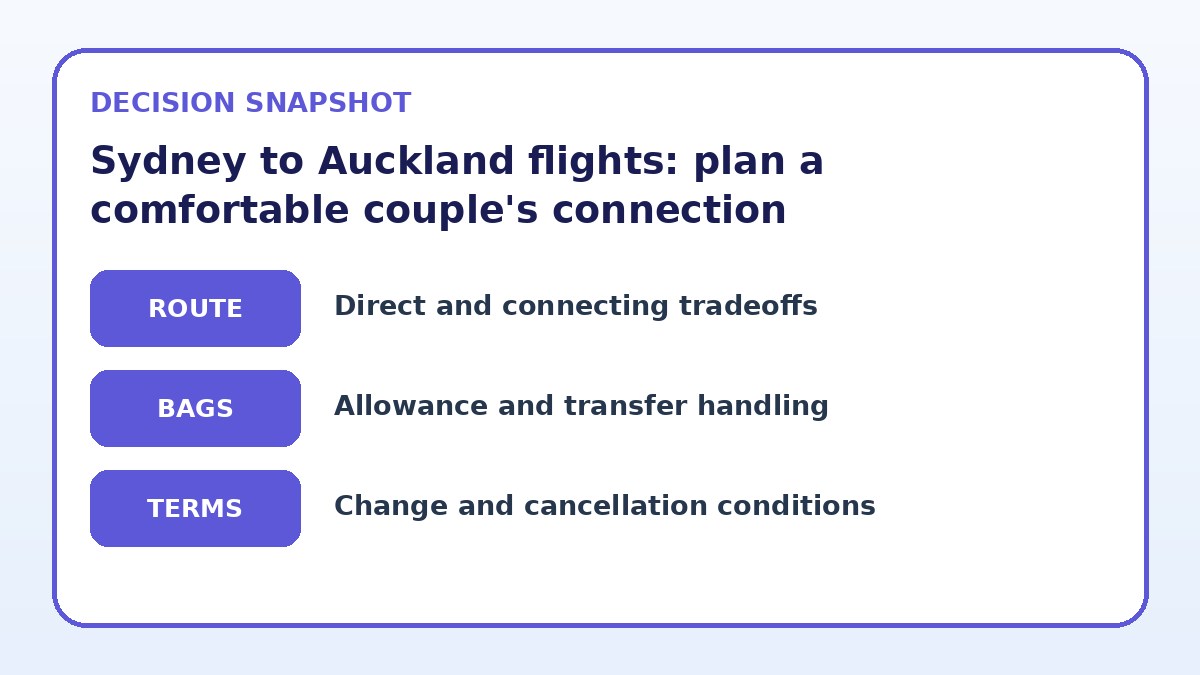
Routing: direct versus one-stop and what to weigh
Direct flights are the clearest comfort choice for couples: fewer airport transfers, lower risk of lost bags, and less coordination between partners during transit. If a direct option exists on your dates, check departure and arrival times versus your schedule, the aircraft type for seating comfort, and whether premium seating or extra legroom is available as upgrade options. Direct routes minimize the number of moving parts in your plan, which is valuable when you want to relax together or arrive without the fatigue of multiple airport hops.
A one-stop routing can reduce fare or open up better departure times but brings tradeoffs: you’ll need to factor in the connecting airport layout, minimum connection time, and whether both legs are operated by the same ticketing carrier. Couples should compare total door-to-door journey time, not just flight time, and add a buffer for immigration or repeated security checks if a connection requires it. If you choose a connecting itinerary, prefer connections that leave at least 90–120 minutes on domestic-to-international or international-to-international transfers, and verify if the airlines transfer checked bags automatically.
Baggage and connection risk: protect your luggage and timeline
Checked baggage choices matter for both comfort and risk. If you purchase two separate tickets, remember you may need to collect and recheck bags between flights, which increases the chance of missed connections and extra stress. Couples who prefer to travel lightly can aim for carry-on only to avoid that step, but verify size and weight allowances for each carrier and fare class—these can differ and affect whether both of you comfortably fit essentials in cabin luggage.
On a single-ticket itinerary, airlines usually transfer bags and rebook passengers in irregular operations, which reduces connection risk. However, baggage allowances and fees can change by fare class; before booking, check that the combined fare classes on both legs include the baggage allowance you need. If traveling with bulky items like strollers, surfboards or sports gear, confirm special handling policies and whether an extra connection adds complexity. Always list full passenger details and confirm any special baggage needs on the booking page and at check-in.
Compare flight-selection strategies
| Flight strategy | Best for | Risk to check |
|---|---|---|
| Direct nonstop flight | Couples prioritizing lowest connection risk and easiest door-to-door travel | Often higher fares and fewer departure time choices compared with connecting options |
| Single-ticket one-stop connection | Couples balancing lower fares with some protection for baggage and rebooking | Longer total travel time and more complexity if the connection is tight |
| Separate tickets on low-cost carriers | Couples focused solely on lowest headline fare and willing to manage transfers themselves | Higher risk of having to recheck bags and no automatic rebooking if a leg is delayed |
| Higher-fare flexible tickets (refundable/changeable) | Couples who need date flexibility or want peace of mind against last-minute changes | Higher upfront cost that may be unnecessary if travel plans are firm |
Recheck the complete itinerary
Confirm airports, connection handling, baggage, and change conditions before deciding.
Schedule fit and in-flight comfort priorities for couples
Think beyond departure and arrival times: consider the time you will commute to the airport, peak traffic, and how jet lag might affect your first day in Auckland. For couples, an evening departure that lets you sleep on the plane and arrive in the morning might be preferable, or you may prefer daytime travel to avoid overnight disruption. Check aircraft seat maps and whether a fare includes seat selection so you can book adjacent seats; sitting together is a primary comfort factor that sometimes justifies a modest fare premium.
In-flight comfort also includes cabin class, seat pitch, and amenity availability. If the flight length and your budget make economy long-haul uncomfortable, compare premium-economy or upgrade options on the carrier’s final booking page. Consider meal service timing and special-meal requests, as coordinated meal times and the ability to request the same type of meal can improve the shared experience. If you value privacy and space, look for configurations with fewer middle seats or bulkhead rows suitable for couples.
Flight details to verify
- Confirm exact outbound and return dates, full traveller names as on passports, and any passport numbers before price-checking flights.
- Decide whether you will check baggage or travel carry-on only, and compare the baggage allowance for each fare class on every leg.
- Check seat maps and reserve adjacent seats for both travellers, or include seat selection with the fare if required.
- If booking connecting flights, ensure the itinerary is single-ticket or allows automatic bag transfer; note minimum connection time and airport transfer procedures.
- Read the fare rules on the airline’s booking page: change fees, refund conditions, and how oversold or delay situations are handled.
- Compare total door-to-door travel time and airport commute logistics, not just flight time, and add at least 60–90 minutes buffer for unexpected delays.
Fare conditions and flexibility: read the fine print before booking
Fare rules often determine how stress-free your trip will be if plans change. Lower-priced economy fares may have strict change or cancellation penalties, while more flexible fares cost more but provide peace of mind for couples whose dates could shift. Before confirming any booking, check what section of the airline website details change fees, free rebooking windows, and whether a voucher is offered instead of a refund. If you care about rebooking protection, choose fares with clear, reasonable change policies even if they raise the upfront cost.
Also confirm whether your fare includes seat selection, priority boarding, and lounge access, and weigh those against the extra cost. If you’re booking a multi-operator itinerary, read whether each segment’s fare class influences your overall protection; some budget carriers on a connecting itinerary may not accept responsibility for missed connections. Finally, verify refund and disruption policies on the carrier’s live booking page or on Trip.com as you compare options, and make sure your chosen fare’s name-match and document requirements align with your passports.
Flight Guide questions travelers ask
Should a couple always choose a direct Sydney to Auckland flight if available?
Not always. Direct flights reduce connection risk and simplify logistics, which many couples value for comfort. However, a one-stop itinerary can offer better departure times or a lower fare that fits your budget. Decide based on how much you value fewer airport transitions versus saving money. If you prefer stress-free travel and easy baggage handling, direct is usually the better choice. If budget or a specific schedule matters, compare single-ticket one-stop options that include baggage transfer and protected connections.
How much connection time should we allow when booking a one-stop trip between Sydney and Auckland?
Aim to allow at least 90–120 minutes for international-to-international connections, and more if the transfer requires clearing immigration, collecting and rechecking bags, or moving between terminals. Couples should factor in time to move together through the airport, queue for security, and handle any unexpected delays. Longer layovers increase comfort—time to relax, use lounges, or dine—whereas tight connections increase stress and the chance of missing the onward flight.
What fare conditions are most important for couples to check before finalizing a booking?
Key fare conditions include change and cancellation fees, baggage inclusion, seat selection rules, and whether the fare is refundable or eligible for credit. Also check whether the ticket is single-ticket (protected connection) or separate tickets, and if there are any name-change restrictions. For peace of mind, consider fares that allow free or low-cost date changes if your plans might shift. Always verify these specifics on the airline’s final booking page before payment.
Final decision note
For couples planning Sydney to Auckland travel, start by deciding which comforts are non-negotiable: a direct flight, guaranteed adjacent seats, or flexible change rules. Prepare exact travel dates and full traveller details, confirm baggage needs, then compare single-ticket and separate-ticket options side-by-side. Prioritise itineraries that minimize connection risk if you want a relaxed trip, or select a one-stop single-ticket path when the schedule and fare align with your comfort threshold. Read the fare conditions on the carrier’s booking page and confirm baggage transfer rules; use Trip.com or the airline sites to compare live availability, but verify all policies before you pay. Thoughtful prep and clear priorities make a long-haul connection far more comfortable for two.
Continue planning
Check current options and final conditions
Use the provider page to confirm live availability, the final total, cancellation terms, and every condition that matters to your trip.
This evergreen planning guide was created with AI-assisted drafting and a structured quality review. It does not display live prices, schedules, availability, visa guidance, or provider rankings. Verify current details before booking. Some links are affiliate links; we may earn a commission at no additional cost to you.