Practical answer first: for most families visiting central Osaka who plan only day trips to nearby attractions (Universal Studios, Osaka Aquarium, Dotonbori), driving adds friction and parking costs without clear advantage. But if your group includes small children, grandparents, or you want to base in more rural Kansai areas (Minoh, Koya, or coastal Wakayama) the flexibility, luggage space, and door-to-door convenience of an Osaka car rental can be worth it. This guide helps you decide quickly, then walks through route value, insurance language to check, pickup and return friction, and a clear non-driving fallback. Read the “what to verify” checklist before booking and use the comparison rows to match one mobility approach to your family’s priorities—comfort, cost, convenience, or low-stress public transit.
Deciding whether to drive: route value and family needs
Start by mapping each day’s major stops and estimating door-to-door time rather than relying on straight-line distance. Road trips shine when your family wants to visit dispersed destinations—mountain temples, seaside towns, or onsen—and when public transit would require multiple transfers, long walks, or late-night returns. Consider who’s traveling: toddlers and elderly relatives benefit from the control of a private car, with easier naps and immediate bathroom breaks. Factor luggage and equipment—strollers, car seats, coolers—and the number of drivers available to share long drives.
Balance that against downsides. Urban Osaka has dense traffic at peak hours and limited, often expensive, parking near popular sights. Narrow streets in older districts and toll-heavy expressways can add stress and cost. Also consider public-transit conveniences: trains and subways in Kansai are frequent and relieve you from navigation and parking hassles. If most of your sightseeing clusters around central neighborhoods or along well-served rail lines, driving may be a net burden rather than a benefit.
Decide whether driving earns its place
| Mobility strategy | Best for | Cost or friction to check |
|---|---|---|
| Rent a car for the whole stay | Families wanting complete flexibility and multiple rural day trips | Higher parking, tolls, and navigation stress in urban Osaka |
| Use public transit only | Families staying in central Osaka with rail-friendly itineraries | Less privacy and luggage/hardware handling for strollers and seniors |
| Hybrid: transit in-city, car for excursions | Groups wanting lower urban friction but door-to-door rural access | Extra planning to coordinate pickups and possible one-way fees |
| Organized private transfers or day tours | Families who prefer no driving and guided logistics for specific outings | Less spontaneous flexibility and potentially higher per-trip cost |
Check live rental choices only after the route test
Use the exact driver, dates, pickup point, and return plan to compare current conditions.
Insurance wording and what to verify on the booking page
Insurance language varies and can hide important exclusions. On the provider’s final booking page look for exact policy names and the specific incidents covered: collision damage waiver (CDW), loss/damage waiver (LDW), third-party liability limits, and whether roadside assistance is included. Check for stated deductibles and whether windshield, tire, or undercarriage damage is excluded. If you’ll cross prefectural borders—say from Osaka into Wakayama or Nara—confirm whether coverage still applies and whether there’s any mileage or geographic restriction.
Also verify permitted drivers (age limits, additional driver fees), child-seat policies and fees if you need them, and fuel rules on return. If any waiver seems ambiguous, screenshot or save the booking page text showing the exact terms and ask customer service to confirm in writing. When comparing suppliers, read the fine print rather than relying on headline coverage names. If easier, you can source supplemental travel insurance that explicitly covers rental vehicle liability—check wording carefully to avoid overlap or gaps.
Compare the full rental conditions
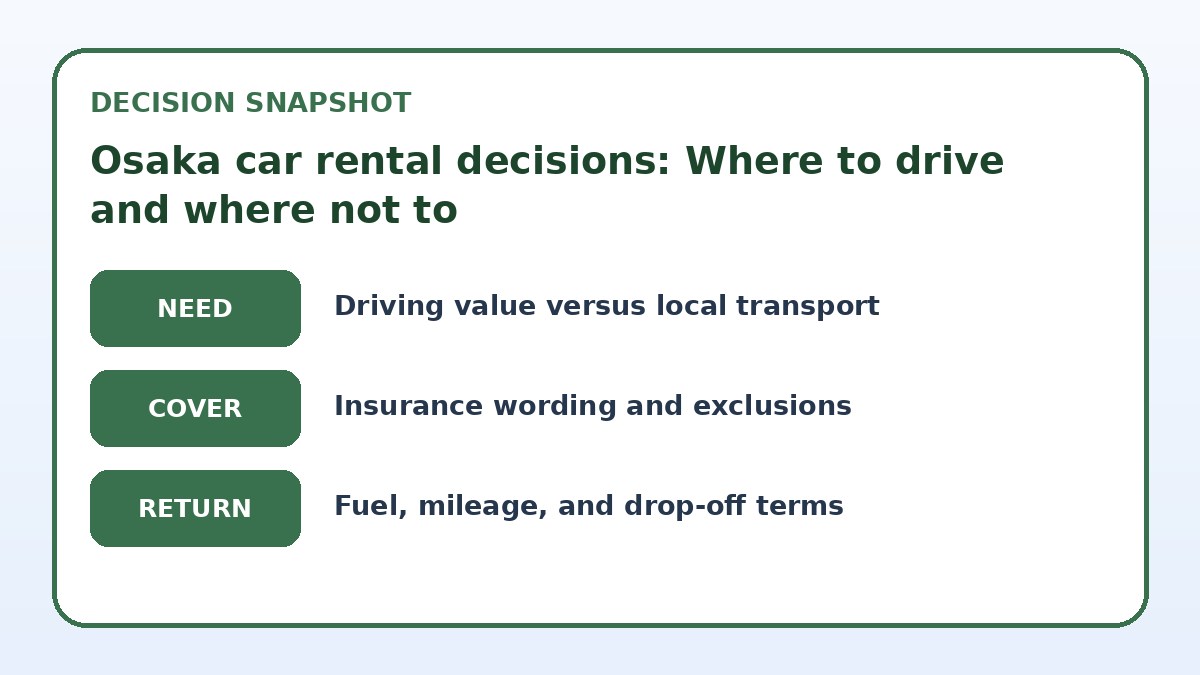
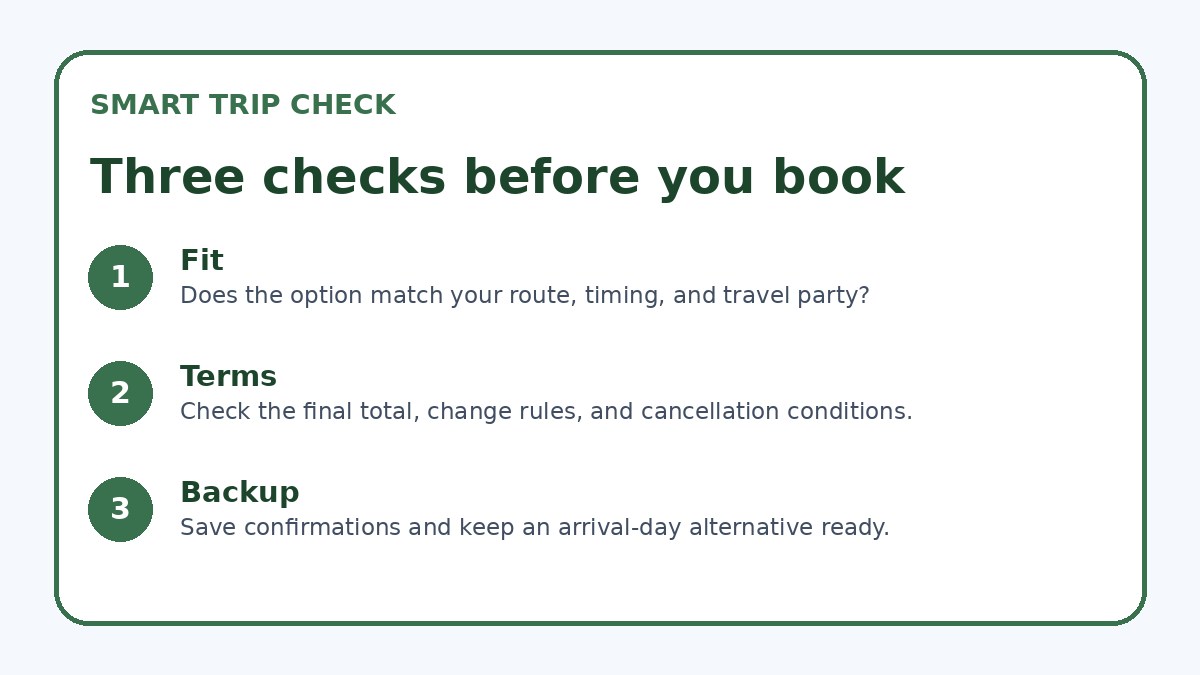
Confirm insurance wording, exclusions, deposit, fuel, mileage, and return terms on the final page.
Pickup, return friction and practical airport vs city options
Pickup and return logistics often determine whether a rental feels smooth or stressful. Airport locations may offer longer hours and larger fleets but can mean long shuttle rides and traffic to central Osaka. City-center desks save drive time but can be cramped and closed earlier, making evening returns tricky. Look at opening hours for your pickup and return dates, whether after-hours return is permitted and how it is documented, and whether the supplier charges for one-way drops between prefectures or to different airports.
Also assess parking and toll realities: does your accommodation include parking, and is it large enough for a family-sized vehicle? Inquire about toll cards or electronic payment devices (ETC) that speed highway travel and request instructions for using them. If you’ll arrive by plane, check whether you need to collect the vehicle at Kansai International Airport or Itami (Osaka) and whether the supplier’s counter has bilingual staff for a quicker handover. Plan a buffer between flight arrival and pickup to absorb delays without rushing.
Car rental terms to verify
- Map your daily stops and flag which require rural driving or long transfers to decide if a car adds real value.
- Confirm exact insurance terms on the final booking page: CDW/LDW names, deductibles, third-party liability limits, and geographic coverage.
- Check pickup and return opening hours, after-hours return procedures, and whether staff provide an English handover.
- Verify parking availability and size at each overnight accommodation and estimate likely toll costs or ETC card needs.
- Reserve child seats and additional drivers in advance and record the supplier’s written confirmation of these items.
- Make refundable or flexible transit/reservation alternatives (train passes, hotels near stations) before committing to the rental.
A practical non-driving fallback and switching mid-trip
If driving looks marginal, build a non-driving fallback into your booking plan before you finalize reservations. Identify hotels near major train or subway stations, note direct or single-transfer train options to your intended day-trip destinations, and prebook flexible tickets or passes that allow date changes. Consider day-trip tours that include hotel pickup or private transport for specific outings that would be cumbersome by public transit. Keep a short list of refundable rental options so you can cancel without penalty if you decide not to drive.
Switching mid-trip is often simpler than you think: reserve a car only for the days you need it, or split the itinerary—public transit for urban days, rental for excursions outside the rail network. When planning this hybrid approach, check that drivers are comfortable with short-term rentals and that child seats can be swapped or briefly installed. Use services like Trip.com to compare current availability and conditions, but always verify the final terms on the supplier’s booking page before confirming.
Car Rental & Road Trip questions travelers ask
Is driving in Osaka difficult for foreign families?
Driving difficulty depends on your route and experience. Central Osaka can have heavy traffic, narrow streets, and busy intersections; navigation and parking are the main challenges. If your plan keeps you on expressways between cities with clear signage, and one family member is comfortable driving on the left and using GPS, driving can be straightforward. For short urban-only stays with many subway-accessible sights, public transit removes a lot of stress. Regardless, verify the rental company’s age and license requirements and whether an International Driving Permit or local translation is required on the supplier’s booking page.
How do I handle child seats and car-seat laws when renting?
Child-seat rules vary by jurisdiction and rental supplier policies. If you need child seats, reserve them at booking and get written confirmation of the seat type and any extra fee. On the final booking page, check whether seats meet local safety standards and whether the rental company installs them for you. If you prefer your own seats, confirm the car’s compatibility and whether the supplier accepts customer-supplied equipment. Always follow manufacturer instructions for installation and secure children according to their size and age, and verify legal requirements on the supplier’s page.
What should I verify about tolls, parking, and one-way fees?
On the booking page and the rental agreement, look for explicit statements about expressway toll payment methods (ETC card availability and charges), expected parking limitations, and whether one-way rentals between prefectures or to airports incur extra fees. Some suppliers include an electronic toll device and bill tolls later; others expect you to pay at booths. Also check whether there are restrictions on overnight parking in certain districts. If the wording is unclear, ask the provider to clarify how tolls and one-way fees are calculated and how you will be billed.
Final decision note
For families, the right Osaka car rental decision hinges on route spread and comfort needs. Drive if your plan includes multiple dispersed day trips, rural temples, or coastlines where trains are slow or absent; prioritize insurance clarity, driver allowances, and pickup/return hours. Avoid a car if you will stay mostly in central Osaka—trains and subways save time and avoid parking headaches. A hybrid approach—use transit inside the city and rent a car for specific days—often delivers the best balance. Before you click confirm, verify the supplier’s exact insurance wording, child-seat policies, and any one-way or toll procedures on the final booking page.
Continue planning
Check current options and final conditions
Use the provider page to confirm live availability, the final total, cancellation terms, and every condition that matters to your trip.
This evergreen planning guide was created with AI-assisted drafting and a structured quality review. It does not display live prices, schedules, availability, visa guidance, or provider rankings. Verify current details before booking. Some links are affiliate links; we may earn a commission at no additional cost to you.