For couples deciding how to travel from Dubai to Abu Dhabi, the practical starting point is to choose modes by how well they fit your door-to-door plan: door pickup and drop-off, luggage needs, and how flexible your schedule must be. On this route you’ll typically weigh private car or taxi, shared coach, or a mixed approach that pairs a shorter driver segment with public coach links. The best choice depends less on the nominal travel time and more on terminal fit and transfer friction — how far you must walk, whether a transfer requires a second booking, and how easy it is to change plans. Below you’ll find a clear decision checklist, four comparison approaches that couples commonly use, and step-by-step items to verify before you book. Where specific operator details matter (schedules, vehicle types, or baggage rules), check the provider’s booking page or a comparison site such as Trip.com for current conditions.

How to pick between car, coach, or a combined plan
Start by mapping the exact door-to-door legs: your Dubai accommodation to the chosen departure point, the intercity leg, and the arrival transfer to your Abu Dhabi stay. Couples often prefer a private car when they want a single, seamless trip from hotel door to hotel door and can accept the higher cost and limited public oversight. Shared coach services can work well if both travelers are mobile and luggage is modest; coaches typically have fixed departure points that might require a short taxi from your Dubai address.
A combined plan — for example, a short taxi to a major coach terminal followed by an intercity coach and then a short taxi at the other end — can reduce cost while keeping transfer complexity low. When creating a combined itinerary, time each transfer conservatively, and avoid tight connections that require moving across large terminals. Couples should weigh whether the small savings are worth the effort of transferring, especially if either traveler prefers minimal walking or carries bulky bags.
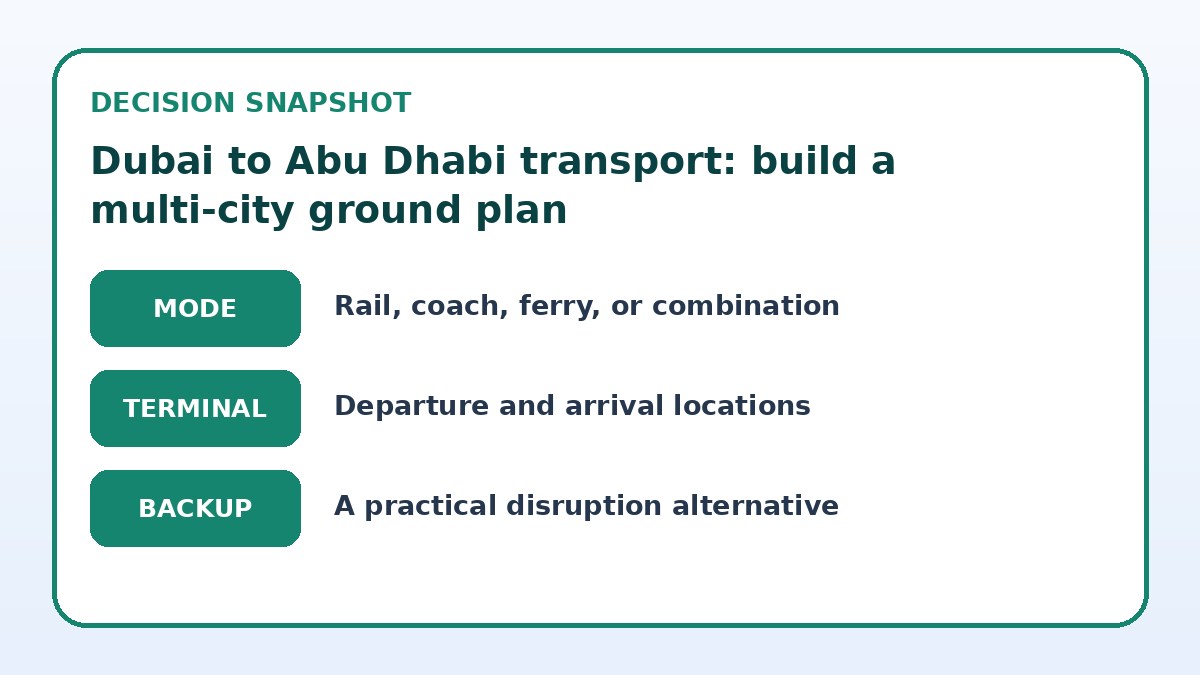
Choose the end-to-end journey plan
| Journey approach | Best for | Friction to check |
|---|---|---|
| Private door-to-door car hire or taxi | Couples prioritizing convenience, privacy, and minimal transfers. | Higher cost and dependence on a single provider for reliability. |
| Scheduled intercity coach with short local transfers | Couples wanting lower cost with reasonable predictability and no navigation effort. | Fixed departure times and potential walking or short taxi legs at each end. |
| Mixed plan: short taxi to coach or park-and-ride | Couples balancing cost and seamless legs by reducing long private-driving distance. | Extra coordination and slightly higher transfer friction than full private rides. |
| Flexible rideshare or on-demand car for select legs | Couples seeking real-time flexibility without pre-booking an entire route. | Variable pricing and potential wait times during peak demand or late hours. |
Check live intercity options
Look beyond the ride itself and compare terminals, transfers, luggage, and arrival fit.
Terminal fit, luggage friction, and transfer practicalities
Terminal fit matters: a departure from a dedicated bus terminal or coach park implies different walking distances and signage clarity compared with a hotel or airport pickup. Verify where the vehicle actually stops — some services use curbside hotel drop-offs while others require you to wait inside a terminal. For couples, this affects not only comfort but also timing: one partner handling luggage will have to manage stairs, lifts, or luggage trolleys.
Luggage friction is more than weight limits; it’s how baggage is loaded and retrieved, whether you have to tag bags, and if you can keep important items with you. If either traveler needs mobility assistance or has oversized suitcases, prioritize options that advertise onboard storage and minimal handling. Before booking, check the provider’s baggage rules and the practicalities of getting from the vehicle to your final door: evaluate distance, escalators, and whether the last leg requires another vehicle.
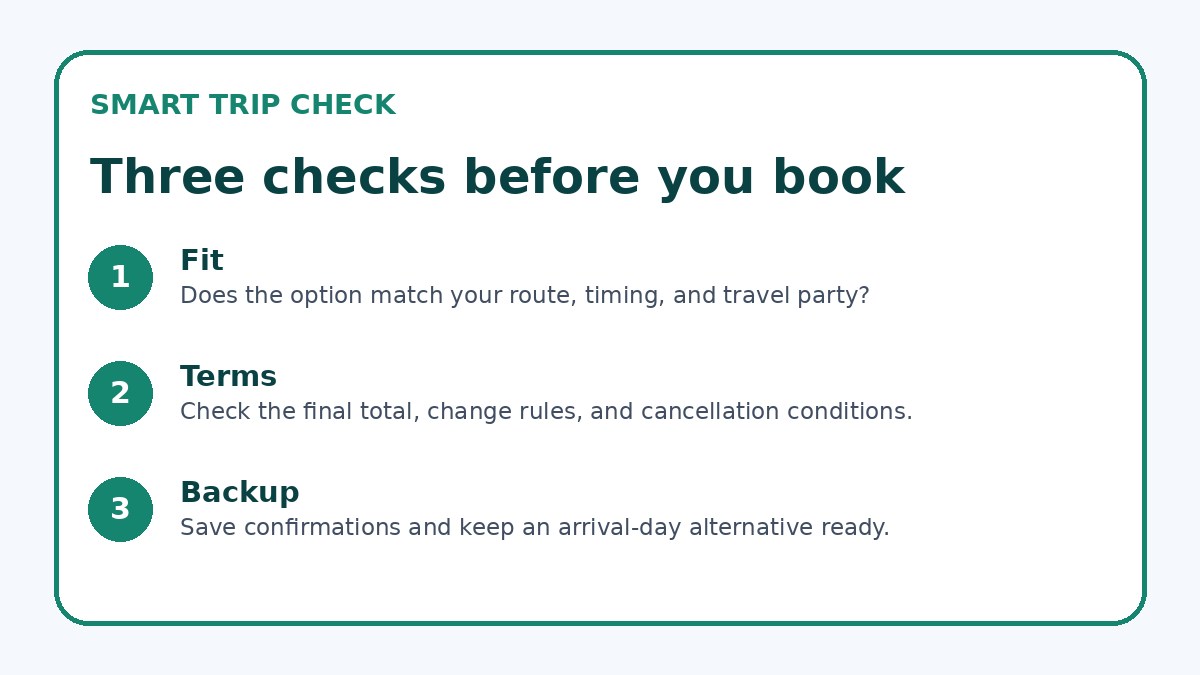
Timing flexibility and building buffer time
Couples should honestly assess how rigid their schedule is. If you’re on a strict schedule — arriving for a reserved activity or flight out of Abu Dhabi — choose options with more frequent departures or a private transfer that reduces variability. If your plan is flexible, you can accept scheduled coaches with limited daily departures and use the time for a relaxed breakfast or a short stop en route. Remember that midweek and evening services may differ from daytime frequency, so build buffers around any single departure.
When planning multi-city travel, add explicit buffer minutes for each transfer: time to leave your room, check out, reach the pickup point, and handle luggage. Consider traffic variability during peak hours and local events that might increase travel time. For couples, include small personal buffers for pit stops or to handle unexpected delays together, and plan check-ins with your accommodation so they know your arrival window if late check-in is needed.
Compare the practical alternatives
Use the final page to confirm what is actually offered on your dates and save a workable fallback.
Intercity travel checklist
- Map door-to-door legs and estimate conservative transfer times between each segment.
- Verify exact pickup and drop-off points and whether they are curbside, terminal-based, or hotel entrances.
- Check the provider’s baggage policy and confirm how luggage is handled on arrival and departure.
- Identify and save a Plan B taxi or rideshare option, including contact details or app credentials.
- Confirm mobility or accessibility features if either traveler needs assistance moving between legs.
- Keep screenshots of bookings, directions, and a local contact number in case of network loss.
A disruption backup and simple contingency steps
Always create a straightforward Plan B you can activate without added stress. For example, identify a reliable local taxi or rideshare app that operates between the two cities, note a central pickup location, and have the contact or app ready. Couples should agree on the trigger that switches plans — missed departure, excessive delay, or uncomfortable conditions — so the decision to change course is quick and collaborative.
Also plan financial and timing contingencies: keep a small buffer in your schedule for extra cost if you must upgrade to a private transfer, and save screenshots of booking confirmations and directions in case of network issues. If either traveler has limited mobility or medical needs, consult both the primary provider’s accessibility information and your secondary transport option before departure. Reconfirm any provider-specific baggage and pickup rules on the operator’s booking page before finalizing plans.
Rail & Intercity Transport questions travelers ask
Should couples choose a private car or a coach for the Dubai to Abu Dhabi route?
Choosing between a private car and coach depends on your priorities. A private car minimizes transfers and provides door-to-door comfort, which is helpful if either traveler carries lots of luggage or prefers privacy. A coach can be economical and predictable if you’re near a departure terminal and both travelers can manage short walks and shared spaces. Evaluate how important transfer minimization, luggage handling, and flexible departure times are to you; then compare the practical pickup and drop-off locations rather than assuming one mode is universally better.
How much buffer time should we build between arrival and onward plans in Abu Dhabi?
Build a realistic buffer that covers disembarking, luggage retrieval, and the walk or local transfer to your final address. For many couples a 45–90 minute buffer is practical when using scheduled intercity services, while private transfers can work with tighter windows if you trust the provider. If you have an important timed activity or flight after arrival, increase the buffer and choose more flexible or frequent services. Always check provider-specific pickup locations so you don’t spend your buffer time locating the vehicle.
What key details must we verify on a provider’s booking page before purchase?
On the provider’s booking page, confirm exact pickup and drop-off addresses, baggage allowances, boarding procedures, and accessibility information. Look for the operator’s change and cancellation terms, how they handle delays, and whether transfers require separate tickets. For shared services, check boarding time recommendations and whether seats are assigned. If the provider partners with local taxis for last-mile service, verify how that handoff works. Use those confirmed details to finalize your door-to-door schedule and contingency plan.
Final decision note
For couples traveling between Dubai and Abu Dhabi, prioritize the door-to-door experience: choose the mode that minimizes transfers, meets your luggage and mobility needs, and fits your timing flexibility. A private car reduces friction at the cost of higher spend, while coaches and mixed plans save money but require clearer transfer planning. Always confirm pickup/drop-off points and baggage rules on the operator’s booking page, and keep a ready Plan B taxi or rideshare option. With straightforward mapping of each leg, conservative buffer times, and agreed disruption triggers, you’ll build a multi-city ground-transport plan that keeps the trip comfortable and lets you focus on enjoying time together.
Continue planning
Check current options and final conditions
Use the provider page to confirm live availability, the final total, cancellation terms, and every condition that matters to your trip.
This evergreen planning guide was created with AI-assisted drafting and a structured quality review. It does not display live prices, schedules, availability, visa guidance, or provider rankings. Verify current details before booking. Some links are affiliate links; we may earn a commission at no additional cost to you.