If you’re travelling from Kuala Lumpur to Singapore with extra luggage, the practical question is: which way gets your bags and you to the door you need with the fewest painful transfers? For many travellers the best day-of choice balances terminal fit, luggage-handling options, transfer complexity and timing flexibility. Rail and coach routes keep bags with you but may mean tight platform transfers; a private transfer or staged taxi/train combo reduces handling but costs more; and mixed itineraries can split the trip to avoid luggage fees or long station walks. This article gives a direct recommendation up front, then breaks down the tradeoffs, the timing considerations, and a disruption backup so you can pick the option that fits your tolerance for walking, lifts, and re-lugging bags between modes.
Choosing between rail, coach, private transfer, or mixed routes
Start by matching your luggage profile to the transport mode. Rail services often offer roomy carriages and the comfort of a fixed schedule, but stations can mean stairs, long platform walks, and crowded corridors when boarding or changing. Coach services usually have underfloor bays for suitcases and put most of the handling onto staff at pickup and drop-off, but coaches load and unload in dedicated areas that may still require a short walk from terminal to city transfer points. A private transfer or taxi keeps your bags in one vehicle and reduces physical handling, which is ideal for oversize, fragile, or many-piece luggage, though it can mean higher cost and possible delays at border formalities.
Mixed itineraries—such as a short private transfer to a rail terminal, or a coach for the long leg plus a taxi at the far end—let you trade price and comfort against door-to-door simplicity. When choosing, factor how many times you are willing to lift and move each bag, whether you can carry items up stairs or down to a loading bay, and whether you need guaranteed space for a stroller, bike box, or crate. For many extra-luggage travellers, a straightforward private taxi to a main coach terminal, then a coach that keeps cases below, can reduce station stairs and repeated handling while limiting the private-transfer distance and cost.
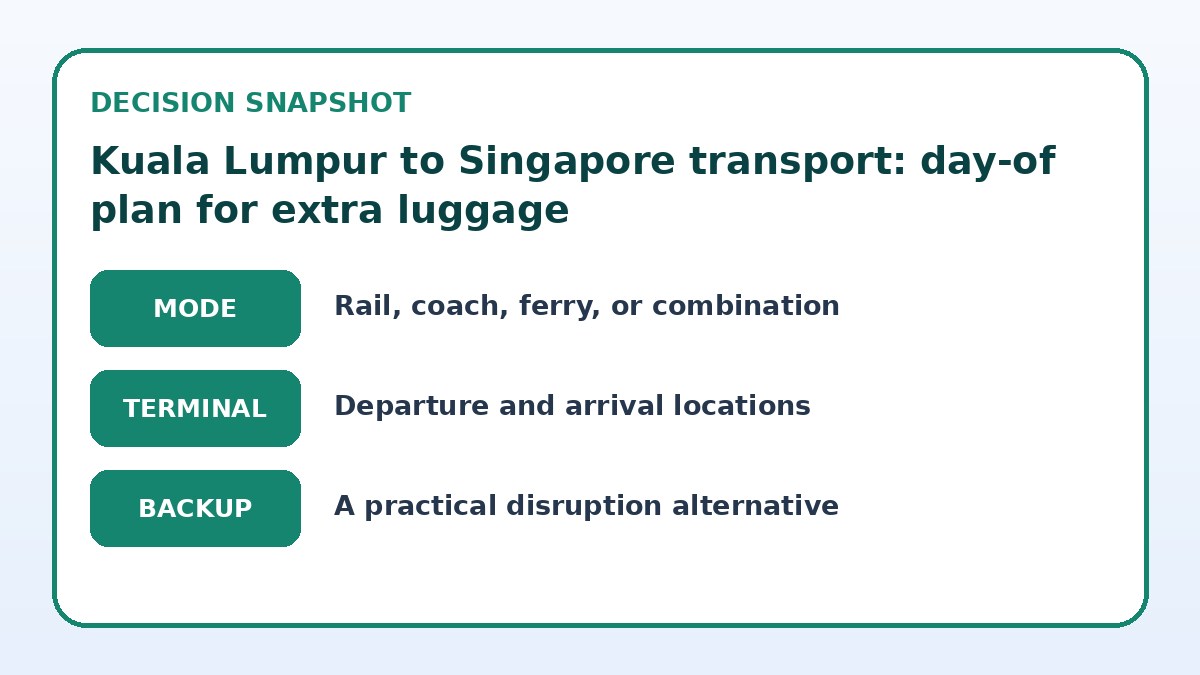
Choose the end-to-end journey plan
| Journey approach | Best for | Friction to check |
|---|---|---|
| Private door-to-door transfer (taxi/minivan) | Travelers with many or heavy bags who prioritise minimal handling and simple pickups/drops. | Higher cost and potential border queue delays compared with public modes; verify vehicle luggage capacity in advance. |
| Direct coach with underfloor luggage bays | Those who want few transfers and staff-handled suitcases for reduced personal lifting. | You may face a short walk from drop-off to final door; coach schedules are less flexible than private hires. |
| Train for comfort, combined with short taxi legs | Travelers seeking smooth main-leg travel and control over first/last-mile transfers. | Station layouts can create heavy-lift situations; compare station access and elevator availability before booking. |
| Split-route mixed plan (store or courier one leg) | Those with oversized or nonstandard items who can separate personal travel from freight movement. | Requires coordination and extra time; verify pickup and drop-off windows and confirm insurance/handling terms. |
Check live intercity options
Look beyond the ride itself and compare terminals, transfers, luggage, and arrival fit.
Terminal fit and luggage-handling friction on travel day
Assess the terminals and interchange points before you book. Some train and coach stations have step-free access, dedicated luggage corridors, or elevators; others have only stairs and narrow footbridges. On the travel day, loading zones, curbside rules, and peak-time crowds increase friction—so map your door-to-door route including sidewalks, lifts, and the shortest walking lines. If a station has platform gates or long pedestrian tunnels, factor those into your assistance and time needs. If you rely on taxis, plan where the vehicle can legally stop to load heavy bags without blocking traffic or being forced to drag luggage a long distance.
Also check where tickets are collected and whether staff load luggage for you. Some coach operators handle suitcases from curb to bay; many rail services expect passengers to move their own bags onto the platform and into the carriage. If your bags are unusually heavy, arrange assistance in advance—reserve wheelchair assistance at stations or request baggage help from coach operators if offered. Finally, consider packing one accessible day bag with essentials so you can avoid opening large suitcases during transfers and quickly find documents needed for border checks.
Timing flexibility, day-of pacing and border considerations
When you carry extra luggage, pad your schedule. Leave earlier than you think you need so you can handle slow elevators, crowded platforms, or a longer-than-expected walk between mode changes. Avoid tight same-day connections that require racing between platforms or last-minute luggage shuffles. Consider the time-of-day effects: midday and late-night services may have fewer crowds but less staff to help with heavy items; peak hours can mean more lifts but also more people and competition for elevator space. Planning a slower pace reduces stress and the chance of leaving an item behind.
Border and immigration checks are the critical timing wild card on cross-border routings. Whether you travel by coach or train, build at least one buffer segment into your plan to accommodate variable clearance times. If you have bulky items that slow you down, be conservative about connection margins and choose interchanges with simple, linear layouts instead of sprawling multi-level terminals. Keep travel documents and any vehicle manifests easily accessible and store them in a lightweight, quick-access pouch so you don’t need to open larger bags mid-process.
Compare the practical alternatives
Use the final page to confirm what is actually offered on your dates and save a workable fallback.
Intercity travel checklist
- Confirm the exact pickup and drop-off addresses, and note the shortest legal curbside spot to load heavy luggage at each end.
- Measure and weigh your largest items, then compare to vehicle and carriage luggage capacity before booking any service.
- Reserve assistance (station staff or coach helpers) in advance if you cannot lift bags up stairs or escalators.
- Pack a quick-access document pouch with passports, tickets, and border forms and keep it on your person during transfers.
- Prepare a 24–48 hour essentials bag with chargers, medications and a change of clothes to avoid opening large suitcases.
- Save contact numbers and booking references offline for your main booking and your chosen backup transfer or courier.
Disruption backup: what to prepare if plans change
Create a simple, layered backup plan focusing on keeping your luggage together. Options include: a flexible ticket or refundable segment so you can rebook without running to a new platform; a paid short-term luggage storage at the origin if you can delay departure; or a local courier or luggage-forwarding service that can transport bulky or oversized items independently of your body. Decide in advance which contingency you’ll use in common disruption scenarios—missed connection, delayed coach, or closed platform—and store the necessary contact numbers and booking screenshots in an offline folder.
Also prepare low-effort ways to reduce immediate friction: pack a compact set of essentials into a small bag for 24–48 hours so you can leave larger suitcases behind quickly; carry a luggage scale and strong straps to consolidate multiple bags; and note nearby hotels or safe waiting areas with luggage storage. If you plan to compare options on the day, have the apps or websites open and a payment method ready so you can book a replacement transfer quickly. Trip.com can be used as one place to compare current availability, but always verify final terms on the provider’s booking page before committing.
Rail & Intercity Transport questions travelers ask
Can I bring oversized or sports equipment on the main train or coach between Kuala Lumpur and Singapore?
Policies on oversized and sports equipment vary by operator. Before you book, check the provider’s final baggage rules and size limits on their official booking page. If the operator allows large items, you may still need to reserve a special space or pay an extra fee; some services expect you to manage carriage at station ramps or staircases. If an item is unusually heavy or bulky, consider a private transfer, a freight-forwarder, or splitting the journey so the item moves separately to reduce handling risk on travel day.
What’s the simplest way to reduce day-of stress with many bags?
Choose a transport option that minimises lifts and transfers: a single vehicle from door to door is simplest, followed by a coach with underfloor bays where staff handle loading. If those aren’t practical, arrange assistance at stations, carry a small essentials bag, and leave generous time buffers. Also consolidate items with straps or a folding trolley so fewer lifts are required. Having a named backup plan—like a local taxi app pre-saved or a courier contact—lets you react quickly if the primary option becomes impractical on the travel day.
How do I decide whether to book flexible tickets or luggage storage before departure?
Booking flexible tickets is useful if you expect potential delays that would otherwise force a tight connection while juggling baggage. Luggage storage at your origin helps when you prefer to travel light for part of the route or have time before your next move. Compare the cost and the opening hours against the value of less handling and stress. Verify refund and change policies on the ticket or storage provider’s booking page and check cut-off times for same-day pickups to ensure your plan works if delays occur.
Final decision note
Making the day-of decision for Kuala Lumpur to Singapore transport when you have extra luggage comes down to one practical axis: how many times are you willing to lift and move your bags? If you want near-zero handling, a private door-to-door transfer keeps everything simple. If cost and straightforward staff-handled loading matter, a direct coach with underfloor bays is appealing. Train travel offers comfort but requires careful station-fit checks. Whatever you choose, verify luggage rules and vehicle capacity on the provider’s booking page, pad your schedule for border checks, and set a firm backup that keeps your luggage together. With those steps you’ll reduce physical strain and keep the day manageable.
Continue planning
Check current options and final conditions
Use the provider page to confirm live availability, the final total, cancellation terms, and every condition that matters to your trip.
This evergreen planning guide was created with AI-assisted drafting and a structured quality review. It does not display live prices, schedules, availability, visa guidance, or provider rankings. Verify current details before booking. Some links are affiliate links; we may earn a commission at no additional cost to you.