The practical answer: set targeted price alerts for flights and hotels, then treat every alert as a data point — not a deadline. For business travelers, the goal is predictable travel costs and schedule control, so use alerts to inform a deliberate comparison between packaged bundles and separate bookings. Before buying anything, line up the exact dates, passenger names, cancellation rules, baggage and change fees, and work-travel reimbursement rules. That checklist lets you compare apples to apples: same travel window, same number of travelers, and the same flexibility. If a bundle looks cheaper, verify what’s included and whether those inclusions genuinely replace expenses you would otherwise pay. Use alerts to monitor options, but pause to compare final terms on provider pages before committing.
Test package value fairly
| Booking approach | Best for | Tradeoff to check |
|---|---|---|
| Buy a flight + hotel bundle from one provider | Travelers who value consolidated booking and one-invoice convenience. | May lock in restrictive fare classes and centralized refund policies that reduce flexibility. |
| Book flights and hotels separately directly with suppliers | Business travelers needing maximum control over fare rules and separate invoices. | Requires more time to manage multiple confirmations and potential separate change fees. |
| Use a corporate travel manager or agency booking | Teams needing policy compliance, traveler support, and consolidated reporting. | May limit access to retail-only promotions and requires coordination for urgent changes. |
| Purchase a basic package and add refundable flight or insurance | Travelers wanting bundled savings with added protection against schedule changes. | Add-ons can erode upfront savings and may not cover all change scenarios or business policies. |
Check current package and separate options
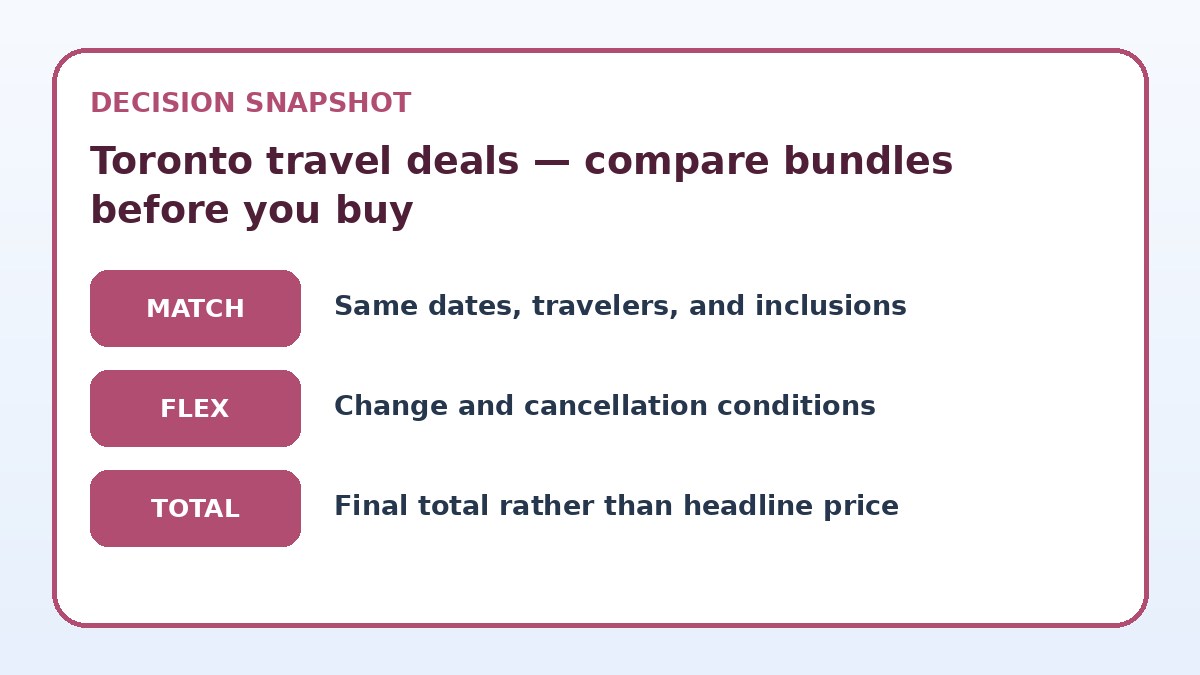
Use identical dates, travelers, room needs, baggage, and flexibility so the comparison stays meaningful.
What to compare before judging a bundle
Start with the inclusions list. Packages can bundle flights, hotels, airport transfers, and extras like breakfast or seat assignments. For a fair comparison, note whether the hotel rate is room-only or includes taxes and fees, which airline fare class is used, and whether baggage and seat selection are part of the bundle. Don’t assume identical service levels: an economy fare with checked baggage included may still be less flexible than a refundable basic economy on a different carrier. Record those line-item differences so you can compare net value rather than headline price.
Next, compare the change and cancellation policies line by line. Business travelers often need last-minute changes; a cheap bundle with strict no-change rules can create higher costs later. Look for penalties, the ability to rebook without paying the full fare differential, and whether coupons or vouchers are provided instead of refunds. Also confirm which party handles schedule disruptions: will the package provider rebook the flight and find alternate accommodations, or must you coordinate with individual suppliers? Those operational details determine real-world usability for business trips.
Inclusions, flexibility, and traveler-specific value
Inclusions only matter if they match your actual needs. A package that adds airport transfer or breakfast is valuable if you would otherwise pay for those items; otherwise it’s a cosmetic perk. For frequent business travelers, priority boarding, lounge access, and flexible departure times can be more valuable than a bundled breakfast. Evaluate each inclusion against your company’s travel policy and expense rules: if a hotel upgrade is nonreimbursable by your employer, its apparent value to you is limited.
Flexibility is often the top priority for business trips. Even small differences in change or refund rules can cost far more than the price gap that led you to choose a package. Consider whether your company prefers separate invoices for flights and hotels, which ease expense reporting. Also check whether the bundle’s provider issues a single invoice or separate receipts for each supplier — this affects reimbursement and auditing. Traveler-specific value means mapping every inclusion to actual expense avoidance and scheduling risk reduction.
Look past the headline total
Compare inclusions and change conditions before deciding whether a package is genuinely useful for this trip.
Deal comparison checklist
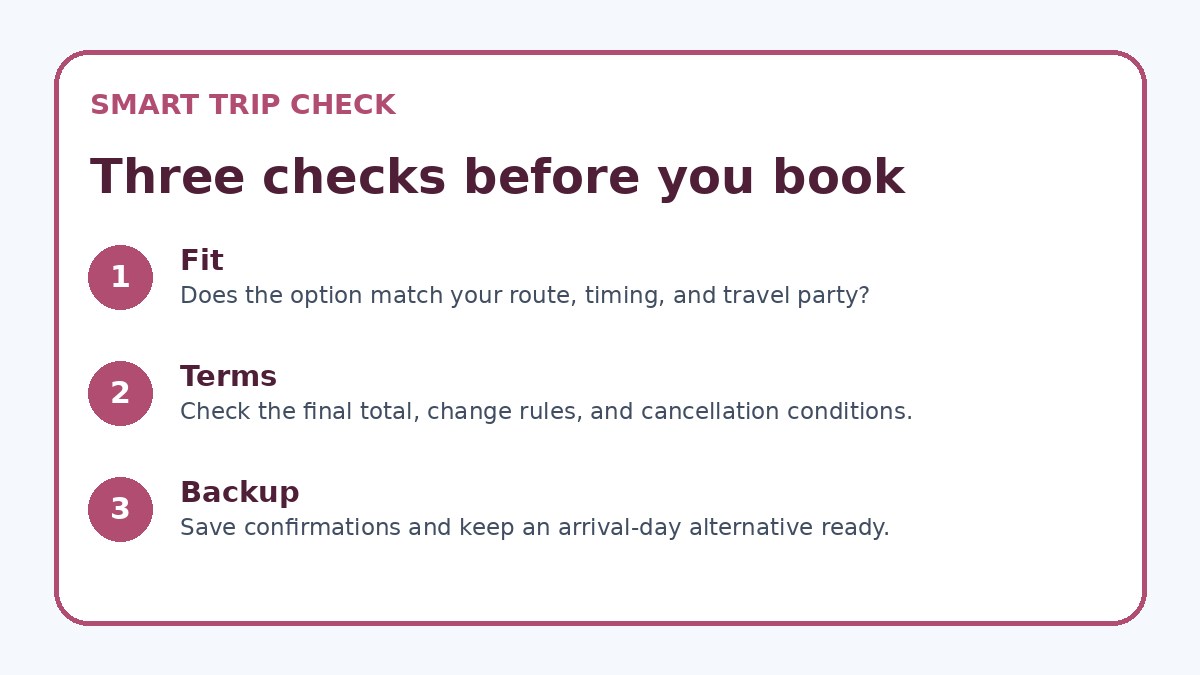
- Match the exact travel dates, number of travelers, and room/seat quantities across every quote you compare.
- Confirm fare class and baggage allowance for the flights included in a bundle versus separate flight options.
- Verify cancellation and change penalties on the supplier’s final booking page before payment.
- Check whether the bundle issues one combined invoice or separate receipts for flights and hotels for expense reporting.
- Compare the bundle’s listed taxes, resort fees, and airport surcharges to the separate-booking totals.
- Record who handles rebooking during disruptions: the bundle provider, the airline, or the hotel directly.
Using price alerts without impulse booking
Configure alerts narrowly: target specific routes, time windows, and fare rules rather than broad city-wide alerts. For example, set one alert for a refundable morning departure and another for a cheaper nonrefundable red-eye. That granularity prevents conflating different product types and reduces impulse decisions triggered by a single low-price notification. Use alerts to build a short list of acceptable options, then pause to compare terms on each provider’s final booking page before proceeding.
When an alert triggers, follow a quick decision protocol. First, verify the final fare conditions on the supplier’s booking page: change fees, refundability, baggage, and whether seat selection is included. Second, compare the bundle and separate booking totals for the same dates and traveler count, including taxes and carrier fees. Third, check your employer’s policy for allowable bookings and invoicing. Only book after confirming that the chosen option aligns with schedule flexibility and company reimbursement rules.
Avoiding false savings and what to verify at checkout
False savings usually come from hidden fees, mismatched conditions, or refundable-voucher replacements. Always re-run the comparison using the exact dates, traveler names, and number of rooms or seats. Confirm whether taxes, resort fees, or airport surcharges are included in the bundle price. If the bundle uses vouchers for cancellations or rebooking, note whether those vouchers have expiry dates or limited reusability that could reduce their real value.
At checkout, verify the final supplier terms shown on the provider’s confirmation page before you pay. Check the name of the ticketing airline, the hotel property and rate plan, the invoicing name and tax details, and the mechanism for changes or refunds — some platforms route you back to the original supplier while others require mediation through the bundler. If you want an independent cross-check, compare availability and conditions on a separate site such as Trip.com, but treat that as a secondary reference and always trust the supplier’s final booking page for terms.
Travel Deals & Booking Strategy questions travelers ask
Can price alerts reliably help me find the best Toronto travel deals for a business trip?
Yes, when you configure alerts carefully. Use separate alerts for refundable and nonrefundable fares, and for the specific time windows you need. Treat alerts as prompts to re-check terms rather than as automatic purchase signals. When an alert appears, compare the bundle and separate-booking totals for the exact dates and traveler count, then verify final cancellation and change terms on the supplier’s booking page before making a decision.
If a bundle shows a lower headline price, how do I check whether it truly saves money?
Recreate the same itinerary with separate bookings: same flight times, same hotel room type, and the same taxes and fees. Add likely ancillary costs such as baggage, transfers, and any required upgrades. Compare total out-of-pocket expense and consider potential change costs. Also factor in non-monetary value like consolidated support or single-invoice convenience. If the bundle requires vouchers or credits for refunds, treat those with caution and include their limitations in your calculation.
Which warning signs mean I should avoid booking a low-priced package for a business trip?
Watch for strict nonrefundable fare classes, vouchers instead of cash refunds, bundled items you won’t use, and lack of clear invoicing for expense reports. If the provider’s cancellation policy forces rebooking through the agent rather than the carrier, that can slow urgent changes. Also be wary when bundles omit airline fare class details or list hotel rates without taxes and fees. Any ambiguity at checkout is a reason to pause and verify terms on the supplier’s confirmation page.
Final decision note
Price alerts are a powerful tool for business travelers planning Toronto trips, but the value comes from disciplined comparison rather than impulse purchases. Use alerts to build a shortlist, then match exact dates, traveler counts, and inclusions to compare bundled and separate options fairly. Prioritize change and cancellation terms, invoicing clarity, and the practical value of inclusions against your company’s travel policy. Confirm everything on the supplier’s final booking page before paying. If you need an additional comparison point, review availability and terms on a secondary site such as Trip.com, then rely on the provider’s confirmed terms when you book.
Continue planning
Check current options and final conditions
Use the provider page to confirm live availability, the final total, cancellation terms, and every condition that matters to your trip.
This evergreen planning guide was created with AI-assisted drafting and a structured quality review. It does not display live prices, schedules, availability, visa guidance, or provider rankings. Verify current details before booking. Some links are affiliate links; we may earn a commission at no additional cost to you.