Short answer: for a Milan-centered family trip that includes nearby lakes, countryside, or multiple small towns, renting a car usually improves flexibility and saves transit hassle; if you’ll stay inside the city or rely on one or two day trains to Venice or Florence, skip the car. This guide helps first-time visitors weigh that choice, then walks through route value, insurance language to check, pickup and return friction, and a robust non-driving fallback. We focus on realistic tradeoffs families face: luggage and car seats, nap-friendly schedules, parking near hotels, and connecting regional drives. Where specifics could change—local ZTL zones, airport pickup counters, or insurance wording—we tell you exactly what to verify on the rental company’s final booking page so you leave with no surprises.
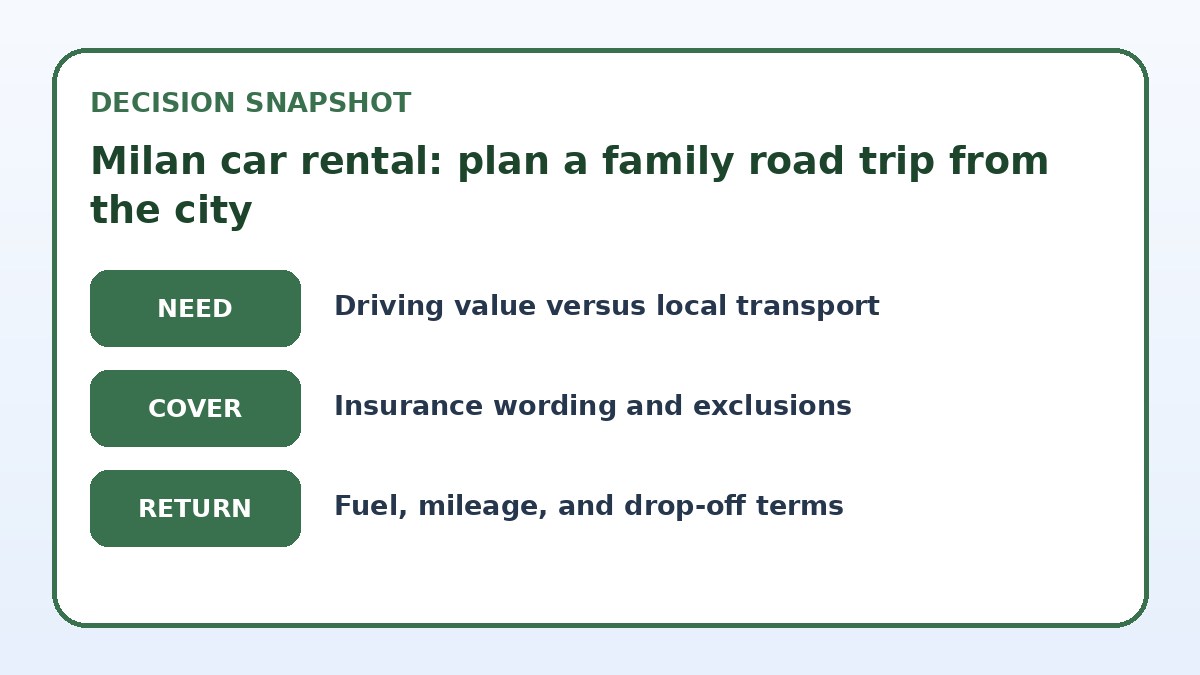
Does driving genuinely improve this Milan family itinerary?
Start by mapping your destinations and asking whether a car saves time or simply shifts complexity. Driving is valuable when your itinerary includes multiple towns around Lombardy—like Lake Como, Bergamo, or regional wine areas—where trains either don’t connect directly or extend travel time with transfers. A car lets you control departure times to match young children’s rhythms, carry strollers and picnic gear, and reach scenic viewpoints that lack direct public transport. But if your plan is museum-heavy in central Milan, or relies on high-speed train hops to major cities, the car can become more of a liability: parking fees, restricted-traffic zones, and one-way return logistics erode the convenience.
Quantify the time and cost tradeoffs for each day rather than deciding on a car for the whole trip by default. List the main drives you want to make, estimate door-to-door times versus train schedules, and add likely parking searches. Consider the family’s tolerance for driving on unfamiliar roads and stress levels with navigation and Italian signage. For many first-time visitors, a hybrid approach—renting for two or three scenic days and using public transport for urban days—gives the best balance of freedom and ease.
Decide whether driving earns its place
| Mobility strategy | Best for | Cost or friction to check |
|---|---|---|
| Full rental car for the entire trip | Families prioritizing maximum flexibility and multiple countryside stops | Convenience vs parking costs, ZTL complexity, and continuous driving responsibility |
| Short-term rental for select days | Families wanting a car only for scenic day trips while minimizing urban parking | Requires careful planning of pickup/return logistics and may add extra fees |
| Train-based with taxi/rideshare last mile | Families staying mainly in Milan or using major rail corridors to cities and towns | Less flexible scheduling and difficulty reaching remote viewpoints or rural stops |
| Public transport plus occasional private driver or day tour | Families who want guided convenience without driving or rental hassle | Higher per-day cost for drivers or tours but lower stress and no parking concerns |
Check live rental choices only after the route test
Use the exact driver, dates, pickup point, and return plan to compare current conditions.
Route value: which drives around Milan are worth the wheel
Evaluate each leg for scenic or practical value: lakes, hill towns, and alpine foothills usually reward driving because they offer rural stops and flexible timing. Prioritize routes that are short enough for children’s attention spans—roughly one to two hours each way—and that include interesting, low-effort stops such as playgrounds, picnic spots, or easy waterfront promenades. Avoid planning long, consecutive driving days; instead design loops or one-way sections combined with a convenient return point so you’re not doubling back through congested zones.
When assessing routes, check road quality and elevation changes you may not expect, and whether any segments pass through limited-traffic ZTL areas in small towns. For routes crossing into neighboring regions or countries, check documentation and insurance conditions that cover cross-border travel. Finally, think logistically about fuel stops and rest breaks—families need predictable pauses. Confirm that your intended stops have family-friendly facilities and that parking is feasible for a mid-size SUV or family car before you commit to the drive.
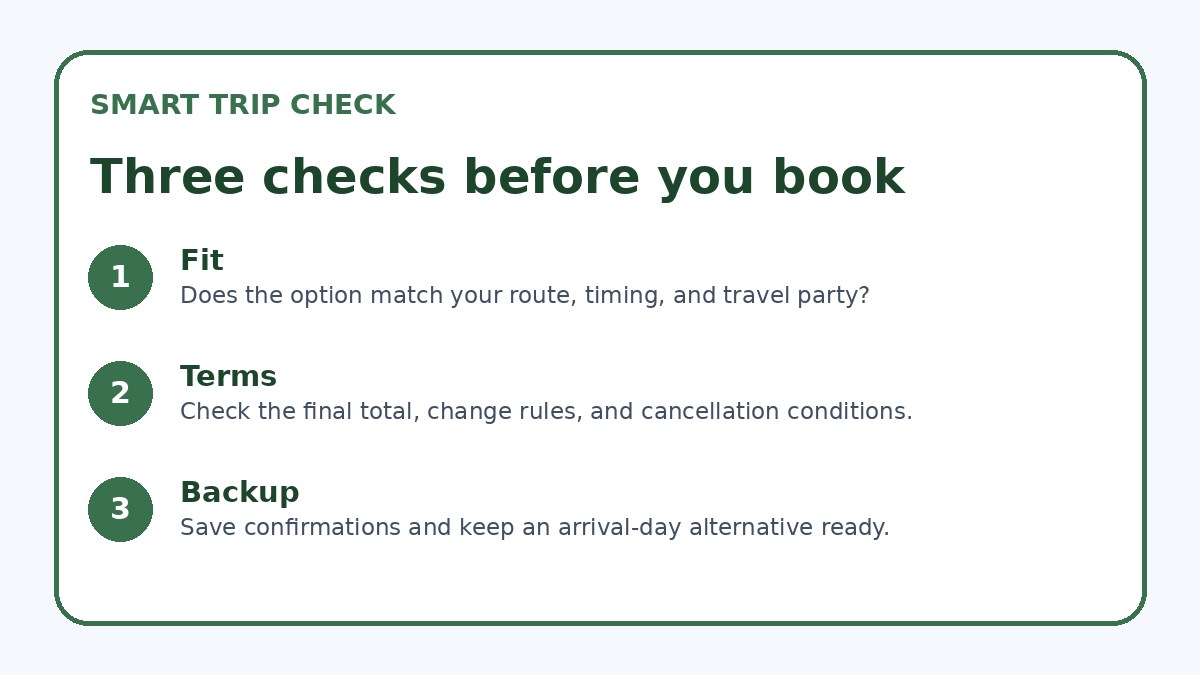
Compare the full rental conditions
Confirm insurance wording, exclusions, deposit, fuel, mileage, and return terms on the final page.
Insurance wording and the pickup/return friction to watch
Insurance documents contain several line items that materially change your exposure. On the rental company’s final booking page, verify the excess/deductible amount, whether a collision damage waiver (CDW) is optional or included, and precisely which items are excluded (often tires, windshields, and undercarriage). Check whether roadside assistance is included and how quickly it operates regionally; also confirm the policy for crossing regional or international borders if your drive leaves Italy. If you plan to use a credit-card-provided insurance benefit, compare its wording to the rental agreement and get any necessary confirmation letters.
Pickup and return can consume more time than the drive itself: airports and central locations may have dedicated counters, but suburban lots sometimes require shuttle transfers. Expect to present the primary driver’s license, a credit card in the driver’s name, and any pre-approved extras like child seats. Ask the rental company how fuel is handled—full-to-full is usually the simplest—and whether they record pre-existing damage with photos. For returns, verify the exact drop-off address, after-hours procedures, and who signs off on fuel and damage so you avoid post-trip charges.
Car rental terms to verify
- List all planned daily destinations and mark which require a car to reach directly versus served by train or bus.
- Confirm child-seat availability and costs with the rental company and note installation responsibilities at pickup.
- On the supplier’s final booking page, verify the excess/deductible amount, CDW terms, roadside assistance, and cross-border permissions.
- Check hotel parking options (on-site, gated, or public garage) and reserve or confirm pricing and entrance height limits.
- Plan fuel policy: prefer full-to-full and photograph the fuel gauge and any pre-existing damage at pickup and return.
- Save exact pickup and drop-off addresses, after-hours return instructions, and the rental counter’s phone number in your phone.
A realistic non-driving fallback and how to mix modes
If you decide not to drive, plan a fallback that feels intentional rather than a compromise. Use Milan as a rail hub: high-speed and regional trains connect to major cities and many lakeside towns, while short taxi or rideshare legs cover the last mile. For family-accessible excursions that require flexibility, book a local private day tour or hire a driver for a single day. This lets you experience scenic roads without committing to multi-day rental complexity and still keeps children on predictable schedules.
Mixing modes often gives families the best experience: take the train for longer, smooth intercity legs and reserve a car or private transfer for days when you’ll explore the countryside or visit multiple small towns in a single day. When you assemble a mixed plan, test one day of the sequence in advance—check luggage handling during transfers, stroller storage on trains, and child-seat availability in taxis. If you shop rental options online, Trip.com can be a place to compare current availability and pick-up details, but always confirm insurance and pickup terms on the supplier’s booking page.
Car Rental & Road Trip questions travelers ask
Is driving in Milan city center necessary or recommended for families?
Driving inside Milan is usually unnecessary and often more trouble than it’s worth for families. Central neighborhoods are compact, well served by public transport, and many central streets are ZTL-restricted—access can result in fines if you don’t have explicit permission. Hotels near the center often recommend arriving on foot or by taxi for drop-off and then parking in an off-street garage. If you plan to base yourself in the city and only take occasional day trips, consider using trains for main connections and renting a car for specific countryside days instead.
What documents and preparations should the primary driver bring to pickup?
Bring the primary driver’s valid driver’s license (an international driving permit if required for your country), the credit card used for the booking in the driver’s name, passports for identity, and the reservation confirmation. Have any promised extras documented in writing—child seats, GPS, additional drivers—and a printed copy of the rental terms that detail insurance inclusions and exclusions. Photograph the vehicle at pickup to document condition, note fuel level, and confirm the pick-up agent records any pre-existing damage to avoid disputes later.
How do I compare insurance options without getting lost in legal language?
Focus on three practical points: the amount of excess/deductible you would pay after a claim, whether CDW and theft protection are included or optional, and what specific items are excluded (windshield, tires, undercarriage). Also confirm if roadside assistance is included and how quickly help is dispatched locally. If a credit card offers secondary coverage, get written confirmation of its terms and compare whether a rental company’s supplementary waiver reduces or eliminates your out-of-pocket excess. Always check the final booking page for the exact policy wording.
Final decision note
Deciding whether to rent a car in Milan for a family road trip comes down to the mix of destinations, how much driving your family can comfortably handle, and how you balance convenience against parking, insurance, and pickup friction. If your plan is a handful of short scenic drives to lakes or hill towns, a car or a short-term rental days can make sightseeing and schedules easier. For city-focused stays or longer high-speed rail legs, a train-plus-taxis approach reduces stress. Use the checklist above before booking, verify insurance and pickup conditions on the supplier’s final page, and build at least one non-driving day into your itinerary so everyone gets a restful, flexible pace.
Continue planning
Check current options and final conditions
Use the provider page to confirm live availability, the final total, cancellation terms, and every condition that matters to your trip.
This evergreen planning guide was created with AI-assisted drafting and a structured quality review. It does not display live prices, schedules, availability, visa guidance, or provider rankings. Verify current details before booking. Some links are affiliate links; we may earn a commission at no additional cost to you.