
For most couples planning Seoul to Jeonju transport, the most practical choice is to prioritize comfort, simplicity, and arrival location. If you want the least amount of hassle and the best balance of onboard space plus a straightforward arrival, prioritize a reserved intercity train or express bus that lands you near Jeonju’s historic hanok village. Choosing between the two depends on what you value most: seat comfort and predictable schedules (train) versus frequent departures and sometimes cheaper fares (bus). Renting a car can make sense when you want flexibility to explore the wider Jeolla region at your own pace, but it adds navigation and parking decisions. Below I explain tradeoffs, decision criteria for couples, and a short checklist of what to confirm before you book so your trip starts smoothly.
Core decision factors for couples
Couples usually balance comfort, time, cost, and convenience. Comfort includes seat width, legroom, and the ability to relax together. Time covers both scheduled journey duration and how much variation is typical on the route. Cost is important but should be weighed against convenience: a slightly higher fare may be worth it for a direct arrival or fewer transfers. Convenience also means arrival location — whether your transport drops you near Jeonju’s main attractions, your hotel, or requires an additional local transfer.
Think about the kind of trip you want on arrival. If you plan an easy weekend with little luggage and lots of walking in the hanok village, a direct train or bus that arrives centrally reduces local taxi hassle. If you want to explore countryside temples and slow roads, a rental car delivers freedom and privacy. Also consider luggage: trains and buses may have limits on oversize bags, while a car keeps everything with you. For each choice, check the provider’s final booking page for seating maps, luggage rules, and station or terminal addresses.
Train vs bus: comfort, frequency, and arrival locations
Trains often win on onboard comfort: bigger seats, room to move, and a calmer environment that’s easier for conversation. They also tend to be more punctual, which helps when you’ve planned dinner reservations or guided tours in Jeonju. However, trains may run less frequently than buses depending on the service and time of day, so you may need to align your schedule to fewer departure windows. Crucially, verify whether the train you consider is direct and which station it serves in Jeonju; some rail options require a transfer at a nearby hub.
Express intercity buses can offer many departures throughout the day and sometimes depart from terminals with easy city connections. Buses may feel cozier and can be the better option if you value frequent departure choices or are booking at short notice. On the other hand, bus comfort varies by operator and vehicle type, so look for seat-type information and if seats are assigned. Check exactly where the bus stops in Jeonju — a central terminal reduces extra travel, while stops on city outskirts add time and taxi cost after arrival.
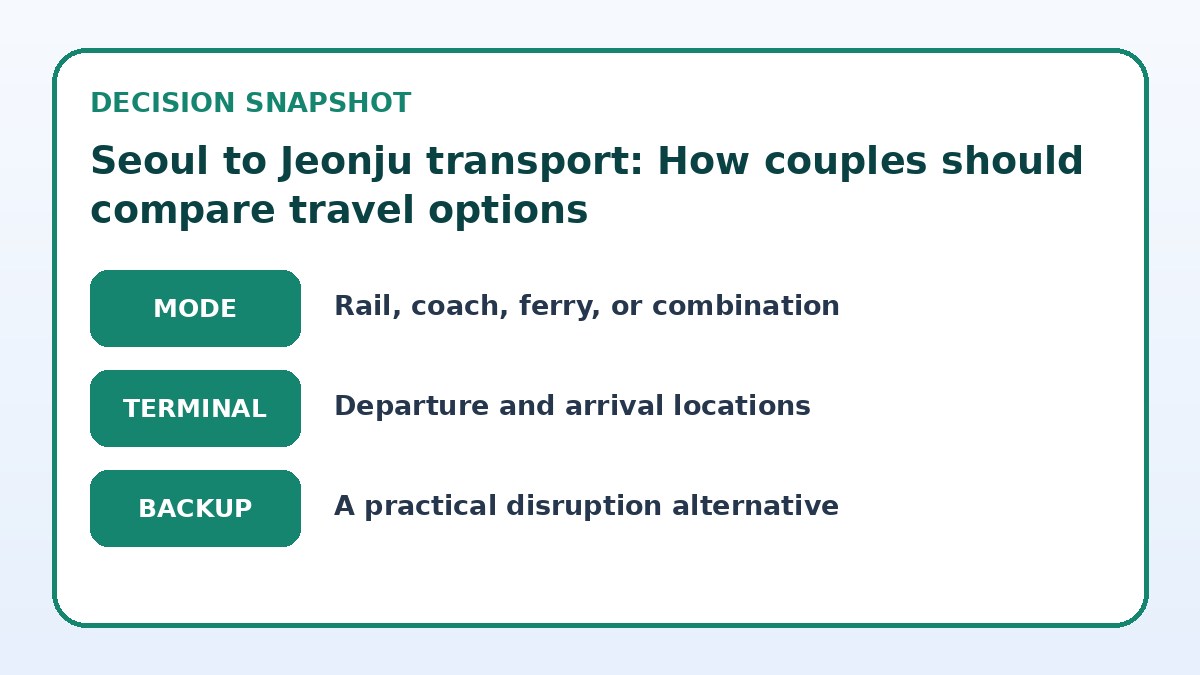
| Approach | Best for | Tradeoff to check |
|---|---|---|
| Reserved intercity train | Couples prioritizing comfort, predictable schedules, and a central arrival | Fewer daily departures may force you to align plans with train times |
| Express intercity bus | Couples wanting frequent departures and flexible departure times | Comfort and legroom vary by operator; final stop may require a local transfer |
| Rental car | Couples seeking freedom to explore beyond Jeonju and travel on their own timetable | Adds driving responsibility, parking planning, and potential extra fees |
| Mixed-mode (train/bus + taxi/local transport) | Couples optimizing door-to-door time while balancing comfort and flexibility | Requires planning connections and possibly paying multiple fares |
When renting a car makes sense for couples
A rental car gives privacy, flexible schedules, and the ability to detour to rural sights like countryside tea houses or small temples that are harder to reach by public transport. For couples who enjoy scenic driving, stopping for viewpoints, or carrying sports or picnic gear, a car turns the route into part of the day’s experience rather than simply transit. But driving requires comfort with local traffic rules and navigation; you should be prepared for tolls, parking decisions in Jeonju, and possible busy holiday traffic.
If you choose a car, confirm the rental company’s pickup and drop-off policies and inspect insurance options before you sign. Look up typical parking options near your intended stay and major attractions so you’re not surprised on arrival. For one-way rentals, verify drop-off availability in Jeonju and any extra fees. Finally, consider combining modes: drive to a nearby town for scenery, then return the car and take a short train or bus into Jeonju proper if that simplifies parking and central arrival.
Before you book
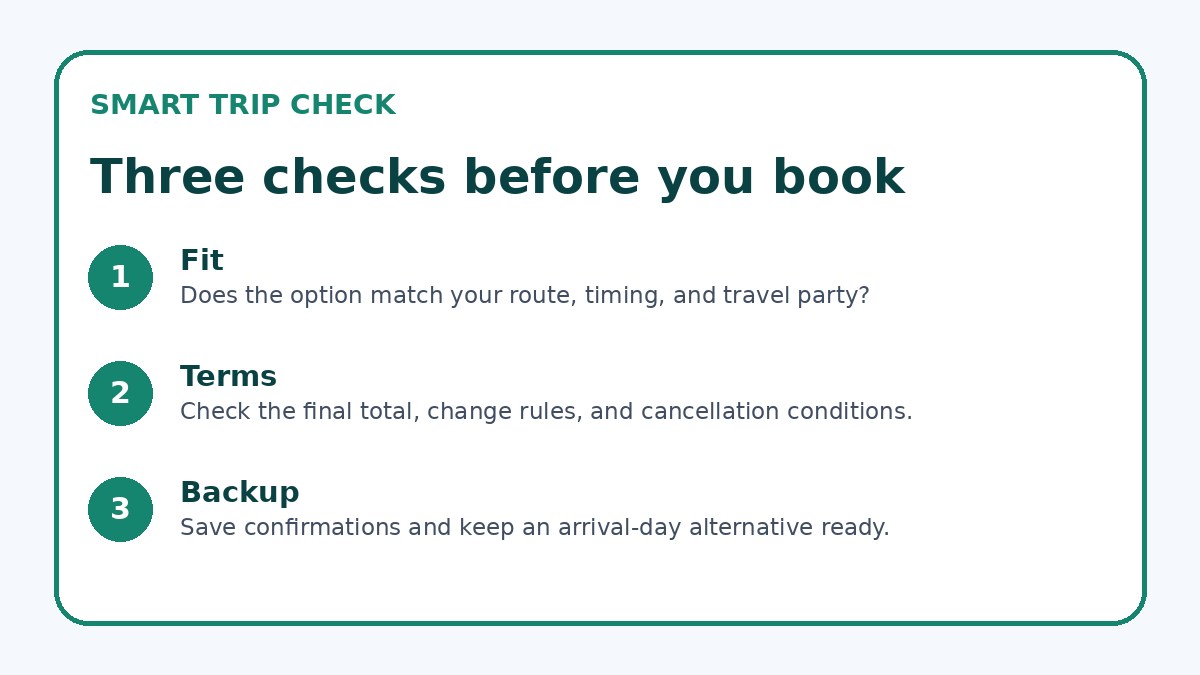
- Confirm exact departure and arrival station or terminal names and addresses on the provider’s booking page.
- Verify luggage allowances and whether seats are assigned or chosen at check-in.
- Check ticket change and cancellation terms so you know flexibility options before paying.
- Look up public transport or taxi time and cost from arrival point to your accommodation.
- If renting a car, confirm insurance coverage, fuel policy, and one-way drop-off rules.
- Download or screenshot tickets and directions, and save offline maps for Jeonju’s central areas.
Practical booking checks and day-of tips
Before you book, compare total door-to-door travel time, not just in-vehicle time — include transfers, walking, and expected wait times. On provider booking pages, verify departure and arrival addresses, exact station or terminal names, luggage rules, seat selection options, cancellation policies, and whether you need to print or show mobile tickets. If you find different providers for train or bus options, compare the final booking conditions rather than relying on third-party summaries. Trip.com is a useful place to compare current availability but always cross-check important terms on the operator’s page.
On travel day, arrive with time to spare: allow extra minutes for ticket collection, station navigation, or unexpected lines. If you’re traveling with a lot of luggage, consider splitting bags or choosing a direct option that minimizes transfers. Bring a small daypack for essentials you’ll need right after arrival — water, a map or offline directions to your accommodation, and any medication. For evenings, check transport frequency back to Seoul to avoid being locked into a late return with limited options.
Frequently asked questions
Is there a direct train or bus from Seoul to central Jeonju?
Direct options may exist, but service types and stopping patterns can differ by operator. When comparing, look at the provider’s timetable and station list to confirm whether the trip is labeled direct or requires a transfer. If a transfer is required, check total journey time including transfer and the transfer station’s layout. Always verify the final arrival station in Jeonju so you know whether you’ll be within easy walking distance of the hanok village or need a short taxi or local ride.
How should couples decide between faster arrival and more flexible schedules?
Start by listing what matters most: relaxed travel versus the ability to leave at many times. Faster, more direct services reduce time spent in transit and lower the risk of missing planned activities; these often appeal to couples with tight itineraries. Flexible schedules suit couples who prefer spontaneous timing or who might change plans. Compare the total door-to-door time and the number of daily departures for each option, then weigh that against the inconvenience of transfers or parking to make a choice you’ll both enjoy.
What should we check about tickets and seating when booking together?
Confirm whether tickets allow you to reserve adjacent seats and whether seat selection is available at booking or only at check-in. For some bus and rail operators, seats can be chosen online; others assign them on arrival. Also check group or twin seating options if you want a two-seat configuration with additional space. Finally, read cancellation and change policies, and make sure both travelers’ names are correctly listed if required — this reduces the chance of assigned seats being split at the last minute.
Final planning note
For couples planning Seoul to Jeonju transport, focus on what you want the journey itself to feel like: a relaxed shared experience or flexible, schedule-friendly transit. Trains usually offer more comfort and predictable arrivals, buses deliver frequency and sometimes more options, and a rental car gives exploration freedom at the cost of extra planning. Use the checklist above to confirm station names, luggage rules, seat assignments, and cancellation terms before booking. Compare total door-to-door time across options, and verify any operational details directly on the provider’s booking page (and on Trip.com if you want another comparison). With those checks done, pick the option that keeps your arrival stress low and your time together enjoyable.
Continue planning
Check current options and final conditions
Use the provider page to confirm live availability, the final total, cancellation terms, and every condition that matters to your trip.
This evergreen planning guide was created with AI-assisted drafting and a structured quality review. It does not display live prices, schedules, availability, visa guidance, or provider rankings. Verify current details before booking. Some links are affiliate links; we may earn a commission at no additional cost to you.