If you’re travelling solo between Sydney and Melbourne, the two decisions that shape the whole trip are what you carry and when you get to the airport. Packing light and choosing carry-on only can eliminate wait time at baggage belts and speed through security, while checked luggage gives flexibility if you need more wardrobe or gear. Likewise, arriving at the terminal with the right buffer—enough time for check-in and security but not so early you waste a morning—keeps the day manageable. This guide gives a practical rule set for baggage choices and airport timing, explains tradeoffs for different traveller types, and lists exactly what to verify before you book. Follow these steps and you’ll make a calm, efficient solo transfer between Sydney and Melbourne without relying on last-minute guesses.
Choose baggage by trip purpose and mobility needs
Start by matching luggage to why you’re travelling. If your flight is a quick business day return or a weekend with minimal clothing changes, a single carry-on and a small personal item usually suffice, keeping you independent and fast-moving. For longer stays, events requiring formalwear, or if you’re carrying sports equipment or photography gear, checked luggage reduces the worry about crushed items and frees your hands through terminals. Consider how much walking you can handle and whether you’ll need public transport or frequent taxi rides; a lighter, wheeled bag is easier if you plan to navigate trains and trams.
Account for mobility or medical needs as well. Solo travellers who use mobility aids should check airline policies about stowing and handling those items and whether they count toward baggage allowance. If you prefer minimal physical lifting, choose soft-sided carry-ons or bags with easy-grip handles that fit under or in overhead bins. Finally, think about clothing choices that save space—pack layers instead of heavy coats, or use compressible cubes—so the baggage decision matches the realities of moving between Sydney and Melbourne without assistance.
Decide check-in and arrival timing based on risk tolerance
How early to arrive at the airport depends on several controllable and uncontrollable factors: whether you have checked baggage, your comfort with queues, and the transfer method to the terminal. If you travel carry-on only, you can often arrive later because you skip bag drop counters, but you still need time for security and potential lines at check-in kiosks or passport control if required. If you have a checked bag, factor in the recommended drop deadline printed by your airline and leave additional time for busy counters. Consider arriving earlier if you expect heavy traffic to the airport or if you’ll need to buy or adjust items at the terminal.
Also think about the consequences of missing a flight. Solo travellers on tight schedules or with non-refundable onward connections might prefer a larger safety margin, while flexible, low-cost travellers can accept tighter timing. For those who dislike idle waiting, plan to arrive with enough time to clear essentials then use the leftover for a relaxed meal; conversely, if you’re trying to reduce time at the airport, arrange a reliable transport window and check live terminal conditions before leaving home. Always confirm the airline’s final check-in and boarding policies on their website before departure.
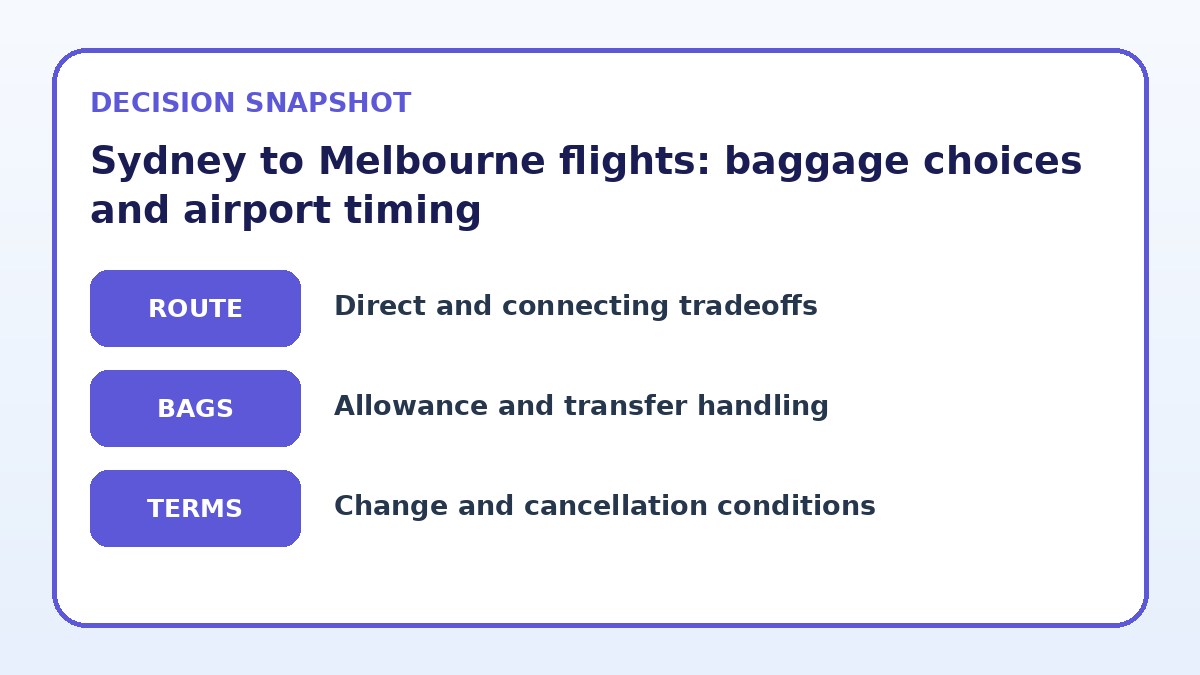
| Approach | Best for | Tradeoff to check |
|---|---|---|
| Carry-on only | Solo travellers wanting speed and minimal terminal time | Limited clothing and liquids; strict size rules mean careful packing |
| Checked bag | Long stays, specialist gear, or passengers needing more clothing | Adds bag-drop and collection time; possible delays at arrival carousel |
| Arrive with large buffer | Risk-averse travellers with tight onward plans | More waiting time at the airport and less flexible schedule |
| Tighter arrival window | Flexible travellers confident in transport and fast process | Higher stress if queues or traffic cause delays |
Practical packing and airport-savings tactics
Select a bag that meets common domestic size limits and practise packing it once before travel to avoid surprises at the gate. Keep liquids in a clear, resealable bag and place electronics near the top for easy removal at security. Pack an outfit change in your carry-on if you must check luggage—this softens the impact of delayed or lost bags. Use organised compartments to find travel documents fast: a passport, booking confirmation, and a printed or screenshot boarding pass can save time when you reach check-in kiosks or security scanning points.
At the airport, use touchpoints to shave minutes: municipal rail or express shuttle information pages tell you recommended departure times to reach the terminal, and some terminals have bag-drop kiosks or fast-track lanes for a fee—verify availability and cost directly with the airline. If you intend to use rideshare or taxi pick-ups, pick a designated curbside meeting point to avoid standing in busy pickup loops. For solo travellers, a charged phone and portable battery, plus one printed backup of your itinerary, keep you independent if mobile connectivity falters.
Before you book
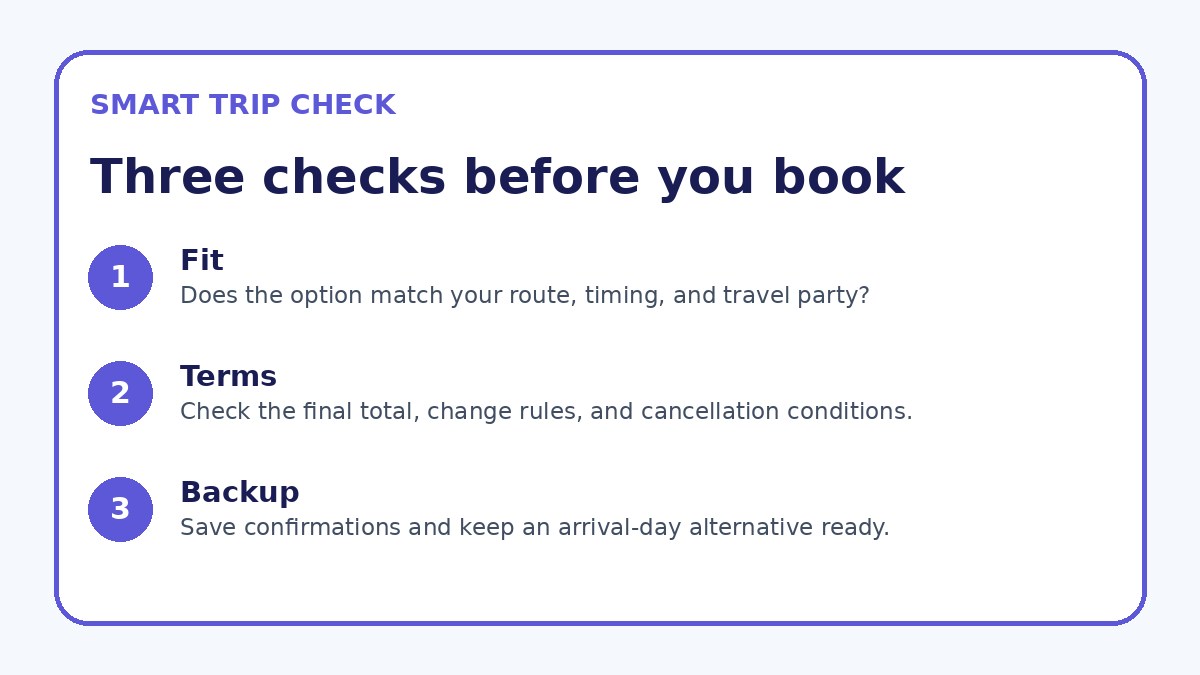
- Confirm baggage allowance and size/weight limits on the airline’s official booking page before packing.
- Practice fitting your packed items into your carry-on and personal item to ensure compliance with overhead/bin rules.
- Check check-in and bag-drop deadlines for your ticket class and add a cushion for busy periods.
- Plan your airport transfer route and allow extra time for peak traffic or public-transport disruptions.
- Print or download boarding passes and keep a screenshot of your flight status in case mobile coverage is poor.
- Identify the terminal and gate information, and re-check it one hour before departure for last-minute changes.
Compare direct and connecting flights when timing baggage flow
Always check whether services are direct or involve connections: a direct flight simplifies baggage handling and usually means your checked luggage is transferred automatically, while connections can introduce transfer times and risk for delayed bags. When booking, compare total door-to-door travel time rather than only flight duration—layovers add complexity and usually require longer minimum connection times. If you have checked bags and a short connection, prioritise flights with longer connection windows or choose direct services where available to reduce stress and the chance of misrouted items.
If you opt for a connecting itinerary, build contingency into your timing by selecting connections that give a comfortable transfer window and avoiding tight back-to-back flights. Check whether you need to claim and re-check bags at the connecting airport—airline and ticket type determine this. Before you book, verify on the airline’s final booking page who is responsible for the transfer of luggage, and whether the connection requires changing terminals so you can plan ground transport between gates if necessary.
Frequently asked questions
How much time should a solo traveller leave for security and check-in at Sydney or Melbourne airports?
Time needs vary by luggage and travel time to the airport. For carry-on only, allow time to reach the terminal and clear security—this can be substantially shorter than if you must check a bag. If you have checked luggage, add time for bag drop and queuing. Also factor in transport to the terminal and potential peak-hour surges. The safest approach is to review your airline’s stated check-in and bag-drop deadlines, build an extra buffer based on your risk tolerance, and check live terminal alerts on the day you travel.
Is it worth paying to check a bag for a short Sydney–Melbourne trip?
Paying to check a bag can be worth it if you need additional clothing, specialist equipment, or want to avoid lifting bulky luggage. For short trips where you can pack minimally, carry-on only saves time at both ends and removes the risk of a delayed bag. Compare the convenience of mobility and hands-free travel against the extra time and cost of bag drop and collection. Before paying, confirm the airline’s fees and the exact allowance on your booking page so you can choose the option that fits your priorities.
What should solo travellers check on the airline’s final booking page before departing?
Verify baggage allowances (weight and dimensions), check-in and bag-drop deadlines, boarding gate and terminal details, and whether fast-track or priority lanes are included with your fare. If your plan involves any special items like sports or medical equipment, confirm handling procedures and applicable fees. Also check whether the ticket shows a direct flight or a connection and what that means for luggage transfer. If you use third-party sites like Trip.com to compare options, return to the airline’s site to confirm the exact terms and any recent changes.
Final planning note
Solo travel between Sydney and Melbourne becomes simpler when you align baggage choices with your trip purpose and pick an airport arrival time based on realistic buffers rather than guesswork. Carry-on only is the fastest route through terminals, while checked luggage offers flexibility when you genuinely need it—each choice has tradeoffs in time and convenience. Decide how much waiting you tolerate, check the airline’s official rules before you pack, and plan your ground transport to match your chosen buffer. With a clear packing test and a verified check-in timeline, you’ll reduce stress and keep control of the journey from home to your Melbourne arrival gate.
Continue planning
Check current options and final conditions
Use the provider page to confirm live availability, the final total, cancellation terms, and every condition that matters to your trip.
This evergreen planning guide was created with AI-assisted drafting and a structured quality review. It does not display live prices, schedules, availability, visa guidance, or provider rankings. Verify current details before booking. Some links are affiliate links; we may earn a commission at no additional cost to you.